
Rear hatch
A rear hatch is a door that opens the back of the body into the luggage space.
- Example: the rear glass rising with the door
- Check: the width and height of the entrance
- Limit: not every car with a hatch has a square rear profile
Hatchbacks are identified chiefly by a rear door that opens into the luggage area, often lifting the rear window with it. A traditional coupe is identified more by its two-door passenger layout and roof profile. These descriptions overlap: a coupe can have a liftback, and a hatchback can have only two side doors.
The useful differences are therefore the rear opening, access to the back seats, roof shape, and how passenger and cargo space share the body. Inspect those features on the actual cars. A badge or silhouette does not tell you whether a stroller fits, an adult can sit comfortably in back, or a long door will open easily in your parking space.
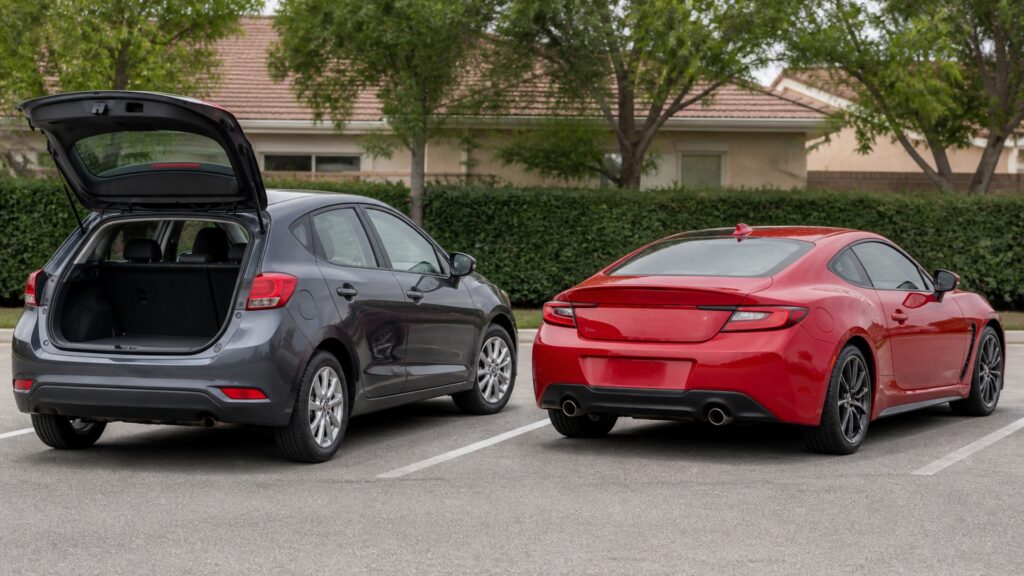
Understand the physical differences that affect daily use.
Tip: Look at what opens and where passengers enter before relying on the model description.
Each feature answers a different practical question.
A rear hatch is a door that opens the back of the body into the luggage space.
A trunk lid opens a separate luggage compartment below the rear window.
Side-door count describes the doors used for normal passenger entry.
Roof profile is the shape and height of the roof as it approaches the rear of the car.
A liftback is a sloping rear hatch that opens with the rear glass.
Seat-to-cargo conversion changes the interior by folding available rear backrests.
Tip: Treat hatch, roofline, and side doors as separate observations.
A hatch lifts a large part of the rear closure away, which can make tall or awkward objects easier to position. A separate trunk may have ample room once a bag is inside but a smaller entrance. Shape matters: a deeply sloping hatch can still limit the height available near the rear glass.
A rigid box reveals restrictions that soft shopping bags can hide.
In a traditional two-door coupe, rear passengers usually enter past a moved front seat. A five-door hatchback gives them separate rear doors. A three-door hatchback does not offer that same advantage, even though it has a hatch. Long front doors can also require more room beside the car.
Frequent rear passengers may value separate doors more than a small difference in measured legroom.
A low or descending roof can influence rear headroom, the size of the rear window, and the height of cargo that fits beneath it. Seat height and floor position matter too. Some coupes have usable rear seating; some hatchbacks are cramped. Neither name substitutes for sitting in the actual seat.
A car that works for occasional short trips may still be tiring for the same passengers on longer journeys.
A hatchback luggage area is generally part of the cabin volume, usually screened by a removable or retractable cover. A traditional trunk is more separated, although folding seats and pass-throughs can connect it to the cabin. That distinction affects how belongings are accessed and concealed; it does not by itself prove which car is quieter.
Mazda's hatchback guidance warns against loading objects onto the luggage cover; concealment is not the same as cargo restraint. Mazda: liftgate and luggage-cover guidance.
A coupe can be comfortable and relaxed, and a hatchback can be tuned for demanding driving. Acceleration, ride, handling, noise, and economy depend on the actual vehicle and equipment. Wheels, tires, suspension choices, and powertrain can create larger differences than the label on the body.
Choose a coupe for the qualities you experience, not an assumption that every two-door car drives better.
The strongest distinctions come from the actual body design.
Separate rear passenger doors and a large luggage opening can simplify mixed passenger-and-cargo use.
A shared luggage area may need careful concealment and arrangement.
Rear-seat access commonly goes through the front doors, and the roof may prioritize a lower profile.
The rear luggage opening may be a separate trunk or a liftback; check rather than assume.
Body names are useful shorthand with real exceptions.
Three-door hatchbacks have two side doors and one rear hatch.
Some coupe-shaped cars use a liftback that opens with the glass.
Performance depends on the specific powertrain, chassis, tires, and weight.
Tip: Open the doors and inspect the seats; the mechanism is more informative than the badge.
Clarifying the common points of overlap.
Yes. Coupe can describe the passenger-body style while a hatch or liftback describes the rear closure.
Those counts generally include the rear hatch along with the passenger doors.
A large hatch often helps, but compare the exact opening, closed clearance, and space with required seats occupied.
No. Check the designated seating positions and actual comfort; body style alone does not determine capacity.
The meaningful differences are in the openings, seating access, and shape of the usable space.
Compare those directly, then assess driving character and comfort on their own merits.
Use these Review Streets paths to compare related categories and practical next decisions.
Compare cargo needs and dependable charging.
Check equipment compatibility and clearance.
Understand the hatch and folding-seat mechanisms.
Choose a retailer
Prices checked regularly. We may earn a commission at no cost to you.