Why Paint Protection Fitment Matters

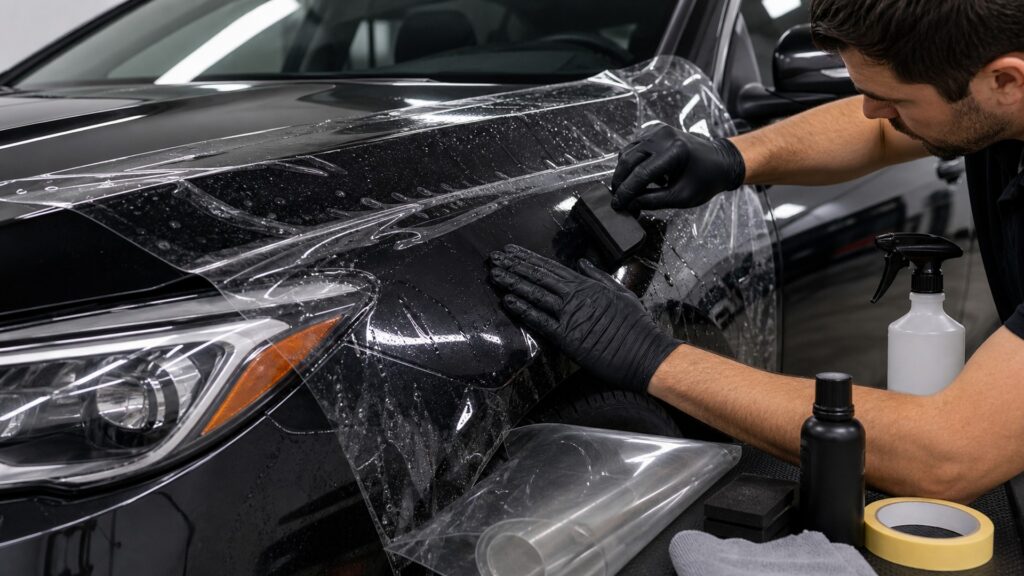
Paint-protection fitment is more than selecting gloss or durability. The substrate may be original paint, repaint, matte finish, repaired clear coat, existing coating, or film; each changes preparation and adhesion. Coverage geometry, edges, sensors, trim, badges, and panel shape determine whether liquid coating or cut film can be applied and inspected.

The system must also fit the environment and ownership plan. Temperature, humidity, dust, lighting, ventilation, cure time, water avoidance, vehicle storage, driving exposure, wash method, installer requirements, and warranty records affect performance. A technically capable product is a poor fit when its preparation, application, cure, or maintenance conditions cannot be met.

By: Review Streets Research Lab
Updated: September 1, 2026
Explainer · 8-12 min read
paint protection fitment explainer hero image for Review Streets
What You'll Learn

Resolve Paint Protection Fitment through Its Controlling Evidence

The explanation separates five mechanisms that decide paint protection fitment instead of repeating a generic care sequence.

  • Paint History Determines Preparation and Adhesion
  • Patterns, Edges, Curves, Trim, and Sensors Shape the Installation
  • Application and Cure Need Controlled Temperature, Humidity, Dust, and Time
  • Protection Type Must Address the Owner's Real Damage Mechanism
  • Maintenance, Inspection, Repair, Removal, and Warranty Must Be Feasible
  • How to verify the finished state

Tip: Use the first failed paint protection fitment gate to choose the next test; do not compensate with unrelated force, chemistry, or product.

Definitions

Key Concepts That Define Paint Protection Fitment

These definitions anchor paint protection fitment to exact materials, mechanisms, limits, and observable evidence.

Paint Condition Assessment

Paint Condition Assessment locates the interface where paint protection fitment under the named surface and operating conditions.

  • Measure paint condition assessment before work
  • Observe how paint condition assessment changes
  • Record paint condition assessment after verification

Repaint Cure Status

Repaint Cure Status sets the usable boundary for paint protection fitment under the named surface and operating conditions.

  • Measure repaint cure status before work
  • Observe how repaint cure status changes
  • Record repaint cure status after verification

Existing Coating Removal

Existing Coating Removal explains the material response during paint protection fitment under the named surface and operating conditions.

  • Measure existing coating removal before work
  • Observe how existing coating removal changes
  • Record existing coating removal after verification

Film Pattern Coverage

Film Pattern Coverage measures the transfer created by paint protection fitment under the named surface and operating conditions.

  • Measure film pattern coverage before work
  • Observe how film pattern coverage changes
  • Record film pattern coverage after verification

Panel Edge Geometry

Panel Edge Geometry reveals the failure condition within paint protection fitment under the named surface and operating conditions.

  • Measure panel edge geometry before work
  • Observe how panel edge geometry changes
  • Record panel edge geometry after verification

Application Temperature

Application Temperature records the verified outcome after paint protection fitment under the named surface and operating conditions.

  • Measure application temperature before work
  • Observe how application temperature changes
  • Record application temperature after verification

Tip: Use each paint protection fitment term at its defined interface rather than as a generic synonym for cleaning or protection.

Substrate Fit

Paint History Determines Preparation and Adhesion

Original paint, repair, matte finish, prior coating, and damage need different evaluation. Evidence joins paint condition assessment with film pattern coverage; humidity cure window sets the next limit. Record film adhesive compatibility before changing maintenance product compatibility. Compare paint condition assessment after humidity cure window stabilizes, then use film pattern coverage to confirm whether film adhesive compatibility produced the intended result. For row 210, repaint cure status establishes the baseline beside panel edge geometry. If coating leveling time changes first, hold paint condition assessment constant and inspect maintenance product compatibility. A valid decision connects repaint cure status to film adhesive compatibility, preserves panel edge geometry, and documents coating leveling time after the applicable drying or curing interval. The existing coating removal observation is accepted only when application temperature remains traceable; exposure profile then distinguishes normal progress from warranty documentation. Pairing existing coating removal with warranty documentation gives section 1 its independent diagnostic path for article 210. Final evidence for repaint cure status is logged beside humidity cure window, so article 210 retains a surface-specific causal record after interval 1.

  • Inspect under dry light
  • Ask about repainting
  • Measure where appropriate
  • Test uncertain adhesion

Unknown substrate history raises installation risk.

Coverage Fit

Patterns, Edges, Curves, Trim, and Sensors Shape the Installation

PPF needs workable geometry and clean edge strategy; coatings need reachable, levelable sections. Evidence joins repaint cure status with panel edge geometry; coating leveling time sets the next limit. Record exposure profile before changing warranty documentation. Compare repaint cure status after coating leveling time stabilizes, then use panel edge geometry to confirm whether exposure profile produced the intended result. For row 210, existing coating removal establishes the baseline beside application temperature. If film adhesive compatibility changes first, hold repaint cure status constant and inspect warranty documentation. A valid decision connects existing coating removal to exposure profile, preserves application temperature, and documents film adhesive compatibility after the applicable drying or curing interval. The film pattern coverage observation is accepted only when humidity cure window remains traceable; maintenance product compatibility then distinguishes normal progress from paint condition assessment. Pairing film pattern coverage with paint condition assessment gives section 2 its independent diagnostic path for article 210. Final evidence for existing coating removal is logged beside coating leveling time, so article 210 retains a surface-specific causal record after interval 2.

  • Define coverage areas
  • Inspect panel edges
  • Plan disassembly cautiously
  • Protect sensors and trim

Coverage promises must match actual panels.

Environmental Fit

Application and Cure Need Controlled Temperature, Humidity, Dust, and Time

Product windows govern wetting, flash, leveling, adhesive build, and initial exposure. Evidence joins existing coating removal with application temperature; film adhesive compatibility sets the next limit. Record maintenance product compatibility before changing paint condition assessment. Compare existing coating removal after film adhesive compatibility stabilizes, then use application temperature to confirm whether maintenance product compatibility produced the intended result. For row 210, film pattern coverage establishes the baseline beside humidity cure window. If exposure profile changes first, hold existing coating removal constant and inspect paint condition assessment. A valid decision connects film pattern coverage to maintenance product compatibility, preserves humidity cure window, and documents exposure profile after the applicable drying or curing interval. The panel edge geometry observation is accepted only when coating leveling time remains traceable; warranty documentation then distinguishes normal progress from repaint cure status. Pairing panel edge geometry with repaint cure status gives section 3 its independent diagnostic path for article 210. Final evidence for film pattern coverage is logged beside film adhesive compatibility, so article 210 retains a surface-specific causal record after interval 3.

  • Measure conditions
  • Provide clean lighting
  • Reserve indoor cure
  • Prevent early water

A schedule that cannot protect cure is not fit.

Exposure Fit

Protection Type Must Address the Owner's Real Damage Mechanism

Highway chips, chemical fallout, sun, storage, washing, and appearance goals point to different layer strengths. Evidence joins film pattern coverage with humidity cure window; exposure profile sets the next limit. Record warranty documentation before changing repaint cure status. Compare film pattern coverage after exposure profile stabilizes, then use humidity cure window to confirm whether warranty documentation produced the intended result. For row 210, panel edge geometry establishes the baseline beside coating leveling time. If maintenance product compatibility changes first, hold film pattern coverage constant and inspect repaint cure status. A valid decision connects panel edge geometry to warranty documentation, preserves coating leveling time, and documents maintenance product compatibility after the applicable drying or curing interval. The application temperature observation is accepted only when film adhesive compatibility remains traceable; paint condition assessment then distinguishes normal progress from existing coating removal. Pairing application temperature with existing coating removal gives section 4 its independent diagnostic path for article 210. Final evidence for panel edge geometry is logged beside exposure profile, so article 210 retains a surface-specific causal record after interval 4.

  • Map driving patterns
  • Name priority exposures
  • Separate PPF from coating claims
  • Choose realistic coverage

Fit comes from the exposure, not the premium label.

Lifecycle Fit

Maintenance, Inspection, Repair, Removal, and Warranty Must Be Feasible

The owner needs compatible washing, prompt contaminant removal, edge care, records, and access to qualified repair. Evidence joins panel edge geometry with coating leveling time; maintenance product compatibility sets the next limit. Record paint condition assessment before changing existing coating removal. Compare panel edge geometry after maintenance product compatibility stabilizes, then use coating leveling time to confirm whether paint condition assessment produced the intended result. For row 210, application temperature establishes the baseline beside film adhesive compatibility. If warranty documentation changes first, hold panel edge geometry constant and inspect existing coating removal. A valid decision connects application temperature to paint condition assessment, preserves film adhesive compatibility, and documents warranty documentation after the applicable drying or curing interval. The humidity cure window observation is accepted only when exposure profile remains traceable; repaint cure status then distinguishes normal progress from film pattern coverage. Pairing humidity cure window with film pattern coverage gives section 5 its independent diagnostic path for article 210. Final evidence for application temperature is logged beside maintenance product compatibility, so article 210 retains a surface-specific causal record after interval 5.

  • Read maintenance terms
  • Keep installation records
  • Schedule inspections
  • Plan eventual removal

Protection that cannot be maintained is incomplete.

Quick Reality Check

Where Paint Protection Fitment Helps—and Where It Stops

The method is useful only when its mechanism, material, conditions, and verification remain inside the documented paint protection fitment boundary.

Evidence Supporting Use

paint condition assessment and repaint cure status remain controlled while existing coating removal produces the expected material response.

film pattern coverage, panel edge geometry, and application temperature can be observed independently without masking residue or an unstable finish.

Evidence Requiring a Stop

Stop when humidity cure window, coating leveling time, or film adhesive compatibility cannot be verified within the supported process window.

Unknown material, uncontrolled exposure profile, incompatible maintenance product compatibility, or failed warranty documentation requires another method, location, repair, or qualified service.

Common Myths

Misconceptions About Paint Protection Fitment

These myths replace paint protection fitment evidence with shortcuts that fail across materials and conditions.

New paint accepts protection immediately

Repaint cure, solvent release, surface condition, and body-shop instructions can delay or change coating and film suitability. Verify paint protection fitment on the named material after complete drying. Record paint protection fitment factor 1 before final acceptance.

One PPF pattern fits every trim level

Sensors, badges, vents, body revisions, options, and repair geometry can alter panel boundaries and coverage. Check paint protection fitment against vehicle guidance and the observed residue. Record paint protection fitment factor 2 before final acceptance.

Indoor application guarantees cure conditions

Temperature, humidity, dust, lighting, ventilation, and water exposure still need measurement and control throughout the specified period. Confirm paint protection fitment with a controlled test before broader application. Record paint protection fitment factor 3 before final acceptance.

Longest warranty is the best fit

Coverage, exclusions, installer requirements, transfer terms, inspections, maintenance, remedy, and owner use matter alongside duration. Reinspect paint protection fitment under stable light, temperature, and moisture conditions. Record paint protection fitment factor 4 before final acceptance.

Tip: Test the claimed paint protection fitment mechanism and inspect the dried or cured result before accepting it.

FAQ

Frequently Asked Questions About Paint Protection Fitment

These answers resolve the remaining material, process, safety, and verification questions around paint protection fitment.

Can coating go over PPF?

Only when both manufacturers support the exact film, preparation, coating, application, cure, and maintenance combination. Document paint protection fitment, the affected surface, and the final functional check. Record paint protection fitment factor 5 before final acceptance.

Can PPF go over ceramic coating?

Installation guidance may require removing existing coating because it can impair adhesive contact; follow the film system instructions. Keep paint protection fitment within the product label and recovery capacity. Record paint protection fitment factor 6 before final acceptance.

How is coverage chosen?

Prioritize actual impact zones, appearance, seams, budget, panel geometry, repairability, and owner tolerance for visible edges. Judge paint protection fitment by transferred soil rather than immediate appearance. Record paint protection fitment factor 7 before final acceptance.

What environment is required?

Use the product-specified temperature, humidity, cleanliness, lighting, ventilation, cure time, and water-avoidance conditions. Stop paint protection fitment when color, texture, grip, or adhesion changes. Record paint protection fitment factor 8 before final acceptance.

What records should be kept?

Retain product, lot, installer, panels, paint history, preparation, conditions, date, warranty registration, maintenance, and inspection evidence. Compare paint protection fitment with the untreated area after all residue leaves. Record paint protection fitment factor 9 before final acceptance.

Bottom Line

Why Paint Protection Fitment Matters depends on paint condition assessment, repaint cure status, and existing coating removal; later evidence adds film pattern coverage, panel edge geometry, and application temperature.

Accept the result only after humidity cure window, coating leveling time, and film adhesive compatibility remain stable under the documented material and operating conditions.

Next Steps

Continue the Paint Protection Fitment Decision

These article-level destinations extend the mechanism, fitment, or category boundary for paint protection fitment without padding the module with taxonomy ancestors.