
Weighted Gear
Weighted gear adds wearable or attached resistance to an exercise.
- Example: a weighted vest for push-ups
- Check: confirm the movement is ready for load
- Limit: load can change mechanics
Weighted training gear is different from functional suspension training because weighted gear adds load, while suspension training changes leverage and body angle. Weighted vests, belts, ankle weights, and wrist weights make a movement heavier. Suspension straps, rings, and handles make bodyweight control adjustable.
Both categories can make familiar exercises harder, but they do it in different ways. Weighted gear asks whether the user is ready for more resistance. Suspension training asks whether the user can control position, angle, and tension.
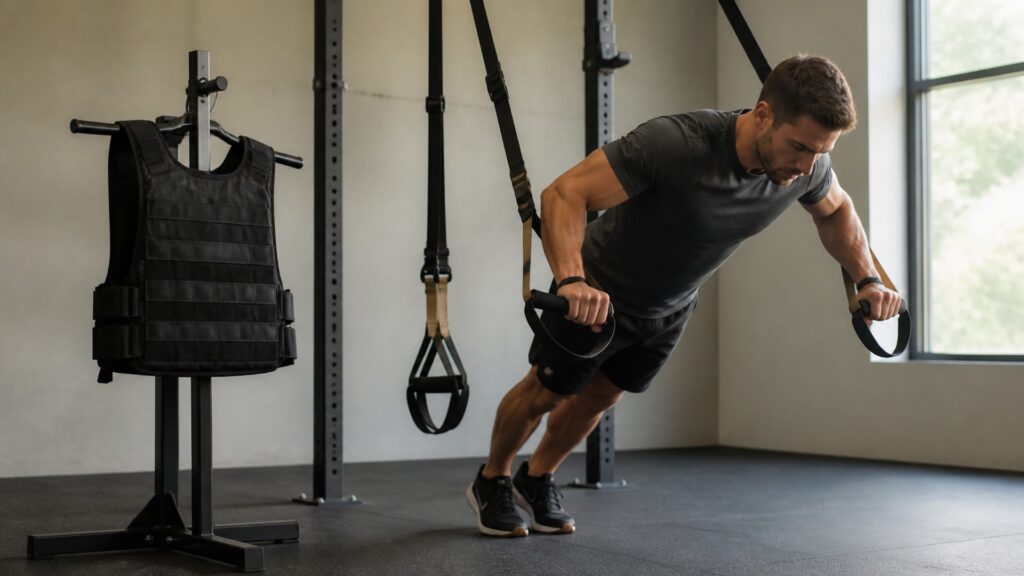
A practical comparison of added load and leverage-based bodyweight training.
Tip: Choose load when resistance is missing and suspension when leverage control is missing.
These concepts clarify the practical signals readers should check before choosing equipment or planning workouts.
Weighted gear adds wearable or attached resistance to an exercise.
Suspension training uses straps, handles, rings, or anchors to adjust bodyweight resistance.
External load is resistance added beyond bodyweight.
Leverage change makes an exercise harder or easier by altering body angle or position.
Fit stability is how well weighted gear stays secure during the movement.
Anchor security is whether a strap or ring attachment point can handle the exercise.
Tip: The best equipment choice is the one that matches the training job, available space, and user's current ability.
Weighted gear makes an exercise heavier. That can be useful when push-ups, pull-ups, walking, step-ups, or squats are already controlled and need more resistance.
Weighted gear is strongest when resistance is the missing piece.
Suspension training adjusts difficulty by changing leverage, stability, and body position. It can make rows, presses, lunges, and core drills easier or harder without adding separate weight.
Suspension tools are strongest when control and leverage are the focus.
Weighted gear progresses by adding resistance. Suspension training progresses by changing angle, stance, range, tempo, or stability. Both can work, but the tracking method is different.
Clear progression keeps both categories useful.
Weighted gear needs secure fit. Suspension training needs secure anchoring. A poor vest fit and a poor strap anchor create different problems, but both can undermine the workout.
Setup quality decides whether the tool can be trusted.
If the exercise needs more load, weighted gear may be better. If the exercise needs better body-position control or scalable leverage, suspension training may be the smarter first choice.
The next progression should guide the purchase.
The right choice depends on whether the user needs load or leverage control.
The movement is controlled and needs added resistance.
A secure vest, belt, or other load can progress the exercise cleanly.
The user needs scalable bodyweight control, rows, presses, lunges, or core work.
Changing body angle is safer or more useful than adding weight.
Both can make exercises harder, but they do not work the same way.
Suspension training changes leverage and stability rather than adding external load.
Added load helps only after the movement is ready.
Straps still need secure anchors and controlled body position.
They often complement each other when load and leverage each have a role.
Tip: Treat strong claims as reasons to inspect the workout fit more closely.
Short answers for practical training and buying decisions.
Weighted gear adds load, while suspension training changes leverage and body angle.
Suspension training can be easier to scale, but beginners still need secure setup and control.
Choose it when the movement is controlled and needs more resistance.
Yes, but only when the user can control the suspension setup and added load safely.
Use weighted gear for added resistance and suspension training for leverage-based control.
Weighted training gear differs from functional suspension training by adding resistance instead of changing leverage.
Weighted gear is best for controlled overload, while suspension training is best for scalable bodyweight control.
Use these Review Streets paths to compare related categories and practical next decisions.
Review how weighted accessories change exercises.
See how load placement affects movement.
Compare another training-equipment category with suspension work.
Choose a retailer
Prices checked regularly. We may earn a commission at no cost to you.