
Optical Transmission
The portion and quality of visible light passing through glazing to the driver, camera, or sensor.
- Tint changes transmitted light
- Distortion changes image geometry
- Contamination scatters glare
Windshield components manage visibility and enclosure. Laminated glass transmits light while retaining fragments after fracture; the perimeter bond locates and seals the panel; wipers, washers, and defogging clear exterior and interior obstruction; cameras and rain sensors depend on known optical zones. Their outputs are sightline quality, retention, water control, and clear sweep.
Brake components manage vehicle motion. Pedal or automated commands become hydraulic or electromechanical force, friction torque, heat, and deceleration at the tire-road contact. Electrified vehicles may blend regenerative and friction braking, but the windshield does not create stopping torque and the brakes do not restore a distorted or contaminated view. Each system has different triggers, measurements, hazards, and release tests.
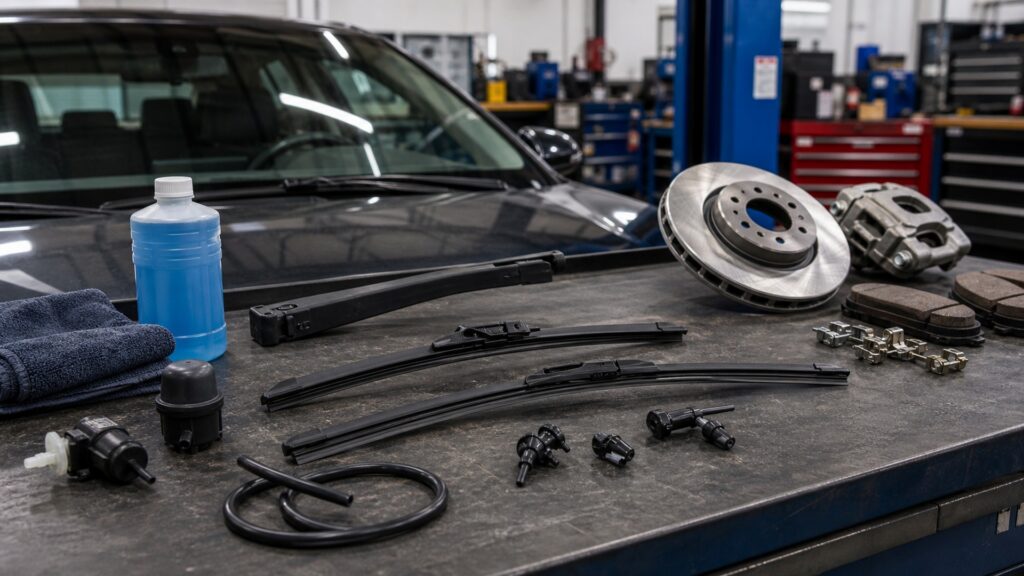
One system preserves the driver's and camera's view; the other converts a deceleration command into predictable wheel torque.
Tip: If visibility is suddenly lost or braking becomes unreliable, stop safely; neither hazard should be extended merely to reproduce the other complaint.
These terms distinguish optical and retention performance from hydraulic, friction, and deceleration performance.
The portion and quality of visible light passing through glazing to the driver, camera, or sensor.
The plastic layer bonding windshield glass plies and retaining many fragments when the panel fractures.
The portion of windshield surface cleared through a complete wiper cycle under defined wet conditions and geometry.
Fluid pressure transmitting and modulating a brake command toward calipers or wheel cylinders.
Rotational resistance produced when brake friction materials press against a rotor or drum at an effective radius.
Control coordination that combines regenerative and friction deceleration to meet a requested stopping response.
Tip: Record whether the symptom follows rain, fog, glare, wiper motion, pedal application, wheel rotation, or repeated stops before selecting a repair category.
Cracks, haze, distortion, delamination, fog, smearing, missed wipe bands, or blocked camera zones belong to the optical and clearing path. They can impair decisions before the brake pedal is touched.
A clear sightline is an input to safe braking, not a brake component function.
Pedal application or automated braking creates wheel torque. Long travel, pull, vibration during braking, grinding, drag, or abnormal stopping distance belongs to hydraulic, friction, tire, or control diagnosis.
A cracked windshield cannot explain a hydraulic pressure loss.
Warm airflow or embedded elements clear moisture and ice at the windshield. Braking converts kinetic energy into heat at rotors, drums, pads, and surrounding parts. Local temperatures identify the active mechanism.
The shared word heat hides opposite locations and purposes.
Windshield adhesive distributes loads around a body aperture and seals weather. Calipers, brackets, hubs, and suspension react braking forces while rotors or drums rotate through the friction interface.
Molding is not a caliper, and a brake shield is not glazing retention.
Windshield work ends with optical, leak, wipe, wash, defog, feature, and calibration verification. Brake work ends with hydraulic integrity, correct assembly, free rotation, warning status, bedding where specified, and predictable stops.
Passing a road stop does not prove the view, and clear glass does not prove brake reserve.
Windshield components preserve view, retention, and weather control; brake components create controlled deceleration through force, friction, and wheel torque.
Cracks, chips, delamination, distortion, glare, haze, bond or leak problems, wiper sweep, blade contact, washer pattern, defogging, heating, rain sensing, camera view, and calibration status.
The complaint changes with weather, moisture, light angle, glass temperature, wiping, washing, or a sensor sightline rather than with a deceleration command.
Pedal travel, hydraulic pressure, leakage, assist, friction thickness, rotor or drum condition, wheel drag, localized heat, vibration under braking, stability data, and measured stopping behavior.
A visibility fault can contribute to delayed braking decisions, but it does not prove failed brake hardware. Diagnose causal interaction without merging component categories.
Because both systems are safety-critical and can involve warnings, vibration, noise, or heat, vague symptom language can route work to the wrong end of the vehicle.
Straight stopping says nothing about optical distortion, crack growth, bond retention, water leaks, wiper coverage, defogging, camera calibration, or nighttime glare. Windshield functions require their own inspection from the driving position.
Wiper chatter follows blade motion across glass and relates to rubber, angle, pressure, contamination, coating, or linkage. Brake judder follows deceleration and wheel rotation. Event timing separates them before parts are selected.
Friction heat remains concentrated at wheel hardware and does not provide controlled cabin airflow across the glazing. Defog performance depends on HVAC temperature, airflow, humidity, outlets, glass condition, and sometimes embedded heating.
Some driver-assistance features use a forward camera, but braking warnings can also involve power, network, radar, wheel sensors, hydraulics, or calibration. Replace glass only for supported optical or fitment evidence, then complete required diagnostics.
Tip: Anchor each claim to the driver input, physical location, energy path, and measurement that changes when the symptom appears.
These answers address driver-assistance interaction, shared warnings, vibration, heat, safety priority, and distinct verification requirements.
A blocked, distorted, incorrectly mounted, or uncalibrated camera view may limit features that use forward vision. Read the exact warning, inspect the optical path, and follow manufacturer diagnostics rather than assuming the friction brakes failed.
Spilled automotive fluids can harm paint, plastics, adhesives, or coatings depending on material and exposure. Prevent contact, follow product-specific cleanup, and inspect affected trim or bonding areas without treating the spill as a glazing diagnosis.
Stop driving for severely impaired forward visibility or unreliable braking. Move only as safely permitted, use emergency assistance when necessary, and inspect both systems independently if one event involved obscured vision and abnormal stopping.
Wiper vibration follows sweep frequency and may occur while parked; brake vibration follows wheel rotation and pedal force. Engine, tire, suspension, road, and body vibration can imitate either, so synchronize observations before diagnosis.
For glass, record damage, optical findings, leaks, sweep, spray, sensors, glass markings, adhesive, cure, and calibration. For brakes, record pedal, fluid, measurements, temperatures, drag, friction, hydraulics, warnings, and stopping verification.
Windshield components preserve optical clarity, retained glazing, weather sealing, surface clearing, and sensor sightlines. Brake components turn pedal or automated commands into hydraulic or electromechanical force, friction torque, heat, and deceleration.
Classify the complaint by its trigger and physical output, then verify each system separately. Driver-assistance features may connect camera information to braking commands, but that data path does not make glazing and wheel-end hardware interchangeable.
Related explainers provide the internal windshield mechanism, the brake energy path, and fitment requirements that can affect driver-assistance cameras without replacing brake diagnosis.
Trace light, adhesive load, wiper torque, washer fluid, defogging, and camera sightlines through the windshield assembly.
Follow pedal force, hydraulic pressure, friction torque, heat, and wheel-speed control during a stop.
Match optical features and camera brackets before assuming a driver-assistance warning belongs to brakes.
Choose a retailer
Prices checked regularly. We may earn a commission at no cost to you.