What Makes Work Trucks Different from Cargo Vans

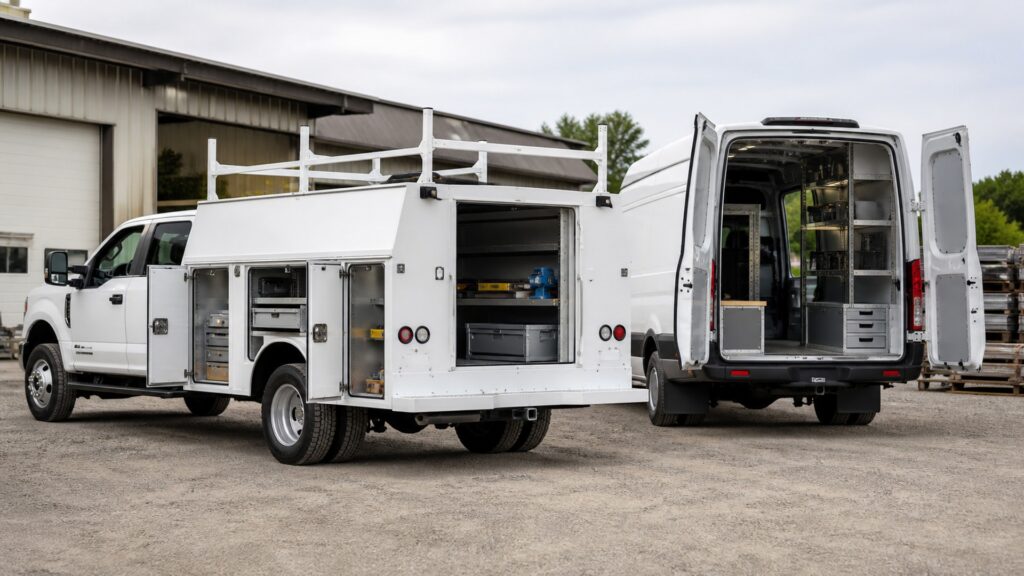
The clearest difference is the way the working space is built and accessed. Work trucks can use a pickup bed, flatbed, service body, dump body, or other vocational arrangement behind the cab. A cargo van places its principal load area inside an enclosed body reached through side or rear doors. Those layouts change how material is loaded, protected, organized, and reached.

The categories overlap in purpose: both can be heavily equipped business vehicles, and some truck bodies are enclosed. Compare the actual architecture rather than assuming trucks are always open or vans are always simple delivery vehicles. Body configuration explains much of the practical difference; weight ratings, powertrain, and fitted equipment still need their own comparison.

By: Review Streets Research Lab
Updated: October 6, 2026
Explainer · 8-12 min read
work trucks explainer hero image for Review Streets
What You'll Learn

Compare the Architecture of the Working Space

Understand how body design changes access, storage, installation, and everyday use.

  • Distinguish a vocational truck body from an enclosed van load area.
  • Compare side, overhead, and door-based loading paths.
  • See how storage arrangements affect retrieval.
  • Separate capacity limits from visible space.
  • Identify which differences depend on the specific model.

Tip: Sketch where people and material move before comparing the volume figures.

Definitions

Body Features That Explain the Difference

These features describe physical layout rather than a universal ranking.

Vocational body

A vocational body is a load or equipment structure designed around a particular work task.

  • Example: a service body or dump body behind a truck cab
  • Check: the intended task and access arrangement
  • Limit: not every vocational body is open

Van cargo area

A van cargo area is the principal enclosed space intended for carried goods or equipment.

  • Example: shelving inside a cargo van
  • Check: interior shape and entry openings
  • Limit: usable space depends on the installed fittings

Loading aperture

A loading aperture is the opening through which material must pass.

  • Example: a rear-door opening admitting a large case
  • Check: clear width, height, and approach
  • Limit: interior volume does not establish opening size

Exterior compartment

An exterior compartment provides storage reached from outside the body.

  • Example: a side tool locker on a service truck
  • Check: reach, door swing, sealing, and security
  • Limit: individual compartments may not accept bulky cargo

Body integration

Body integration is the way the load structure and equipment connect with the underlying vehicle.

  • Example: a fitted truck body or equipment installed inside a van
  • Check: mounting, systems, and access requirements
  • Limit: a broad body label does not specify the engineering

Usable payload

Usable payload is the carrying allowance available for the intended load after accounting for the finished vehicle and applicable limits.

  • Example: capacity remaining with installed storage and equipment
  • Check: the actual configuration and axle distribution
  • Limit: a large cargo area can reach a weight limit before it is full

Tip: Visible space, access, and permitted load are separate properties.

Body Layout

A Truck Can Change Its Working Body More Fundamentally

A chassis-cab truck can be completed with a body chosen for a vocational purpose. A platform presents an open deck; a service body divides storage into compartments; a dump body changes the unloading method. Cargo vans generally begin with an enclosed load space that can be fitted internally. Cutaway and other commercial configurations blur these boundaries, so identify the completed vehicle rather than relying only on its sales category.

  • Name the actual body configuration.
  • Distinguish external body choice from interior fittings.
  • Check exceptions such as enclosed truck bodies.

This architectural difference explains the range of working layouts without implying that every truck is more adaptable than every van.

Loading

The Opening Determines the Route into the Vehicle

An open platform may accept a suitable load from the side or above, whereas a van load normally passes through a door. A van can have a useful low loading floor, but actual floor and sill heights vary. A truck may add a liftgate or other loading aid. Compare the approach, opening, and destination of the material as one path.

  • Measure the opening as well as the load area.
  • Check the equipment used to move the load.
  • Include space outside the parked vehicle.

A load can fit inside a compartment in theory yet be impossible to turn through the available entrance.

Storage

Enclosed Volume and Exterior Access Organize Work Differently

A van can provide one connected interior space for shelves, cases, and larger items. A service truck can make selected tools accessible directly from the outside. Each arrangement has compromises: deep interior storage may require reaching or entering, while exterior compartments divide space into smaller shapes. Weather protection and security depend on the particular doors, locks, seals, and operating practices.

  • Compare tool retrieval at a typical stop.
  • Check large items and small stock separately.
  • Inspect the actual protection and locking arrangements.

Neither an enclosed body nor a set of lockers removes the need for suitable cargo restraint and careful organization.

Capacity

Body Volume Does Not Tell You the Working Weight Limit

Bodies, shelving, racks, and attachments add weight before the crew and materials enter. Both trucks and vans can run out of allowable load while visible space remains. Compare the finished vehicle, including occupants and equipment, against its total and axle ratings. Vehicle class, wheelbase, body, and specification all affect the result; the category name alone is not a capacity figure.

  • Use the completed vehicle's configuration.
  • Include installed storage and equipment.
  • Check distribution and axle limits.

Manufacturer payload and loading information provides the relevant limits; a larger-looking body is not evidence of a higher permitted load. Ford payload and loading guidance.

Daily Use

Compare the Space Around the Vehicle as Well as Inside It

A tall van, a long truck body, and a service body with side doors create different site constraints. Consider parking height, turning space, door swing, and where the crew stands during retrieval. The cab experience also varies: seating, visibility, and the relationship between passenger and cargo areas are model-specific. Test the actual layout rather than assuming one type is always easier to drive or load.

  • Check the route and parking environment.
  • Try access with nearby obstacles represented.
  • Include the intended crew and ordinary clothing.

The meaningful difference is how the architecture supports the people and material on a real assignment, not which silhouette looks more commercial.

Quick Reality Check

Two Ways to Arrange a Working Vehicle

The designs serve different access and storage priorities.

Typical Truck-Body Strengths

A choice of vocational structures can put the load or equipment directly behind the cab.

Suitable platforms and service bodies can provide open loading or exterior tool access.

Typical Cargo-Van Strengths

A connected enclosed load area can support protected storage and interior organization.

Side and rear doors provide defined access points to a fitted cargo space.

Common Myths

Misconceptions About Truck and Van Differences

The actual body and specification matter more than stereotypes.

Every work truck has an open bed

Work trucks also use enclosed bodies and protected compartments.

Cargo vans cannot carry vocational equipment

Many vans have specialized storage, power, and task equipment.

The bigger cargo space carries more weight

Weight ratings and the finished configuration determine the allowable load.

Tip: Describe the opening, storage arrangement, and installed equipment before drawing conclusions.

FAQ

Questions About Work-Truck and Cargo-Van Design

Answers for understanding the physical differences.

Is a service body the same as a pickup bed?

No. A service body typically adds organized compartments and a different working layout.

Can an enclosed truck resemble a cargo van in use?

Yes. Enclosed truck bodies can provide protected space, though access, chassis, and construction may differ.

Does either category always have a lower loading floor?

No. Compare the actual floor, sill, suspension, body, and any loading equipment.

Which measurements are most useful?

Measure the load, openings, usable storage shapes, access space, and finished vehicle dimensions, then check applicable weight limits separately.

Bottom Line

Work trucks and cargo vans differ most clearly in body architecture, loading paths, and the organization of working space.

Compare the completed configurations: neither enclosure, capacity, nor usability can be inferred reliably from the category name alone.

Next Steps

Go Deeper or Compare Your Options

Use these Review Streets paths to compare related categories and practical next decisions.