
Rinseable Exterior
A vehicle surface designed to shed weather and controlled wash water without exposing vulnerable hidden components.
- Seals still require inspection
- Openings can defeat drainage
- Damaged trim changes risk
Use car wash equipment when the dominant problem is outside the weather seals: loose grit, traffic film, wheel soil, underbody residue, or broad rinseable coverage. Pumps, spray devices, brushes, and blowers can move water and soil efficiently when paint, trim, seals, drainage, and runoff controls tolerate the process.
Choose interior cleaning when contamination is inside the cabin or embedded in upholstery, carpet, vents, crevices, and touch surfaces. Vacuuming, restrained chemistry, agitation, blotting, extraction, and drying must match each material. Pressure-washing a cabin can drive moisture into foam, wiring, sensors, seams, and adhesives without recovering it.
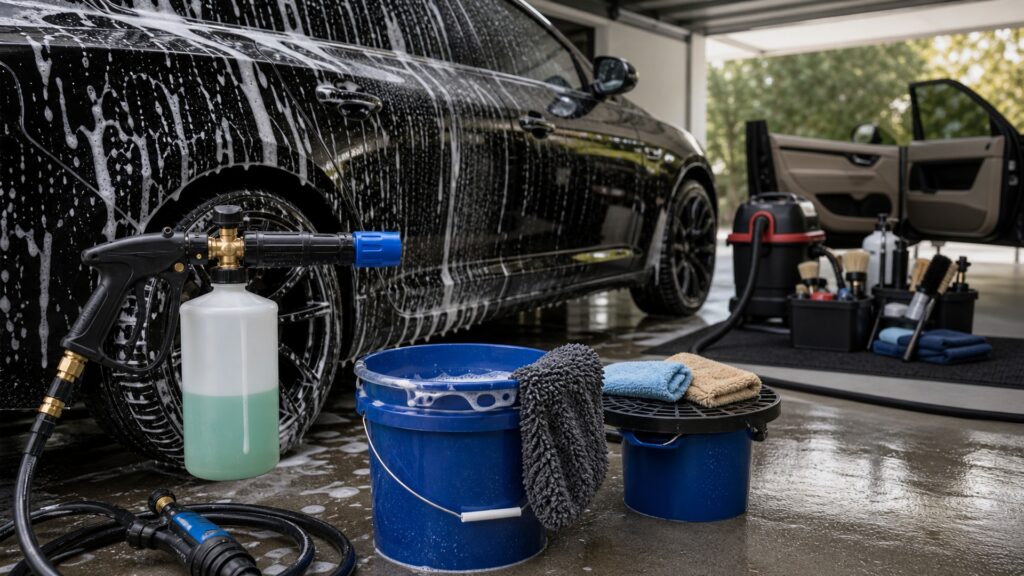
The decision turns on where contamination sits, whether the surface can be freely rinsed, how liquid will be recovered, and which materials or electronics lie behind it.
Tip: If the contamination crosses both zones, split the job into separate exterior and interior workflows rather than carrying wheel or body soil into cabin tools.
These terms separate an open-rinse exterior process from cabin work that must control moisture, residues, and hidden assemblies. Decision evidence includes exterior soil load, cabin dry debris, rinseable surface, water intrusion path, extractor recovery, and cross-contamination zone.
A vehicle surface designed to shed weather and controlled wash water without exposing vulnerable hidden components.
An interior material such as coated plastic, leather, fabric, carpet, foam, wood veneer, display glass, or headliner.
Movement of liquid or vapor beyond the visible cleaning area through seams, capillary paths, padding, or airflow.
Removal of applied solution and suspended soil by a wet-extraction tool after controlled application and agitation.
A tool and media boundary established to keep wheel, exterior, restroom, pet, food, or bio-soil away from cleaner surfaces.
A check that the visible surface and underlying material have reached an acceptable moisture condition before reassembly or closure.
Tip: A tool name does not decide the method. Locate the soil, identify the substrate, and trace where every applied liquid, particle, and vapor can travel.
Exterior equipment uses flowing water to lift and carry contamination toward drains or collection. Cabin work usually captures particles into a vacuum or transfers dissolved soil into towels and an extractor tank, limiting uncontrolled spread.
The right process gives contamination a controlled exit.
Paint and exterior plastics tolerate appropriately controlled rinsing; headliners, seat foam, switches, modules, displays, wood, and leather may not. Material construction sets chemistry, agitation, temperature, and moisture limits.
Interior sensitivity is often hidden behind the surface being cleaned.
Spray extraction can be useful on compatible carpet or fabric because solution is applied in a bounded area and immediately recovered. Flooding adds water faster than suction and ventilation can remove it.
More liquid can dilute soil while simultaneously driving it deeper.
Exterior washing needs lawful runoff handling, safe footing, adequate supply, and room for hoses. Interior work needs lighting, ventilation, moderate humidity, open access, and enough time for concealed layers to dry.
Site conditions can rule out an otherwise suitable method.
A complete detail may require both methods. Clean wheels and body with dedicated exterior media, move the vehicle to a dry zone, change gloves and tools, then address cabin debris and materials without importing abrasive grit.
Combining services does not mean combining their contamination controls.
Open rinsing is useful only where water can reach the soil, leave the surface, and enter a controlled disposal path without invading sensitive assemblies.
The main soil is on paint, glass, wheels, exterior trim, an underbody, or another inspectable surface designed to face weather and controlled rinse water.
The site provides supply, drainage or reclaim, safe hose routing, appropriate temperature, and enough space to maintain nozzle distance and prevent overspray.
The problem is dry debris, spills, body oils, food, odor sources, stains, or residues in cabin materials, vents, tracks, seams, carpet, or upholstery.
The method must meter chemistry, avoid electronics, recover moisture, separate contaminated tools, and verify that visible and concealed materials dry before the vehicle is closed.
The word detailing can obscure a hard boundary: outside work normally exports soil with flowing water, while cabin work must capture contamination without flooding hidden structures.
Pressure can force water and debris behind trim, into foam, connectors, sensors, adhesives, and seams while creating little controlled recovery. Interior speed comes from dry removal, appropriate chemistry, agitation, extraction, and managed drying.
Extraction is suitable only for compatible materials and construction. Headliners, delicate leather, display coatings, wood, switches, perforated seats, and glued assemblies may require minimal-moisture methods even when a powerful recovery vacuum is available.
Fabric faces can feel dry while backing, padding, seat foam, carpet underlay, or closed cavities remain damp. Confirm recovery, airflow, time, humidity, and odor before reinstalling mats or closing the vehicle.
Wheel particles, road film, grease, food residue, pet contamination, and cabin protectants create incompatible contamination loads. Dedicated, labeled media reduces grit transfer, chemical cross-use, odor migration, and accidental staining. safely
Tip: Name the surface and exit path before selecting equipment; never treat a pressure washer as a shortcut for interior extraction.
These answers clarify mixed jobs, limited water, carpet extraction, engine-bay boundaries, and the evidence that should drive a switch between exterior and cabin processes.
Yes. Treat them as separate controlled stages with different media, chemistry, liquid paths, and verification. Finish runoff-producing exterior work, reset the area and tools, then clean cabin materials with restrained moisture and recovery.
Use an authorized wash location, a service with reclaim, or a compatible low-water process for light contamination. Do not redirect polluted runoff to a storm drain or force a waterless method onto abrasive heavy soil.
Use it on identified carpet or fabric that tolerates the cleaner and moisture load, after thorough dry vacuuming and a test area. Apply sparingly, recover repeatedly, ventilate, and verify underlying layers have dried.
No. It is exterior-service work around sensitive electrical, air-intake, ignition, and fluid components. Follow vehicle-specific guidance, cool the vehicle, limit water and chemistry, protect vulnerable openings, and never improvise with indiscriminate pressure.
Identify where the contamination resides and whether that surface can be openly rinsed. Then trace the removal path: drain or reclaim outside, versus vacuum, towel transfer, extraction recovery, and controlled drying inside.
Use car wash equipment for exterior contamination when water, spray energy, access, and drainage can safely transport soil away.
Use interior cleaning for cabin contamination when materials, electronics, hidden moisture paths, and recovery demand controlled application. A mixed vehicle needs two separated workflows, not one aggressive tool applied everywhere.
Related explainers show how wash equipment creates exterior capacity, how detailing kits organize targeted steps, and how fitment determines whether the selected hardware can operate safely.
Trace how supply, pump, nozzle, detergent, contact, rinse, drying, and runoff handling create exterior wash capacity.
Follow a detailing kit through material inspection, decontamination, correction, protection, and media separation.
Check water, hose, connector, electrical, chemical, surface, and site fitment before operating wash hardware.
Choose a retailer
Prices checked regularly. We may earn a commission at no cost to you.