
Calf Sleeve
Compression apparel that covers the calf without covering the foot.
- It points to lower-leg pressure coverage.
- Sock choice remains separate.
- It is not medical compression by default.
Use compression apparel instead of athletic socks when the problem is pressure-focused coverage above or beyond the foot, not the foot-to-shoe layer.
Athletic socks should lead when toe seams, heel pockets, cushion, sock height, and shoe volume are the main questions; compression apparel leads when a sleeve, tight, or pressure garment is the actual category need.
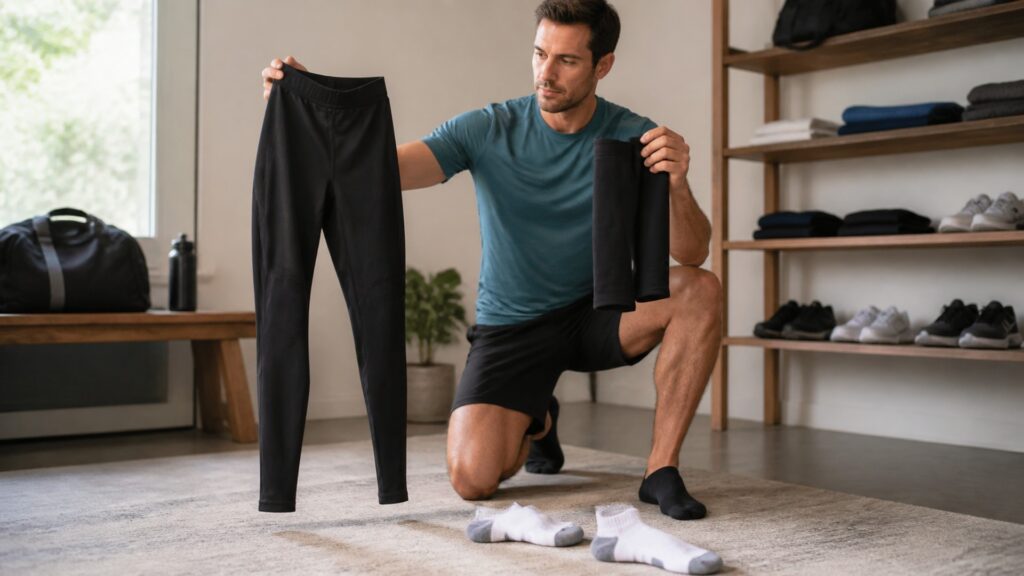
This comparison separates compression apparel from athletic socks without ignoring compression-sock overlap.
Tip: If the foot-to-shoe interface is the main issue, start with socks; if body-area pressure is the issue, start with compression apparel.
These definitions connect the main idea to the variables, limits, and practical signals readers need to compare options.
Compression apparel that covers the calf without covering the foot.
A sock-like garment with pressure-focused fit over the foot, ankle, or calf.
A low sock chosen mainly for foot coverage inside a shoe.
The shaped sock area that cups the heel.
The internal space available when the sock is inside the shoe.
Coverage around the calf or lower leg rather than the foot.
Tip: These terms make the overlap visible without merging the categories.
Compression apparel should lead when the reader wants firm coverage for calves, thighs, arms, torso, or another area beyond ordinary sock function.
Body-area pressure points to compression apparel.
Athletic socks are the better category when the concern is shoe volume, heel hold, toe seams, cushion, footbed feel, or cuff height inside footwear.
Footwear interaction belongs to socks.
Compression socks combine sock coverage with pressure-focused design, so the label, intended use, pressure wording, and medical status matter more than the name alone.
Overlap should not be guessed.
A calf sleeve may answer lower-leg pressure coverage while still requiring an athletic sock for shoe fit, cushion, toe seams, and moisture behavior.
Sleeve use does not remove sock selection.
Compression apparel and athletic socks can be compared by construction without promising blister prevention, circulation changes, recovery, or injury prevention.
The decision stays product-specific.
This decision explains when compression apparel is the better category than athletic socks.
It separates body-area pressure from foot-to-shoe function.
It handles compression socks as an overlap case.
It does not make medical, circulation, recovery, blister-prevention, or injury-prevention claims.
It does not replace shoe fitting or clinician guidance.
Common shortcuts and misunderstandings can make the topic seem simpler than it is.
They leave the foot uncovered and do not address heel, toe, or shoe-volume needs.
They solve different garment problems unless a specific product overlaps both.
Some are athletic products; medical compression is a separate category.
Ordinary athletic socks mainly serve the foot-to-shoe interface.
Tip: Treat strong claims as starting points for comparison, not final answers.
Concise answers to common questions readers may have after the main explanation.
When pressure-focused coverage outside ordinary foot-and-shoe sock function is the main need.
When shoe fit, cushion, toe seams, heel hold, or foot moisture behavior is the question.
They can overlap; the label and intended use need to be read carefully.
No. It covers the calf and leaves foot coverage to a sock.
That should not be claimed from product category alone.
Use compression apparel instead of athletic socks when the need is pressure-focused coverage beyond the foot.
Use athletic socks when the real issue is how the foot, sock, and shoe work together.
Use these Review Streets paths to connect the explainer to related categories, comparisons, and next decisions.
Use this to understand the foot-and-shoe side of the comparison.
Review pressure zones, panels, cuffs, and sizing before choosing compression.
Use the reciprocal article when the footwear interface should lead instead.
Choose a retailer
Prices checked regularly. We may earn a commission at no cost to you.