
Coupe layout
A traditional coupe layout commonly uses two side doors and a lower roof profile.
- Example: rear entry past the front seat
- Check: the real seating and access arrangement
- Limit: the body name does not specify a gasoline engine
A gasoline coupe can make sense instead of a battery-electric car when its seating and luggage layout suit you, you prefer its actual driving character, and charging would create recurring inconvenience. The decision should be about two real vehicles and the journeys you make, not a belief that coupe styling and electric propulsion are incompatible.
Coupe describes the body; electric describes the powertrain. An electric coupe can offer both. If your preferred coupe uses gasoline, compare its refueling routine, passenger access, costs, and driving experience with the electric alternative. Choose the coupe when those tradeoffs fit your needs, while recognizing the conditions in which an EV would be easier to own.
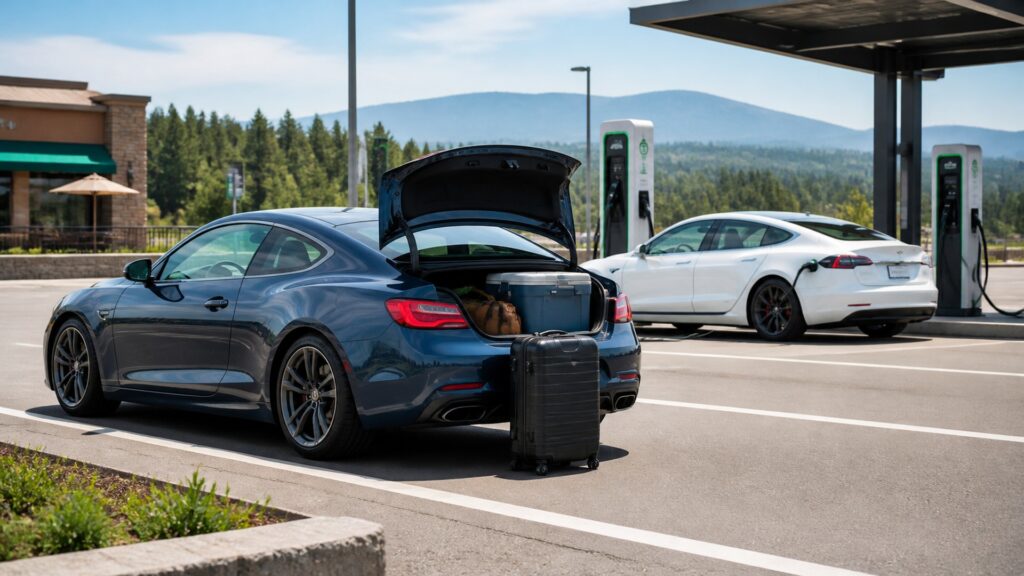
Weigh a preferred body and driving experience against the energy routine.
Tip: If you want both coupe styling and electric driving, compare vehicles that combine them before accepting an either-or choice.
Each concept answers a different ownership question.
A traditional coupe layout commonly uses two side doors and a lower roof profile.
The refueling routine is the way fuel stops fit into ordinary travel.
Dependable charging is compatible access available at practical times and locations.
Driving preference is the combination of response and control feel a driver values.
A passenger compromise is a limitation in access or comfort accepted for another vehicle quality.
Replacement cost is the complete expense of changing vehicles rather than continuing with the current one.
Tip: Separate personal preferences from requirements the car must meet every week.
A gasoline coupe may fit better if your parking changes frequently and reliable charging is difficult to arrange. Investigate realistic public or workplace options before deciding, but include detours, waiting, access restrictions, and a backup. A routine that sounds manageable once may become frustrating when repeated several times each week.
DOE consumer guidance treats access to charging as part of vehicle suitability, not an assumption every buyer can make. DOE: EV suitability and charging.
Frequent long trips with uncertain destinations or tight timing can favor a convenient fuel routine if charging options along those routes are poor. Other long trips work well with planned charging stops. Check the real route and schedule instead of using distance alone as proof that either powertrain is unsuitable.
The relevant question is whether the whole journey works reliably within the time you can allow.
A preferred roofline or driving position is not enough if passengers cannot use the car comfortably. Try the doors where you park, rear-seat entry if fitted, and the luggage you actually carry. A coupe can be entirely suitable for one or two occupants yet awkward for repeated rear-passenger trips.
Do not trade a charging inconvenience for a passenger-access problem that occurs just as often.
You may value a particular engine response, manual gearbox where available, steering feel, or seating position. Those are legitimate preferences when the vehicle also meets practical needs. Electric cars can also offer engaging driving, and coupes vary widely, so experience the actual candidates rather than assuming one category owns enjoyment.
A car is easier to enjoy when its preferred character does not make routine journeys tiring.
Compare purchase cost, insurance, energy, maintenance, tires, and expected use. Keeping a sound existing coupe may be more sensible than changing cars for modest running-cost savings alone. Conversely, high mileage and convenient inexpensive charging may strengthen the electric case. Use your own figures and acknowledge uncertain resale values.
DOE's ownership resources encourage comparing individual vehicles; a broad powertrain label cannot settle your personal costs. DOE: ownership benefits and costs.
Preference and practicality need to agree.
Its seating and cargo arrangement work, its driving character suits you, and charging would be repeatedly inconvenient.
The complete ownership comparison supports buying or keeping it.
Regular passengers struggle with the body layout or running costs exceed the planned budget.
Dependable charging is available and an electric candidate meets the same practical and driving needs.
Avoid false opposites and blanket judgments.
Coupe body styling and electric propulsion can coexist.
Charging availability, vehicle range, conditions, and schedule determine whether the route works.
Driving character depends on the actual design and your preferences.
Tip: Choose the compromise you can live with repeatedly, not merely the one that sounds appealing.
Practical answers for a preference-led purchase.
Yes, provided the car also meets your passenger, route, and cost requirements.
Look for candidates that combine the body and powertrain you want, then assess them using the same practical checks.
No. Investigate dependable workplace or public charging, including its cost and timing. Suitability depends on the actual routine.
Compare the full cost of keeping and replacing it. The purchase transaction and other ownership expenses may outweigh energy savings.
Choose the gasoline coupe when the real car and its refueling routine suit you better than the electric alternative.
Keep the decision grounded in passenger access, travel, driving preference, and complete costs—and remember that an electric coupe may combine the qualities you want.
Use these Review Streets paths to compare related categories and practical next decisions.
Separate electric propulsion from coupe body design.
Check EV parts, equipment, and installation compatibility.
Follow the energy through an electric drivetrain.
Choose a retailer
Prices checked regularly. We may earn a commission at no cost to you.