Why Electric Cars Fitment Matters

Electric-car fitment is the compatibility between a particular vehicle and the wheels, carriers, charging accessories, or replacement components you intend to use. A part can appear to fit while still having the wrong rating, mounting interface, clearance, or operating requirements. The electric badge is not enough to identify a suitable product.

Begin with the exact model, year, variant, and factory equipment. Then check the vehicle maker's instructions and the product manufacturer's application information. EV-specific packaging makes careful lifting and underbody work especially important, while charging accessories require electrical and operational compatibility as well as a connector that physically fits.

By: Review Streets Research Lab
Updated: October 5, 2026
Explainer · 8-12 min read
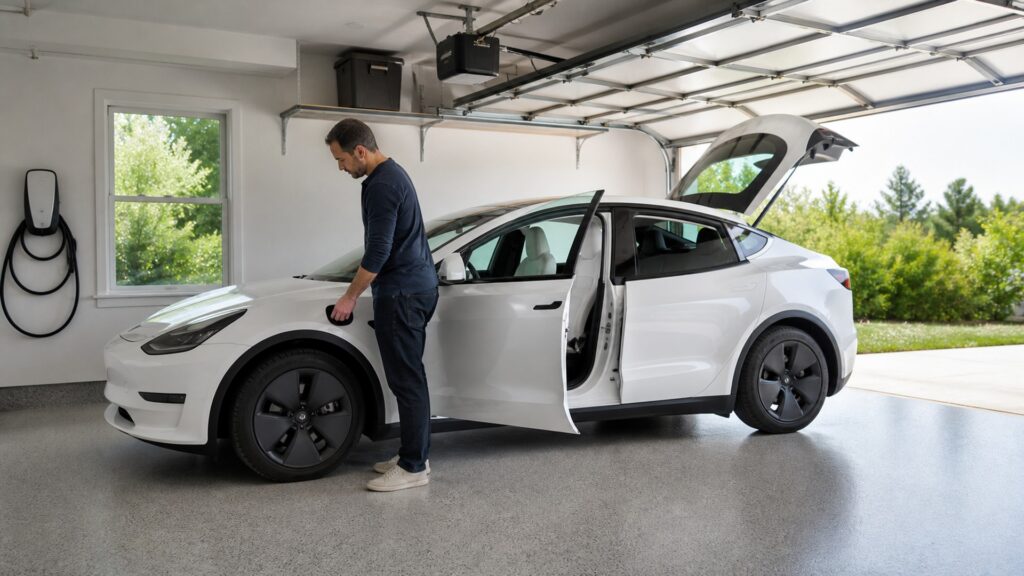
electric cars explainer hero image for Review Streets
What You'll Learn

Verify the Whole Installation Before Buying

Match the product to the vehicle, its limits, and its intended use.

  • Identify the exact vehicle application.
  • Check wheels and tires beyond diameter.
  • Protect approved lift and mounting points.
  • Verify charging-accessory compatibility.
  • Confirm that equipment does not obstruct normal functions.

Tip: Keep the exact part number and application notes with the purchase record.

Definitions

What Correct EV Fitment Includes

Compatibility involves more than shape and size.

Vehicle application

Vehicle application is the exact set of vehicle versions for which a product is specified.

  • Example: a carrier listed for one model year and roof arrangement
  • Check: variant and equipment exclusions
  • Limit: a shared badge does not guarantee shared mounting details

Wheel clearance

Wheel clearance is the space between a fitted wheel or tire and surrounding vehicle components.

  • Example: clearance around the brake assembly
  • Check: approved size, offset, and other specifications
  • Limit: matching wheel diameter alone is insufficient

Load rating

A load rating specifies the weight a relevant component or arrangement is designed to support under stated conditions.

  • Example: the required tire load capability
  • Check: vehicle and equipment instructions together
  • Limit: a part fitting physically does not prove adequate capacity

Approved lift point

An approved lift point is a location specified for supporting the vehicle during lifting.

  • Example: a workshop using the manufacturer's designated points
  • Check: vehicle-specific lifting instructions
  • Limit: the battery enclosure is not an improvised support point

Charging compatibility

Charging compatibility means the vehicle, connection, equipment, and service can work together as permitted.

  • Example: using an approved adapter at a supported station
  • Check: manufacturer and network requirements
  • Limit: a plug adapter cannot add a charging capability the car lacks

Functional clearance

Functional clearance is room for normal movement and operation after installation.

  • Example: a luggage carrier clearing the hatch
  • Check: doors, sensors, cameras, and moving parts
  • Limit: a stationary fit check may miss an obstruction

Tip: Resolve an uncertain application before installation, not after a component causes interference.

Identity

Use the Exact Vehicle and Product Details

Different variants can use different brakes, wheels, roof equipment, or mounting arrangements. Read the product's exclusions as carefully as its model list. For used equipment, identify every component and obtain the correct installation instructions. An incomplete kit can turn a valid application into an unsuitable installation.

  • Confirm model year and variant.
  • Record relevant factory options.
  • Check the complete product and hardware list.

A seller's claim that something fits electric cars is much weaker than a manufacturer's listing for the actual vehicle.

Wheels and Tires

Diameter Is Only the Beginning

Wheel and tire suitability involves the vehicle's specified dimensions, clearances, load capability, and other requirements. A wheel that mounts can still interfere with brakes or place the tire incorrectly. Tire choice can also affect noise, efficiency, and ride, but those benefits do not replace the essential compatibility checks.

  • Use approved specifications for the exact car.
  • Confirm suitable tire ratings.
  • Have uncertainty resolved by a qualified tire professional.

NHTSA recommends following the vehicle's tire information and manufacturer guidance rather than choosing a replacement by appearance alone. NHTSA: tire selection and care.

Underbody

Installation Must Respect the Battery and Lift Points

Many EVs package the traction battery beneath the passenger floor. This makes the prescribed lifting and mounting information essential for workshops fitting wheels or other equipment. Do not treat a broad flat underbody surface as permission to support the car there, and do not improvise drilling near battery or electrical systems.

  • Give the installer the correct vehicle instructions.
  • Use only specified lifting locations and methods.
  • Leave underbody or high-voltage uncertainty to qualified personnel.

Tesla's Model 3 lifting instructions explicitly identify permitted locations and warn against placing lift pads under the battery. Tesla: approved lifting guidance.

Charging Accessories

Physical Connection Is Not the Entire Compatibility Test

Check whether an adapter or cable is approved for the vehicle and the intended type of charging. Vehicle capability, station support, network access, and equipment ratings all matter. Do not assume an adapter changes an AC-only capability into DC fast charging, or that matching connector shapes establish every required permission and technical condition.

  • Use the car and accessory manufacturers' guidance.
  • Confirm support for the intended station or network.
  • Do not modify a connector to make it fit.

DOE's charging overview distinguishes equipment types and connectors; the car's own specifications determine what it can actually use. DOE: charging equipment.

Carriers and Interior

Preserve Access, Visibility, and Normal Operation

Roof and rear carriers must use an approved vehicle application and stay within all relevant limits. Check opening clearance and any restrictions involving cameras, sensors, lights, or registration plates. Inside, mats and organizers must not interfere with pedals, seat latches, belts, or required access.

  • Follow the full mounting instructions.
  • Check moving clearances as directed.
  • Confirm loaded use remains within the stated limits.

Thule's vehicle-fit guidance illustrates the need to select equipment by the exact application, not simply by the width of the roof. Thule: vehicle compatibility.

Quick Reality Check

A Fit Claim Versus a Suitable Setup

Use documented compatibility and a complete installation check.

Evidence to Proceed

The exact vehicle and equipment combination is supported, with all required parts and instructions.

Ratings, clearances, charging support, and normal functions have been checked.

Reasons to Stop

The application is guessed from a similar car or a vague universal listing.

Fitting requires forced connections, improvised mounting, underbody drilling, or accepting interference.

Common Myths

Misconceptions About Electric-Car Fitment

A common power source does not create a universal parts standard.

Any part marked EV fits any electric car

Model, variant, equipment, and intended use still determine compatibility.

If the wheel bolts on, the fit is correct

Clearance, geometry, tire specifications, and ratings also matter.

An adapter gives the car every charging capability

Adapters do not replace vehicle capability or manufacturer and network requirements.

Tip: Obtain a documented answer when a compatibility claim is unclear.

FAQ

Questions About EV Parts and Accessories

Practical answers before purchasing or fitting equipment.

Can I reuse wheels from another vehicle?

Only after confirming the complete specifications and approved application. Matching diameter or bolt count alone is not enough.

Can a regular workshop work on an EV?

Use a workshop equipped and qualified for the specific task, with access to the correct lifting and service instructions. High-voltage work needs appropriate specialist training.

Will a roof rack increase carrying capacity?

No. The vehicle and equipment limits remain applicable, including the equipment weight where specified.

What should I do with an uncertain charging adapter?

Do not rely on physical fit. Confirm approval and support with the vehicle, accessory, and charging-service providers before use.

Bottom Line

Correct EV fitment means the product matches the exact vehicle, its operating requirements, and its limits.

Confirm the application, ratings, mounting method, and functional clearances before installation, and use qualified help where electrical or structural compatibility is uncertain.

Next Steps

Go Deeper or Compare Your Options

Use these Review Streets paths to compare related categories and practical next decisions.