When to Use Electric Cars Instead of Hatchbacks

Choose a battery-electric car over a gasoline or non-plug-in hybrid hatchback when charging fits your parking routine, its range supports your journeys, and the actual car meets the same passenger and cargo needs. The strongest case is a workable daily routine, not a claim that every electric car is a better vehicle.

Electric and hatchback are overlapping descriptions: one names the powertrain and the other the body layout. An electric hatchback may preserve the loading access you like while changing how the car is powered. If the electric alternative has a different body, assess that change separately so a powertrain upgrade does not become a practical compromise.

By: Review Streets Research Lab
Updated: October 5, 2026
Explainer · 8-12 min read
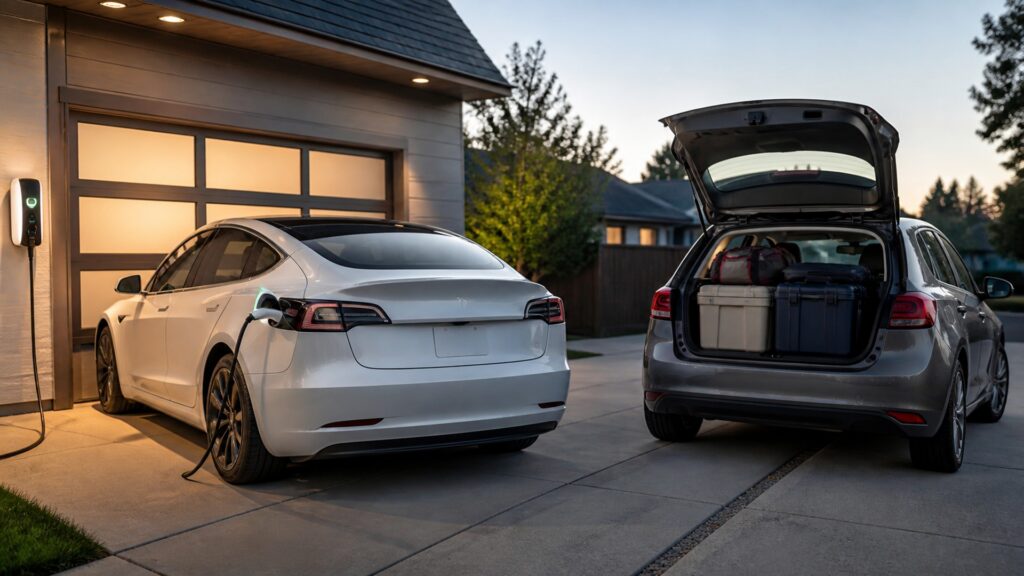
electric cars explainer hero image for Review Streets
What You'll Learn

Keep the Practical Body, Reconsider the Powertrain

Identify the conditions that make switching to electric useful.

  • Recognize electric hatchbacks as a possible combination.
  • Match charging to existing parked time.
  • Check the longest recurring journeys.
  • Retest luggage and passenger needs in the candidate car.
  • Use realistic costs and an actual driving trial.

Tip: Start with the tasks your current hatchback performs well and require the replacement to meet them.

Definitions

The Checks Behind a Useful Electric Switch

These terms turn a broad preference into a vehicle comparison.

Battery-electric car

A battery-electric car uses stored electricity for propulsion without a combustion engine.

  • Example: charging instead of buying gasoline
  • Check: the exact model's charging and range capabilities
  • Limit: electric does not specify the body style

Hatchback layout

A hatchback layout provides a rear door opening into the luggage area.

  • Example: loading an upright box through the rear hatch
  • Check: opening shape and required seating
  • Limit: the car can use gasoline, hybrid, or electric power

Parked-time charging

Parked-time charging replenishes energy during time the vehicle would already be stationary.

  • Example: charging during an overnight parking period
  • Check: access, permission, and available power
  • Limit: the arrangement must supply enough energy for your use

Recurring route

A recurring route is a journey repeated often enough to shape vehicle needs.

  • Example: a weekly motorway visit to another city
  • Check: distance, conditions, and dependable stops
  • Limit: the short commute may not be the hardest requirement

Charging compatibility

Charging compatibility is the ability to use a particular vehicle and charging setup as permitted.

  • Example: the car using a supported station connection
  • Check: vehicle and network requirements
  • Limit: similar-looking connectors or an adapter do not guarantee every service works

Comparable ownership cost

Comparable ownership cost includes the major expenses for the same distance and ownership period.

  • Example: purchase, insurance, energy, tires, and service over a planned term
  • Check: your actual prices and assumptions
  • Limit: energy savings alone do not settle the total

Tip: Require both a usable vehicle and a dependable way to supply its energy.

Daily Use

Choose Electric When Charging Removes a Recurring Errand

If dependable charging is available where the car already spends time, electric driving can make energy supply less intrusive. Confirm access and the amount of energy the arrangement can provide before counting on it. A frequently occupied public charger several miles away creates a different routine from a reliable place at home or work.

  • Identify the normal charging location.
  • Check permission, access hours, and price.
  • Plan a realistic backup.

DOE's home-charging guidance emphasizes matching charging needs and equipment to the available electrical setup. DOE: charging at home.

Travel

Make the Difficult Regular Journey Work

Check the longer journeys you actually repeat, including the return trip and destination. Use compatible charging locations and allow a reserve for weather, speed, diversions, or unavailable equipment. An occasional inconvenience may be acceptable, but a recurring one can outweigh an otherwise attractive car.

  • Review the complete journey.
  • Consider the time and alternatives at charging stops.
  • Do not count on unconfirmed destination access.

The case for electric is stronger when the route plan is workable on an ordinary difficult day, not only under ideal conditions.

Practicality

Keep the Loading Access You Depend On

A fuel-powered hatchback may already handle a useful mix of passengers and bulky items. If the electric candidate is a sedan, a larger compartment may still have a less convenient entrance. If it is an electric hatchback, check the floor, seat folding, and closed hatch clearance rather than assuming the layout is identical.

  • Bring the regular load or its dimensions.
  • Keep necessary passenger seats occupied.
  • Check parking and opening clearances.

A replacement that makes routine cargo awkward is not made practical by its power source.

Driving

Choose the Response You Enjoy Living With

Electric propulsion can offer smooth, quiet low-speed driving, but steering, ride, visibility, and controls still vary. Try the car in everyday situations rather than judging it only by acceleration. Learn the braking modes and check that the seating and control layout remain comfortable over the length of a normal trip.

  • Try parking and gentle starts.
  • Assess ride on familiar surfaces.
  • Check rear-seat comfort with your passengers.

A short burst of power is memorable; the seating position and ride will accompany every mile.

Cost and Readiness

Switch When the Whole Ownership Picture Adds Up

Compare actual purchase and insurance quotes, the energy prices you would pay, service needs, and tires. Include charging installation if needed. Electric cars generally avoid several combustion-engine services, but savings depend on the vehicles and your mileage. A sound existing hatchback may remain a reasonable choice if replacing it adds cost without solving a practical problem.

  • Use the same ownership period for both choices.
  • Include public charging where it will be used.
  • Keep uncertain resale estimates visible.

DOE's EV benefits overview treats costs and charging access as considerations; neither an electric badge nor a fuel-saving claim replaces a complete comparison. DOE: EV benefits and considerations.

Quick Reality Check

When the Switch Is Ready—and When It Is Not

A good choice meets the whole routine.

A Strong Electric Case

Charging fits existing parked time, regular routes work, and the car retains the needed practical space.

You prefer the driving experience and the full ownership costs are acceptable.

Reasons to Wait or Choose Differently

Charging depends on unreliable access or repeated inconvenient detours.

The candidate loses essential loading or passenger usefulness, or the costs do not support replacing the current car.

Common Myths

Misconceptions About Replacing a Hatchback with an EV

Avoid losing useful features through a false either-or choice.

Going electric means giving up a hatchback

An electric car can have a hatchback body. Check the combinations available to you.

A larger EV must carry my belongings more easily

Exterior size does not establish the opening or usable space with passengers aboard.

Lower energy cost guarantees a worthwhile replacement

Purchase, insurance, servicing, tires, installation, and expected use all affect the result.

Tip: Choose the replacement for the work it does across a normal week.

FAQ

Questions About Choosing Electric over a Fuel-Powered Hatchback

Answers for a practical replacement decision.

Should I look at electric hatchbacks first?

If the hatchback layout is important to you, they can be a useful starting point. Still check the actual space and charging suitability.

Is public-only charging enough?

It can be if access, compatibility, timing, and cost are dependable. Test the proposed routine before relying on it.

Should I replace a working hatchback just to save on fuel?

Compare the complete cost of keeping and replacing it over the period you expect to use the car. Fuel or electricity is only one expense.

What is the most useful test before choosing?

Combine a realistic passenger-and-cargo trial with a verified charging plan and a review of your difficult recurring route.

Bottom Line

Choose electric when the energy routine improves and the car still performs the practical tasks you need.

An electric hatchback can combine both priorities; a different body style should earn its place through a direct passenger-and-cargo comparison.

Next Steps

Go Deeper or Compare Your Options

Use these Review Streets paths to compare related categories and practical next decisions.