
Engine-Load Symptom
A fault that appears as airflow, fuel, lubrication, speed, or torque demand rises during engine operation.
- Idle may remain normal
- Temperature can change severity
- Measurements must reproduce demand
Use engine filters when the required work belongs to clean air, lubricating oil, or fuel delivery: a documented service interval, excessive intake restriction, abnormal filter pressure drop, contamination exposure, water collection, compromised media, damaged housing, or sealing failure. The evidence should identify the circuit and its limit.
Use brake components when the failed output is deceleration, parking restraint, pedal response, hydraulic containment, wheel-end friction, release, or chassis-control behavior. Dragging brakes can mimic lost engine power and raise consumption, while an overdue filter can coexist with safe braking. Control immediate hazards first, separate symptoms by the event that triggers them, and prove the chosen system with its own measurements.
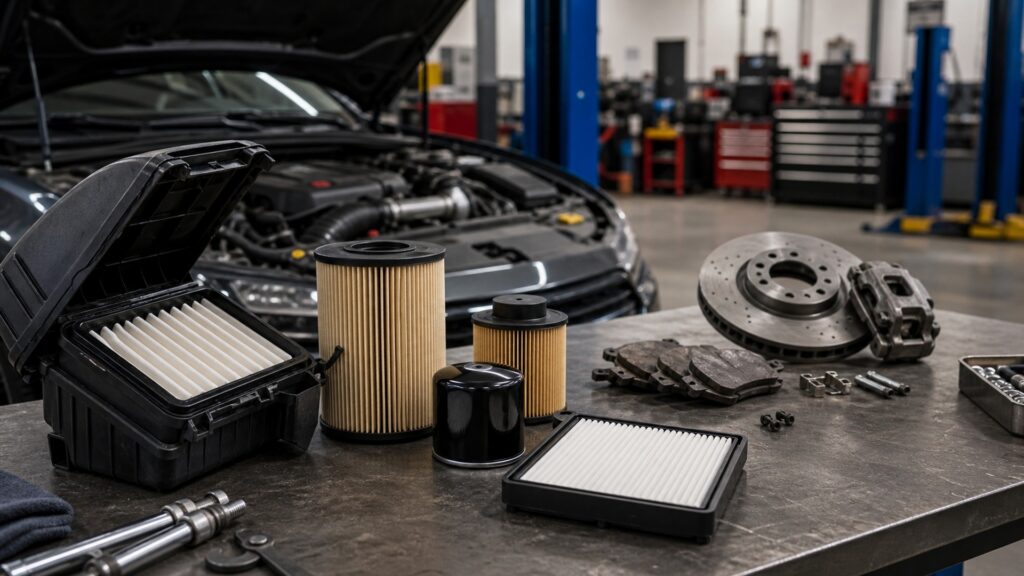
Engine-filter faults usually follow engine demand or fluid condition; brake faults usually appear during pedal application, vehicle slowing, parking restraint, or wheel release.
Tip: A hot wheel or abnormal pedal takes priority over routine filtration because continued driving can rapidly remove braking reserve.
These terms route ambiguous complaints toward the system that owns the failed function.
A fault that appears as airflow, fuel, lubrication, speed, or torque demand rises during engine operation.
Resistance across media or its housing that limits fluid delivery at a stated operating condition.
Lubrication-circuit pressure resulting from pump flow, clearances, viscosity, temperature, restriction, and regulation.
A symptom beginning or changing when the service brake is commanded by the driver or vehicle controls.
Continued wheel-end friction after the braking command should have released.
The first diagnostic step that controls conditions capable of immediate injury, fire, engine damage, or loss of vehicle control.
Tip: An overdue reminder authorizes scheduled inspection, not a claim that the reminded part caused today's symptom.
A hesitation appearing only under throttle or high airflow invites engine tests. Pull, vibration, or pedal change occurring during slowing invites brake inspection. A constant drag may affect both acceleration and coast behavior.
Timing converts vague adjectives into a useful system boundary.
A lubrication warning can threaten bearings, fuel leakage can create fire, and abnormal braking can remove control. Routine filters or pads wait until the active hazard has been stabilized.
Priority comes from consequence, not the category listed first on the work order.
Inspect exact air, oil, or fuel paths, including pumps, ducts, fluids, housings, sensors, and valves. A dark filter or service age may support maintenance but cannot alone prove cause.
The replacement earns its place when it corrects a documented filtration limit.
Inspect hydraulics, friction surfaces, mounting hardware, parking mechanisms, sensors, tires, and left-right behavior. Heat concentrated at one wheel can reveal drag that feels like engine resistance.
A drag diagnosis belongs to the brake that stays applied, not to an unrelated air filter.
After filter work, confirm pressure, restriction, sealing, fluid level, leaks, and engine response. After brake work, confirm pedal, torque, warnings, release, bedding, and controlled deceleration.
One improved symptom cannot release the other system when two faults coexisted.
Filtration belongs to proven contamination-control or flow needs; braking belongs to proven deceleration, restraint, hydraulic, or wheel-end needs.
Exact interval, severe-duty guidance, measured restriction or pressure drop, contamination, water, media damage, housing leakage, incorrect fitment, or a failed seal identifies the filter circuit.
The engine-related complaint changes with documented airflow, oil, or fuel conditions and returns to specification after a controlled filter repair.
Pedal behavior, hydraulic leakage, friction wear, rotor or drum limits, wheel-end heat, parking restraint, chassis faults, or repeatable deceleration evidence identifies the brake path.
Both systems may need work; selecting one does not authorize ignoring unsafe braking, low oil pressure, fuel leakage, unverified fitment, or a separate symptom that remains after repair.
The diagnostic trap is substituting a common maintenance item for the system that actually produces the complaint.
Consumption also changes with brake drag, tires, driving, weather, loads, sensors, fuel, engine condition, and controls. Measure intake restriction and wheel release rather than replacing the most familiar service item first.
Hot oil leakage can involve filter sealing, but dragging brakes, exhaust contact, electrical faults, belts, clutches, or debris can also smell. Stop safely, locate heat and leakage, and avoid touching hot components.
A filter cannot correct rotor thickness variation, runout, friction transfer, wheel attachment, suspension, tire, or ABS behavior. Reproduce the vibration during braking and inspect the responsible rotating and hydraulic components.
Reminder logic typically tracks time, mileage, or algorithms and may group several services. Inspect the actual vehicle, retrieve relevant data, and diagnose new symptoms independently before deciding between filtration and braking work.
Tip: Use timing, hazard consequence, and measurement ownership to keep filter and brake decisions separate.
These answers address sluggishness, odors, warnings, simultaneous maintenance, and measurements that distinguish the two paths.
Yes. Continued wheel friction can make acceleration weak, reduce coast distance, raise energy use, and create heat. Compare wheel temperatures and free rotation safely before attributing load-related sluggishness solely to engine airflow or fuel.
Filters do not normally create wheel friction, though engine stalling or assist-related faults can change steering or brake-assist behavior on some designs. Diagnose the assist and brake system directly whenever pedal effort or control changes.
Stop safely and follow the vehicle guidance. Low voltage or network faults can produce multiple warnings, but true oil-pressure loss and braking defects are independent hazards requiring separate immediate tests before further operation.
They can be serviced concurrently when exact intervals, parts, access, and authorization are clear. Document them as separate jobs, prevent cross-contamination, and verify engine filtration and braking independently rather than combining outcomes.
Tow when braking is unpredictable, pedal reserve is lost, a wheel overheats, fluid leaks, oil pressure is absent, fuel leaks, the engine cannot run safely, or diagnosis would require hazardous road reproduction.
Use engine filters instead of brake components when measurements or documented maintenance evidence identify an air, oil, or fuel contamination-control or flow need.
Use brakes for deceleration, restraint, hydraulic, friction, or release faults. When sluggishness or heat could belong to either, divide the paths by event timing and confirm both rather than guessing.
Related explainers supply the filter flow map, filter maintenance evidence, and brake mechanism needed to resolve complaints that cross engine demand and wheel resistance.
Trace air, oil, and fuel from dirty entry through media, seals, pressure loss, and clean delivery.
Use intervals, severe-duty exposure, contamination events, and service records without mistaking maintenance for diagnosis.
Trace pedal demand through hydraulics, friction, heat, controls, and tires.
Choose a retailer
Prices checked regularly. We may earn a commission at no cost to you.