
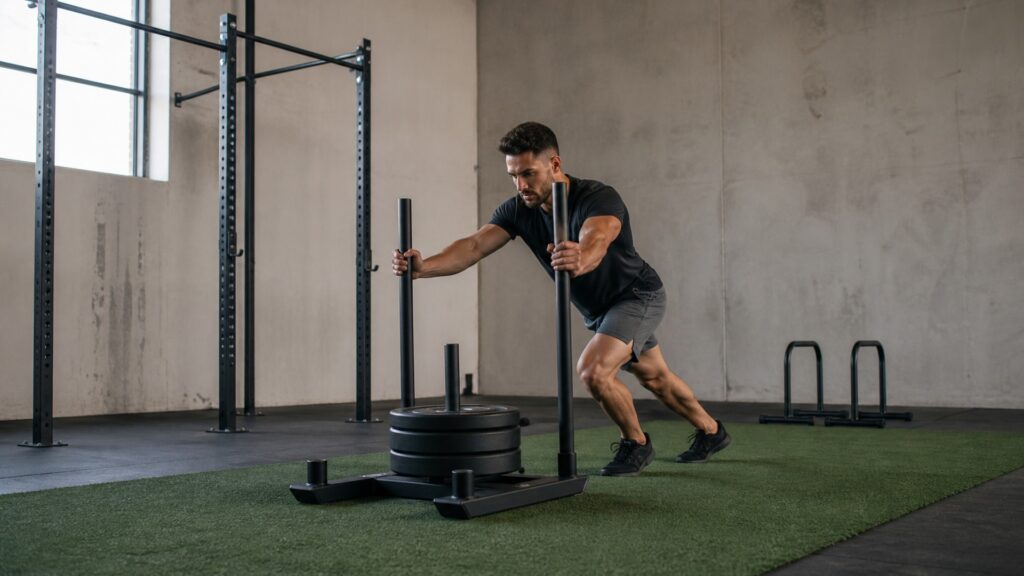
When to Use Functional Training Equipment Instead of Bodyweight Training Equipment

Use functional training equipment instead of bodyweight training equipment when the workout needs external load, unstable implements, loaded carries, throws, pulls, or resistance that bodyweight tools cannot provide on their own. Bodyweight equipment can make push-ups, pull-ups, dips, suspension work, and floor training easier to organize, but it still relies mostly on the user's body as the resistance source.

The decision is not about which category is more serious. Functional training equipment is the better fit when the tool changes the training stimulus. Bodyweight training equipment is the better fit when the goal is simple setup, skill practice, portable strength, or controlled body-position work.

By: Review Streets Research Lab
Updated: October 2, 2026
Explainer · 8-12 min read
functional training equipment explainer hero image for Review Streets
What You'll Learn

When Functional Training Equipment Is The Better Fit

A practical decision path for choosing loaded, movement-based training tools over bodyweight-focused equipment.

  • Why external load changes what functional training equipment can do
  • Where bodyweight equipment is simpler and more portable
  • How movement variety, grip demand, and space needs affect the choice
  • When progression is easier with adjustable equipment
  • Why the two categories can work together instead of replacing each other
  • What to check before buying gear for home, studio, or team training

Tip: Choose the tool that solves the missing training need. More equipment helps only when it changes the exercise in a useful way.

Definitions

Key Concepts Behind The Equipment Choice

These terms explain why functional training equipment and bodyweight training equipment serve different workout needs.

External Load

External load is resistance added by a tool rather than by body position alone.

  • Example: a kettlebell used for swings, carries, or goblet squats
  • Check: decide whether the workout needs added weight
  • Limit: load adds setup, storage, and safety demands

Movement Variety

Movement variety is the range of exercise patterns the equipment can support.

  • Example: using medicine balls, sandbags, or bands for throws, carries, and rotational work
  • Check: review the movements planned across a week
  • Limit: more variety is not helpful without a clear purpose

Skill Demand

Skill demand is the coordination, control, and practice required to use the tool well.

  • Example: learning a kettlebell clean before using it in circuits
  • Check: match the tool to the user's experience level
  • Limit: complex tools can slow training if technique is not ready

Setup Space

Setup space is the room needed to use the equipment safely, including movement clearance and storage.

  • Example: needing floor space for sled work, battle ropes, or loaded carries
  • Check: measure the full training area
  • Limit: compact tools can still need room to move

Progression Control

Progression control is how easily the workout can become harder or easier over time.

  • Example: moving from a lighter sandbag to a heavier one
  • Check: look for load steps that match the user's progress
  • Limit: large jumps in load can be awkward

Bodyweight Support

Bodyweight support is equipment that improves body-position exercises without adding much external resistance.

  • Example: parallettes, pull-up bars, dip stations, or suspension straps
  • Check: see whether the goal is control, range, or leverage
  • Limit: bodyweight tools may not provide enough load for every strength goal

Tip: The better category is the one that matches the workout's resistance source, not the one with the longer equipment list.

Best Fit

Use Functional Equipment When The Workout Needs Load

Functional training equipment is strongest when the session needs resistance that bodyweight tools cannot create easily. Kettlebells, bands, medicine balls, sandbags, sleds, ropes, and similar tools can add load, speed, grip demand, or direction changes.

  • Use it for loaded carries, hinges, throws, pulls, and resisted movement.
  • Choose tools that match the movement pattern you plan to repeat.
  • Avoid buying equipment only because it looks versatile.

Functional equipment should add a clear training stimulus, not just more objects in the room.

Bodyweight Fit

Use Bodyweight Equipment When Simplicity Matters More

Bodyweight training equipment is often the cleaner choice when the goal is control, leverage, range of motion, or portable strength work. It can support serious training without requiring a large gear collection.

  • Pull-up bars, parallettes, rings, and suspension straps can cover many patterns.
  • Setup is often faster and easier to store.
  • Progression may depend more on body angle, range, tempo, and skill.

Simple equipment works well when the user's body is the main resistance source.

Loading

Progression Looks Different In Each Category

Functional training equipment often progresses by changing weight, band tension, distance, speed, or implement type. Bodyweight equipment often progresses by changing leverage, range, tempo, assistance, or exercise variation.

  • Choose adjustable load when strength progression needs small steps.
  • Choose body-position progressions when control is the main goal.
  • Make sure progressions are practical for the user's current level.

A good progression path matters more than the category name.

Space

The Room Can Decide The Better Choice

Functional equipment can need more open space, safer flooring, storage, and attention to nearby people or objects. Bodyweight equipment can be easier in small spaces, although pull-up bars, dip stations, or suspension anchors still need secure setup.

  • Measure movement clearance, not just storage footprint.
  • Check anchors, floors, ceilings, and surrounding space.
  • Choose quieter, smaller tools when training at home.

The best equipment is the equipment the space can support safely.

Practical Check

Match The Tool To The Training Problem

The clearest reason to choose functional training equipment is that bodyweight equipment leaves a real gap: not enough load, not enough resisted movement, not enough rotational work, or not enough carry and grip challenge.

  • Name the missing stimulus before buying.
  • Start with the smallest set of tools that solves it.
  • Combine both categories when each one covers a different job.

The right choice should make the workout more useful, not more complicated.

Quick Reality Check

Where Functional Equipment Wins And Where Bodyweight Tools Stay Better

The categories overlap, but they solve different training problems.

Functional Equipment Wins When

The workout needs external load, resisted movement, carries, throws, grip work, or rotational patterns.

Progression is easier with adjustable resistance than with body-position changes alone.

Bodyweight Equipment Stays Better When

The priority is low setup, portability, skill practice, or strength work built around body control.

The available space cannot support loaded, fast, noisy, or wide-ranging movements.

Common Myths

Misconceptions About Functional Equipment And Bodyweight Tools

The stronger choice depends on the workout need, not on which category sounds more complete.

Functional equipment is always more advanced

It can add load and variety, but simple bodyweight tools can be better for control, skill, and low-friction training.

Bodyweight equipment is only for beginners

Pull-up bars, rings, parallettes, and suspension tools can support difficult strength and control work.

More tools mean better functional training

A small set of well-chosen tools often works better than a crowded room of equipment with no clear plan.

The two categories replace each other

They often work together. Bodyweight tools can handle control and pulling work while functional tools add load, carries, and resisted movement.

Tip: Compare the actual exercises you will repeat, not the equipment labels.

FAQ

Frequently Asked Questions About Functional Equipment Versus Bodyweight Tools

Short answers for choosing between loaded training tools and bodyweight-focused equipment.

When should I choose functional training equipment?

Choose it when you need external load, resisted movement, carries, throws, bands, ropes, sled work, or other stimuli that bodyweight tools do not provide well.

When is bodyweight training equipment enough?

It can be enough when the goal is pull-ups, dips, push-up variations, suspension work, mobility, core control, or portable strength training.

Which option is better for small spaces?

Bodyweight equipment is often easier in small spaces, but secure mounting and clearance still matter. Some functional tools can also work if they are compact and quiet.

Can I combine both categories?

Yes. Many useful setups pair bodyweight tools for control and pulling work with functional tools for load, carries, and conditioning.

What is the practical takeaway?

Use functional equipment when added load or resisted movement solves the workout problem. Use bodyweight equipment when simple, controllable setup is enough.

Bottom Line

Use functional training equipment when the workout needs a training stimulus that bodyweight equipment cannot provide by itself.

Use bodyweight training equipment when simple setup, body control, portability, and leverage-based progression are the main priorities.

Next Steps

Go Deeper or Compare Your Options

Use these Review Streets paths to compare related categories and practical next decisions.

Quick Summary

Functional Gear Or Bodyweight Tools

  • Functional equipment adds load, carries, throws, resistance, and movement variety.
  • Bodyweight equipment supports control, leverage, pulling, dips, and portable strength.
  • Space, storage, noise, and safety can decide the better fit.
  • The categories can work together when each tool has a clear job.