When to Use Interior Comfort Instead of Floor Protection

A cold seat, sore hip, hot backrest, harsh glare, or awkward pedal reach is an occupant-comfort problem. Mud, road salt, wet footwear, sand, spilled drinks, and heel wear are floor-protection problems. The cabin may contain both, but a thicker or plusher mat does not become a substitute for seat support or climate control.

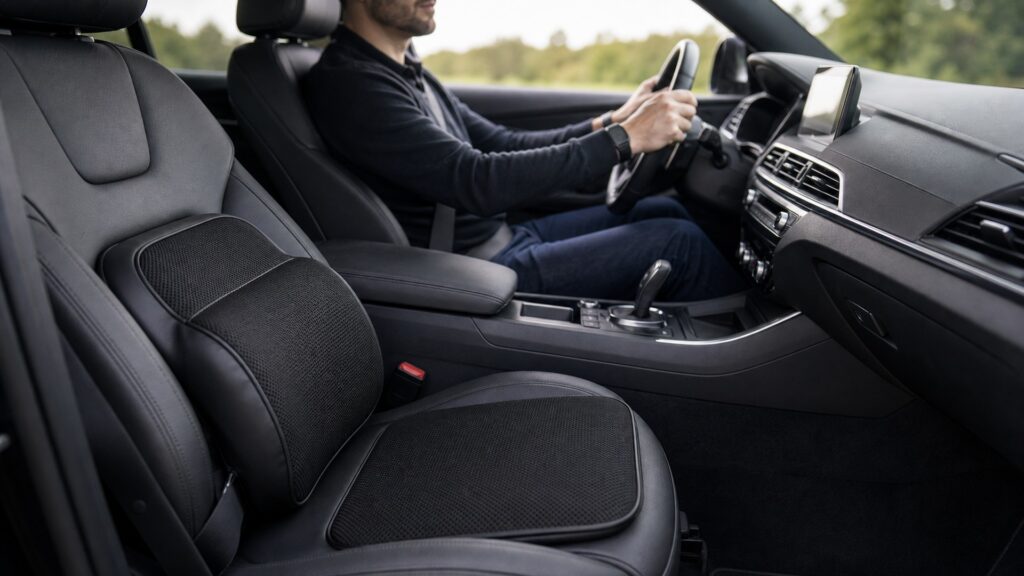
Choose a cushion, lumbar support, breathable cover, heater, fan, or shade only when it addresses the documented discomfort. Choose a mat or liner when the goal is to protect carpet. If both are installed, check how cushion height changes leg angle and heel position, then confirm the driver-side covering stays retained and clear of every pedal.

By: Review Streets Research Lab
Updated: September 14, 2026
Explainer · 8-12 min read
interior comfort instead of floor protection explainer hero image for Review Streets
What You'll Learn

Is the Problem the Occupant or the Carpet?

Use the affected subject and the physical input to decide between comfort products and mats or liners.

  • Seat pressure and support complaints
  • Heat, cold, glare, noise, and airflow
  • Mud, salt, sand, water, and heel wear
  • Mat coverage, channels, and retention
  • Cushion height and pedal reach
  • Driver-side edge and pedal clearance
  • Leaks, broken seats, and HVAC faults

Tip: Inspect beneath the mat and test the occupant separately; the top surface alone cannot diagnose either problem.

Definitions

Key Concepts That Define Interior Comfort or Floor Protection Selection

The terms below are specific to interior comfort or floor protection selection and the products a buyer will compare.

Body-Centered Need

A requirement to change the occupant's pressure, posture, temperature, airflow, sound, glare, touch, reach, motion, or time-dependent response.

  • Record the body area, sensation, and onset time
  • Try factory seat and climate adjustments first
  • Select products that act directly on the remaining symptom

Material-Centered Need

A requirement to limit wear, moisture, debris, chemicals, stains, or biological contamination reaching vehicle flooring.

  • Inspect carpet for wear, moisture, grit, salt, and stains
  • Identify how contamination enters and spreads
  • Choose removable coverage for the actual exposure

Pressure Onset

The contact location and elapsed time at which discomfort, numbness, or support fatigue first becomes noticeable.

  • Note the minute and seat position when pressure appears
  • Compare a support through the same route
  • Reject any setup that moves pain or weakens control reach

Contaminant Pathway

The route by which solids or liquids enter, move across, penetrate, collect on, and leave a cabin surface.

  • Follow water, grit, or salt from footwear to carpet
  • Check liner channels and edges before capacity is exceeded
  • Remove contamination without spilling it back into the cabin

Containment Trial

A representative exposure followed by inspection of capacity, migration, leakage, removal, underlying carpet, retention, and pedal clearance.

  • Load the final mat or liner with realistic water and debris
  • Inspect anchors, edges, removal, and carpet beneath
  • Confirm full pedal travel after reinstallation

Underlying Fault

A vehicle, equipment, environmental, or occupant condition producing the symptom that an accessory might otherwise conceal.

  • Check for leaks, wet padding, collapsed foam, failed adjustments, and HVAC faults
  • Do not mask abnormal vibration or persistent symptoms
  • Repair the cause before buying another accessory

Tip: Apply each interior comfort or floor protection selection check with the actual occupant, product, load, and vehicle.

Need Classification

Decide Whether the Result Belongs to a Person or the Floor

Describe the failure without product names. A changing human sensation indicates comfort; damaged, wet, dirty, or worn carpet indicates protection. Mixed complaints require two separate causal statements. Seat wedges, lumbar pads, cooling covers, and sunshades address human inputs; mats and liners intercept material carried into the footwell.

  • Name the affected subject
  • Locate the failing interface
  • Avoid proxy evidence

Selection begins with ownership of the desired outcome.

Comfort Route

Choose Human-Input Control for Pressure, Heat, Glare, Noise, or Reach

Start with factory adjustments, identify onset conditions, then trial one compatible support, thermal, airflow, visual, acoustic, tactile, or reach intervention. Preserve the occupant's stable relationship to safety systems. Use the occupant's symptom route to test comfort and a realistic wet-shoe or debris exposure to test floor protection.

  • Record the baseline
  • Change one comfort input
  • Repeat original duration

Comfort evidence must come from the actual occupant.

Protection Route

Choose a Barrier for Abrasion, Debris, Moisture, and Staining

Match coverage, channels, absorbency, wall height, material, anchors, and removal to the expected load. Inspect under the covering after use rather than judging only the visible top surface. Compare driver-side mats for correct anchors, edge shape, channel capacity, backing, and removal rather than softness alone.

  • Characterize contamination
  • Match finite capacity
  • Inspect underlying carpet

Protection succeeds when exposure is intercepted and exported safely.

Shared Footwell

Pedal Travel and Foot Movement Override Both Benefits

Added thickness, curled edges, shifting layers, raised walls, supports, and seat-position changes can alter heel placement or transitions. Use only intended layers and verify complete pedal movement with the final occupant position. After changing cushion height, recheck leg angle, heel placement, full pedal travel, and the retained position of the floor covering.

  • Engage retention points
  • Test all pedals parked
  • Recheck after driving

The driver footwell is a control zone before it is a comfort or cleanliness zone.

Diagnostic Limit

Do Not Accessorize Over Leaks, Seat Damage, HVAC Faults, or Abnormal Vibration

Wet carpet may indicate water intrusion; discomfort may reflect collapsed seating, broken adjustment, climate failure, tire or mechanical problems, or a health concern. Correct the cause before accepting an accessory workaround. Water under a dry-looking mat or pain over collapsed seat foam points to a cause that accessories should not conceal.

  • Inspect hidden conditions
  • Compare factory operation
  • Escalate persistent causes

A category decision is valid only after obvious underlying faults are excluded.

Quick Reality Check

One Accessory Can Affect Both Without Replacing Either

A floor covering changes underfoot feel, and a seat cushion changes heel position. Those side effects do not prove carpet protection or sustained occupant comfort.

What each category should prove

The actual occupant improves through the original symptom conditions without losing safe function.

Underlying carpet stays acceptably protected while the covering remains retained and clear of controls.

Problems that need repair or professional review

Driver-side layers that move, curl, stack, or approach pedals are unacceptable.

Leaks, damaged seats, HVAC faults, abnormal vibration, or persistent symptoms need root-cause evaluation.

Common Myths

Misconceptions About Interior Comfort or Floor Protection Selection

Common comfort and mat mix-ups

A softer floor mat is always a comfort product

Texture may change underfoot sensation, but a mat's primary function can remain contamination interception. Softness does not establish postural support, thermal control, stable pedal transitions, retention, liquid capacity, or drying performance.

Clean carpet proves the occupant is comfortable

Protection evidence cannot establish seat pressure, temperature, airflow, glare, sound, reach, posture, or fatigue. A spotless floor may coexist with an unresolved human symptom requiring a different mechanism and trial.

A seat cushion can replace floor protection

Support under the occupant does not intercept wet shoes, abrasive grit, salt, mud, spills, or heel wear at the carpet. It also should not be moved into the footwell as an improvised barrier.

One road test validates both categories

Comfort needs representative occupant duration and symptom tracking; protection needs realistic contamination, capacity, removal, and hidden-surface inspection. Shared pedal and fit checks matter, but the two promised outcomes still require separate evidence.

Tip: Inspect the person and the carpet separately.

FAQ

Frequently Asked Questions About Interior Comfort or Floor Protection Selection

Questions about comfort products and floor coverings

Which category addresses cold seat contact?

Interior comfort addresses the occupant's thermal exchange. Diagnose the surface, airflow, clothing, and duration; use compatible vehicle controls or products; and verify temperature behavior, wiring, restraints, posture, controls, and shutdown.

Which category addresses road salt on carpet?

Floor protection addresses salt carried by footwear. Choose compatible coverage and retention with enough capacity, remove it without spilling, clean and dry both surfaces, and confirm edges and anchors remain clear of pedals.

Can floor protection affect comfort?

Yes. Thickness, stiffness, texture, insulation, odor, moisture, and heel support can change sensation or foot movement. Treat those as secondary observations while independently validating contamination control, retention, capacity, cleanout, and pedal clearance.

Can comfort products affect floor fit?

A support can change seat position, leg angle, heel location, and pedal reach; cables may cross floor space. Recheck the final occupant geometry, floor-covering retention, edges, full pedal travel, vents, and seat tracks.

What faults should be excluded first?

Rule out water intrusion, wet padding, broken mat anchors, collapsed seat foam, failed adjustments, HVAC problems, damaged outlets, loose trim, tire or mechanical vibration, and symptoms that warrant medical or mobility evaluation.

Bottom Line

Choose Comfort for the Person and Protection for the Carpet

Use a comfort product for pressure, posture, temperature, glare, sound, or reach. Use a mat or liner for wear, dirt, and moisture. If both are present, the final driver position and the complete pedal-clearance check decide whether the combination is acceptable.

Next Steps

Comfort and Floor-Protection Guides

Use these pages to compare the two mechanisms and confirm fit around the driver footwell.

How Interior Comfort Works

Trace the occupant-centered support, thermal, airflow, sound, glare, touch, reach, and duration mechanism.

How Floor Protection Works

Follow abrasion, debris, liquid, retention, capacity, removal, and cleanout through floor protection.