When to Use Lifting Straps Instead of Lifting Belts

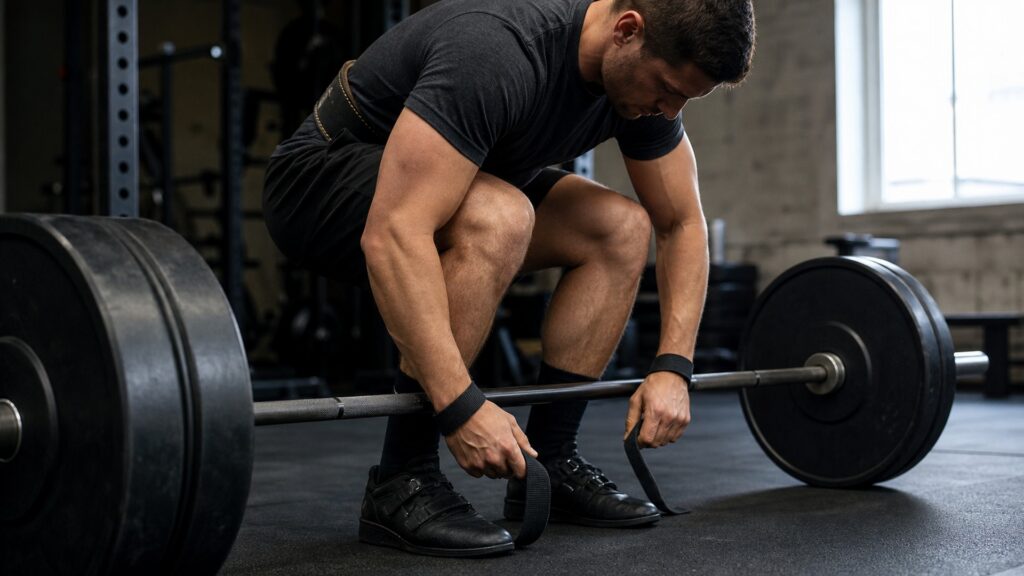
Use lifting straps instead of a lifting belt when the limiting problem is grip, not torso bracing. Straps connect the hand more securely to a bar, handle, or dumbbell during pulling work. A belt gives the trunk a surface to brace against during heavy loaded lifts.

The distinction matters because both accessories can appear in the same gym bag while solving different problems. Straps can help when the target muscles still have work to do but the hands are failing. A belt is more relevant when the lift demands a stronger, more consistent brace.

By: Review Streets Research Lab
Updated: August 31, 2026
Explainer · 8-12 min read
lifting straps explainer hero image for Review Streets
What You'll Learn

How to Separate Grip Support from Bracing Support

The right accessory depends on whether the set is limited by the hands, the torso brace, the movement pattern, or the training goal.

  • Why straps support pulling grip rather than torso position
  • Why belts support bracing rather than hand connection
  • Which exercises usually point toward straps
  • Which exercises usually point toward belts
  • How accessory choice can change the training effect
  • Why using both tools at once should still have a clear reason

Tip: For lifting straps vs lifting belts, the useful first question is what condition the tool or metric changes.

Definitions

Key Concepts That Define Lifting Straps vs Lifting Belts

These terms keep the accessory choice attached to the actual bottleneck: hand connection or torso bracing.

Lifting straps

Lifting straps wrap around the hand and implement so grip is less likely to end a pulling set.

  • They are most common in deadlift variations, rows, shrugs, and heavy pulls.
  • They reduce grip demand during the strapped set.
  • They do not create torso bracing.

Lifting belt

A lifting belt gives the torso a firm surface to brace against under load.

  • It is relevant when trunk pressure and position are central to the lift.
  • It does not secure the hands to the implement.
  • It must be paired with active breathing and bracing.

Grip fatigue

Grip fatigue is the point where the hands lose the ability to hold the implement before the target muscles are finished.

  • It can limit pulling volume.
  • Straps can move that bottleneck for selected sets.
  • Grip work may still need separate attention.

Bracing

Bracing is the active breath and trunk tension used to organize the body under load.

  • A belt can make the brace easier to feel.
  • Straps do not solve a weak brace.
  • Bracing demand depends on the lift and load.

Pulling volume

Pulling volume is the repeated work done in exercises such as rows, deadlifts, hinges, and shrugs.

  • It often exposes grip fatigue.
  • Straps can help keep the target movement going.
  • They should be used deliberately when grip is not the training target.

Accessory mismatch

Accessory mismatch happens when the tool solves a different problem from the one limiting the lift.

  • A belt cannot fix a bar slipping from the hands.
  • Straps cannot organize torso pressure.
  • Naming the bottleneck prevents unnecessary gear stacking.

Tip: If the hands are failing first, think straps; if torso pressure is the issue, think belt.

Primary Bottleneck

Straps Solve Grip; Belts Solve Bracing Feedback

The decision starts by naming what is failing first. If the hands open before the back, hips, or target muscles are trained, straps may be relevant. If the torso cannot stay organized under load, the belt is the closer match.

  • Straps wrap the implement so grip is less likely to end the set.
  • Belts give the abdomen and trunk a surface to brace against.
  • A deadlift can involve both grip and bracing, so the exact weakness matters.
  • Rows and pulls often expose grip fatigue before torso bracing.
  • Squats usually make belt logic more relevant than strap logic.

Use straps when the hand connection is the limiter; use a belt when torso pressure is the limiter.

Exercise Match

Pulling Volume Is the Clearest Strap Use Case

Straps most often make sense for deadlift variations, rows, shrugs, Romanian deadlifts, and heavy dumbbell pulling where grip fatigue cuts the set short. They are less relevant for lifts where the hands are not the weak link.

  • High-volume pulling can fatigue grip before the target muscles.
  • Straps can let the lifter continue back or hinge work after grip fades.
  • They do not improve squatting, pressing, or bracing by themselves.
  • They can reduce grip-training stimulus during strapped sets.
  • Grip-specific work may still belong elsewhere in the program.

Straps are not a general strength badge; they are a pulling-volume tool.

Belt Context

Belts Belong Where Torso Stiffness Drives the Lift

A belt becomes more relevant when load and movement pattern require a deliberate brace. Heavy squats, deadlifts, hinges, and some presses can justify belt use when the lifter knows how to breathe and brace into it.

  • A belt is not a grip accessory.
  • It can help the lifter feel and repeat a brace under heavier loads.
  • It does not correct poor setup or make a load appropriate.
  • It may be unnecessary for light isolation work.
  • The lifter still has to control position and technique.

A belt answers a different question from straps, even during the same deadlift session.

Tradeoffs

The Wrong Accessory Can Hide the Real Problem

Using straps when grip should be trained may delay grip development. Wearing a belt when grip is failing does not solve the set. Adding both can be useful, but it can also make the lifter less aware of what changed.

  • Straps reduce grip demand during the strapped movement.
  • Belts can encourage heavier loading before bracing skill is consistent.
  • Changing accessories and load together makes cause and effect harder to read.
  • Competition rules may limit whether straps are allowed.
  • Pain or symptoms should not be solved through accessory swapping.

Accessory choice should make the training problem clearer, not blur it.

Decision Boundary

Use Straps Instead When the Hands Are the Limiting Link

The simplest test is whether the target movement would continue if the implement stayed connected to the hands. If yes, straps may fit. If the torso brace is the issue, a belt or technique work is more relevant.

  • Choose straps for grip-limited rows, hinges, deadlift volume, or carries when grip is not the training target.
  • Choose a belt for bracing-heavy lifts when torso pressure feedback matters.
  • Use neither when the movement problem is balance, range, pain, or poor setup.
  • Use both only when grip and bracing are separately justified.
  • Keep medical and injury concerns outside a gear-only decision.

Straps replace belts only when the real question is grip support rather than bracing support.

Quick Reality Check

Where Lifting Straps vs Lifting Belts Helps and Where the Explanation Needs Limits

A balanced view of what lifting straps vs lifting belts clarifies, plus what the concept should not be stretched to prove.

What Lifting Straps vs Lifting Belts Clarifies

Lifting Straps vs Lifting Belts helps readers connect the category name to actual mechanisms, setup choices, and use conditions.

It also makes comparison more honest by separating the main job from marketing claims or vague performance language.

Where the Shortcut Breaks Down

The explanation cannot prove that one product, score, or accessory is best for every body, routine, or training goal.

It also cannot replace qualified guidance for pain, symptoms, health concerns, or individualized programming.

Common Myths

Misconceptions About Lifting Straps vs Lifting Belts

Common shortcuts and misunderstandings can make the topic seem simpler than it is.

Lifting Straps vs Lifting Belts is only about preference

Preference matters, but the category also has real mechanics. Sensor placement, bracing, elastic tension, pressure method, or setup can change how the tool behaves.

More advanced always means more useful

A feature-rich device or accessory can still be a poor match if it does not solve the actual tracking, support, resistance, or recovery problem.

One metric or feature tells the whole story

A single score, material, attachment, or device format needs context from fit, setup, exercise type, routine, and the user's reason for using it.

If it feels helpful once, it is always the right choice

A useful first session does not prove the tool fits every workout. Conditions, fatigue, exercise selection, and setup quality can change the result.

Fitness gear can replace professional guidance

Consumer fitness tools can support training decisions, but health concerns, persistent pain, unusual symptoms, or complex programming questions need qualified human judgment.

Tip: Straps and belts can appear in the same lift, but the grip problem and the bracing problem should stay separate.

FAQ

Frequently Asked Questions About Lifting Straps vs Lifting Belts

Concise answers to common questions readers may have after the main explanation.

What is the simplest way to understand lifting straps vs lifting belts?

Start by identifying the main job: what signal, load, support, pressure, or decision the tool changes. Then judge the category by that job.

Is lifting straps vs lifting belts always important?

No. Its importance depends on the activity, training goal, user tolerance, setup quality, and whether the issue it addresses is actually limiting the session.

Can the same tool work for beginners and advanced users?

Often yes, but the reason may differ. A beginner may need structure or simplicity, while an advanced user may need precision around a specific bottleneck.

What is the biggest mistake when comparing options?

The biggest mistake is treating the category label as the explanation. The better comparison follows mechanism, fit, adjustment, limits, and use context.

Can this prevent injury or guarantee better results?

No. Fitness products and metrics can support decisions, but they should not be presented as guarantees of safety, recovery, performance, or health outcomes.

Bottom Line

Use lifting straps instead of a lifting belt when the set is ending because the hands cannot keep the implement connected.

Use a belt when the issue is bracing under load. The two accessories can share a session, but they should never be confused as solutions to the same problem.

Next Steps

Go Deeper or Compare Your Options

Use these related explainers to go deeper on belt mechanics, portable resistance tools, and recovery accessories.

Why Lifting Belts Matter

Go deeper on the bracing side of the comparison before deciding whether a belt is the right accessory.

Quick Summary

Lifting Straps vs Lifting Belts Explained

  • Straps support grip during pulling work.
  • Belts support bracing feedback under load.
  • Rows, hinges, and deadlift volume often expose strap use cases.
  • Squats and heavy bracing demands point more toward belt logic.
  • The right accessory names the bottleneck before adding gear.