
Roof Top Tent
Vehicle-mounted shelter with a rigid or folding sleeping platform above the roof.
- It travels as roof mass
- Bedding may remain integrated
- Deployment can immobilize the vehicle
Use a roof top tent instead of a ground tent when a trip involves frequent one-night stops, the vehicle and rack are explicitly compatible, occupants can use a ladder safely, and integrated bedding makes repeated setup and packing meaningfully easier. Elevation can also separate the sleeping platform from wet, rough, or muddy ground.
Choose a ground tent when low mass, low cost, vehicle independence, flexible site selection, standing room, family capacity, pet access, or leaving camp assembled matters more. The decision is not simply comfort versus inconvenience. Roof load, handling, wind, parking level, daily driving, drying, deployment clearance, and emergency egress can turn a quick elevated shelter into the wrong tool for a particular vehicle or campsite.
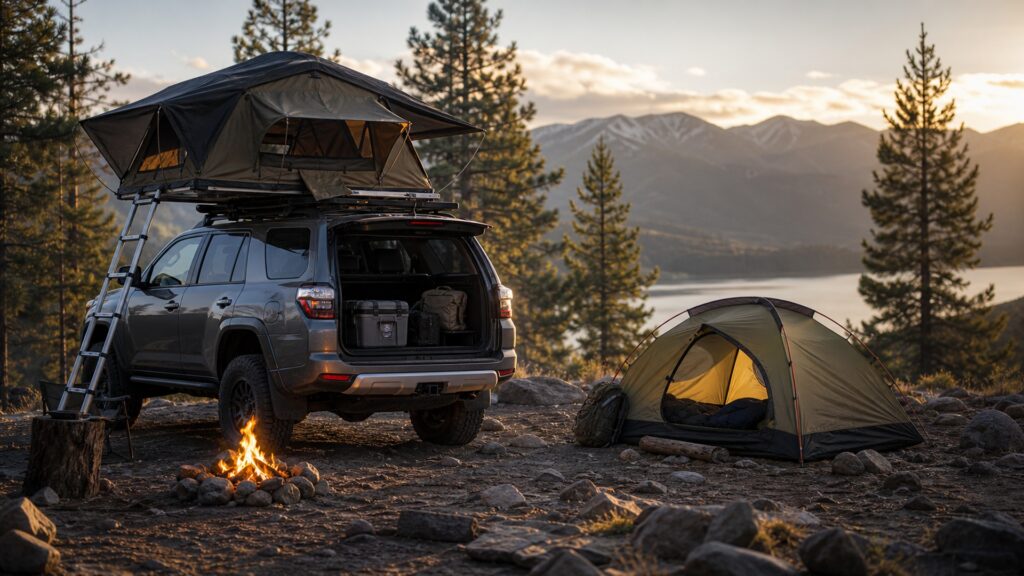
Compare the complete travel day: driving effects, site selection, setup, sleep access, weather management, morning departure, drying, and whether the vehicle must move after camp is established.
Tip: Perform consecutive practice nights using the real occupants and packed vehicle, including a rainy closure and a drive-away errand; one showroom deployment cannot reveal the recurring compromises.
These terms describe why elevated and ground-based shelters support different trip patterns.
Vehicle-mounted shelter with a rigid or folding sleeping platform above the roof.
Shelter supported directly by terrain through a floor, poles, stakes, or freestanding frame.
Tent that maintains basic shape without relying entirely on stakes and guy lines.
Ground and airspace occupied by the shelter, ladder, doors, guy lines, and safe access.
Degree to which shelter use requires a specific parked vehicle, rack, level, and orientation.
Time and effort required to dry, fold, secure, inspect, and make shelter travel-ready.
Tip: Follow vehicle, rack, and tent instructions and campsite rules; neither shelter is safe in severe wind, flooding, falling-object zones, traffic paths, unstable slopes, or prohibited areas.
When every night uses a new site, an attached platform and stored bedding can remove repeated groundsheet, mattress, and pole work. The advantage shrinks during multi-day base camps because every vehicle trip requires closing the tent.
A fast opening matters less than the total cycle from parking to verified road-ready closure.
Roof tents avoid small rocks and surface water beneath the bed, but need a compatible rated roof system, level stable parking, height clearance, deployment airspace, and ladder footing. Ground tents need suitable terrain and anchoring instead.
Elevation changes which site constraints matter; it does not remove site selection.
Nighttime ladder use, footwear, rain, fatigue, illness, children, pets, and limited mobility make elevated entry consequential. Ground tents offer simpler evacuation and larger floor plans, while some roof tents provide a firmer built-in mattress.
The best bed is unusable when entry or emergency descent does not fit the people sleeping there.
Roof tents sit higher in wind and transfer loads into the rack; ground tents can be shielded by terrain but exposed to runoff. Both accumulate occupant moisture and require ventilation, waterproofing, drying, and suitable staking or support.
A roof platform solves ground wetness, not airborne moisture or severe weather.
Roof tents cost more, consume roof capacity, affect handling and efficiency, require lifting or year-round exposure, and may limit garages. Ground tents occupy cargo space but can serve without the vehicle and be replaced or shared more easily.
The better shelter is the one whose non-camping burdens the owner will actually maintain.
Trip rhythm, compatibility, occupants, weather, campsite geometry, and daily vehicle use determine whether integrated roof shelter earns its costs.
The vehicle and rack are approved, travel involves frequent short stops, occupants handle ladders comfortably, and integrated bedding materially simplifies the repeated routine.
Suitable level parking, deployment clearance, manageable wind, secure ladder footing, and no need for spontaneous vehicle use are normally available.
Low weight, lower cost, large occupancy, pet or mobility access, flexible placement, severe-weather profile, or leaving camp established while driving matters more.
Neither format compensates for a hazardous campsite, poor ventilation, wet storage, inadequate anchoring, overcrowding, or weather beyond the shelter's instructions.
These myths reduce shelter choice to setup speed or distance above the soil.
Opening can be quick, but leveling, removing covers, extending ladders, arranging bedding, managing annexes, drying fabric, tucking material, latching the shell, and verifying mounts affect the complete cycle. Some modern ground tents are equally fast.
Elevation avoids some surface water and crawling insects, but does not prevent wind, lightning, falling branches, wildlife attraction, vehicle instability, fire, carbon monoxide, flooding around tires, or unsafe ladder descent.
The tent may be light, but separate mattresses, bedding, groundsheet, poles, and wet-storage bags consume cargo volume. Compare the whole sleep system against tent, rack, mounting hardware, and any bedding carried on the roof.
Compatibility depends on the vehicle roof, rails, feet, bars, bar spread, clamp geometry, dynamic rating, static support, roof type, and tent instructions. Visual sturdiness or an advertised rack capacity is insufficient.
Tip: Compare the entire trip loop and the actual occupants instead of a single idealized campsite demonstration.
These answers cover trip length, base camps, wind, pets, and total weight comparison.
They suit trips with frequent relocations more than duration alone. A month of one-night stops may favor integrated setup, while a week at one base camp may favor a ground tent that remains erected.
No. It must be fully closed, latched, and verified before any movement. If errands, trailheads, emergencies, or sightseeing require the vehicle, a separate ground shelter preserves camp without repeated packing.
Design, orientation, anchoring, fabric, profile, site shelter, and manufacturer limits matter. Roof tents are more exposed and load the rack; low ground tents can reduce exposure but still require secure stakes and safe terrain.
Ground tents usually avoid lifting, ladder training, falls, and claw damage during elevated entry. A roof tent can work with a suitable animal and safe handling plan, but never improvise lifting beyond occupant and platform limits.
For a roof tent, include rack, hardware, closed tent, and travel contents against dynamic roof limits. For a ground system, include tent, poles, stakes, mattress, bedding, and bags against payload and cargo restraint.
Use a roof top tent when verified vehicle compatibility, frequent mobile stops, integrated bedding, suitable occupants, level parking, and predictable deployment space outweigh roof mass, ladder access, and daily vehicle dependency.
Use a ground tent when lower mass, flexible placement, larger occupancy, easier access, base-camp independence, and simpler vehicle ownership matter more; compare the complete travel and weather cycle, not opening speed alone.
These explainers supply the structural and systems context needed to choose honestly between the two formats.
Understand dynamic roof limits, static support, bar spacing, handling, ladder forces, condensation, and egress before choosing elevated shelter.
Place shelter mass and storage inside the complete overlanding budget for payload, center of gravity, water, power, recovery, and access.
Apply inspection, cleaning, drying, correct repair, and documented hardware checks to shelter and rack preservation.
Choose a retailer
Prices checked regularly. We may earn a commission at no cost to you.