When to Use Vehicle Batteries Instead of Brake Components

Choose vehicle-battery work when evidence shows failed electrical storage or delivery: voltage collapses under an appropriate load, usable capacity or charge acceptance is inadequate, cell or isolation data is abnormal, or the battery cannot support its auxiliary or propulsion role after cables, chargers, converters, and drains are checked.

Choose brake-component work when the unsafe or failed quantity is deceleration: pedal travel, hydraulic pressure, friction thickness, wheel drag, temperature, stability data, or stopping response is outside its limit. Electrified vehicles blend regeneration with friction braking, so a battery limit can change recovered energy without proving the pads or hydraulics failed. Protect stopping control first, then separate the two energy paths.

By: Review Streets Research Lab
Updated: September 1, 2026
Explainer · 8-12 min read
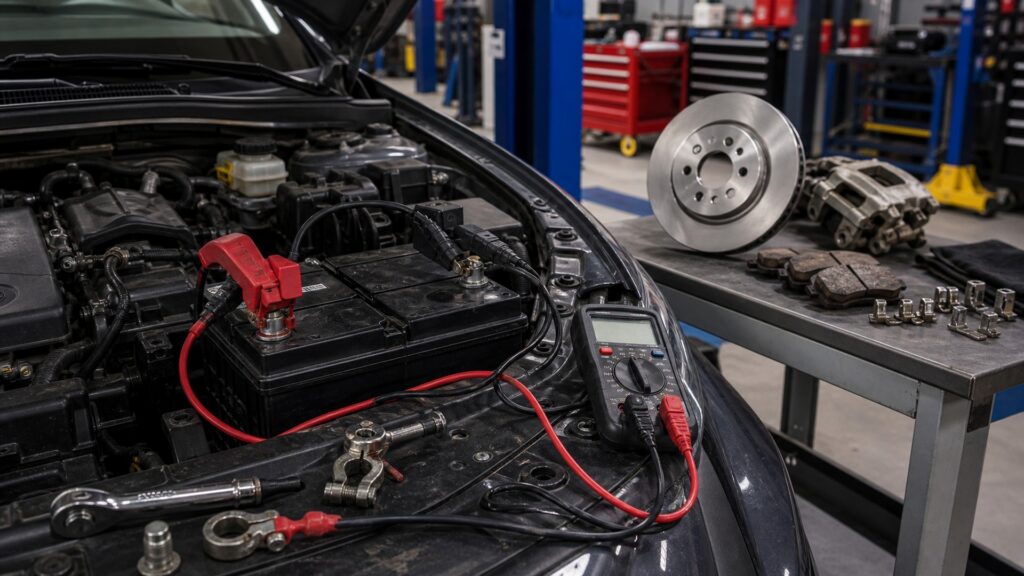
vehicle batteries instead of brake components explainer hero image for Review Streets
What You'll Learn

Choose by the Reserve That Failed

Battery reserve is electrical availability; brake reserve is the ability to slow predictably when a deceleration command arrives.

  • Measure voltage and current together
  • Inspect charging and conversion support
  • Assess pedal and hydraulic behavior
  • Compare wheel drag and temperature
  • Observe regeneration limits
  • Verify electrical and stopping outcomes separately

Tip: Any soft pedal, fluid leak, smoke, severe pull, or grinding with reduced control blocks further driving even if a battery warning is also present.

Definitions

Key Concepts That Define Vehicle Batteries or Brake Components

These terms route overlapping energy and warning complaints toward electrical storage or controlled deceleration.

Loaded Battery Voltage

Terminal potential measured while a defined electrical demand draws current from the battery under stated temperature and charge conditions.

  • Load gives the value meaning
  • Connections add separate loss
  • Architecture sets the threshold

Charge Acceptance

The battery's ability to receive energy at its current chemistry, temperature, state, resistance, and control limits.

  • Cold can reduce acceptance
  • High charge can restrict current
  • Faults may trigger protection

Battery Isolation

Electrical separation between high-voltage conductors and accessible vehicle structure monitored to reduce shock and leakage hazards.

  • Damage can breach barriers
  • Moisture affects measurements
  • Qualified procedures are required

Brake Pedal Travel

The distance and feel through which a brake command develops hydraulic or electronic deceleration response.

  • Air can increase travel
  • Leaks reduce reliable force
  • Integrated systems need procedures

Wheel Drag

Uncommanded resistance to wheel rotation caused by friction, hydraulic, mechanical, bearing, tire, or driveline conditions.

  • Heat may localize the fault
  • Lift tests need safe support
  • Electric range can decline

Regenerative Limit

A control-imposed ceiling on recoverable deceleration energy because of traction, speed, battery, temperature, charge, or component constraints.

  • Friction fills the remainder
  • Limits can be normal
  • Warnings change interpretation

Tip: Record state of charge, pedal state, vehicle speed, requested regeneration, friction contribution, warnings, and temperatures on one timeline before changing either system.

Start with Shared Electrical Symptoms

Battery Weakness Reaches More than One Vehicle Function

Slow cranking, module resets, reduced propulsion power, charge faults, or repeated low-voltage messages point toward storage and distribution. Measure the battery at its terminals while observing the supported loads.

  • Identify auxiliary or traction battery
  • Check voltage under intended load
  • Measure cable losses
  • Verify charger or converter operation

Broad electrical instability belongs upstream of wheel friction.

Follow the Deceleration Command

Brake Evidence Begins when the Vehicle Is Asked to Slow

Pedal input or automated control creates hydraulic pressure, motor action, clamp force, and wheel torque. Long travel, pull, grinding, smoke, or poor stopping must be tested in that chain.

  • Inspect fluid and hydraulic integrity
  • Measure friction hardware
  • Compare wheel response
  • Control the road-test environment

A battery test cannot certify the physical stopping path.

Use Regeneration as a Boundary Test

Recovered Energy Depends on Both Sides without Merging Them

The drive motor can generate electrical power during deceleration, but the pack accepts only what charge, temperature, and controls permit. Friction brakes provide the rest and remain independently necessary.

  • Read requested versus delivered regen
  • Check battery acceptance limits
  • Inspect friction brakes separately
  • Confirm smooth brake blending

Reduced regeneration may be expected at high charge while friction performance remains normal.

Map Heat to Its Source

Cell Resistance and Wheel Friction Warm Different Hardware

Battery current can heat cells, buswork, or terminals; brake drag or repeated stops heat rotors, drums, pads, and wheels. Location, timing, odor, and command state distinguish urgent hazards.

  • Keep away from smoking batteries
  • Measure wheel temperatures remotely
  • Stop for rapid heat rise
  • Follow architecture-specific isolation

Heat is not a generic component verdict; its location chooses the safety response.

Require Two Release Tests when Systems Interact

Electrical Delivery and Stopping Control Must Each Pass

Battery repair ends with correct fitment, connection, loaded delivery, charging, communication, and isolation. Brake repair ends with intact hydraulics, correct friction assembly, free rotation, stable control, and predictable deceleration.

  • Repeat the original electrical load
  • Repeat the original brake command
  • Check warnings across all modules
  • Document independent results

A restored range estimate cannot certify brakes, and a firm pedal cannot certify battery capacity.

Quick Reality Check

Choose Electrical Availability or Deceleration Control

The decision turns on which reserve failed, where heat appears, what command triggers the symptom, and whether regeneration is limited by the pack or friction hardware.

Choose Battery Components When

Loaded voltage, capacity, resistance, state of charge, charge retention, charge acceptance, cable loss, converter or charger interaction, cell balance, thermal data, or isolation evidence fails a documented criterion.

The complaint spans starting, modules, accessories, charging, propulsion, or electrical warnings rather than beginning specifically with pedal application or wheel friction.

Choose Brake Components When

Pedal response, hydraulic pressure, leakage, friction thickness, rotor or drum condition, wheel drag, localized friction heat, stability data, or measured stopping behavior is abnormal.

Control any stopping hazard immediately. Battery overheating, arcing, smoke, damaged high-voltage hardware, or isolation warnings also require shutdown and qualified response before ordinary diagnosis continues.

Common Myths

Misconceptions About Vehicle Batteries or Brake Components

Regenerative braking can make a battery complaint feel like a brake complaint, while low-voltage faults can illuminate brake-control warnings without proving hydraulic failure.

Reduced regeneration means the brake pads are worn

Regeneration can decline because the battery is cold, hot, nearly full, fault-limited, or traction-limited. Inspect friction hardware on its own evidence; pad thickness does not determine how much electrical energy the pack can accept.

A battery warning means braking is mechanically unsafe

Some electrical faults can reduce assistance or regeneration, but the message alone does not prove a fluid leak or worn friction. Follow vehicle guidance, read all modules, and test both electrical supply and braking response.

New brakes will restore lost electric range

Correcting wheel drag can reduce wasted energy, yet pads and rotors cannot restore cell capacity, balance, charge acceptance, or converter output. Measure wheel resistance and battery performance separately before promising a range recovery.

A full traction battery provides stronger stops

High charge can reduce regenerative acceptance, shifting more work to friction brakes. Proper controls preserve requested deceleration, but a changed feel or warning deserves inspection. State of charge alone never certifies stopping performance.

Tip: Separate the commanded stop, electrical acceptance, and mechanical friction response instead of replacing the component named by the first message.

FAQ

Frequently Asked Questions About Vehicle Batteries or Brake Components

These answers address shared warnings, regeneration, wheel drag, low-voltage assistance, heat, and which hazard receives priority.

Can a weak 12-volt battery trigger brake warnings?

Yes. Integrated brake modules, pumps, sensors, and networks require stable low voltage. Test battery posts, grounds, charging support, and module data while still checking actual pedal, hydraulic, and friction performance before clearing the vehicle.

Can dragging brakes make the battery seem weak?

Drag raises propulsion demand and can reduce electric range or fuel economy, but it does not establish lost battery capacity. Compare wheel temperatures and coast behavior while measuring charge state, resistance, and energy use.

Which problem should be repaired first?

Unreliable stopping, fluid leakage, smoke, severe pulling, or grinding with reduced control takes immediate priority. Battery fire, rapid heating, exposed high voltage, or isolation warnings also demand emergency or qualified isolation rather than continued driving.

Why does brake feel change when regeneration is unavailable?

Controls may substitute friction braking when recovered energy is limited, and the transition can feel different by design. Persistent harshness, increased travel, warnings, or reduced deceleration requires manufacturer-specific diagnosis of both blending and friction systems.

What proves the correct category was chosen?

The selected system fails a repeatable measurement tied to the complaint, its repair restores that measurement, and independent tests confirm the other system still meets its electrical or stopping obligations under representative conditions.

Bottom Line

Use vehicle batteries when the failed reserve is electrical—loaded voltage, capacity, charge, connection, acceptance, balance, isolation, or managed power. Use brake components when pedal, hydraulic, friction, wheel, or stopping evidence fails.

Regeneration connects the paths but does not merge them. Stabilize urgent hazards, capture electrical and deceleration data together, then require independent proof that battery delivery and braking control each meet their own release criteria.

Next Steps

Name the Reserve before Naming the Part

Related explainers deepen the battery mechanism, brake energy conversion, and operating limits that determine whether stored energy or controlled deceleration failed.

How Vehicle Batteries Work

Trace chemical storage, direct-current delivery, cell arrangement, charging, and auxiliary versus traction roles.