
Resistance Need
Resistance need means the workout would benefit from more load.
- Example: a weighted vest for controlled step-ups
- Check: confirm the movement is already stable
- Limit: load can reduce speed and range
Use weighted training gear instead of agility training equipment when the workout needs added resistance more than movement cues. Weighted vests, belts, wrist weights, and ankle weights change load. Agility ladders, cones, hurdles, and markers organize footwork, direction changes, and reaction points.
The better choice depends on the missing training quality. If a familiar movement needs more resistance, weighted gear may fit. If the session needs sharper spacing, faster feet, or clearer direction-change practice, agility equipment is usually the better tool.
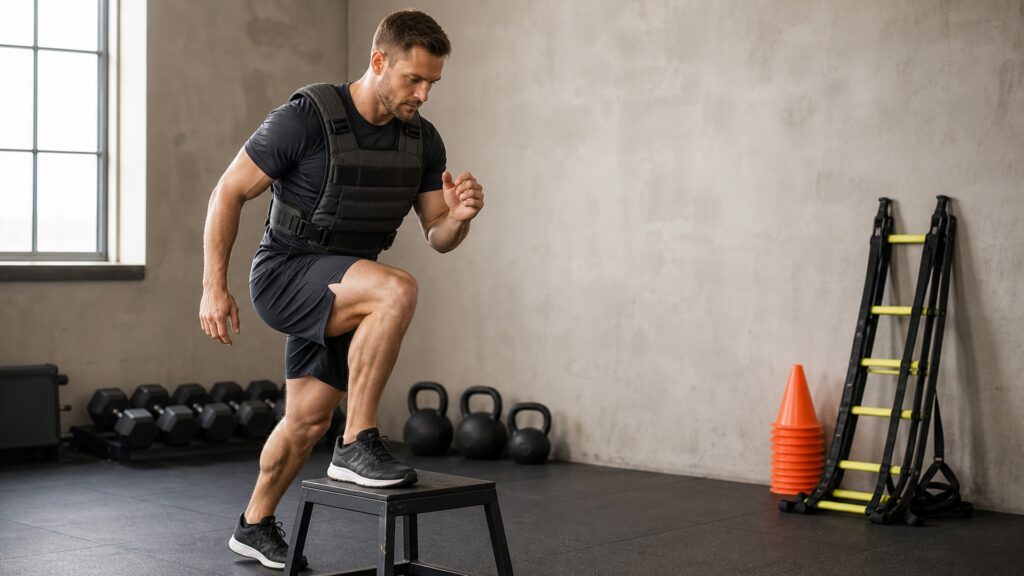
A practical decision guide for choosing weighted gear over agility-focused equipment.
Tip: Choose weighted gear when the workout needs resistance more than movement cues.
These concepts clarify the practical signals readers should check before choosing equipment or planning workouts.
Resistance need means the workout would benefit from more load.
A movement cue tells the user where or when to move.
Agility equipment organizes footwork, spacing, reaction, and direction changes.
A loaded drill uses added resistance during a familiar movement.
Speed quality is how cleanly the user accelerates, brakes, and changes direction.
Training priority is the main quality the session is meant to improve.
Tip: The best equipment choice is the one that matches the training job, available space, and user's current ability.
Weighted gear is the better choice when the exercise is already controlled and needs more resistance. It can help bodyweight strength, loaded walking, carries, step-ups, and some conditioning sessions.
Weighted gear should solve a load problem.
Agility equipment is better when the goal is foot placement, reaction, braking, or direction change. The value comes from the route and cue, not from added resistance.
Agility tools should make movement clearer.
Adding weight to quick cuts or ladder drills can make braking and landing harder to control. Most users should learn the movement unloaded before considering extra resistance.
Fast movement deserves a careful loading decision.
A program may use weighted gear for resistance and agility equipment for movement skill. The categories work well together when they do different jobs.
Different jobs can share the same training week.
If progress is limited by low resistance, weighted gear is the stronger first purchase. If progress is limited by coordination, spacing, or direction-change practice, agility equipment is the clearer choice.
The bottleneck should decide the equipment.
The choice depends on whether the workout needs load or movement organization.
The movement is stable and needs added resistance.
The user wants controlled overload for strength or conditioning.
The session needs footwork, reaction, spacing, or direction changes.
Extra load would slow or distort the movement.
These categories are useful for different reasons.
Extra load can reduce speed and change braking mechanics.
Cones, ladders, and hurdles can organize advanced movement practice.
Repeated agility drills can be demanding without wearable load.
The better option is the one that matches the training priority.
Tip: Treat strong claims as reasons to inspect the workout fit more closely.
Short answers for practical training and buying decisions.
Choose it when controlled movement needs more resistance.
Choose it when the workout needs footwork, spacing, reaction, or direction-change practice.
Yes, but use each category for a separate purpose.
Only after unloaded mechanics are clean and the load does not reduce control.
Use weighted gear for resistance and agility equipment for movement cues.
Use weighted training gear when resistance is the missing piece.
Use agility equipment when the workout needs sharper footwork, reaction, spacing, or direction-change practice.
Use these Review Streets paths to compare related categories and practical next decisions.
Review how wearable load changes training.
See why added load needs a clear job.
Compare load placement with movement quality.
Choose a retailer
Prices checked regularly. We may earn a commission at no cost to you.