
Wiper Chatter
Rapid stick-slip motion of the blade edge across glazing that produces vibration, noise, and incomplete water removal.
- Surface friction drives release
- Arm angle influences reversal
- Rubber condition changes grip
Choose windshield components when the trigger is surface clearing or view quality: wipers chatter or miss sections, washer spray fails, glass is cracked or distorted, fog cannot be cleared, water enters around the opening, or a forward camera is unavailable because its sightline or mounting is wrong.
Choose brake components when the trigger is deceleration: pedal travel or pulsation changes, friction noise begins with braking, a wheel drags or overheats, hydraulic fluid leaks, the vehicle pulls during a stop, or measured stopping response is abnormal. Rain can expose both, and a camera can request automated braking, but the category still follows the failed physical output. Control visibility and stopping hazards before any road reproduction.
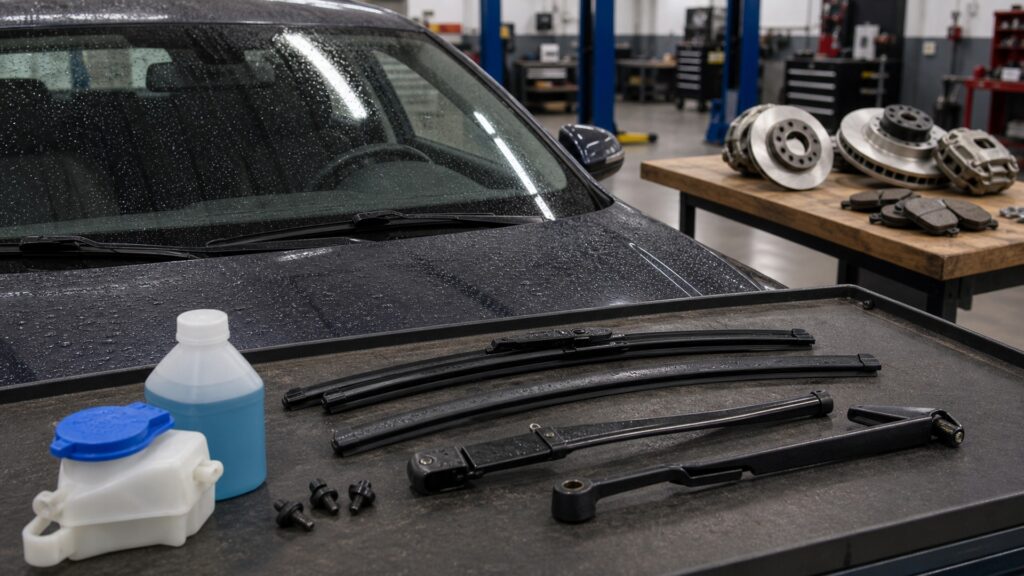
Wiper faults follow blade sweep across glass; brake faults follow wheel rotation and a pedal or automated deceleration command.
Tip: Do not drive to reproduce either complaint when the windshield cannot provide an adequate forward view or the brakes cannot stop predictably.
These terms turn vague reports such as shudder, squeal, weak response, and warning light into distinct visibility or braking evidence.
Rapid stick-slip motion of the blade edge across glazing that produces vibration, noise, and incomplete water removal.
The change in wiping-edge orientation as the blade stops and begins traveling in the opposite direction.
Material, damage, moisture, film, tint, ice, or distortion that removes or degrades part of the usable forward view.
Repeating force or movement felt through the brake pedal as pressure or controlled anti-lock action varies.
Resistance to wheel rotation persisting without the intended brake command because of friction, hydraulic, mechanical, or adjacent faults.
The vehicle's deceleration, direction, stability, and pedal behavior after a defined brake command under stated road and load conditions.
Tip: Capture a short timeline with wiper setting, pedal state, engine and vehicle speed, weather, warning text, noise location, and heat before components cool or dry.
Wiper chatter follows the visible blade stroke and can occur while parked. Brake vibration typically follows wheel rotation and deceleration, changing with road speed, pedal force, temperature, and hardware condition.
Matching the vibration to its moving part narrows the category immediately.
A stalk or automatic rain request powers the wiper motor and washer pump; a pedal or automated stop request builds hydraulic or electromechanical braking force. Log which command precedes the symptom.
A shared switch-on moment is less useful than the specific command path.
Wiper faults leave streaks, skipped bands, rubber residue, arm noise, weak spray, or glass marks. Brake faults leave pad or shoe wear, rotor or drum variation, fluid evidence, wheel heat, drag, or friction debris.
Location prevents the word squeal from becoming a parts order.
A windshield camera may be blocked by rain, fog, ice, dirt, glass damage, or mounting issues. Brake warnings may describe fluid, stability, ABS, assist, electrical supply, or hydraulic faults.
One amber icon cannot establish which component needs replacement.
After windshield work, verify optics, full wet sweep, spray, leaks, defog, sensors, and calibration. After brake work, verify hydraulics, friction assembly, drag, warnings, bedding where required, and controlled stopping.
A quiet drive cannot replace measurements for either system.
Blade sweep, wheel rotation, command state, physical location, warning meaning, and hazard priority route similar noise or vibration toward windshield or brake work.
Chatter follows blade travel; skipped or smeared areas repeat in the wiped field; washer delivery, optical clarity, defogging, leak control, camera sightline, attached hardware, or calibration fails a supported test.
The symptom can occur while stationary and changes with wiping, washing, rain, fog, frost, glass temperature, lighting, or an obstruction at the forward optical surface.
The symptom begins with pedal or automated braking and follows wheel speed, hydraulic pressure, friction force, rotor or drum variation, wheel drag, localized heat, pulling, stability data, or stopping response.
Stop for inadequate view or unreliable braking. Do not select either category from a generic warning, weather coincidence, or one sound when tires, suspension, body, electrical supply, sensors, and controls remain untested.
Both systems can chatter, squeal, vibrate, generate warnings, and behave differently in rain, so symptom adjectives alone are unusually weak evidence.
Wiper motion, road water, tire imbalance, suspension, driveline, road texture, and engine vibration can reach the steering wheel. Brake components become likely only when vibration reliably follows braking and measured wheel-end evidence supports it.
Noise often originates where blade rubber sticks on dry, contaminated, coated, or incorrectly contacted glass. Inspect fluid delivery, surface condition, blade edge, arm angle, pressure, and fitment before condemning the motor.
A visibility-based driver-assistance feature can become unavailable while mechanical brakes remain sound. Clear and inspect the camera view, then diagnose calibration, power, data, and actual brake operation according to the exact warning.
Crosswind, road crown, standing water, tires, alignment, wheel drag, uneven friction, or stability intervention can change direction. Windshield parts affect seeing the path, not the wheel forces that make the vehicle pull.
Tip: Use command, frequency, location, and output together before choosing glass, wiper, washer, hydraulic, or friction parts.
These answers address wiper chatter, brake judder, shared warnings, rain, camera-based braking, heat, and cases where both repairs may be required.
Yes. Blade stick-slip can transmit through the cowl and body, especially while stopped with the brake applied. Turn wipers off only when visibility allows and note whether vibration follows sweep or wheel rotation.
Road and vehicle residues can reach glazing, but the source may be traffic film, washer fluid, wax, oil, or environmental material. Clean safely and inspect wheel leaks separately rather than assigning residue by appearance alone.
Any condition that prevents adequate forward visibility or predictable stopping requires immediate safe action. Record exact messages, stop driving, and obtain qualified inspection; warning hierarchy depends on actual function and manufacturer guidance, not color alone.
Yes. Worn blades may smear rain while water, temperature, or electrical faults expose brake warnings. Document separate triggers, control the more immediate hazard, and require independent visibility and stopping proof after each repair.
Confirm safe visibility and brake control, capture command and frequency, inspect glass and wet sweep, inspect hydraulics and wheel ends, read relevant modules, stabilize electrical supply, reproduce cautiously, then verify each repaired output independently.
Use windshield components when the failure follows blade sweep, washer delivery, optical obstruction, fog clearing, water sealing, or camera sightlines. Use brake components when it follows pedal input, hydraulic force, wheel friction, drag, heat, or stopping response.
Route vague vibration, squeal, and warning complaints by command, frequency, location, and output. If visibility or braking is inadequate, stop testing and arrange qualified service before attempting to reproduce either fault on the road.
Related explainers provide the windshield clearing mechanism, brake deceleration path, and operating evidence needed when rain and vibration make the categories feel similar.
Trace motor, linkage, arm, blade, washer, glass, defogging, and sensor operation through a full visibility cycle.
Trace pedal command, hydraulic force, friction torque, heat, and wheel control through a stop.
Evaluate optical clarity, blade pressure, spray distribution, moisture control, and electronic sightlines under the triggering conditions.
Choose a retailer
Prices checked regularly. We may earn a commission at no cost to you.