
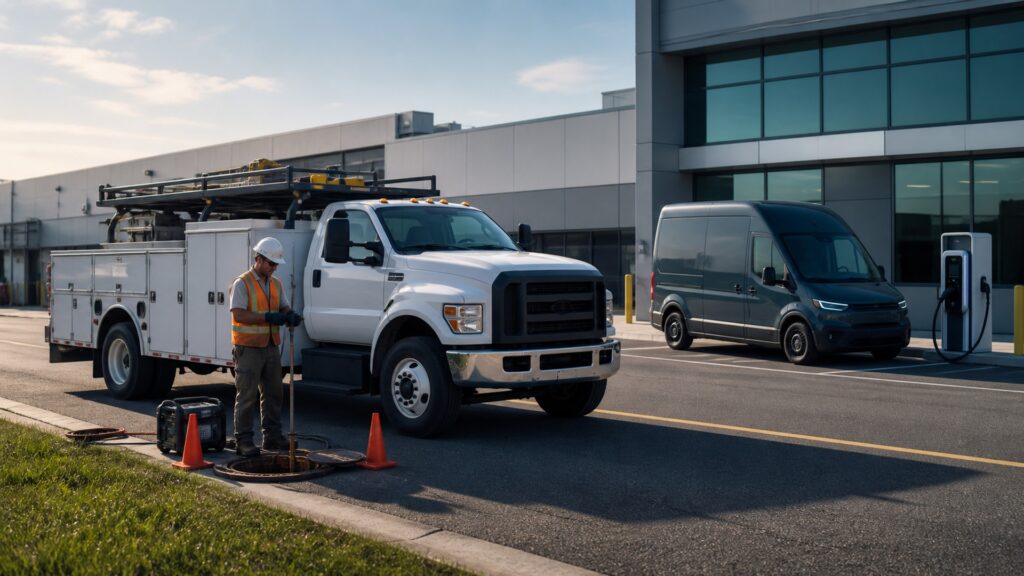
When to Use Work Trucks Instead of Commercial Electric Vehicles

A work truck can itself be a commercial electric vehicle. Work truck describes the job and equipment; electric describes the propulsion system. The practical decision is whether a particular conventional work truck or an electric alternative can perform the same assignment with the required body, load, equipment output, and energy supply.

A conventional truck can make more sense when a suitable electric configuration or dependable charging arrangement is not available for the required duty. An electric work truck can make sense when the complete assignment and charging schedule have been demonstrated. Compare finished vehicles and an actual operating plan, rather than assuming either power source guarantees suitability.

By: Review Streets Research Lab
Updated: October 6, 2026
Explainer · 8-12 min read
work trucks explainer hero image for Review Streets
What You'll Learn

Compare Two Ways to Perform the Same Truck Job

Separate body capability from energy supply and test both against the assignment.

  • Recognize electric work trucks as an overlapping category.
  • Define the required body and equipment first.
  • Include travel and stationary energy demands.
  • Check real charging access and turnaround time.
  • Evaluate readiness, support, and total operating requirements.

Tip: Use the same crew, load, equipment duty, and route when assessing both candidates.

Definitions

The Requirements Behind a Practical Powertrain Choice

These concepts help compare working capability without confusing it with propulsion.

Vocational configuration

The vocational configuration is the body and equipment that let the vehicle perform its job.

  • Example: a service body with a specified equipment package
  • Check: the completed working arrangement
  • Limit: propulsion type does not establish body suitability

Battery-electric truck

A battery-electric truck uses stored electrical energy and electric motors for propulsion.

  • Example: a truck recharged during a planned depot stop
  • Check: the particular battery and charging capabilities
  • Limit: electric does not mean the truck lacks vocational equipment

Duty profile

The duty profile describes the representative travel and work demands of an assignment.

  • Example: road travel followed by several hours of equipment use
  • Check: distance, conditions, load, and working time
  • Limit: an average mileage figure may conceal demanding days

Auxiliary energy demand

Auxiliary energy demand is energy used by equipment or other loads beyond propulsion.

  • Example: power supplied to tools, a lift, or cabin climate systems
  • Check: the actual source and amount of energy used
  • Limit: equipment capability and travel range need separate checks

Charging window

A charging window is time when the vehicle can access suitable charging without disrupting required work.

  • Example: a predictable overnight depot stay
  • Check: available dwell time and a compatible working charger
  • Limit: parked time is not charging time unless access exists

Operational reserve

Operational reserve is planned capacity to handle foreseeable variation in the assignment.

  • Example: extra travel caused by a detour or additional call
  • Check: the operator's validated reserve policy
  • Limit: a single universal percentage does not suit every job

Tip: A suitable energy plan cannot compensate for the wrong body, and the right body cannot compensate for an inadequate energy plan.

Job First

Start with a Body and Equipment That Can Do the Work

Before comparing propulsion, establish the required load space, access, crew seating, and attachments. Confirm that each proposed finished vehicle supports those needs. If one candidate cannot accept the needed equipment or cannot carry the assignment within its limits, the comparison is already decided for that job. A vehicle that works for parcel delivery may not substitute for a specialized service truck.

  • Specify the complete body and equipment package.
  • Check the finished loaded configuration.
  • Use the same essential job requirements for both.

A conventional truck is a reasonable choice when it provides a necessary working configuration that the available electric candidate does not.

Duty

Assess a Demanding Representative Day, Not Only an Average

Record the actual route, load, stops, terrain, weather exposure, and equipment use. For an electric candidate, obtain a vehicle-specific assessment or demonstration that includes auxiliary demands and a realistic reserve. Do the equivalent fuel and equipment assessment for the conventional truck. Avoid translating a passenger-car range figure into a promise about a loaded vocational vehicle.

  • Include stationary equipment use.
  • Represent demanding but foreseeable assignments.
  • Validate performance with the actual configuration.

The Department of Energy highlights duty requirements, environmental conditions, and auxiliary loads when evaluating electric fleet applications. DOE electric-fleet duty guidance.

Energy Access

Charging Must Be Available When the Truck Is Available

A return-to-base truck with a predictable dwell period may fit a planned charging routine. A truck dispatched unpredictably between distant sites presents a different problem. Check compatibility, physical access, available power, and how charging fits the timetable. Public charging should be treated as a verified operating option, including access for the completed vehicle, rather than a map symbol alone.

  • Identify the actual charging locations.
  • Check dwell time and vehicle compatibility.
  • Confirm how the plan handles a busy or unavailable charger.

DOE fleet-charging guidance considers duty cycles, garaging locations, vehicle models, and off-site charging when planning infrastructure. DOE fleet-charging considerations.

Readiness

The Vehicle and Its Supporting Site Must Be Ready Together

An electric truck may arrive before a depot installation is usable, or a specialized conventional upfit may have its own delivery and commissioning delay. Ask for a coordinated readiness plan covering vehicle, equipment, energy supply, training, and service support. A proposed future capability should not be counted as available for a job that must start sooner.

  • Confirm vehicle and upfit delivery dates.
  • Establish when the energy arrangement becomes usable.
  • Plan service and temporary coverage.

Where charging work is required, coordinate the site, utility, and installer early; infrastructure development is part of deployment, not a detail to solve after the truck arrives. DOE charging-infrastructure development.

Decision

Choose the Configuration with a Demonstrated Operating Plan

Compare the complete ownership and operating requirements over the same period: vehicle, body, energy access, service, training, and downtime coverage. Battery-electric vehicles have different maintenance needs, but the body, tires, brakes, and task equipment still require care. Use actual quotations and duty evidence instead of a universal savings claim. A limited trial can expose assumptions before a wider commitment.

  • Compare like-for-like job capability.
  • Include supporting equipment and service arrangements.
  • Document what the trial did and did not demonstrate.

Use the conventional work truck when it is the proven practical fit for the assignment; use the electric work truck when its capability and energy plan are equally well established. DOE electric-vehicle maintenance.

Quick Reality Check

When Each Operating Plan Can Make Sense

The boundary is the assignment and support available, not whether a vehicle is called a truck.

A Conventional Truck Can Fit Better When

The required body or equipment is unavailable on a suitable electric candidate.

Unpredictable duty or inadequate verified charging prevents a dependable electric operating plan.

An Electric Work Truck Can Fit Well When

The complete load and equipment duty are supported by the chosen configuration.

Travel, charging windows, infrastructure, and service arrangements have been validated together.

Common Myths

Misconceptions About Work Trucks and Commercial EVs

Avoid turning overlapping descriptions into an artificial either-or choice.

Work trucks cannot be electric

A vocational truck can use electric propulsion.

A published range figure proves job suitability

Actual load, environment, route, equipment use, and reserve requirements need assessment.

Electric propulsion eliminates maintenance

The vehicle and its body and equipment still need the applicable inspections and service.

Tip: Choose between specific working configurations with credible energy plans.

FAQ

Questions About Conventional and Electric Work Trucks

Answers for evaluating the same assignment with different power sources.

Does frequent return to base guarantee an EV will work?

No. It may help charging, but the actual duty, charger access, dwell period, and equipment demands still need validation.

Can equipment power affect the assessment?

Yes. Establish how the equipment is powered and include its demand in the operating plan.

Is public charging enough for a commercial truck?

It can be part of a plan if access, compatibility, capacity, timing, and backup arrangements are verified for the actual vehicle.

What if neither candidate has been demonstrated?

Resolve the missing duty and support evidence before treating either as a dependable replacement.

Bottom Line

Choose the truck that can perform the complete assignment with a dependable energy and support plan; work-truck capability and electric propulsion are compatible concepts.

A conventional truck may be the practical choice for an unsupported duty, while a validated electric configuration may serve a suitable assignment well.

Next Steps

Go Deeper or Compare Your Options

Use these Review Streets paths to compare related categories and practical next decisions.