Why Aftermarket Automotive Replacement Parts Matters

Aftermarket automotive parts matter because a vehicle's service life extends beyond one manufacturer's inventory, pricing, and design choices. Independent application catalogs and wider parts availability can keep common repairs possible, offer multiple construction levels, address known service problems, and create price competition. That breadth supports older vehicles when an original channel is slow or uneconomic.

Breadth also creates variation. Two products listed for the same application may differ in materials, tolerances, included hardware, validation, instructions, and warranty support. The useful question is not whether aftermarket is good or bad. It is whether a named supplier can document fitment, specifications, quality control, and recourse for this function and whether the installer can verify the result.

By: Review Streets Research Lab
Updated: August 26, 2026
Explainer · 8-12 min read
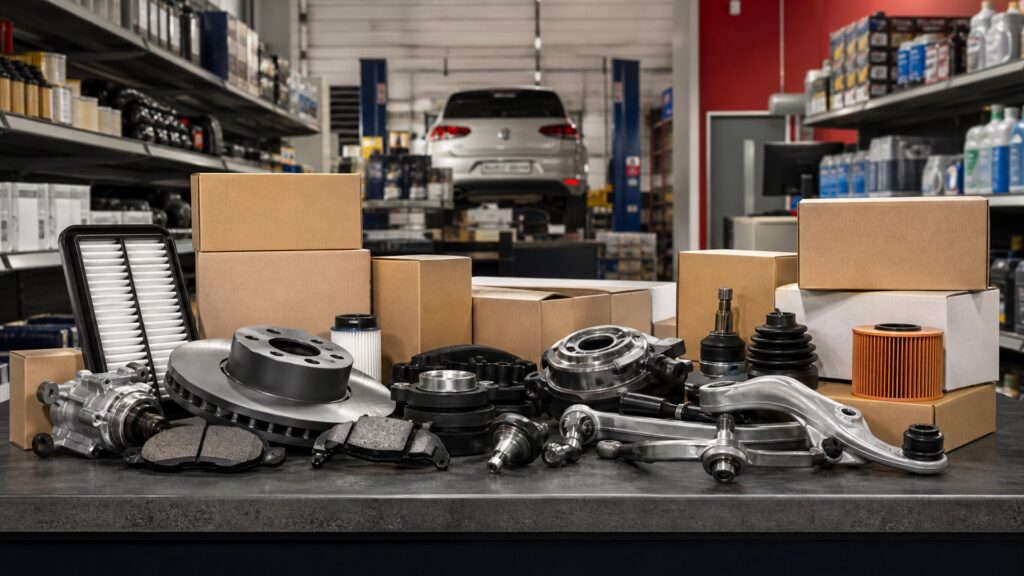
aftermarket automotive replacement parts explainer hero image for Review Streets
What You'll Learn

From Open Competition to a Defensible Part Choice

The aftermarket matters because it expands supply and design options, but every option must survive application, specification, supplier, installation, and verification checks.

  • How independent catalogs establish coverage
  • Why one application can have several grades
  • Where redesigned parts may help
  • How warranty causation actually works
  • What traceability reveals
  • Why post-installation testing remains essential

Tip: Ignore the word aftermarket until you can name the manufacturer, product line, application note, warranty, and evidence behind the specific part.

Definitions

Key Concepts That Define Aftermarket Automotive Replacement Parts

These concepts separate an open supply market from the evidence needed to trust an individual component.

Aftermarket Part

A replacement component made outside the vehicle manufacturer's authorized service brand.

  • May follow or intentionally alter original specifications
  • Quality varies among manufacturers and lines
  • Fitment still requires exact application data

Application Coverage

The vehicles and configurations a supplier says a product fits.

  • Catalog depth can differ
  • Notes may include production splits
  • A listing does not prove root cause

Service Grade

A product line designed to restore ordinary function at a defined cost and life expectation.

  • The term is not universally standardized
  • Materials and included hardware can vary
  • Written specifications matter more than labels

Design Revision

A supplier change intended to alter durability, installation, or performance relative to an earlier design.

  • The claimed failure mode should be identified
  • Testing should match the claim
  • A change can introduce new tradeoffs

Supplier Traceability

Evidence identifying the manufacturer, plant or batch, seller, and transaction.

  • Supports authenticity and claims
  • Distinguishes makers from house brands
  • Marketplace anonymity increases uncertainty

Warranty Causation

The link between a replacement part or installation and damage claimed under another warranty.

  • Aftermarket use alone is not automatic cancellation
  • A caused failure can affect related coverage
  • Records help resolve disputes

Tip: Evaluate the maker and product line, not merely the sales channel; the same retailer may carry excellent, basic, and unidentified choices.

Market Function

How Independent Supply Extends Vehicle Serviceability

Aftermarket manufacturers aggregate demand across many vehicles and years, allowing them to keep wear and repair components available after original demand declines. Multiple suppliers also reduce dependence on one catalog or distribution network.

  • Broader coverage supports aging fleets
  • Competing lines create price and feature choices
  • Regional warehouses can reduce downtime
  • Low-volume applications may still remain scarce

Supply diversity matters most when the exact application is documented rather than approximated.

Specification Choice

Why the Same Fitment Can Produce Different Products

A catalog position defines the vehicle application, not every material, coating, tolerance, bearing, fastener, or test. Suppliers may target economy, original-equivalent service, severe duty, easier installation, or specialized performance.

  • Compare dimensions and rated capacity
  • Identify material and coating differences
  • Check included hardware and instructions
  • Match the grade to the duty cycle

Application equivalence and product equivalence are separate questions.

Design Alternative

When a Revised Aftermarket Design Can Add Value

Independent suppliers sometimes redesign a weak joint, serviceable subassembly, corrosion barrier, or installation feature. A credible improvement names the failure mechanism and provides construction or test evidence instead of relying on vague claims such as premium or heavy duty.

  • Ask which failure mode changed
  • Look for measurable construction differences
  • Check compatibility with surrounding parts
  • Consider new noise, stiffness, or service tradeoffs

A redesign is useful only when its mechanism matches the vehicle's actual need.

Evidence Filter

How Manufacturer Identity Changes Risk

A recognized manufacturer with technical data, catalog notes, support contacts, and a usable warranty offers a different risk profile from an anonymous listing. Retailer reputation helps, but it cannot replace knowing who designed and stands behind the component.

  • Find the actual manufacturer
  • Read technical and warranty documents
  • Verify authorized distribution
  • Inspect labeling before installation

Traceability turns a low price into an assessable offer rather than a gamble.

Repair Proof

Why Installation and Functional Testing Decide the Outcome

An aftermarket part must enter the same controlled repair loop as any other source: confirmed diagnosis, exact fitment, clean installation, specified torque, calibration where required, and a test that reproduces the original operating condition.

  • Document baseline measurements
  • Follow supplier and vehicle procedures
  • Check adjacent worn components
  • Repeat the symptom-triggering condition

The final test evaluates the installed system, not a category reputation.

Quick Reality Check

Choice and Availability with Uneven Evidence

The aftermarket can improve repair access and product choice while demanding more supplier-level scrutiny.

What the Market Adds

Independent production can preserve serviceability, reduce downtime, create price competition, and offer construction tailored to particular duty cycles.

A documented redesign can address a specific service weakness when its materials, geometry, and validation support the claim.

What the Label Cannot Tell You

Aftermarket alone says nothing decisive about manufacturer competence, material grade, counterfeit exposure, or fitment accuracy.

No supplier claim can rescue an incorrect diagnosis, damaged companion component, poor installation, or omitted calibration.

Common Myths

Misconceptions About Aftermarket Automotive Replacement Parts

Aftermarket myths usually make the category either universally inferior or automatically equivalent.

All aftermarket parts are cheap copies

The category includes basic replacements, original-equipment suppliers' service lines, redesigned problem-solvers, motorsport products, and anonymous copies. Manufacturer identity, construction, testing, and application documentation distinguish them; the word aftermarket does not.

Every listed part meets the original specification

A seller's fitment listing can mean only that the part attaches to a vehicle. Materials, capacity, signal range, durability testing, noise, and included hardware may differ, so compare the function-specific specification.

Aftermarket use automatically ends the vehicle warranty

FTC guidance says using aftermarket or recycled parts does not by itself void coverage. A manufacturer may dispute damage caused by a defective component or improper installation, making diagnosis, invoices, and repair records important.

A lifetime warranty proves the highest quality

Warranty duration does not reveal failure rate, labor coverage, shipping cost, exclusions, or company stability. Read the remedy and calculate the cost of repeating installation before treating long coverage as product evidence.

Tip: Replace the category verdict with manufacturer, product-line, application, specification, and repair evidence.

FAQ

Frequently Asked Questions About Aftermarket Automotive Replacement Parts

These answers focus on supplier selection, certifications, severe-duty claims, online listings, and documentation after installation.

How do I identify the actual manufacturer?

Check the box, molded or stamped marks, technical sheet, warranty issuer, and catalog website. A retailer or marketplace brand may not be the producer, so trace who publishes the specification and accepts claims.

Does certification guarantee fitment and durability?

A certification can show that defined tests or processes were met within its scope. It does not prove every vehicle application, installation, long-term outcome, or claim outside that scope; read what the program evaluates.

When does a severe-duty part make sense?

Choose it when the construction addresses a real load such as towing heat, repeated stops, corrosion, impact, or fleet mileage. Added stiffness, noise, weight, cost, and companion-component wear may be tradeoffs.

Can I trust a marketplace fitment checker?

Use it as a lead, then cross-check the manufacturer's catalog, VIN or option split, dimensions, ratings, connector details, and service notes. Anonymous seller compatibility text is not adequate evidence for a critical function.

What records should accompany the repair?

Keep the supplier name, product line, part and lot numbers, seller, invoice, vehicle mileage, diagnostic measurements, installation procedure, calibration result, and verification test. Those records make future troubleshooting and warranty claims far clearer.

Bottom Line

Aftermarket replacement parts matter because independent supply expands availability, competition, design choices, and the economic service life of vehicles.

Judge the named manufacturer and product line against the exact application and duty, then prove the installed result; neither suspicion nor enthusiasm for the entire category is a sound repair method.

Next Steps

Compare Independent Choice with Controlled OEM Supply

Use the source comparison and complete repair workflow to decide when broader options outweigh the documentation advantages of the vehicle-maker channel.