Why Auto Reliability Matters

Auto reliability matters because the purchase price is only the beginning of ownership. A vehicle that starts consistently, avoids major repairs, and wears predictably can save time, money, stress, and resale-value loss.

This explainer breaks reliability into design, manufacturing, maintenance, age, data quality, and repair complexity so readers can judge claims more carefully than a simple reputation score allows.

By: Review Streets Research Lab
Updated: June 23, 2026
Explainer · 8-12 min read
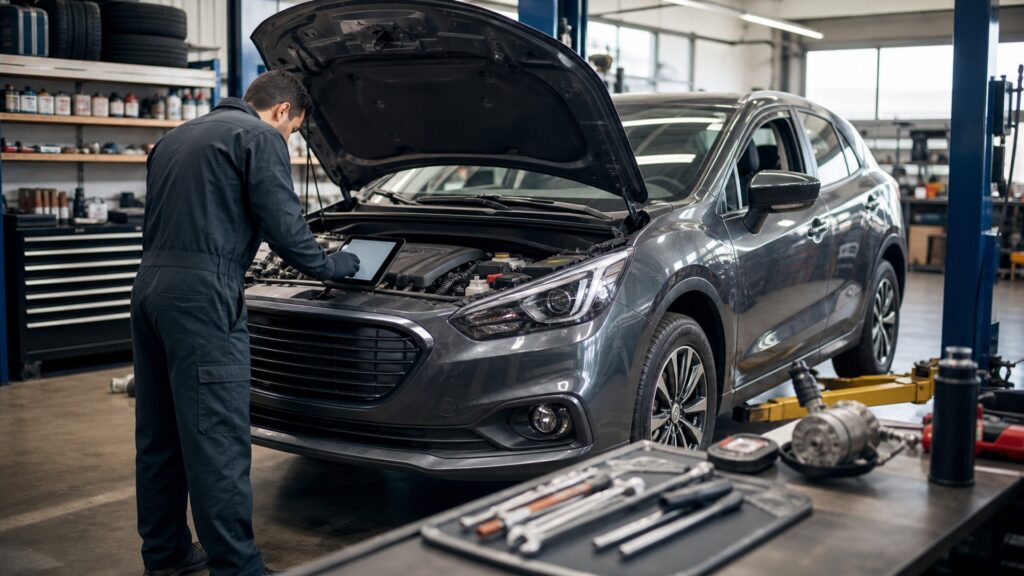
modern vehicle in a clean service bay suggesting inspection and reliability
What You'll Learn

How Reliability Shapes Long-Term Ownership

A practical explanation of failure risk, maintenance, repair complexity, data signals, and the limits of brand reputation.

  • What reliability means beyond whether a vehicle starts
  • How design, manufacturing, and supplier quality affect failures
  • Why maintenance changes the odds of long-term problems
  • How recalls, service bulletins, and owner reports differ
  • Where age, mileage, climate, and driving patterns change reliability
  • Why repair cost and downtime matter alongside failure rate
  • How to read reliability claims without treating them as guarantees

Tip: Read the concept as part of a system, then connect it back to the use case.

Definitions

Key Concepts That Define auto reliability

These definitions connect the main idea to the variables, limits, and practical signals readers need to compare options.

Failure Rate

How often a component or system stops working as intended over a given period, mileage, or use pattern.

  • Meaning: Estimates problem frequency
  • Includes: Mechanical, electrical, software, and wear-related failures
  • Decision signal: Helps compare risk, not certainty

Durability

The ability of parts and systems to keep performing under repeated load, heat, vibration, moisture, and time.

  • Meaning: Describes resistance to wear and degradation
  • Includes: Materials, seals, bearings, electronics, and structure
  • Decision signal: Matters for high-mileage or harsh-use ownership

Maintenance Interval

The scheduled timing for fluids, filters, inspections, adjustments, and replacements that preserve system health.

  • Meaning: Defines routine care expectations
  • Includes: Oil, coolant, brakes, tires, belts, filters, and inspections
  • Decision signal: Affects cost, convenience, and preventable failures

Repair Complexity

How difficult, expensive, or specialized it is to diagnose and fix a vehicle when something fails.

  • Meaning: Connects reliability to ownership impact
  • Includes: Labor access, parts availability, software tools, and calibration
  • Decision signal: Changes downtime and repair bills

Service Bulletin

Manufacturer guidance that helps technicians diagnose or repair known issues outside a formal safety recall.

  • Meaning: Documents recurring problems or repair procedures
  • Includes: Technical service bulletins and updated procedures
  • Decision signal: Shows patterns that may not appear in marketing

Ownership Data

Reports from owners, fleets, warranty claims, inspections, and surveys that reveal real-world reliability patterns.

  • Meaning: Adds evidence beyond brand reputation
  • Includes: Complaint rates, repair histories, surveys, and recall records
  • Decision signal: Stronger when sources are broad and current

Tip: Keep the definitions connected; the strongest answer usually comes from the whole system, not one term.

Reliability Path

How Small Issues Become Ownership Problems

Reliability is a chain from design choices to daily use. A weak component, poor maintenance habit, harsh environment, or difficult repair can turn a small issue into downtime and cost.

  • Design sets the baseline for expected stress and wear
  • Manufacturing consistency determines whether parts meet that design
  • Maintenance keeps fluids, cooling, tires, and wear items in range
  • Diagnostics and repair access determine how quickly faults are corrected
  • Owner use changes the load placed on every system

Reliability is strongest when design, care, and serviceability all support the same ownership pattern.

Data Signals

Why Reliability Evidence Needs More Than Reputation

Brand reputation can be useful, but it is too broad to answer every vehicle question. Model year, powertrain, trim, supplier parts, software updates, and owner use can change the reliability picture.

  • A reliable brand can still have a weak model year or component
  • Warranty claims show repair patterns but may miss out-of-warranty issues
  • Owner surveys capture experience but can reflect sample bias
  • Recall and complaint records highlight issues that deserve closer review

Good reliability judgment weighs several data signals instead of one ranking.

Tradeoffs

Where Reliable Design Can Still Create Costs

A reliable vehicle can still be expensive to maintain or repair. Complexity, part prices, packaging, calibration requirements, and limited service access can make rare failures feel costly.

  • Advanced systems can reduce failures in one area while adding specialized repairs
  • Tight packaging can raise labor time for ordinary service
  • Rare parts or brand-specific tools can extend downtime
  • Long maintenance intervals require the correct fluids and service discipline

Reliability should be read with repair cost and service access, not only problem frequency.

Real-World Limits

Why Age, Climate, and Use Change Reliability

Vehicles do not age in a vacuum. Heat, cold, salt, dust, short trips, towing, stop-and-go traffic, and deferred maintenance can shift reliability faster than mileage alone suggests.

  • Heat stresses batteries, cooling systems, seals, and electronics
  • Short trips can prevent fluids and exhaust systems from reaching ideal temperature
  • Road salt and moisture accelerate corrosion and electrical issues
  • Towing and heavy loads increase demand on cooling, brakes, and drivetrains

The same vehicle can have different reliability outcomes under different ownership conditions.

Practical Check

How to Use Reliability Before Choosing

A practical reliability check connects model history, powertrain, mileage, maintenance records, inspection results, and repair access. The goal is not certainty; it is reducing avoidable risk.

  • Check the specific model year and powertrain, not only the badge
  • Review maintenance records and skipped service intervals
  • Look for recurring recalls, bulletins, and owner complaints
  • Estimate repair access, parts availability, and warranty coverage
  • Balance reliability with safety, efficiency, comfort, and actual vehicle needs

Reliability matters most when it is tied to the exact vehicle and ownership plan.

Quick Reality Check

Where Reliability Helps and Where It Cannot Promise Everything

A balanced look at reliability as risk reduction, not a guarantee that a vehicle will never fail.

What Reliability Clarifies

It helps buyers think beyond purchase price by estimating repair risk, downtime, resale value, and confidence over years of ownership.

It also separates predictable wear from warning signs such as repeated failures, hard-to-source parts, and model-year-specific problems.

Where Reliability Needs Context

Reliability data cannot predict every individual vehicle because prior care, environment, mileage, accidents, and repair quality matter.

A strong reputation can also hide expensive maintenance needs or rare failures that are costly when they occur.

Common Myths

Misconceptions About auto reliability

Common shortcuts and misunderstandings can make the topic seem simpler than it is.

Reliable cars never need repairs

Reliability means lower risk and more predictable ownership, not zero repairs. Tires, brakes, fluids, batteries, filters, belts, suspension parts, alignments, and software updates still require attention over time, mileage, and seasonal use.

Brand reputation is enough

Brand reputation can be a useful starting point, but model year, powertrain, trim, supplier parts, maintenance history, climate, and previous ownership often matter more for the exact vehicle being considered.

Low mileage always means reliable

Low mileage can help, but age, storage conditions, short trips, corrosion, old fluids, and deferred maintenance can still create problems. A lightly driven vehicle may need catch-up service soon.

More technology always hurts reliability

Technology can add complexity, but it can also monitor faults, prevent damage, and reduce wear. The reliability question is whether the design, software, service support, and parts quality are proven.

Tip: Treat strong claims as starting points for comparison, not final answers.

FAQ

Frequently Asked Questions About auto reliability

Concise answers to common questions readers may have after the main explanation.

What does auto reliability really mean?

Auto reliability means a vehicle is likely to perform as intended with fewer unexpected problems over time. It includes mechanical durability, electronic stability, maintenance sensitivity, repair cost, and downtime risk.

Why does reliability matter financially?

Reliability affects repair bills, missed work, rental costs, resale value, warranty use, and stress. A cheaper vehicle can become expensive if frequent failures create downtime and major repairs quickly over several ownership years.

How should I compare reliability data?

Compare the specific model year, engine, transmission, trim, and ownership history whenever possible. Use multiple sources, including recalls, service bulletins, owner reports, inspections, and documented maintenance records together before trusting conclusions.

Can maintenance improve reliability?

Yes. Maintenance cannot fix every design weakness, but it reduces preventable failures by controlling heat, friction, contamination, tire wear, brake condition, fluid breakdown, leaks, corrosion, vibration, and early warning signs.

Is a reliable vehicle always the best choice?

Not always. Reliability is important, but buyers still need to consider safety, fuel economy, comfort, cargo space, driving needs, price, warranty, parts availability, and whether repairs are accessible locally enough.

Bottom Line

Auto reliability matters because it turns a vehicle choice into a long-term ownership risk decision.

The practical takeaway is to compare the exact model, maintenance history, repair complexity, and use case instead of trusting reputation alone.

Next Steps

Go Deeper or Compare Your Options

Use these Review Streets paths to connect the explainer to related categories, comparisons, and next decisions.

Quick Summary

auto reliability Explained

  • Reliability is lower repair risk and more predictable ownership.
  • Model year, powertrain, maintenance, and use can outweigh brand reputation.
  • Repair complexity and parts access affect downtime and cost.
  • Age, climate, mileage, and driving pattern change outcomes.
  • The strongest reliability check uses multiple evidence sources.