
Why Auto Safety Ratings Matter

Auto safety ratings matter because they translate complex crash tests, injury measurements, and prevention technology into a comparison point buyers can understand. They are not perfect predictions, but they help reveal meaningful differences in protection and avoidance.

This explainer shows how ratings are built, what they can and cannot tell you, and why the best reading combines test scores with vehicle size, visibility, braking performance, driver-assistance behavior, and real use.

By: Review Streets Research Lab
Updated: June 23, 2026
Explainer · 8-12 min read
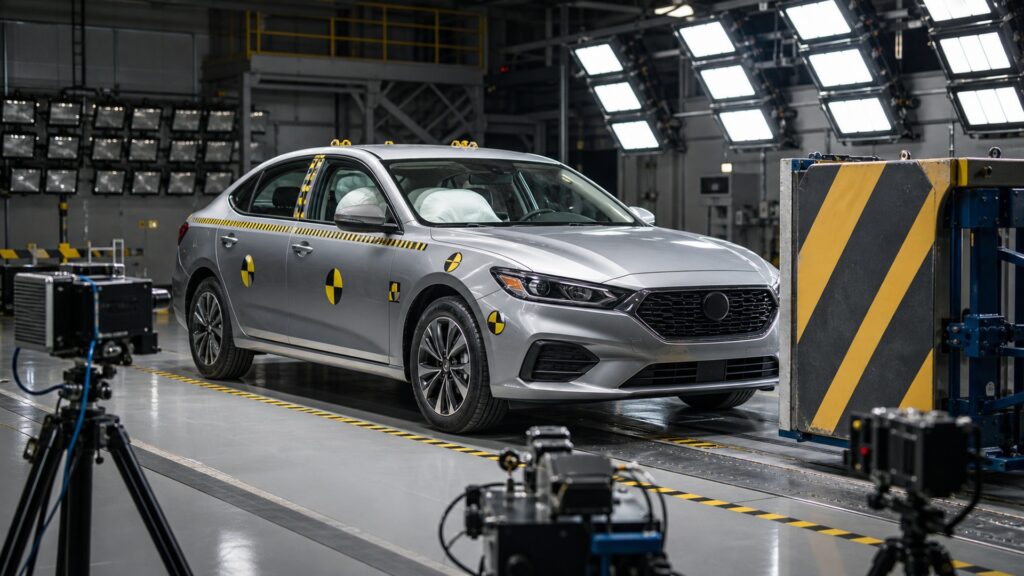
editorial automotive safety testing scene with crash-test equipment and modern vehicles
What You'll Learn

How Auto Safety Ratings Turn Tests Into Buying Signals

A practical explanation of crash ratings, safety awards, driver-assistance scores, and the context buyers need before treating a rating as final.

  • What safety ratings measure in crashworthiness and crash avoidance
  • Why test protocols matter as much as the star or award label
  • How injury metrics are translated into consumer-facing scores
  • Where driver-assistance features can improve or complicate safety
  • Why vehicle class, size, and crash compatibility change interpretation
  • How ratings can become outdated when test standards change
  • Which safety details deserve a closer look before choosing a vehicle

Tip: Read the concept as part of a system, then connect it back to the use case.

Definitions

Key Concepts That Define auto safety ratings

These definitions connect the main idea to the variables, limits, and practical signals readers need to compare options.

Crashworthiness

The vehicle's ability to protect occupants during a crash by managing energy and preserving survival space.

  • Meaning: Measures protection after impact begins
  • Includes: Structure, airbags, belts, restraints, and load paths
  • Decision signal: Helps compare occupant protection within test conditions

Crash Avoidance

Systems and design traits that help reduce the chance or severity of a collision before impact.

  • Meaning: Focuses on prevention rather than only protection
  • Includes: Braking, lighting, visibility, stability, and alerts
  • Decision signal: Matters in everyday driving and emergency response

Test Protocol

The exact procedure used to score a vehicle, including speed, angle, barrier type, dummy placement, and measured injuries.

  • Meaning: Defines what the rating actually represents
  • Includes: Frontal, side, rollover, pedestrian, and prevention tests
  • Decision signal: Explains why ratings change when tests change

Injury Metric

A measured value from crash-test dummies that estimates risk to specific body regions.

  • Meaning: Converts sensor data into safety scoring
  • Includes: Head, neck, chest, leg, and pelvis measurements
  • Decision signal: Reveals strengths or weak points beyond the headline rating

Driver Assistance

Electronic features that warn, intervene, or help maintain control, but still require an attentive driver.

  • Meaning: Supports prevention and mitigation
  • Includes: Automatic emergency braking, lane support, blind-spot alerts
  • Decision signal: Depends on calibration, conditions, and driver use

Rating Date

The model year and test-standard context behind a published score or award.

  • Meaning: Shows when the rating was earned
  • Includes: Test version, equipment assumptions, and model-year changes
  • Decision signal: Prevents comparing old and new standards as equal

Tip: Keep the definitions connected; the strongest answer usually comes from the whole system, not one term.

Rating Path

How a Vehicle Becomes a Safety Score

A safety score starts with controlled tests, then turns measurements into public ratings. The path matters because every rating reflects specific crash types, equipment assumptions, and scoring thresholds.

  • Vehicles are tested under defined speeds, angles, and impact conditions
  • Dummies and sensors record force, movement, and injury-risk indicators
  • Structural performance and restraint behavior are reviewed together
  • Crash-avoidance systems may be evaluated separately from impact protection
  • Final labels simplify the evidence but do not replace the underlying details

The rating is useful when the buyer understands what was tested and what was not.

Prevention Systems

How Active Safety Changes the Risk Picture

Modern safety ratings increasingly consider whether a vehicle can help avoid or reduce a crash. These systems can be valuable, but their usefulness depends on sensors, software, weather, speed, and driver response.

  • Automatic emergency braking may reduce impact speed in some scenarios
  • Lane systems depend on clear markings and driver engagement
  • Blind-spot alerts help with awareness but do not create space
  • Headlight performance affects how early hazards become visible

Active safety adds prevention context, but it is not a substitute for attentive driving.

Comparison Tradeoffs

Why Ratings Need Vehicle-Class Context

Ratings are strongest when comparing vehicles tested under the same protocol and within a similar class. Size, ride height, weight, and vehicle geometry can change real crash interactions beyond the lab scenario.

  • A top score within one class does not make all vehicles equally protective
  • Small and large vehicles interact differently in multi-vehicle crashes
  • Visibility, braking distance, and maneuverability also affect risk
  • Optional safety packages can change what equipment a rating assumes

The better comparison asks what rating, what class, what equipment, and what test year.

Real-World Limits

Why a Rating Cannot Predict Every Crash

Safety ratings are controlled evidence, not a map of every road hazard. Real crashes vary by angle, speed, occupant size, seat position, cargo, weather, tire condition, and the behavior of other drivers.

  • Crash tests cover important repeatable scenarios but not every collision
  • Occupant seating position and belt use can change protection
  • Tire condition and braking maintenance influence crash avoidance
  • Road design and driver behavior often matter before the impact occurs

Ratings reduce uncertainty, but they cannot guarantee outcomes in every crash.

Practical Check

How to Use Safety Ratings Before Buying

The smartest use of ratings is to narrow risk, then look deeper at the safety details that match the buyer's real driving environment. Families, commuters, teen drivers, and rural drivers may prioritize different risks.

  • Compare ratings from the same model year and testing organization
  • Confirm whether the scored vehicle had the same safety equipment
  • Look for weak subtests hidden behind strong overall labels
  • Check braking, visibility, headlights, and driver-assistance behavior
  • Balance crash protection with reliability, tires, maintenance, and driver training

A rating matters most when it becomes a checklist, not a shortcut.

Quick Reality Check

Where Safety Ratings Help and Where They Need Context

A balanced view of safety scores as useful evidence, not a complete guarantee of real-world crash outcomes.

What Safety Ratings Clarify

They make structural protection, restraint performance, and some prevention systems easier to compare across vehicles tested under a common protocol.

They also highlight weak areas that marketing claims may hide, such as headlight performance, side-impact protection, or automatic braking limits.

Where Ratings Need More Context

A strong rating does not prove equal protection in every crash, especially across different vehicle sizes, speeds, and impact angles.

Ratings can also depend on optional equipment, model-year updates, and testing standards that change over time.

Common Myths

Misconceptions About auto safety ratings

Common shortcuts and misunderstandings can make the topic seem simpler than it is.

Five stars means safest in every crash

A top rating means strong performance in specific tests, not universal protection. Real crashes vary by speed, angle, vehicle size, occupant position, cargo, tire condition, and whether safety systems were active.

Driver assistance can replace attention

Driver-assistance features can warn or intervene, but they still rely on sensors, conditions, and driver oversight. Rain, glare, lane markings, speed, unusual hazards, and poor maintenance can reduce system confidence.

Bigger vehicles are automatically safer

Size and mass can help in some crashes, but structure, restraint design, braking, stability, visibility, and crash compatibility still matter. A larger vehicle can also be harder to stop or maneuver.

An old rating means the same thing today

Testing standards evolve, and vehicles may change between model years. A rating earned under an older protocol should not be treated as identical to a newer score with stricter requirements.

Tip: Treat strong claims as starting points for comparison, not final answers.

FAQ

Frequently Asked Questions About auto safety ratings

Concise answers to common questions readers may have after the main explanation.

What do auto safety ratings measure?

They measure selected crash-protection and crash-avoidance performance under controlled conditions. Depending on the organization, ratings may include frontal impacts, side impacts, rollover risk, headlights, pedestrian detection, and automatic braking.

Are safety ratings useful when comparing cars?

Yes, especially when vehicles are from similar classes, model years, and test protocols. Ratings help identify stronger protection, but buyers should still review subtests, equipment assumptions, visibility, and braking behavior.

Can two top-rated vehicles still differ?

Yes. Two vehicles can share a headline rating while differing in side-impact results, headlights, driver-assistance performance, braking feel, visibility, or crash compatibility with larger and smaller vehicles on real roads.

Why do safety ratings change over time?

Ratings change because testing organizations update protocols, add scenarios, raise award thresholds, or evaluate new technologies. Automakers also revise structures, software, airbags, and standard equipment between model years during redesigns.

What should buyers check beyond ratings?

Check whether the exact trim has the safety features tested, review weak subtest areas, consider visibility and braking distance, and match safety priorities to the driving environment and passengers carried most often.

Bottom Line

Auto safety ratings matter because they turn controlled crash and prevention evidence into a usable comparison signal.

The practical takeaway is to use ratings as a starting point, then read the test details, equipment assumptions, and real-world context before deciding.

Next Steps

Go Deeper or Compare Your Options

Use these Review Streets paths to connect the explainer to related categories, comparisons, and next decisions.

How Autos Work

Compare this with automotive systems to see how it connects with auto safety ratings in real auto decisions.

Quick Summary

auto safety ratings Explained

  • Safety ratings compare controlled crash and prevention performance.
  • The test protocol defines what the score actually means.
  • Driver-assistance features support safety but require driver oversight.
  • Vehicle class, size, equipment, and model year affect interpretation.
  • The best buying decision looks beyond the headline rating.