
Pad Thickness
The remaining friction-material depth measured separately from its metal backing plate at relevant locations.
- Inner and outer pads may differ
- Taper points to movement faults
- Exact limits govern replacement
Brake maintenance is the repeated work of measuring reserve before normal wear, corrosion, fluid aging, or restricted movement becomes a stopping complaint. Pads and shoes lose friction material; rotors and drums thin and corrode; slides and parking mechanisms can seize; hoses and seals age; fluid absorbs moisture; sensors and wiring face wheel-end exposure.
Those processes do not share one clock. A vehicle driven little can develop rust and degraded fluid, while highway mileage may consume less friction material than dense traffic. Maintenance therefore combines schedule, operating conditions, inspection, exact limits, and symptom response. Replacing parts on a calendar without measurements wastes material; waiting for grinding or a warning lamp can surrender safety and repair margin.
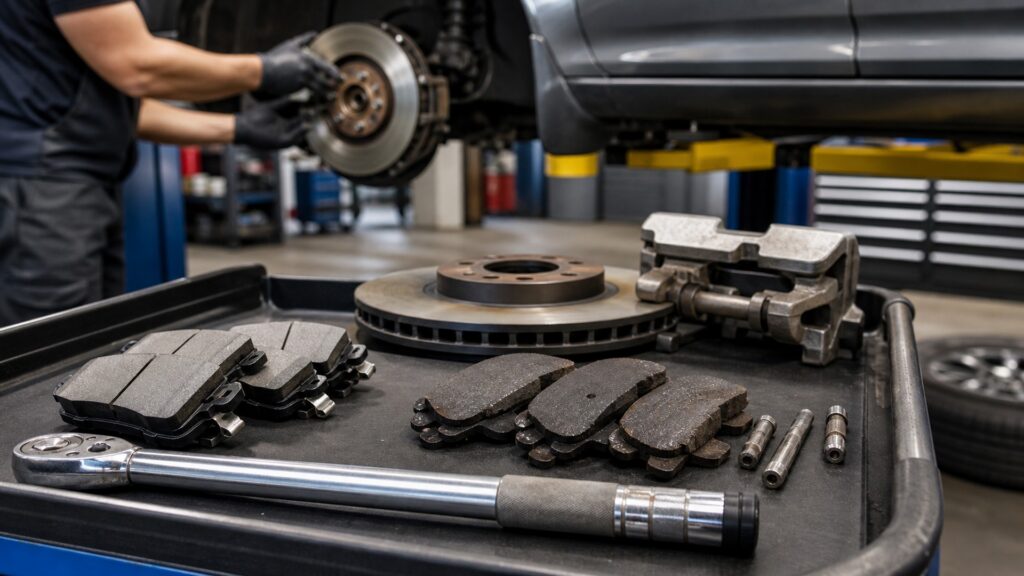
Useful maintenance separates friction wear, metal dimensions, movement, hydraulics, corrosion, and electronic evidence instead of treating a pad glance as the entire inspection.
Tip: Look at the inboard pad. A seized slide or piston can consume it much faster than the easier-to-see outboard pad.
These terms turn brake maintenance from a generic interval into measurable condition tracking.
The remaining friction-material depth measured separately from its metal backing plate at relevant locations.
The minimum permitted rotor thickness after wear or machining for the exact component application.
Small circumferential differences in rotor thickness that can change brake torque as the wheel turns.
A guided joint that lets a floating caliper center clamp force across both pads.
The state of brake fluid considering correct type, contamination, water exposure, boiling margin, and service history.
Dated evidence of inspection, measurements, installed parts, fluid, procedures, and verification results.
Tip: Keep measurements with date and mileage; trend information reveals uneven wear sooner than an isolated pass/fail note.
Floating calipers, opposed pistons, parking mechanisms, debris shields, and airflow create different wear patterns. An outer-pad estimate can miss an inboard pad already near its limit or a rotor face hidden behind the wheel.
Uneven wear is diagnostic evidence, not merely a reason to install a thicker pad.
Friction rings lose thickness through use and corrosion. Their remaining section must absorb and distribute heat while staying dimensionally stable; cracks, severe grooves, heat spots, runout, or below-limit dimensions change the service decision.
A smooth-looking surface may still lack dimensional reserve.
Brakes can apply yet fail to release evenly when boots tear, pins corrode, pistons bind, or parking cables stick. Drag creates heat and accelerated wear, while excess clearance can increase travel.
Restored movement is part of the repair, not optional cosmetic cleanup.
Brake fluid transmits force and encounters high caliper temperatures. Water uptake can lower boiling resistance and encourage internal corrosion; petroleum contamination can damage rubber. Intervals and test methods vary by vehicle and fluid specification.
Topping up cannot reverse contamination or establish why the level changed.
After assembly, the technician must establish pedal reserve, seat pads where required, check all disturbed joints, torque wheels, clear valid faults, and confirm predictable low-speed behavior before higher loads.
The next maintenance interval begins only after current function is proven.
Intervals prompt inspection; measurements, deterioration patterns, duty cycle, and exact service limits decide what the brakes actually need.
Inspections capture all wheel ends, dimensions and movement are recorded, fluid history is known, causes of uneven wear are corrected, and post-service behavior is verified.
Short trips, road salt, water exposure, towing, mountain driving, storage, heavy loads, or repeated high-energy stops shorten the time between meaningful checks.
Installing pads without evaluating rotors, slides, pistons, hoses, lines, fluid, parking mechanisms, sensors, tires, and prior heat damage can leave the original defect in place.
Universal mileage rules cannot override the exact manual, measured limits, active symptoms, recalls, or the judgment of a qualified inspection on the specific vehicle.
Brake-maintenance myths often wait for noise, rely on one visible corner, or treat every service interval as identical.
Noise can come from wear indicators, corrosion, debris, vibration, material behavior, or hardware, while some serious wear and hydraulic faults remain quiet. Periodic inspection finds condition that sound cannot reliably classify.
Storage and light use can encourage rotor rust, seized slides, sticky parking mechanisms, hose aging, and fluid moisture even when pads remain thick. Time, environment, and movement matter beside odometer distance.
The hidden pad may wear faster, and pad thickness does not reveal rotor dimensions, hose condition, fluid history, seized hardware, leaks, parking operation, electronic faults, or tire limitations. Access must match the question.
Reservoir vents, hose materials, service openings, and time permit moisture or contamination effects. Follow the specified fluid and vehicle interval, investigate leaks, and use an appropriate condition method rather than color alone.
Tip: Use symptoms as urgent triggers, not as the routine measurement system for a component that may lose reserve gradually.
These answers cover inspection frequency, rotor decisions, fluid, uneven wear, and recordkeeping.
Follow the vehicle schedule and inspect sooner for noise, pull, vibration, warning lamps, leaks, long pedal travel, drag, odor, or severe duty. Tire rotations often provide access, but local conditions may justify additional checks.
Not automatically. Measure thickness, variation and runout as applicable, inspect cracks, grooves, corrosion and heat damage, then follow exact refinishing and discard limits. Some designs or conditions make replacement the practical safe choice.
Restricted slide pins, piston behavior, pad binding, hose faults, parking mechanisms, contamination, installation errors, or alignment can create unequal application or release. Correct the mechanism before treating the thickness difference as normal.
A test may inform condition, but it must suit the fluid and measurement target. Manufacturer intervals, contamination events, hydraulic repairs, boiling symptoms, corrosion concerns, and unknown history can still require service.
Record date, mileage, pad and shoe readings, rotor or drum measurements, fluid specification, installed part numbers, hardware work, torque values, diagnostic results, bedding steps, pedal check, leak inspection, and road-test outcome.
Brake-component maintenance matters because wear, corrosion, fluid condition, hardware movement, and electronic evidence progress on different schedules.
Use intervals to trigger complete inspection, then let exact measurements and service limits decide the work. Correct unequal wear causes, preserve clean hydraulics, and verify the assembled system before relying on the next interval.
Related explainers connect maintenance readings with the brake mechanism, fitment controls, and safety margins they are meant to preserve.
Understand which hydraulic, friction, structural, and electronic functions each maintenance check is protecting.
Confirm that every replacement matches the exact interfaces, dimensions, sensors, hardware, and friction requirements.
Connect measurements and post-service checks to the reserves needed for repeated and emergency stops.
Choose a retailer
Prices checked regularly. We may earn a commission at no cost to you.