Why Brake Components Operating Function Matters

Brake-component function matters because identical symptoms can arise at different stages. A hard pedal can involve assist; a sinking pedal can involve pressure containment; pull can involve friction, release, tires, or suspension; fade can involve pad material, rotor temperature, fluid, or load.

Knowing the job of each component turns parts replacement into controlled diagnosis. It also prevents fitment shortcuts: master-cylinder volume, caliper piston area, rotor radius, hose routing, ABS valves, sensors, and parking hardware are selected as a system. The goal is not merely to install something new, but to restore force, balance, thermal reserve, redundancy, warnings, modulation, and hold.

By: Review Streets Research Lab
Updated: September 1, 2026
Explainer · 8-12 min read
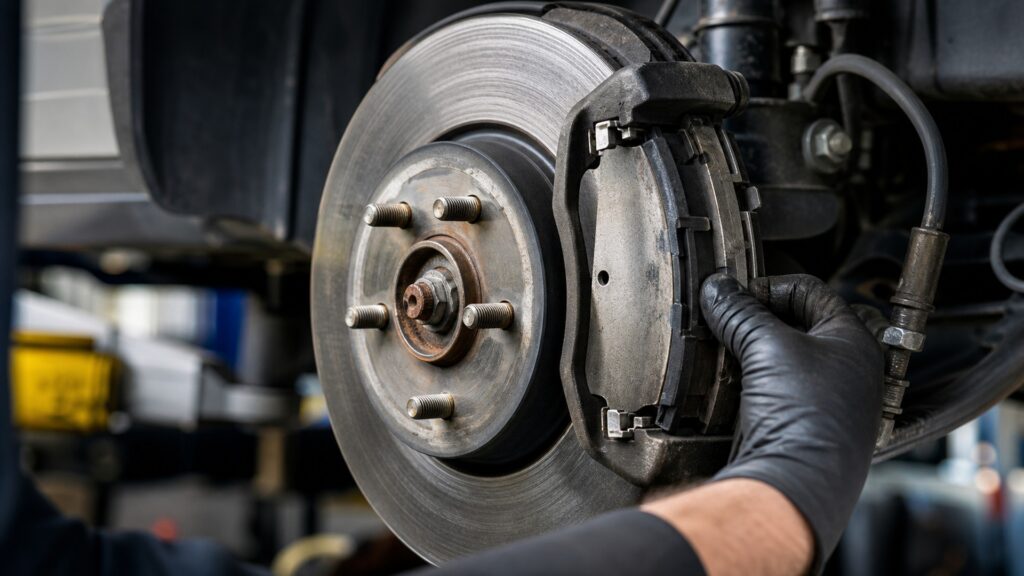
brake components operating function explainer hero image for Review Streets
What You'll Learn

Assign Every Symptom to a Brake Function

A disciplined repair identifies whether input, assistance, pressure, containment, actuation, friction, heat rejection, release, modulation, warning, or parking retention failed before choosing hardware.

  • Separate pedal input from assist
  • Distinguish pressure creation from containment
  • Measure actuation and friction geometry
  • Identify heat and release failures
  • Read ABS and warning evidence
  • Verify redundancy and parking hold

Tip: Describe the lost function in the estimate: for example, a hose that retains pressure, a caliper that cannot release, or a rotor below thermal service thickness. The description makes part choice auditable.

Definitions

Key Concepts That Define Brake Component Operating Function

These functions divide the brake system into diagnosable jobs without pretending any stage works alone.

Pressure Generation

Conversion of pedal or power-unit command into controlled hydraulic or electrical actuation pressure for service braking.

  • Master-cylinder geometry shapes displacement
  • Power units add external energy
  • Reserve behavior must remain defined

Pressure Containment

Retention and transmission of brake force through reservoirs, seals, lines, hoses, valves, and wheel cylinders without leakage.

  • Split circuits limit some failures
  • Flexible hoses accommodate movement
  • Fluid compatibility protects elastomers

Clamp Force

Wheel-end force pressing friction material against a rotor or drum through piston area and mechanism geometry.

  • Pressure alone does not state force
  • Slides must move freely
  • Adjustment controls running clearance

Thermal Capacity

The ability of friction components and surrounding airflow to absorb and reject repeated braking energy within material limits.

  • Rotor mass buffers temperature
  • Pads need stable hot friction
  • Fluid boiling reduces pressure response

Slip Modulation

Automatic adjustment of brake pressure or torque to manage excessive wheel slip during a stop.

  • Sensors estimate wheel behavior
  • Valves reduce hold and restore pressure
  • Tire grip sets the authority

Parking Retention

Mechanically maintained friction that holds a stationary vehicle without continuous service-brake pressure.

  • Actuators need reserve travel
  • Cables and levers can seize
  • Regeneration cannot provide a parked hold

Tip: When a test is safety-critical or procedure-sensitive, use current vehicle service information and qualified equipment rather than improvising thresholds or bypassing warnings.

Input Function Shapes Pedal Evidence

Leverage and Assist Determine Effort before Pressure Exists

Pedal ratio and travel convert driver motion; vacuum, hydraulic, or electric assist adds energy. Linkage play, assist supply, reserve, switches, and power-unit behavior explain why effort and travel can change independently.

  • Record when the symptom occurs
  • Test assist reserve by procedure
  • Inspect linkage and free play
  • Separate effort from stopping output

A hard pedal identifies an input problem only after downstream binding and road conditions are considered.

Containment Preserves Redundancy

Seals, Lines, Hoses, and Split Circuits Keep Commanded Pressure Available

Master seals, rigid lines, flexible hoses, valves, and wheel-end seals must hold compatible fluid. Split architecture preserves partial function for specified failures, while warnings reveal low fluid, pressure imbalance, or control faults.

  • Inspect every wet or corroded area
  • Check reservoir and warning operation
  • Flex hoses through travel
  • Never accept unexplained fluid loss

Pressure cannot be balanced or modulated after it escapes.

Actuation Defines Mechanical Match

Piston Area, Bracket Radius, and Friction Geometry Create Brake Torque

Line pressure becomes piston force, caliper or shoe force, and friction torque at a defined radius. Wrong piston, bracket, pad sweep, rotor, drum, or adjuster can change balance, travel, clearance, and heat.

  • Measure rather than compare photographs
  • Match axle and option codes
  • Verify free release
  • Use specified fasteners and torque

Operating function explains why a bolt-on near-match can be unsafe.

Friction Function Carries the Energy

Pads, Shoes, Rotors, Drums, and Fluid Must Survive the Temperature Cycle

Deceleration energy becomes heat. Material friction can fall, binders can degrade, rotors can crack or distort, fluid can boil, and seals can suffer when load or repeated stops exceed cooling capacity.

  • Inspect after any severe overheat
  • Use service thickness limits
  • Keep friction surfaces clean
  • Match duty without unsupported upgrades

Heat history is part of condition even after the assembly cools.

Control and Holding Functions Set Boundaries

ABS, Brake Blending, Warnings, and Parking Retention Perform Separate Jobs

ABS modulates slip during service braking; electrified vehicles may blend regeneration with friction; warning logic reports monitored failures; parking mechanisms retain a stationary vehicle. Each needs its own procedure and proof.

  • Scan relevant control modules
  • Confirm sensor and actuator calibration
  • Test parking hold safely
  • Verify friction contribution when regeneration changes

Electronic coordination cannot repair a leaking, binding, or misfitted base brake.

Quick Reality Check

Function Turns Parts into a Verifiable Safety System

Naming each job creates a causal diagnosis, preserves designed balance, and defines what must be tested after repair.

A Function-Based Repair Is Complete When

The failed stage is identified by evidence, the replacement preserves application geometry and control interfaces, contributing causes are corrected, and no unrelated parts are sold as substitutes.

Post-repair checks prove input, pressure, containment, release, friction, temperature, modulation, warnings, parking retention, fastening, and controlled stopping behavior appropriate to the work performed.

What Function Knowledge Cannot Replace

A conceptual map cannot supply vehicle-specific pressure values, service dimensions, torque, bleeding sequence, actuator mode, calibration, legal inspection, or road-test procedure. Current technical information remains mandatory.

Do not continue driving with uncertain braking, bypass warning circuits, clamp hoses as a permanent repair, mix incompatible fluid, machine below limits, disable ABS, or assume regeneration hides weak friction brakes.

Common Myths

Misconceptions About Brake Component Operating Function

Operating-function myths confuse a component's name with proof of failure or assume electronic controls can compensate for damaged base hardware.

The code names the brake part that failed

Brake-control codes identify monitored circuits or conditions, not always the root cause. Wiring, connectors, tone targets, voltage, wheel bearings, tires, hydraulic faults, and calibration can influence the same reported system.

Bigger caliper pistons always improve braking

Piston area changes clamp force, fluid displacement, pedal travel, front-rear balance, master-cylinder demand, ABS calibration, packaging, and tire utilization. Unengineered size changes can degrade control even if peak clamp force rises.

ABS can compensate for worn or contaminated brakes

ABS can modulate available wheel pressure when slip becomes excessive; it cannot restore missing friction material, dry a contaminated rotor, seal a leak, free a seized caliper, or create tire grip.

The parking brake is just a backup brake pedal

Parking retention uses a mechanically maintained friction path intended mainly to hold a stationary vehicle. Application force, axle coverage, adjustment, actuator behavior, and emergency capability differ from ordinary hydraulic service braking.

Tip: Require a causal sentence linking observed evidence, lost function, selected repair, and final verification before approving the job.

FAQ

Frequently Asked Questions About Brake Component Operating Function

These answers show how function guides diagnosis, parts selection, upgrades, electronic braking, warning interpretation, and the final repair sign-off.

How does function help diagnose a pulling stop?

Map unequal force sources: tire friction, hydraulic pressure, caliper or shoe actuation, contamination, rotor or drum condition, release, suspension, alignment, load, and ABS intervention. Temperature and measurement help identify the divergent side.

Why does piston area matter?

Hydraulic pressure acting over piston area creates actuation force and consumes fluid displacement. Changing area can alter clamp response, pedal travel, balance, seal geometry, caliper clearance, master-cylinder demand, and control-system assumptions.

What is the function of brake fluid?

Compatible brake fluid transmits hydraulic pressure, lubricates specified internal parts, and must retain suitable boiling and viscosity behavior. It does not get consumed normally; loss, contamination, or wrong fluid requires root-cause correction.

How does regenerative braking change friction-brake diagnosis?

Regeneration can supply part of deceleration, so friction use varies with charge acceptance, speed, temperature, drive mode, faults, and ABS. Service procedures may command blending tests; friction brakes must remain fully capable when regeneration is unavailable.

What proves a function was restored?

Use repair-specific evidence: stable pedal and pressure, no leakage, free release, correct dimensions and temperature, warning and sensor operation, parking hold, calibrated actuators, proper torque, bedding, and controlled stops under approved conditions.

Bottom Line

Brake-component operating function matters because diagnosis, fitment, balance, thermal capacity, redundancy, ABS, regenerative blending, warnings, parking retention, and verification all depend on the exact job each part performs.

Identify the lost function first, select the application-correct component, repair contributing causes, and prove the complete stage afterward. A new part, cleared code, or improved pedal feel is evidence only when it matches the function that originally failed.

Next Steps

Write the Repair as a Cause-and-Proof Chain

Related explainers connect function-based diagnosis to the full braking mechanism, fitment dimensions, and replacement-part workflow that turns selected hardware into a verified repair.