
Injection Injury
Tissue damage caused when a high-pressure stream drives water, chemical, air, or debris through skin.
- Entry marks can be tiny
- Internal damage can be extensive
- Emergency evaluation is urgent
Car wash equipment combines hazards that are easy to underestimate because water looks familiar. A high-pressure jet can penetrate skin, a released hose can whip, wet connectors can shock, detergents can injure eyes or skin, and overspray can reach people, traffic, property, or electrical hardware. Surface damage is also a safety and liability event.
Controls must follow each energy path. Depressurize before service, protect wet-location power with appropriate grounding and GFCI protection, read chemical labels and Safety Data Sheets, isolate the work zone, manage runoff, and operate fuel-burning machines only where exhaust cannot accumulate. Safe cleaning is designed before the trigger opens.
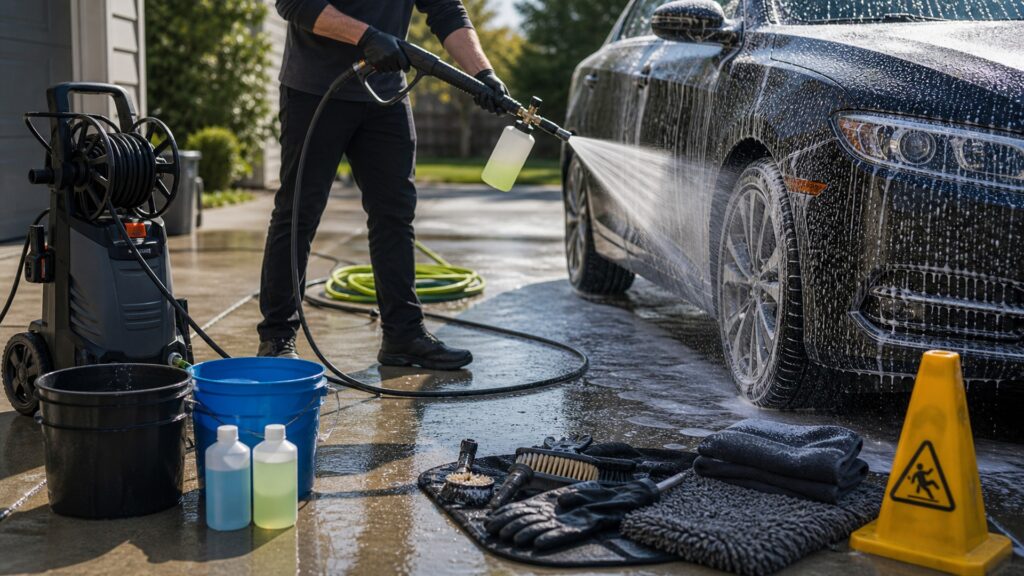
Safety comes from separating hydraulic, electrical, chemical, physical, environmental, vehicle, and combustion risks, then verifying the barrier for each one.
Tip: A pressure-injection wound can look small while causing severe internal injury; seek immediate medical evaluation and identify the fluid involved.
These terms identify the energy, exposure, and containment conditions that make wash work hazardous. The hazard register includes injection injury, stored pressure, hose whip, wet-location GFCI, chemical Safety Data Sheet, exposure boundary, and carbon monoxide.
Tissue damage caused when a high-pressure stream drives water, chemical, air, or debris through skin.
Pressure remaining in a pump, hose, gun, lance, or accumulator after power or water supply changes.
A device intended to interrupt electrical power when leakage current indicates an unintended path, especially important in wet locations.
A controlled perimeter keeping bystanders, vehicles, doors, intakes, electrical devices, and property outside spray, debris, chemical, and hose paths.
Buildup of an odorless combustion gas when fuel-burning engines operate in enclosed or insufficiently ventilated spaces.
Methods that prevent wash water, sediment, oil, and chemicals from entering unintended soil, waterways, or storm drains.
Tip: Do not compress several hazards into one generic caution; each needs a specific prevention, inspection, and emergency response.
High-pressure spray must never contact skin, another person, or an animal. Damaged hoses, loose couplers, blocked nozzles, and unexpected trigger movement can release energy in directions the operator did not intend.
Treat every pressurized line as an energy source, even when the motor is off.
Electric washers, vacuums, extractors, lights, and extension systems operate beside conductive water and wet hands. Equipment ratings, intact cords, dry elevated connections, grounding, and tested GFCI protection must match the location.
A GFCI reduces one risk; it does not authorize submerged or damaged equipment.
Concentrates, acids, alkalis, solvents, fragrances, and aerosols have different incompatibilities and exposure routes. Wet floors, hoses, noise, repetitive force, hot panels, and moving automatic equipment add physical hazards.
Pleasant odor, consumer packaging, or foam color does not establish low hazard.
Narrow jets or close standoff can lift paint, decals, seals, trim, or protective films and can affect sensors, tires, vents, and exposed connectors. Mist and debris can travel beyond the visible fan.
A clean panel is not a safe outcome if the process damages the vehicle or surroundings.
Wash water can carry sediment, oil, metals, and detergents; gasoline engines can emit lethal carbon monoxide. Collection and disposal must be planned, while combustion equipment remains outdoors away from doors, windows, and air intakes.
Ventilation guesses and unknown drains are failed controls, not minor uncertainties.
Passing one check does not offset another: low chemical hazard cannot excuse an unsafe jet, and outdoor operation cannot excuse runoff entering a storm drain.
The operator verifies the manual, component ratings, hose condition, nozzle, electrical protection, chemical instructions, protective equipment, work boundary, footing, drainage, ventilation, and emergency shutdown.
Bystanders are excluded; vulnerable vehicle areas and nearby property are protected; the operator knows how to isolate power, water, stored pressure, a spill, and an exposure.
Stop for leaks, damaged cords, unstable pressure, loose couplers, unverified chemicals, missing protective equipment, unsafe footing, bystanders, uncontrolled runoff, enclosed engine exhaust, or uncertain vehicle openings.
After injection, eye exposure, inhalation symptoms, electrical contact, or significant chemical contact, stop work and follow emergency guidance rather than using appearance or pain level to dismiss the event.
Safety myths persist because familiar water, small wounds, open doors, and consumer equipment can make serious energy and exposure paths look ordinary.
High-pressure fluid can penetrate skin and carry contamination or chemical deep into tissue. The entry mark may appear minor despite major internal injury, so immediate professional medical evaluation is necessary.
Pressure can remain trapped in hoses, guns, pumps, or blocked attachments after power stops. Isolate the supply, follow shutdown instructions, trigger into a safe direction, confirm zero energy, and only then service components.
Carbon monoxide can accumulate or enter occupied spaces despite an open door. Operate fuel-burning washers outdoors, well away from doors, windows, and air intakes; never rely on smell, a fan, or apparent airflow.
Ground-fault protection can interrupt certain leakage currents but does not make damaged cords, submerged plugs, unsuitable extensions, wet hands, or sprayed equipment safe. Follow ratings, grounding, placement, inspection, and manufacturer requirements together.
Tip: Use manufacturer instructions, labels, SDS information, site controls, and emergency guidance rather than judging hazard by appearance.
These answers cover injection response, PPE, electric and gasoline machines, vehicle-sensitive areas, and practical controls for runoff and bystanders.
Stop work, call emergency services or seek immediate emergency medical care, and state that it is a high-pressure injection injury. Provide the injected fluid or chemical information and do not delay because the wound looks small.
Follow the washer manual and each chemical label or Safety Data Sheet. Eye and skin protection, suitable footwear, hearing protection, and task-specific respiratory controls may apply; PPE supplements rather than replaces pressure, ventilation, and containment controls.
Use only within the manufacturer's environmental rating and instructions. Wet conditions increase connector, footing, visibility, and runoff risks. GFCI protection, intact grounded equipment, protected connections, and a controlled work area remain necessary.
Keep concentrated spray away from people, damaged paint, film edges, loose trim, seals, sensors, cameras, vents, tires, labels, electrical connectors, and openings. Consult vehicle guidance because placement and tolerance vary by model.
Establish a barrier beyond expected spray, ricochet, debris, chemical mist, moving equipment, and hose travel. Control vehicle movement, monitor wind, maintain safe footing, post warnings, and stop when people enter the boundary.
Car wash equipment safety matters because hydraulic energy, wet electricity, chemicals, movement, vehicle vulnerability, runoff, and combustion create distinct hazards that can coexist in one small work area.
Inspect and isolate each path before use, stop for any failed barrier, and treat pressure injection or carbon-monoxide symptoms as emergencies. Cleaning speed never compensates for an uncontrolled exposure.
Related explainers connect equipment operation and fitment with the function limits that safety controls must govern.
Trace water, pressure, chemistry, surface contact, rinsing, drying, and runoff through the complete wash system.
Verify hoses, connectors, nozzles, electrical supply, chemistry, vehicle surfaces, and site conditions as one fitment chain.
Understand how pressure, flow, spray geometry, dwell, contact, and rinse functions change surface force and process behavior.
Choose a retailer
Prices checked regularly. We may earn a commission at no cost to you.