
Hip Flexion
The bend at the hip when the thigh moves toward the torso.
- It stresses tights and shorts.
- Depth varies by activity.
- It is not a diagnosis.
Compression apparel movement pattern matters because a garment that feels correct while standing can behave differently during hip flexion, knee bend, elbow bend, stride cycles, or repeated reaches.
The issue is not whether movement is good or bad; it is whether the garment's pressure, seams, cuffs, and panels stay usable during the activity being performed.
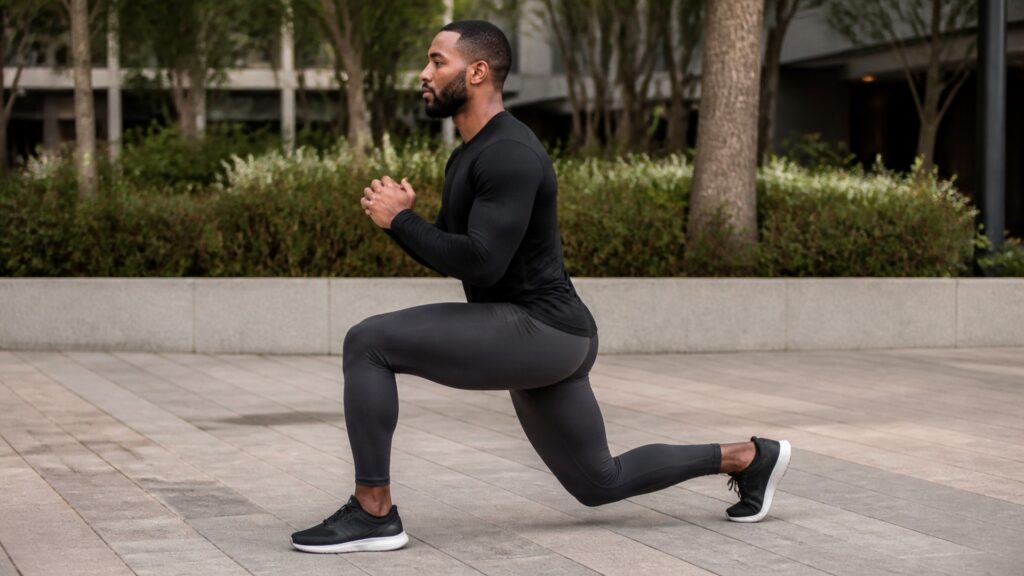
This explanation centers on how actual body motion changes compression garment behavior.
Tip: Test compression apparel in the movement pattern, not only in a mirror.
These definitions connect the main idea to the variables, limits, and practical signals readers need to compare options.
The bend at the hip when the thigh moves toward the torso.
The change in knee angle during strides, squats, lunges, or cycling.
The repeated flexing of the elbow during lifting, court sports, or running arm swing.
Garment movement away from its intended position.
Gradual movement of a sleeve or garment edge during activity.
Folding or shifting at the waistband during movement.
Tip: These movement terms belong to garment behavior rather than body coaching.
Compression apparel can feel controlled while still, yet shift when the wearer bends, strides, lifts, pedals, or reaches repeatedly.
Movement reveals fit behavior.
When a joint flexes, fabric may stretch across one side and fold on the other, changing how pressure feels around knees, hips, elbows, or ankles.
Joint angles reshape the garment.
The openings that hold a garment in place can creep, roll, or press unevenly when repeated movement pulls against them.
Edges decide whether placement lasts.
A seam that is barely noticed at rest can become more obvious where the fabric bends, twists, or rubs under repeated motion.
Seam location belongs to the movement question.
This explanation can describe garment movement without making claims about joint health, injury prevention, technique correction, or training results.
The topic stays with clothing behavior.
Movement pattern explains why compression apparel must be evaluated in motion.
It clarifies joint bending, edge travel, fabric migration, and seam tension.
It gives sleeves, tights, shorts, and tops different movement questions.
It does not assess biomechanics, injury risk, rehabilitation, or personal technique.
It does not promise that a garment improves movement quality.
Common shortcuts and misunderstandings can make the topic seem simpler than it is.
Repeated movement can reveal cuff creep, waistband roll, or seam tension.
Panel shape, edge design, sweat, and activity pattern can also matter.
Too much tightness can create edge pressure or restrict motion.
It only shows whether the garment behaves acceptably during use.
Tip: Treat strong claims as starting points for comparison, not final answers.
Concise answers to common questions readers may have after the main explanation.
Movement changes fabric tension, edge placement, and seam feel.
The movements that match the activity, such as strides, squats, reaches, bends, or pedal strokes.
It is garment movement away from the intended position during use.
That should not be claimed from fit behavior alone.
Repetition, sweat, sizing, and edge construction can all change placement.
Compression apparel movement pattern matters because pressure-focused clothing has to remain usable while the body actually moves.
The practical test is motion-specific: bend, stride, reach, or flex in the garment before treating static fit as enough.
Use these Review Streets paths to connect the explainer to related categories, comparisons, and next decisions.
Use this for the construction details behind cuffs, seams, panels, and stretch recovery.
Read this when movement issues become fit warnings or pressure concerns.
Compare movement logic for running-specific apparel once that article is available.
Choose a retailer
Prices checked regularly. We may earn a commission at no cost to you.