Why Coupe Cars Maintenance Role Matters

Coupe maintenance keeps the actual car dependable and preserves the features that make its body pleasant to use. The powertrain, age, equipment, and driving conditions determine most service needs. The coupe shape can add practical points to watch, including long-door operation, window sealing where frameless glass is fitted, rear-seat access mechanisms, and low bodywork clearance.

There is no universal coupe service interval or assumption that every coupe is a high-performance gasoline car. Start with the exact owner manual and service history. Then combine scheduled work with checks for changes in tire wear, braking, door alignment, water entry, and other symptoms that a low-mileage or occasionally used car can still develop.

By: Review Streets Research Lab
Updated: October 5, 2026
Explainer · 8-12 min read
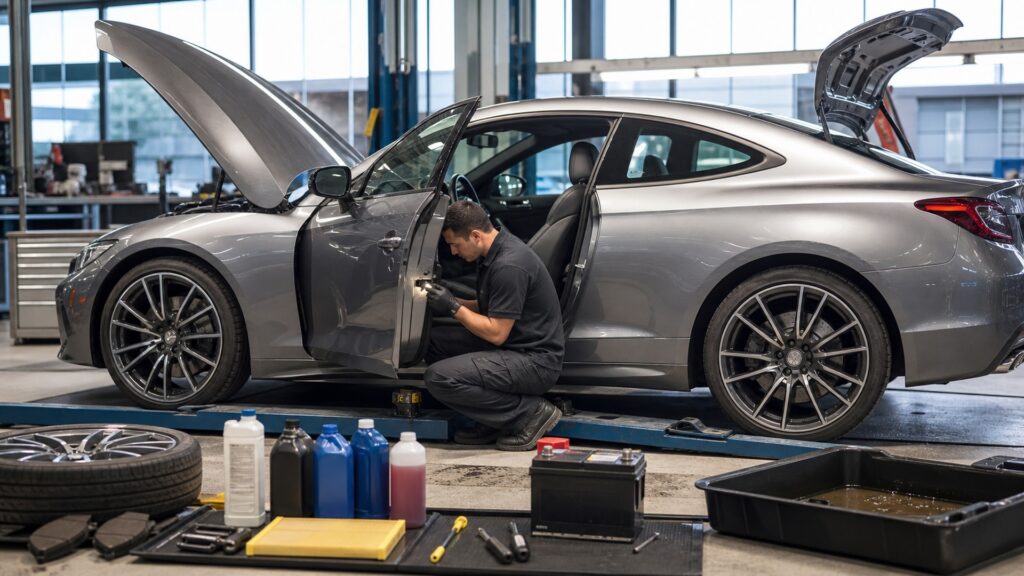
coupe cars explainer hero image for Review Streets
What You'll Learn

Maintain the Vehicle Behind the Coupe Styling

Combine the prescribed schedule with attention to body-specific functions.

  • Use the exact powertrain and equipment schedule.
  • Check tire configuration before planning rotation.
  • Watch door, glass, and seal operation.
  • Keep seat access and luggage closures working correctly.
  • Respect time-based needs even when mileage is low.

Tip: A weekend car can still need calendar-based service and condition checks.

Definitions

The Checks That Matter in Coupe Ownership

These terms separate routine service from body and wear concerns.

Service schedule

The service schedule specifies maintenance by time, distance, or condition for the exact vehicle.

  • Example: a prescribed fluid or filter service
  • Check: the correct engine or electric-powertrain guidance
  • Limit: body style does not determine every interval

Tire configuration

Tire configuration is the specified combination of sizes, ratings, and positions on the car.

  • Example: different front and rear tire sizes
  • Check: the permitted replacement and rotation arrangements
  • Limit: not every coupe can use a generic rotation pattern

Window indexing

Window indexing is a small automatic glass movement used by some frameless-door designs to clear the seal.

  • Example: glass lowering slightly when a door opens
  • Check: normal operation and the exact manual instructions
  • Limit: not every coupe uses this feature

Weather seal

A weather seal helps keep water and air from entering around an opening.

  • Example: a door seal meeting the glass correctly
  • Check: damage, contamination, or signs of leakage
  • Limit: wind noise alone does not identify the failed part

Seat access mechanism

The seat access mechanism allows movement of a front seat or backrest for rear entry.

  • Example: tilting a seat forward in a two-door car
  • Check: release action and secure return
  • Limit: a moved seat must be correctly locked before travel

Time-based maintenance

Time-based maintenance becomes due with elapsed time even if little distance is covered.

  • Example: an inspection specified by calendar age
  • Check: the owner manual and service record
  • Limit: low mileage is not proof that every item remains current

Tip: Use the manual to establish requirements and symptoms to decide what needs investigation.

Baseline

Build the Plan Around the Exact Powertrain

A coupe may use gasoline, hybrid, or electric propulsion, and each brings different maintenance requirements. Obtain the correct schedule and compare it with the service record. Do not infer completed work from appearance or low mileage. If the history is incomplete, a qualified inspection can help establish a sensible starting point.

  • Confirm the vehicle identity and equipment.
  • Check both time and distance requirements.
  • Record completed work and unresolved findings.

An oil-service reminder, where fitted, is not necessarily a summary of every other maintenance item the car needs.

Road Contact

Check the Tire Arrangement Before Applying a Routine

Some coupes use different front and rear wheel or tire sizes, while others use matching sizes. Directional designs and other specifications can affect the permitted rotation pattern. Use the vehicle and tire guidance rather than moving wheels according to a generic diagram. Have vibration, pulling, uneven wear, or damage investigated.

  • Check cold pressures against the vehicle information.
  • Confirm size and rating at each position.
  • Use only the permitted rotation arrangement.

NHTSA's tire guidance emphasizes vehicle specifications, pressure, condition, and appropriate maintenance rather than appearance alone. NHTSA: tire maintenance.

Doors and Glass

Watch How the Door Meets Its Seals

Long doors need usable opening space, and some coupes have frameless glass that moves slightly as the door opens or closes. Notice a change in that sequence, rubbing, new wind noise, or water entry. Keep surfaces clean as instructed and have misalignment or persistent faults assessed; forcing a door against incorrectly positioned glass can make matters worse.

  • Observe opening and closing behavior.
  • Check seals for visible damage or debris.
  • Use only the model's prescribed reset or service procedure.

Ford's Mustang guidance describes short-drop window operation and notes that frost or ice can interfere with it; this is an example of a feature-specific check, not a rule for every coupe. Ford: Mustang short-drop windows.

Access and Closures

Verify Seats, Belts, and Luggage Openings After Use

Rear passengers may rely on front-seat movement for access. Check that seats return and lock as intended and that belts remain available rather than trapped behind a moved backrest. Trunk lids or liftbacks also need sound latches and, where fitted, reliable supports. Report unusual resistance or incomplete closure rather than treating it as part of the car's character.

  • Try the intended release and return sequence.
  • Keep belt paths and latches clear.
  • Check closure warnings and unreliable supports.

A car can look tidy while a frequently handled access mechanism needs attention.

Occasional Use

Low Mileage Does Not Remove Age and Storage Effects

A coupe used mainly for weekends can sit for long periods between trips. Follow the manufacturer's storage and return-to-use guidance for its battery, tires, fluids, and other systems. Avoid assuming that a short engine start is a complete storage routine. Before resuming regular use, check condition and any time-based services that became due.

  • Review elapsed time as well as distance.
  • Follow the vehicle's specific storage instructions.
  • Investigate unusual braking or tire behavior after storage.

Keeping a dated record makes it easier to tell the difference between a lightly used car and a neglected one.

Quick Reality Check

Scheduled Work and Symptom Checks Work Together

Neither replaces the other.

Follow the Calendar and Odometer

Complete the exact powertrain and equipment services when prescribed.

Track low-mileage cars by elapsed time as well as distance.

Respond to Changes

Investigate tire wear, vibration, braking changes, leaks, and abnormal door or window operation.

Confirm seats and closures return to their intended locked positions.

Common Myths

Misconceptions About Coupe Maintenance

Avoid assumptions based on appearance or limited use.

All coupes need the same sports-car service routine

Requirements depend on the actual powertrain, equipment, and use.

Low mileage means maintenance can wait indefinitely

Time-based services and condition checks can still become due.

Every coupe can rotate its tires the same way

Sizes, directionality, and vehicle instructions determine the allowed pattern.

Tip: A useful service history records dates, mileage, work performed, and unresolved issues.

FAQ

Questions About Maintaining a Coupe

Practical answers for daily and occasional use.

Does coupe bodywork require a special engine-service schedule?

No. Use the exact vehicle's schedule; the body name alone does not determine engine or electric-powertrain maintenance.

Why does my window move when I open the door?

Some frameless designs lower the glass slightly to clear the seal and raise it after closing. Follow the manual if the sequence stops working.

Can I swap front and rear tires?

Only if the vehicle and tire configuration permit it. Different sizes or other restrictions may prevent that arrangement.

What should I inspect on a used coupe?

Review the service history and arrange a condition inspection, including tires, brakes, door and window operation, water entry, seating mechanisms, and any model-specific concerns.

Bottom Line

Coupe maintenance combines the correct vehicle schedule with attention to access, seals, tires, and the way the car is used.

Keep age and mileage in view, respond to changing behavior, and maintain a clear record rather than relying on a sporty appearance or low odometer reading.

Next Steps

Go Deeper or Compare Your Options

Use these Review Streets paths to compare related categories and practical next decisions.