
Depressurization
A specified procedure for safely reducing retained fuel or oil pressure before opening a filter circuit.
- Systems can retain pressure after shutdown
- Methods vary by architecture
- Verification precedes disconnection
Engine filters are routine parts installed in systems that may be hot, pressurized, flammable, chemically aggressive, or essential to immediate lubrication. Safety therefore covers both the person doing the work and the engine that depends on uninterrupted clean flow. The risks change sharply among air, oil, and fuel circuits.
A safe service identifies the circuit and pressure state, stabilizes the vehicle, controls heat and ignition sources, uses exact parts and seals, protects every clean opening, restores fluid levels or prime, and checks pressure and leakage during operation. Wrong torque, a doubled oil gasket, an unseated air-filter edge, or fuel-system air entry may look minor at assembly yet cause fire, oil loss, unfiltered ingestion, stalling, or expensive downstream damage.
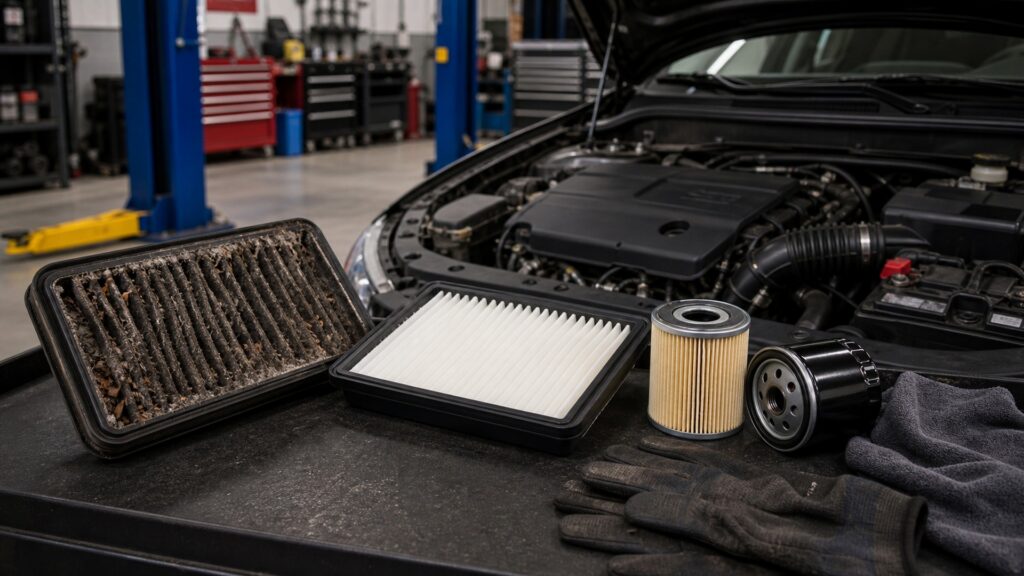
Safe filter work combines personal protection, pressure release, fire control, contamination exclusion, exact fitment, and live post-service inspection.
Tip: If the oil-pressure warning remains on after the permitted startup interval, shut the engine off immediately and follow the exact diagnostic procedure.
These terms identify the hazards and engineering reserves that make a routine filter change safety-sensitive.
A specified procedure for safely reducing retained fuel or oil pressure before opening a filter circuit.
The pressure level a filter or housing can withstand before structural rupture under stated test conditions.
Deformation caused when differential pressure exceeds what pleats, center tubes, or supports can resist.
Entry of service debris, hardware, cloth, or damaged material into the engine's clean intake path.
Seal displacement or extrusion that releases oil or fuel when pressure rises after startup.
A visual and functional inspection of disturbed joints during and after pressure and temperature restoration.
Tip: Plan spill collection and disposal before opening the circuit; improvising with a released fuel line or hot drain stream creates avoidable exposure.
Loose dirt can fall past the element while the airbox is open; forgotten cloths or hardware can be drawn inward after startup. Turbocharger compressor wheels make even small foreign objects consequential.
The safe air-filter change leaves the protected side cleaner than it was before opening.
Drain and filter locations may sit near exhaust parts or require under-vehicle access. After startup, pump pressure rapidly tests the gasket, housing cap, threads, and drain plug while critical bearings await oil supply.
Never assume a remote start is safe without direct leak observation and oil-pressure confirmation.
Gasoline vapors can ignite; diesel injection systems may operate at pressures capable of penetrating skin; opened circuits can admit air or contamination. Vehicle-specific depressurization and priming steps are mandatory.
A suspected injection injury or significant exposure requires immediate medical attention.
Burst and collapse ratings, thread engagement, cap torque, gasket material, bypass calibration, and pleat supports help the filter survive pressure pulses, cold viscosity, vibration, heat, and chemical exposure.
Safety margin disappears when a merely similar part is forced into service.
Restore the specified fluid quantity, prime only as directed, prevent dry cranking where required, and start with tools clear. Watch gauges or warnings and every disturbed joint, then shut down and recheck level.
A running engine is the beginning of verification, not proof that the service is complete.
The risk is controlled by circuit identification, energy isolation, safe access, contamination exclusion, exact fitment, and observed restart verification.
Exact instructions and part data, cooled or depressurized circuits, stable access, personal protection, spill and fire controls, clean tools, downstream covers, correct seals, torque values, and disposal arrangements.
The operator knows the expected prime or pressure timing, immediate shutdown criteria, leak-check locations, fluid-level procedure, diagnostic implications, and when specialist equipment is required.
High-pressure fuel work, hybrid high voltage, uncertain lifting points, severe corrosion, damaged housings, persistent pressure warnings, major leaks, suspected injection injury, or unavailable specifications exceed the available training and equipment.
No successful prior filter change proves the current vehicle shares its pressure, voltage, priming, torque, fluid, bypass, sensor, access, or disposal requirements.
Familiarity makes filter work easy to underestimate, especially when the engine starts normally after an incorrect seal or contaminated installation.
Spin-on and cartridge designs use different gasket-contact and housing-torque procedures. Overtightening can damage seals or caps; undertightening can leak. Follow the exact specification and ensure the old gasket is completely removed.
Never place skin near a suspected high-pressure leak. Fine jets can penetrate tissue with little visible injury and require emergency treatment. Use the manufacturer's safe diagnostic procedure and suitable remote detection equipment.
An engine may start despite slow leakage, doubled gaskets, air ingestion, abnormal restriction, bypass, wrong oil level, or unsealed intake edges. Observe pressure, warnings, joints, level, and operation through the specified verification sequence.
Used filters can retain oil, fuel, metal, and contaminated media. Drain, store, transport, and recycle or dispose according to local rules and facility requirements; contain spills and never mix incompatible wastes.
Tip: Use the same disciplined controls every time because pressure and heat may expose errors only after tools are removed and the vehicle returns to load.
These answers address hot oil, fuel pressure, vehicle support, first startup, environmental handling, and emergency stopping criteria.
Warm oil can drain readily but hot oil and nearby exhaust parts can burn. Follow the manual's temperature guidance, allow safe cooling, wear appropriate protection, stabilize the vehicle, and control the drain path.
The old seal can remain stuck to the mounting surface beneath the new one. Pressure may then force oil between them, rapidly draining the engine and creating fire, road, and lubrication hazards.
Use the exact vehicle procedure; methods differ with port injection, direct injection, diesel common rail, returnless systems, pumps, and service access. Disconnecting a line without verified pressure control can spray flammable or hazardous fuel.
Keep people and tools clear, start only after restoring fluid or prime, watch pressure indicators, inspect every disturbed joint, and shut down immediately for abnormal warnings or leakage. Recheck level and seals afterward.
Drain and contain used oil or fuel filters as required, use closed labeled containers, clean spills promptly, and follow local recycling, hazardous-waste, and facility rules. Never dump fluids or wash contamination into storm drains.
Engine-filter safety factors matter because routine service opens hot, pressurized, flammable, and contamination-sensitive circuits that the engine depends on immediately after restart.
Control pressure, heat, ignition, access, and clean-side exposure; install the exact part and one correct seal; then observe pressure, prime, leaks, level, warnings, and operation before release.
Related explainers connect practical filter flow, hidden fitment requirements, and operating limits to the hazards that must be controlled during service.
Trace each filter circuit so pressure, dirty-side access, clean-side exposure, and verification points are known before service.
Confirm seals, threads, standpipes, valves, materials, and torque before the circuit is pressurized.
Understand efficiency, capacity, restriction, collapse, bypass, and temperature behavior across the service interval.
Choose a retailer
Prices checked regularly. We may earn a commission at no cost to you.