
Skin Comfort
Skin comfort is how the band material and fit feel during daily wear.
- Example: avoiding rubbing under the strap
- Check: inspect skin after longer wear
- Limit: sweat and tight fit can irritate skin
Safety factors matter for fitness bands because the device sits on the skin, collects estimates, sends alerts, and can influence workout decisions. Comfort, fit, skin reaction, charging safety, privacy settings, and data interpretation all affect whether the band is helpful or distracting.
A fitness band should support sensible activity choices without creating overconfidence. The safest use treats wearable metrics as context, not as medical certainty or a reason to ignore pain, fatigue, or professional guidance.
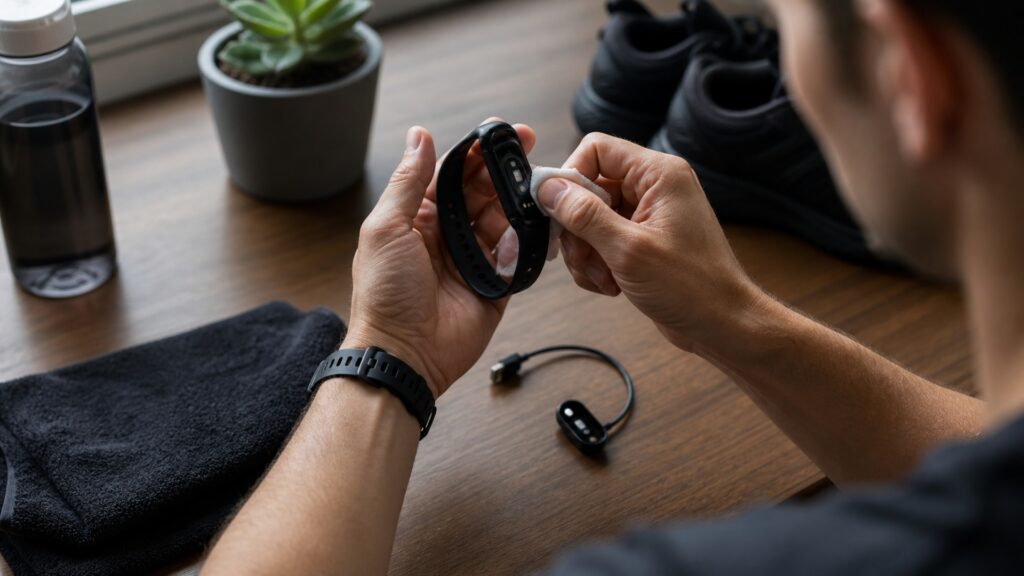
A practical guide to comfort, skin contact, charging, privacy, alerts, and data interpretation.
Tip: Treat fitness-band data as context, not as a replacement for judgment.
These concepts clarify the practical signals readers should check before choosing equipment or planning workouts.
Skin comfort is how the band material and fit feel during daily wear.
Wear fit is how securely and comfortably the device sits on the wrist.
Charging safety means using the intended cable, contacts, and charging conditions.
Alert context means interpreting notifications against how the user feels and what they are doing.
A privacy setting controls how activity, health, location, or social data is shared.
Data interpretation is how the user turns estimates into decisions.
Tip: The best equipment choice is the one that matches the training job, available space, and user's current ability.
A fitness band has to be comfortable enough for regular wear. Tight straps, sweat, trapped moisture, or rough materials can irritate skin and make the device less useful.
Comfort is part of safe daily use.
Charging is simple, but damaged cables, dirty contacts, wet devices, or heat can create avoidable problems. Users should follow the device instructions and inspect accessories.
Good charging habits protect the device and the user.
Heart-rate alerts, recovery scores, and activity reminders can be useful, but they are not complete judgments. Symptoms, effort, medication, stress, and environment can all matter.
The alert starts the check, not the final answer.
Fitness bands may collect activity, sleep, heart-rate, location, and social challenge data. Users should review app permissions and sharing settings before relying on the device.
Privacy is part of wearable safety.
A readiness score or calorie estimate should not push a user into unsafe training. Pain, dizziness, unusual fatigue, or medical concerns deserve attention beyond the device screen.
Wearable data should support judgment, not replace it.
Safety checks make fitness bands more useful and less distracting.
They reduce comfort, charging, privacy, and interpretation problems.
They keep wearable data tied to sensible action.
They do not make consumer metrics medical-grade.
They cannot replace qualified guidance for health concerns.
Wearables are simple, but they still need thoughtful use.
Loose fit can reduce sensor quality and still rub during movement.
Alerts are estimates that need context and, when needed, professional follow-up.
Activity, route, and health-style data can all be sensitive.
Cables, contacts, moisture, and heat deserve basic care.
Tip: Treat strong claims as reasons to inspect the workout fit more closely.
Short answers for practical training and buying decisions.
Yes. Tight fit, sweat, moisture, and materials can cause irritation for some users.
No. They are device alerts that should be interpreted with context.
Yes. Check app permissions, connected services, route sharing, and social settings.
Many users can, but comfort, skin condition, battery, and cleaning habits still matter.
Use fitness-band data as context and keep comfort, charging, privacy, and symptoms in view.
Safety factors matter because fitness bands touch the body, collect personal data, and influence decisions.
Use the device as helpful context while preserving comfort, privacy, and common sense.
Use these Review Streets paths to compare related categories and practical next decisions.
Review how wrist-worn tracking works.
See how band data should support training decisions.
Compare tracking tools with dedicated cardio equipment.
Choose a retailer
Prices checked regularly. We may earn a commission at no cost to you.