
Venturi Draw
Low-pressure suction that pulls solution from the cannon bottle into the moving water stream.
- Draw rate varies by hardware
- Viscosity changes pickup
- Adjustment alters mixture
Foam cannons matter because they mix wash solution, pressurized water, and air into a broad clinging application that can wet a vehicle uniformly and hold compatible chemistry against contamination before contact. That dwell can soften some road film and carry away loose particles during rinsing, reducing the load faced by a mitt.
Foam itself is not the cleaning mechanism or a guarantee against swirls. Detergent concentration, water flow, cannon orifice, pressure, panel temperature, soil chemistry, dwell, and rinse energy determine the result. Thick shaving-cream foam may look impressive while delivering poor wetting or wasting product. Heavy bonded soil still requires a lubricated contact wash after the pre-rinse and foam stage.
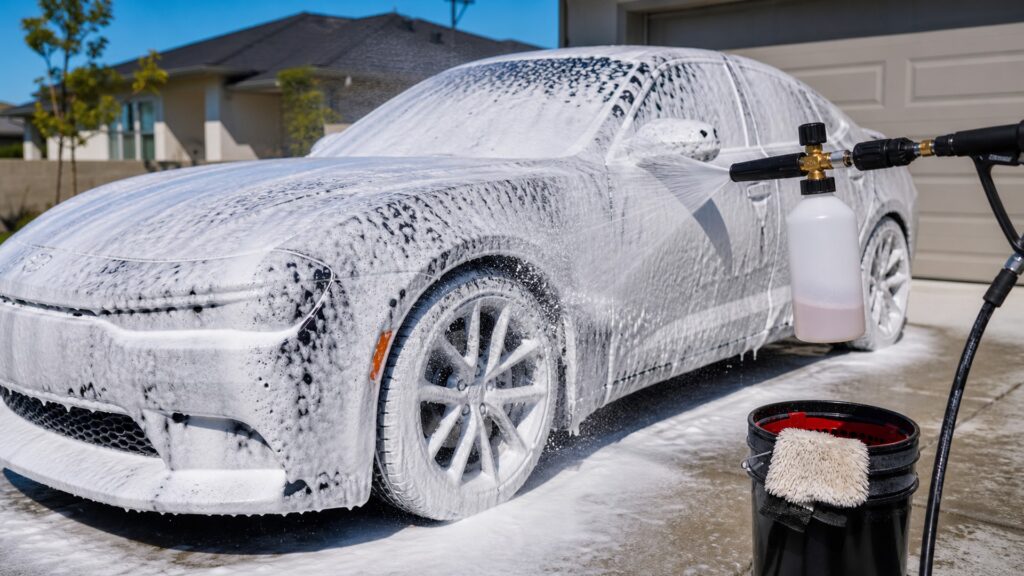
A foam cannon earns a place by controlling coverage and dwell, not by maximizing visual thickness or replacing every later wash step.
Tip: Calculate both bottle dilution and the cannon's further water mixing; concentrate strength in the reservoir is not the same as detergent concentration on paint.
These terms explain fluid delivery, foam structure, and the boundary between prewash and complete washing.
Low-pressure suction that pulls solution from the cannon bottle into the moving water stream.
The small calibrated opening that helps set water velocity and pressure conditions inside the cannon.
Mixing air into diluted detergent as it passes through the cannon and foaming mesh.
The interval in which wet chemistry remains on the surface before rinsing.
A cleaning stage intended to loosen and remove contamination before deliberate physical contact.
The effective detergent strength after bottle mixture combines with the cannon's water stream.
Tip: Tune for wet cling and repeatable coverage; foam that collapses gradually can clean better than a dry blanket that barely moves.
Pressurized water moving through the cannon creates conditions that draw reservoir solution, mix it through an orifice and foaming element, then spread it through an adjustable fan. Washer flow and hardware matching affect stability.
Poor foam can be a flow-path problem rather than weak soap.
The reservoir contains a premix, which is diluted again as the cannon combines it with far more washer water. Product instructions may specify a bottle ratio, but actual panel strength varies with the cannon setting and draw rate.
Without two-stage dilution in mind, users often waste concentrate while believing the panel receives the bottle ratio.
A wet foam layer extends contact between detergent and traffic film, insect residue, or loose soil. Gravity and bubble collapse can move suspended material downward, but hot panels and wind accelerate drying.
Useful dwell ends before the first patch dries; longer is not automatically better.
The pressure rinse supplies water volume and momentum to carry foam and released contamination away. A narrow close jet raises surface, trim, seal, and film-edge risk without necessarily improving safe whole-panel removal.
Loosening contamination has value only when the rinse removes it without driving water where it should not go.
Light dust may leave after pre-rinse, foam, and thorough rinse. Oily bonded road film often remains, requiring fresh lubricated solution and clean wash media. Contact should begin only after the prewash has reduced particle load.
Foam cannon use reduces one input to contact risk; it does not repeal the need for inspection or proper washing.
Foam can improve wet coverage and pre-contact dwell while chemistry, temperature, rinse, and remaining bonded soil set firm limits.
Broad clinging application can distribute a compatible prewash consistently and give it time to soften contamination before wash media touches paint.
The visual blanket makes missed coverage and premature drying easier to see, supporting a repeatable staged wash when conditions are controlled.
Foam cannot guarantee that bonded road film, tar, minerals, or insect residue releases without selective chemistry or contact.
Excessive concentration, hot panels, long dry dwell, unsafe pressure, and poor runoff handling can add residue, cost, surface risk, or environmental harm.
Foam-cannon myths confuse bubble volume with detergent dose, cleaning force, or complete contact-free washing.
Very thick foam may cling while wetting and carrying soil poorly, and it can consume excess product. Cleaning depends on compatible chemistry at useful concentration, wet dwell, soil type, and effective rinse removal.
Loose contamination may rinse away, but bonded traffic film commonly remains. Drying or wiping that residue without a lubricated contact stage can drag particles across paint and defeat the prewash's risk reduction.
Water flow, cannon orifice, air adjustment, detergent viscosity, reservoir mixture, temperature, pickup condition, and foaming mesh all contribute. A high pressure rating cannot compensate for a mismatched or restricted fluid path.
Over-concentration wastes product, can leave residue, challenge existing protection, and increase wastewater load. Use the minimum effective mixture within written instructions and rinse the entire surface completely before the solution dries.
Tip: Evaluate wetting, on-panel concentration, dwell, rinse, and remaining soil instead of grading the process by photographs.
These answers address washer matching, dilution, dwell, contact washing, and whether a garden-hose foam gun can serve the same purpose.
No. Connector, maximum rating, water flow, pressure, and orifice size must be compatible. A cannon designed around different flow may draw poorly, make unstable foam, or place unnecessary load on equipment.
Only as long as the product instructions and conditions permit while it remains wet. Heat, sun, wind, thin edges, and porous trim shorten the safe window, so section size matters.
Often yes when loose grit, salt, mud, or hot panels need initial removal or cooling. Some products specify application to a dry surface for concentration, so follow instructions and choose based on contamination.
Only if inspection shows the surface is actually clean enough for drying contact. Remaining road film can load the towel and create marring; a lubricated contact wash is safer when residue persists.
It can distribute suds without a pressure washer, but draw, bubble structure, reach, and rinse energy differ. Judge whether it provides useful wet coverage within the available water system rather than expecting identical foam.
Foam cannons matter because controlled detergent delivery and wet dwell can reduce loose and weakly bonded contamination before physical contact begins.
Their benefit depends on matched equipment, honest dilution, cool panels, a timely rinse, and recognition of remaining road film. Optimize the cleaning sequence, not the thickness of the foam blanket.
Connect prewash delivery with the full detailing process, wash-method decision, and clean-media discipline before adding contact or drying.
Place pre-rinse, foam, contact washing, drying, and protection inspection in their proper sequence.
Decide whether the available site and runoff path support controlled washing at all.
Use task-matched clean microfiber only after prewash and contact steps leave a truly clean surface.
Choose a retailer
Prices checked regularly. We may earn a commission at no cost to you.