
Split Microfiber
Synthetic filaments mechanically or chemically divided into finer segments with increased surface area.
- Supports liquid and soil pickup
- Quality of splitting varies
- Not every microfiber is equally fine
Microfiber towels matter because every wipe creates an interface among the hand, the towel, the liquid or residue being removed, trapped particles, and the vehicle surface. Fine synthetic fibers can provide large working area, useful capillary pickup, and spaces that move contamination away from direct contact when the towel suits the task.
The material name alone does not make wiping safe. Pile, knit, blend, edge, density, saturation, contamination, fold, pressure, and laundering all change behavior. A plush clean towel can still scratch when used on gritty paint, while a short-pile towel may be better for glass or leveling a coating. Task separation and retirement rules matter as much as purchase specifications.
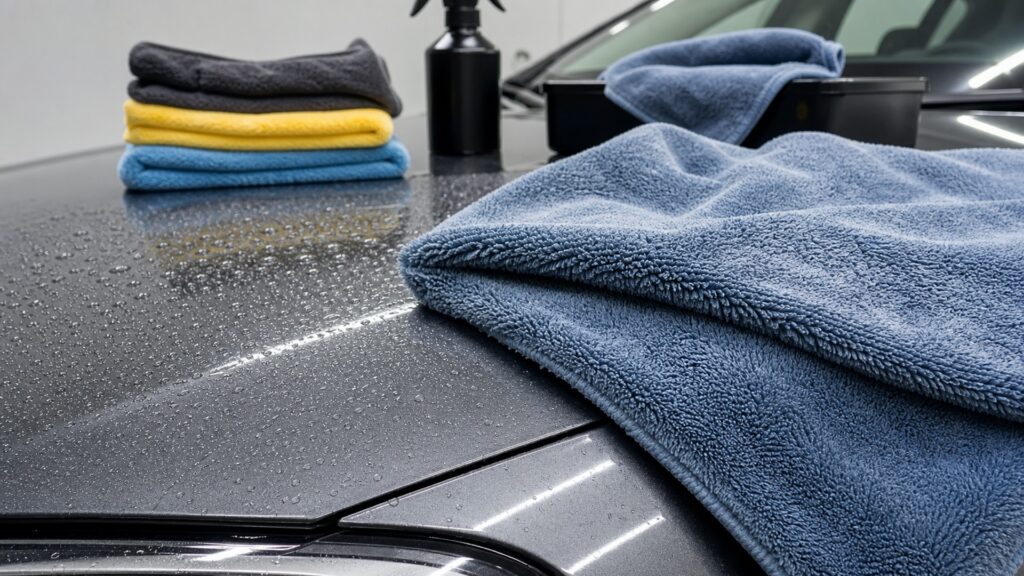
Towel performance comes from construction plus use: how fibers contact the surface, take up liquid, hold soil, expose clean faces, and release contamination during laundering.
Tip: Assign towels by task and color, then retire any towel that touches the ground; microscopic grit is not made harmless by a clean-looking surface.
These terms connect textile construction with actual detailing risk and capacity.
Synthetic filaments mechanically or chemically divided into finer segments with increased surface area.
The length and arrangement of fibers projecting from the towel's knitted base.
Grams per square meter, a measure of towel mass relative to area.
Liquid movement into narrow spaces between fibers through surface interaction.
The state in which a towel can no longer accept or isolate much additional liquid or soil.
Transfer of abrasive particles, grease, chemicals, dye, or residue from one task to another.
Tip: GSM is only mass per area; it cannot by itself describe softness, fiber quality, weave, edge, or suitability for a specific surface.
Many fine filaments present more edges and surface area than a coarse cotton loop. With suitable liquid, light pressure can spread product or collect residue while reducing the need to scrub a small number of stiff contacts.
Microfiber earns its advantage by multiplying gentle contacts, not by making force irrelevant.
Plush pile offers room for light particles during paint wiping; short closed loops can level coatings or clean glass with less lint; waffle structures increase channels for water but may feel less forgiving on dry paint.
Construction should answer the task, not a universal softness ranking.
Folding a towel creates supported panels and a known sequence of clean faces. As one face collects residue or soil, turning it prevents the captured material from being dragged repeatedly over the finish.
A towel is safe only while the working face still has capacity and remains appropriate for the next pass.
Brake dust, tire dressing, interior cleaner, glass residue, polish, and coating solvents create different contamination. Sharing towels can move abrasive or incompatible material to a sensitive surface even after a casual rinse.
Inventory discipline prevents yesterday's dirt from becoming today's paint defect.
Suitable detergent, thorough rinsing, controlled heat, and separation remove oils and particles while preserving absorbency. Fabric softener and some dryer products leave films that reduce water pickup or cause streaking.
Laundry is part of the detailing process because it determines the next wipe's surface and chemistry.
Microfiber can improve pickup and control, but soil, saturation, pressure, and care still govern contact risk.
Task-matched pile and ample clean faces can collect water, polish, wax, cleaner, or light soil with fewer repeated passes and lower pressure.
A segregated, well-laundered inventory makes the wiping process repeatable across paint, glass, interior, wheel, and coating work.
No towel safely removes heavy dry grit from paint without adequate rinsing, lubrication, and soil management first.
GSM, softness in the hand, color, price, or an edgeless cut cannot prove that a towel is clean, non-linting, or compatible with every task.
Microfiber myths turn one textile specification or soft hand-feel into a complete surface-safety claim.
GSM measures mass per area, not fiber fineness, pile behavior, edge quality, contamination, or lint. Very dense towels can be excellent for drying yet awkward for precise coating removal or glass cleaning.
Removing a stitched border eliminates one potential hard contact, but embedded grit, hardened residue, labels, melted fibers, pressure, and dry wiping remain. Clean process control matters more than edge style alone.
A towel used on wheels, exhaust, grease, or dressing can retain particles and chemistry unsuitable for paint or glass. Dedicated inventories reduce cross-contamination and make laundering decisions easier to enforce.
Softeners can coat fibers, reduce liquid pickup, and encourage persistent streaking. Apparent softness does not prove cleaning capacity; use a residue-free laundering method compatible with the towel maker's written care instructions.
Tip: Judge construction, current contamination, capacity, pressure, and care together before putting any towel on paint.
These answers address towel selection, first washing, drying technique, hard-water streaks, and retirement from paint duty.
Choose a clean absorbent towel sized for controlled passes, with construction compatible with the finish and enough capacity for the vehicle. Air assistance or a second towel can reduce pressure after saturation begins.
Often yes, to remove manufacturing lint, packaging dust, or transferable dye, provided the maker allows it. Wash colors and task groups appropriately, then inspect absorbency and lint before using them on sensitive surfaces.
The towel may be saturated, contaminated with wax or softener, too plush for residue pickup, or paired with excessive cleaner. Use a dedicated low-lint glass towel, minimal product, and a dry final face.
Only when contamination is light enough, lubricated, and given space away from direct surface contact. Heavy grit should be rinsed or washed away first; no dry towel makes abrasive particles harmless.
Retire it after ground contact, embedded debris, hardened coating, edge damage, heat distortion, persistent odor, linting, or loss of absorbency. It may move to a less sensitive labeled task or be discarded.
Microfiber towels matter because their fine fibers, pile, and capacity can create a controlled interface for pickup, spreading, and drying with less pressure and fewer passes.
That advantage disappears when the towel is contaminated, saturated, mismatched, or poorly laundered. Select by task, expose clean faces deliberately, segregate inventories, and retire towels before hidden debris reaches paint.
Connect towel behavior to the full detailing workflow, automatic-wash decision, and foam prewash so wiping occurs only after the surface is ready.
Place towel selection inside washing, correction, protection, and maintenance stages with distinct contamination risks.
Evaluate drying contact as part of the hand-detailing versus automatic-wash decision.
Use prewash foam to loosen and carry away some soil before any towel or mitt contact begins.
Choose a retailer
Prices checked regularly. We may earn a commission at no cost to you.