
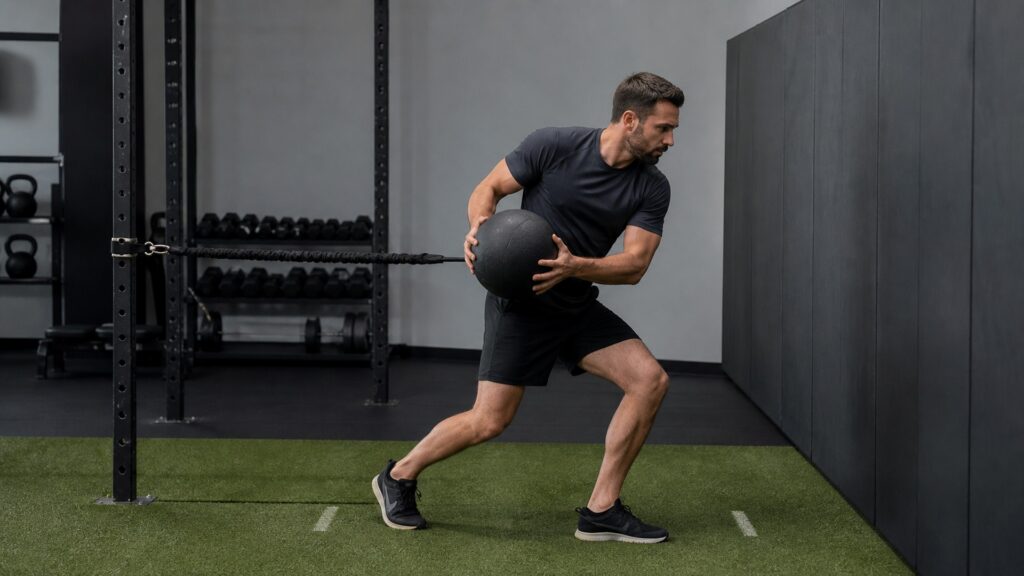
Why Functional Training Equipment Movement Pattern Matters

Movement pattern matters in functional training equipment because the tool shapes the way the body pushes, pulls, hinges, squats, rotates, carries, accelerates, or decelerates. A kettlebell, resistance band, sandbag, sled, medicine ball, and battle rope can all create different movement demands even when they appear to train the same broad goal.

The equipment is useful only when its movement pattern matches the workout purpose. A tool that looks versatile can still be a poor fit if the resistance direction, grip, setup, or space changes the exercise in a way the user does not need.

By: Review Streets Research Lab
Updated: October 5, 2026
Explainer · 8-12 min read
functional training equipment movement pattern explainer hero image for Review Streets
What You'll Learn

How Movement Patterns Shape Functional Equipment Fit

A practical look at why resistance direction, body position, and exercise mechanics matter before choosing functional training tools.

  • Why movement pattern matters more than equipment variety
  • How resistance direction changes the exercise
  • Where carries, throws, hinges, pulls, and rotation need different tools
  • Why space and setup affect movement quality
  • How to judge whether a tool fits a real workout plan

Tip: Judge equipment by the movement it makes better, not by how many movements it lists.

Definitions

Key Concepts Behind Functional Training Equipment Movement Pattern Matters

These concepts clarify the practical signals readers should check before choosing equipment or planning workouts.

Movement Pattern

A movement pattern is the main action an exercise trains, such as pushing, pulling, hinging, squatting, rotating, carrying, or locomotion.

  • Example: a sandbag carry training bracing and gait
  • Check: name the pattern before choosing the tool
  • Limit: pattern labels do not prove the tool fits every user

Resistance Direction

Resistance direction is the angle or path from which force challenges the body.

  • Example: a band pulling sideways during a lateral walk
  • Check: compare the pull direction with the target movement
  • Limit: the wrong angle can turn a useful drill into a distraction

Loaded Carry

A loaded carry is a movement where the user walks or holds position while carrying external resistance.

  • Example: farmer's carries with kettlebells
  • Check: confirm grip, posture, and walking space
  • Limit: carries need clear floor space

Rotational Demand

Rotational demand is the need to produce or resist twisting force.

  • Example: medicine ball rotational throws
  • Check: see whether the space allows safe rotation
  • Limit: rotation can be risky when speed exceeds control

Grip Demand

Grip demand is how much the hands and forearms limit or support the exercise.

  • Example: thick-handled carries or rope pulls
  • Check: match grip challenge to the workout goal
  • Limit: grip can fail before the target muscles are trained

Pattern Coverage

Pattern coverage is how well the equipment supports the movements needed across a training week.

  • Example: using bands for pulls and kettlebells for hinges
  • Check: review a full week, not one exercise
  • Limit: coverage depends on the user's goal

Tip: The best equipment choice is the one that matches the training job, available space, and user's current ability.

Main Decision

Start With The Movement The Workout Needs

Functional training equipment should be chosen around the action it supports. If the goal is loaded carries, a medicine ball will not solve the same problem as a pair of kettlebells. If the goal is rotational power, a heavy sandbag may not be the cleanest tool.

  • Name the movement pattern first.
  • Choose the tool that makes that pattern clearer.
  • Avoid buying equipment only because it covers many exercises.

The pattern gives the equipment a purpose.

Resistance

Force Direction Changes The Exercise

A band, sled, cable, kettlebell, and rope can all create resistance, but they do not challenge the body from the same direction. That direction changes posture, joint angles, speed, and control demands.

  • Check where the force is coming from.
  • Match resistance direction to the intended drill.
  • Use lighter loads when a new angle changes control.

The right resistance path makes the movement easier to understand and repeat.

Exercise Quality

The Tool Should Improve The Pattern

Functional equipment is not automatically better because it looks dynamic. The tool should help the user train the pattern with better load, rhythm, control, or feedback.

  • Watch for awkward grips or poor body positions.
  • Use simpler tools when technique breaks down.
  • Choose equipment that supports progression.

A cleaner movement beats a more impressive-looking drill.

Space

Movement Patterns Need Room

Carries, throws, sled pushes, rope waves, and lateral drills can require more space than static strength work. The room is part of the equipment decision.

  • Measure walking paths and swing space.
  • Check walls, flooring, ceiling height, and nearby people.
  • Use compact alternatives when the space is limited.

A good tool in the wrong room can become unusable.

Practical Check

Review A Full Week Of Training

One exercise can make equipment look useful, but a week of training shows whether the tool actually covers enough patterns. Good choices support repeated work without forcing every drill through one implement.

  • Check push, pull, hinge, squat, carry, core, and rotation needs.
  • Look for progression across weeks.
  • Keep tools that solve distinct jobs.

Movement pattern fit shows up across the plan, not in one demo.

Quick Reality Check

Where Movement Pattern Thinking Helps And Where It Has Limits

Pattern-aware equipment choices keep workouts tied to real exercises.

Where It Helps

It reveals whether a tool supports the movement the user actually needs.

It prevents equipment variety from replacing a clear training plan.

Where It Falls Short

It does not guarantee perfect technique or safe loading.

Some users still need coaching, simpler drills, or different equipment.

Common Myths

Misconceptions About Functional Equipment Movement Patterns

Movement variety is useful only when the patterns are appropriate.

More equipment means more complete training

A smaller set of tools can work better when each tool covers a clear movement need.

Any loaded tool can train any pattern

Load position, grip, and resistance direction change the exercise.

Dynamic drills are always more functional

A drill is useful only when it matches the user's goal and control level.

Pattern labels replace technique

Naming the pattern helps planning, but execution still matters.

Tip: Treat strong claims as reasons to inspect the workout fit more closely.

FAQ

Frequently Asked Questions About Movement Patterns

Short answers for practical training and buying decisions.

Why do movement patterns matter before buying equipment?

They show whether the tool supports the actions the user will actually train.

What patterns should I check?

Check pushing, pulling, hinging, squatting, carrying, rotation, bracing, and locomotion based on the user's goals.

Can one tool cover everything?

Some tools are versatile, but one tool rarely handles every pattern equally well.

How does space affect movement patterns?

Carries, throws, ropes, and lateral drills need clearance, safe flooring, and room to decelerate.

What is the practical takeaway?

Choose functional equipment by the movement pattern it improves, not by how many exercises it claims to support.

Bottom Line

Movement pattern matters because functional training equipment changes how resistance, body position, and space shape the exercise.

The strongest choices make the intended pattern clearer, safer, and easier to progress.

Next Steps

Go Deeper or Compare Your Options

Use these Review Streets paths to compare related categories and practical next decisions.