
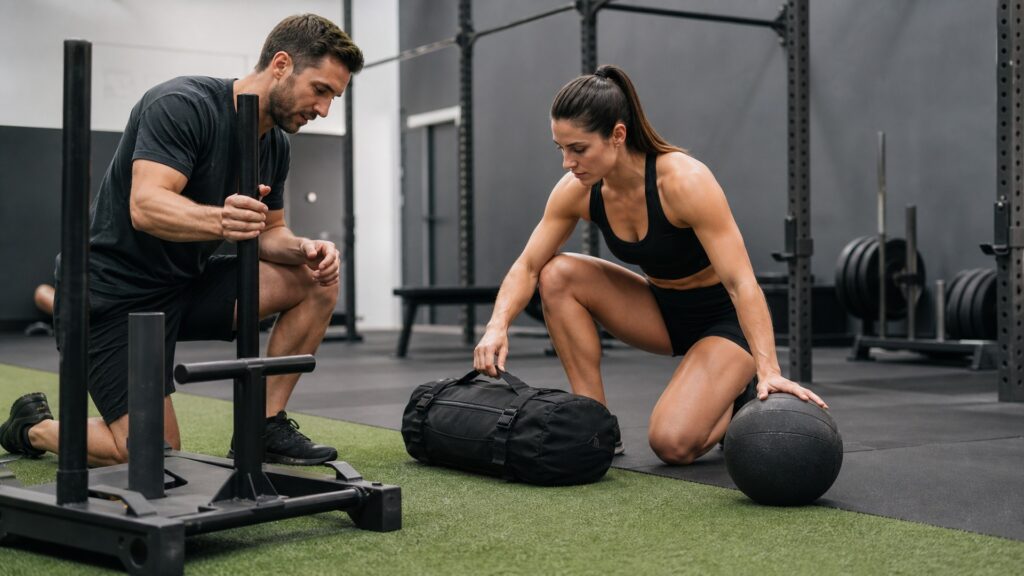
Why Functional Training Equipment Safety Factors Matters

Safety factors matter in functional training equipment because many tools are moved, carried, swung, anchored, dropped, or used at speed. The risk is not only the weight of the equipment. It is also the floor surface, grip, anchor point, clearance, user control, and how quickly fatigue changes technique.

Good safety evaluation keeps useful equipment from becoming a hazard. The goal is not to avoid challenging training, but to match the tool, load, and space to the way people will actually use it.

By: Review Streets Research Lab
Updated: October 5, 2026
Explainer · 8-12 min read
functional training equipment safety factors explainer hero image for Review Streets
What You'll Learn

How Safety Factors Change Functional Equipment Choices

A practical look at load control, space, anchors, flooring, and user readiness before buying or using functional training tools.

  • Why moving equipment creates different risks than static machines
  • How space, flooring, and anchors affect safe setup
  • Where grip, fatigue, and speed change control
  • Why progression should account for technique, not just strength
  • What to check before using loaded or dynamic tools

Tip: A tool is only a good choice if the user, space, and setup can control it.

Definitions

Key Concepts Behind Functional Training Equipment Safety Factors Matters

These concepts clarify the practical signals readers should check before choosing equipment or planning workouts.

Clearance Zone

A clearance zone is the safe area needed around the user and equipment during movement.

  • Example: open space for battle ropes or medicine ball throws
  • Check: measure side, front, overhead, and landing space
  • Limit: storage footprint is not the same as workout clearance

Anchor Integrity

Anchor integrity is whether an attachment point can handle the direction and force of use.

  • Example: a resistance band anchor that stays fixed during rows
  • Check: inspect the anchor and mounting surface
  • Limit: weak anchors can fail suddenly

Load Control

Load control is the user's ability to start, stop, and guide resistance without losing position.

  • Example: lowering a sandbag safely after a carry
  • Check: watch the end of the set when fatigue is highest
  • Limit: a load that starts safely may become unsafe later

Grip Security

Grip security is how reliably the user can hold the implement during the exercise.

  • Example: holding kettlebells during carries or swings
  • Check: consider sweat, handle size, and grip fatigue
  • Limit: grip failure can redirect the load quickly

Floor Compatibility

Floor compatibility is whether the surface supports the tool without slipping, bouncing, or damage.

  • Example: using sleds or medicine balls on appropriate flooring
  • Check: match the tool to the surface
  • Limit: the wrong floor can increase risk and equipment wear

Fatigue Drift

Fatigue drift is the technique change that appears as the user gets tired.

  • Example: rounding the back during late sandbag reps
  • Check: stop sets before control breaks down
  • Limit: fatigue can hide until speed or load increases

Tip: The best equipment choice is the one that matches the training job, available space, and user's current ability.

Setup

Start With The Space Around The Tool

Functional equipment often moves through space. A safe setup needs room for the user, the implement, the path of motion, and mistakes that can happen during fatigue.

  • Measure the full movement area.
  • Keep other people and objects out of the path.
  • Choose compact drills when the room is limited.

Clearance is part of the equipment, not an afterthought.

Anchors

Bands And Straps Need Reliable Attachment Points

Resistance bands, suspension tools, ropes, and cable-style attachments can load an anchor in different directions. A weak anchor can turn a simple drill into a sudden failure.

  • Use attachment points designed for the load.
  • Check doors, mounts, and frames before training.
  • Avoid angles that pull the anchor in an unsafe direction.

The anchor has to be as trustworthy as the tool.

Control

The User Must Be Able To Stop The Load

Dynamic tools are useful because they move, but that movement also requires control. Swings, throws, carries, and loaded transitions should be scaled so the user can stop safely.

  • Test lighter loads first.
  • Watch control at the end of the set.
  • Avoid speed before technique is reliable.

A safe load is one the user can manage when tired.

Surface

Flooring Changes The Risk

Functional equipment can slide, bounce, dent, roll, or catch depending on the surface. Flooring affects sled work, rope use, ball throws, kettlebell placement, and footwork.

  • Match the tool to the surface.
  • Check traction and impact tolerance.
  • Protect floors when loads may drop or drag.

The same drill can be safe on one surface and risky on another.

Progression

Progress Only When Control Stays Clean

Adding weight, speed, range, or complexity should depend on control, not ego. Functional tools can expose small technique problems quickly when the drill becomes faster or heavier.

  • Increase one variable at a time.
  • Keep form standards clear.
  • Use simpler drills when fatigue changes mechanics.

Safety improves when progression follows control.

Quick Reality Check

Where Safety Checks Help And Where They Have Limits

Safety checks make functional tools easier to use responsibly, but they do not remove every risk.

Where They Help

They reveal problems with anchors, flooring, clearance, load, and grip before training starts.

They help users scale dynamic drills to current ability.

Where They Fall Short

They cannot replace instruction for complex lifts or high-speed work.

They cannot make an unsuitable space safe for every tool.

Common Myths

Misconceptions About Functional Equipment Safety

Simple-looking tools can still create meaningful risk.

Light tools are automatically safe

Bands, balls, ropes, and light implements can still create risk when speed, anchors, or space are wrong.

If the equipment fits in the room, the exercise fits

Storage space is different from safe movement clearance.

Grip failure is only a comfort issue

Grip failure can change the path of a moving load.

Safety checks slow training down

Good checks make training smoother because the setup is ready and predictable.

Tip: Treat strong claims as reasons to inspect the workout fit more closely.

FAQ

Frequently Asked Questions About Safety Factors

Short answers for practical training and buying decisions.

What should I check first?

Check clearance, flooring, anchors, load control, grip security, and whether the drill matches the user's skill level.

Are resistance bands risky?

They can be safe when the band and anchor are appropriate, but poor anchors or damaged bands can fail suddenly.

How much space do functional tools need?

It depends on the tool. Carries, ropes, throws, sleds, and lateral drills usually need more room than static strength work.

How should beginners start?

Beginners should start with lighter loads, slower drills, clear movement paths, and fewer variables.

What is the practical takeaway?

Safety factors matter because functional equipment is often moved through space, loaded in different directions, and affected by fatigue.

Bottom Line

Safety factors matter because functional training equipment depends on controlled movement, reliable setup, and enough space.

The best equipment choice is the one users can load, move, stop, and repeat without turning the environment into the problem.

Next Steps

Go Deeper or Compare Your Options

Use these Review Streets paths to compare related categories and practical next decisions.