
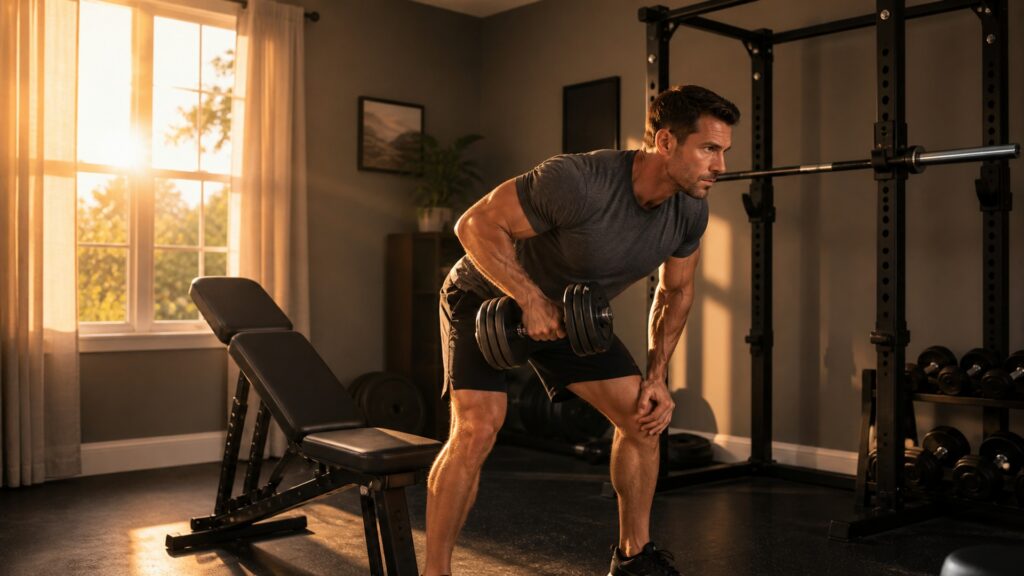
Why Home Gym Equipment Matters

Home gym equipment matters because it changes the conditions around consistency. When useful training tools are already in the house, short sessions, flexible timing, and repeated practice become easier to protect.

That convenience only helps when the equipment fits the room and the routine. A smart setup balances resistance, movement variety, storage, noise, budget, adjustment speed, and household realities instead of copying a commercial gym in miniature.

By: Review Streets Research Lab
Updated: August 31, 2026
Explainer · 8-12 min read
home gym equipment explainer hero image for Review Streets
What You'll Learn

Why Equipment Choice Changes Home Training Consistency

Home gym equipment matters when access, space, progression, and setup friction make repeated training more realistic.

  • Why reducing travel friction can change workout frequency
  • How exercise coverage matters more than collecting machines
  • Why floor space and storage affect actual use
  • How adjustment speed changes routine flow
  • Where progression capacity can limit long-term value
  • Why household fit matters for noise, safety, and shared space

Tip: Why reducing travel friction can change workout frequency before comparing products or routines.

Definitions

Key Concepts That Define Home Gym Equipment

Training access is the ability to start a session without travel, waiting, or schedule friction. The cards below clarify the terms that most often change real setup decisions.

Training access

Training access is the ability to start a session without travel, waiting, or schedule friction.

  • Home equipment can make short sessions practical.
  • Access matters only if the setup is usable, visible, and not buried in clutter.
  • It changes consistency more than motivation slogans do.

Exercise coverage

Exercise coverage is the range of useful movements the equipment can support.

  • A bench and dumbbells cover different work than a rack or cable system.
  • Coverage should follow the user's main movement patterns.
  • More stations are not better if they duplicate the same job.

Space efficiency

Space efficiency is how much training value a tool provides for its footprint, clearance, and storage demand.

  • Foldable or adjustable gear can help tight rooms.
  • Large machines need enough movement room around them.
  • A cramped setup often gets used less.

Setup friction

Setup friction is the time and annoyance required to start, change exercises, or put equipment away.

  • Low friction supports consistency.
  • High friction can make even good equipment feel like a chore.
  • Storage and adjustment speed both contribute.

Progression capacity

Progression capacity is whether the setup can keep challenging the user over time.

  • Dumbbells, plates, stacks, bands, and digital resistance progress differently.
  • A setup can be convenient but capped too soon.
  • The needed capacity depends on the training goal.

Household fit

Household fit includes noise, shared rooms, flooring, safety around others, and daily life around the gym.

  • Equipment that works on paper may fail in a busy room.
  • Storage and access should suit the people who share the space.
  • A home gym is part of a household, not just a product list.

Tip: Exercise coverage is the range of useful movements the equipment can support.

Consistency

Home Equipment Reduces the Distance Between Intent and Action

The main reason home gym equipment matters is friction. Removing the commute, locker room, waiting line, and schedule mismatch can make training easier to start.

  • A 20-minute session becomes more realistic at home.
  • Bad weather or travel time matters less.
  • Shared commercial equipment no longer controls exercise order.
  • The setup still has to be inviting enough to use.
  • Convenience cannot compensate for equipment that does not fit the plan.

Access is the home gym's central advantage.

Coverage

The Right Tools Cover Movements, Not Every Machine

Home gyms matter when a few tools cover the movement patterns the user actually trains. A bench, adjustable dumbbells, rack, cable station, bands, or cardio piece should each earn space by adding coverage.

  • Pressing, pulling, squatting, hinging, carrying, and core work need different setups.
  • A rack can support barbell strength work.
  • Cables and functional trainers add adjustable lines of pull.
  • Benches expand pressing and rowing angles.
  • Duplicated tools can waste space.

Coverage beats collection.

Room Reality

Space Decides Whether the Gym Feels Usable

A home gym is constrained by floors, ceilings, walls, neighbors, and storage. Equipment that technically fits may still feel unusable if movement paths are blocked.

  • Ceiling height matters for racks and overhead work.
  • Flooring affects noise and stability.
  • Plate storage changes how crowded the room feels.
  • Foldable gear helps only if folding is easy.
  • The walking path around equipment matters.

The room is part of the training system.

Progression

Equipment Should Leave Room to Grow

Home equipment matters less if it caps the user too early. Load range, attachment options, bench angles, cable adjustments, and rack compatibility can decide whether the setup remains useful.

  • Beginners may need simple load steps more than heavy maximums.
  • Stronger lifters may outgrow light dumbbells quickly.
  • Cables need enough stack or resistance for intended exercises.
  • Cardio equipment should match the likely training duration.
  • Progression needs should be honest, not aspirational.

A home gym should support today's routine without trapping tomorrow's.

Tradeoff

Home Gyms Trade Variety for Control

A home setup may have fewer machines than a commercial gym, but it gives the user control over timing, cleanliness, exercise order, and environment.

  • Accept missing variety if the main movements are covered.
  • Avoid equipment that creates more setup friction than it removes.
  • Plan storage before buying more options.
  • Consider who else uses the space.
  • Let repeated use define value.

Home equipment matters when it turns the available room into a repeatable training habit.

Quick Reality Check

Where Home Gym Equipment Helps and Where It Needs Context

A practical balance between the useful explanation and the limits that keep the article honest.

What This Clarifies

It explains how home gym equipment changes movement setup, training flow, or equipment decisions.

It helps readers compare real mechanisms instead of relying on vague performance or convenience claims.

What It Cannot Prove

It cannot prove that one product or method fits every body, room, routine, or goal.

It cannot replace qualified guidance for pain, medical concerns, rehabilitation, or individualized programming.

Common Myths

Misconceptions About Home Gym Equipment

Common shortcuts and misunderstandings can make the topic seem simpler than it is.

Home Gym Equipment is automatically useful for everyone

Usefulness depends on the exercise, setup, body position, space, and the exact problem the tool or concept is meant to solve.

The more advanced option is always better

Advanced features can help, but they can also add friction, cost, dependency, or setup demands that make the simpler option more practical.

One specification tells the whole story

A headline spec needs context from fit, stability, movement path, adjustment, and the user's actual training routine.

Feeling different means it is working better

A different sensation can be useful feedback, but it is not proof of better results, safer training, or faster recovery.

Fitness equipment can replace coaching or medical judgment

Equipment and metrics can support decisions, but symptoms, pain, technique problems, and health concerns need qualified human guidance.

Tip: For home gym equipment, a claim is only useful when it names the mechanism and the conditions around it.

FAQ

Frequently Asked Questions About Home Gym Equipment

Concise answers to common questions readers may have after the main explanation.

What is the main thing to understand about home gym equipment?

Look at the mechanism first: how it changes resistance, position, tracking, support, space, or routine flow in the specific fitness setting.

Is it necessary for every home gym or workout?

No. It matters only when it solves a real limitation or supports movements the user will repeat consistently.

How should beginners think about it?

Beginners should prioritize clear setup, repeatable movements, manageable resistance, and enough room to learn before chasing complicated features.

What is the biggest comparison mistake?

The biggest mistake is judging by category label alone instead of checking movement path, fit, adjustment, stability, and use conditions.

Can it prevent injury or guarantee results?

No. It can support better setup or clearer training decisions, but it should not be presented as a safety, rehabilitation, or performance guarantee.

Bottom Line

Home Gym Equipment matters when its mechanism changes a real training decision rather than merely adding another product label.

The practical takeaway is to match the tool, metric, or setup to the movement, room, routine, and limits that actually shape use.

Next Steps

Go Deeper or Compare Your Options

Use these related explainers to place home gym equipment inside adjacent Fitness equipment and accessory decisions.

Quick Summary

Home Gym Equipment Explained

  • Why reducing travel friction can change workout frequency
  • How exercise coverage matters more than collecting machines
  • Why floor space and storage affect actual use
  • How adjustment speed changes routine flow
  • Practical value depends on setup, repeated use, and honest limits.