
Gap Growth
The gradual increase in spark-plug electrode spacing as repeated discharges erode metal from the firing surfaces.
- Raises breakdown-voltage demand
- Can expose weak insulation
- Compare with specified limit
Ignition maintenance preserves the margin between the voltage a plug gap requires and the voltage a coil path can deliver without leaking elsewhere. Each firing event removes minute electrode material; combustion deposits alter the insulator surface; heat cycles age boots, springs, seals, terminals, and winding insulation. These changes can accumulate long before a constant fault appears.
A useful maintenance visit is therefore more than scheduled plug replacement. It identifies the exact interval and plug specification, preserves cylinder order, inspects wells and boots before disturbing them, reads wear patterns, protects threads, and confirms loaded operation afterward. Condition evidence should direct additional coil or wiring work; age alone should not turn a plug service into wholesale ignition replacement.
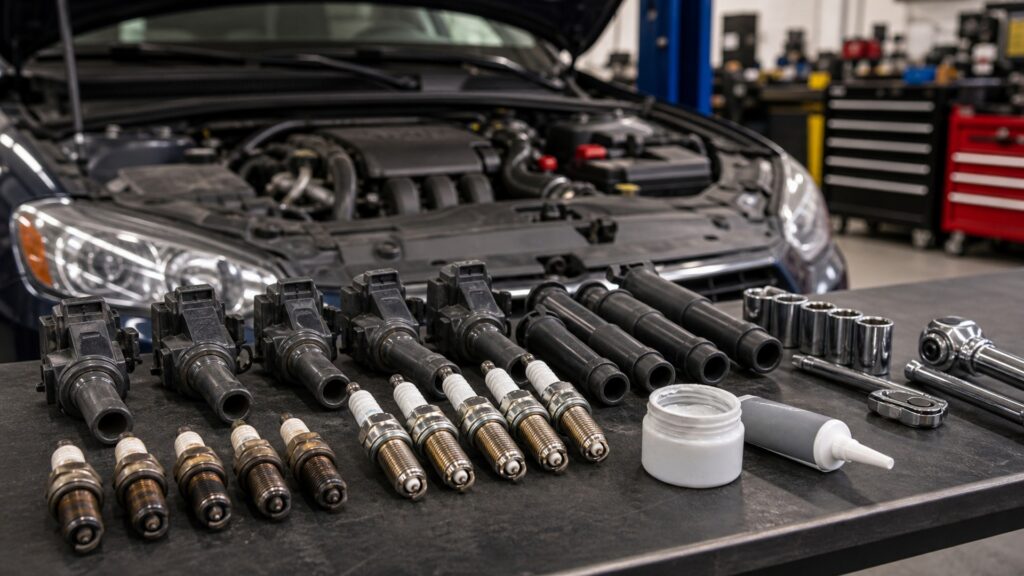
Maintenance protects a chain of small interfaces whose combined wear raises voltage demand or creates an easier leakage path.
Tip: Photograph plug condition by cylinder before cleaning or discarding anything; the pattern can distinguish one local problem from engine-wide wear.
These terms show where scheduled service prevents a marginal spark path from becoming an intermittent fault.
The gradual increase in spark-plug electrode spacing as repeated discharges erode metal from the firing surfaces.
Conductive or insulating material accumulated on the firing end that interferes with a clean discharge across the intended gap.
The insulated flexible path joining a coil output to the plug terminal while sealing the plug well.
A carbonized surface trail formed when repeated high-voltage leakage follows contamination or damaged insulation instead of the plug gap.
The contact force at an electrical connector or coil spring that keeps resistance and intermittent movement within acceptable limits.
The difference between available ignition voltage or energy and the demand imposed by the plug gap and combustion chamber.
Tip: Keep every removed plug labeled by cylinder until the final road test is complete; its wear pattern remains diagnostic evidence.
Spark-plug erosion produces gap growth with every discharge. As the gap widens, the electric field needs more voltage to break down, so a coil and boot that once had ample reserve may begin leaking during acceleration.
Scheduled plugs protect voltage reserve; they do not prove every coil is worn.
Deposit fouling, plug-well oil, or water can start dielectric tracking along a coil boot or ceramic. The secondary pulse then follows that conductive scar rather than ionizing the intended cylinder gap.
A new plug installed into a wet or tracked path inherits the old leakage mechanism.
Repeated heating and cooling can harden elastomer, relax contact pressure, fret terminals, and stress coil insulation. These faults often appear after a hot soak, then disappear once temperatures and dimensions change.
Heat-related evidence deserves targeted repair, not automatic replacement of every coil.
Wrong reach, damaged threads, debris, lubricant used against instructions, or incorrect torque can alter plug heat transfer, sealing, and terminal position. A maintenance shortcut can manufacture the next fault.
Installation quality is part of ignition performance, not merely workmanship appearance.
After service, misfire data, cranking behavior, loaded acceleration, temperature, and warning status should be checked under controlled conditions. This confirms the original margin problem is gone without overheating the catalyst.
Maintenance is complete when the engine passes the condition that previously consumed its reserve.
The interval starts the job, but plug wear, contamination, insulation condition, contact integrity, installation geometry, and loaded verification decide what the job accomplishes.
Specified time or mileage, measured gap growth, normal but advanced electrode wear, hardened boots, weak spring contact, well contamination, disturbed seals, and repeatable load-sensitive misfire trends.
Cylinder labeling, before-and-after scan data, plug photographs, exact part markings, torque records, corrected leaks, restored routing, and a representative final drive make the work traceable.
Oil-soaked firing ends, broken porcelain, severe uneven wear, recurring carbon tracks, melted boots, driver-circuit codes, compression loss, injector faults, or timing evidence are not routine wear conclusions.
Do not replace a complete coil set solely because plugs reached their interval. Test power, ground, command, primary current, secondary containment, fuel, air, and mechanical condition where the evidence points.
A maintenance reminder can encourage replacement without inspection, while a misfire warning can encourage diagnosis without checking overdue wear.
Coils do not share a universal wear interval with plugs. Inspect boots, terminals, insulation, current behavior, and cylinder evidence. Replace a coil when its own condition or test fails, not merely because access is convenient.
Open-air sparking occurs under far lower pressure than combustion. Gap erosion, deposits, insulation leakage, wrong heat range, or damaged sealing can fail only under cylinder demand, so specification and operating evidence matter.
Product and vehicle instructions control use. Excess material in an electrical contact can interfere with engagement, hydraulic-lock a boot, or attract debris. Apply only the specified material, location, and amount for sealing.
Idle usually imposes less firing demand than cold cranking or loaded acceleration. Confirm cylinder counts, voltage stability, temperature behavior, and controlled road load before deciding the restored ignition path has adequate reserve.
Tip: Use the removed components and the conditions that trigger failure to decide whether the job remains maintenance or becomes a fault investigation.
These answers separate scheduled plug care from coil diagnosis, interpret removed parts, and define a defensible release test.
Use the exact vehicle schedule, plug type, engine code, operating conditions, and prior repair history. Inspect sooner after fluid intrusion, overheating, incorrect parts, recurring misfire, or any event that may damage boots or wiring.
Follow the plug and vehicle instructions. Some designs allow careful verification or adjustment; fine-wire electrodes can be damaged by ordinary tools. Confirm the correct part first, then use an approved method without levering on fragile tips.
Cylinder-by-cylinder color, deposits, erosion, cracks, oil, fuel wetness, overheated electrodes, and abnormal gap can direct testing toward mixture, oil control, cooling, heat range, ignition, or mechanical faults without proving one alone.
No. Oil can soften boots, contaminate contact surfaces, encourage leakage, and return after new plugs are installed. Identify the sealing source, clean safely, inspect paired insulation, and verify that the well remains dry.
Record part numbers, cylinder locations, measured gaps, observed deposits, boot and terminal condition, torque method, corrected leaks, trouble codes, misfire counts, test temperature, road-load result, and any fault needing separate diagnosis.
Ignition maintenance matters because electrode erosion, contamination, heat cycling, and contact movement progressively consume the electrical reserve needed to fire a compressed mixture.
Use the schedule to begin inspection, then let cylinder-labeled evidence determine the work. Preserve clean wells and threads, replace only failed companion parts, and verify the result under the load and temperature that challenge firing margin.
These related explainers map the ignition sequence, exact fitment, and operating measurements needed to turn a maintenance interval into verified combustion reliability.
Trace primary charging, field collapse, secondary voltage, plug discharge, and combustion initiation before interpreting wear.
Match plug geometry, heat range, seat, torque, boot depth, and coil electronics to the exact engine.
Use current, dwell, firing demand, spark duration, temperature, and misfire data to judge the repaired margin.
Choose a retailer
Prices checked regularly. We may earn a commission at no cost to you.