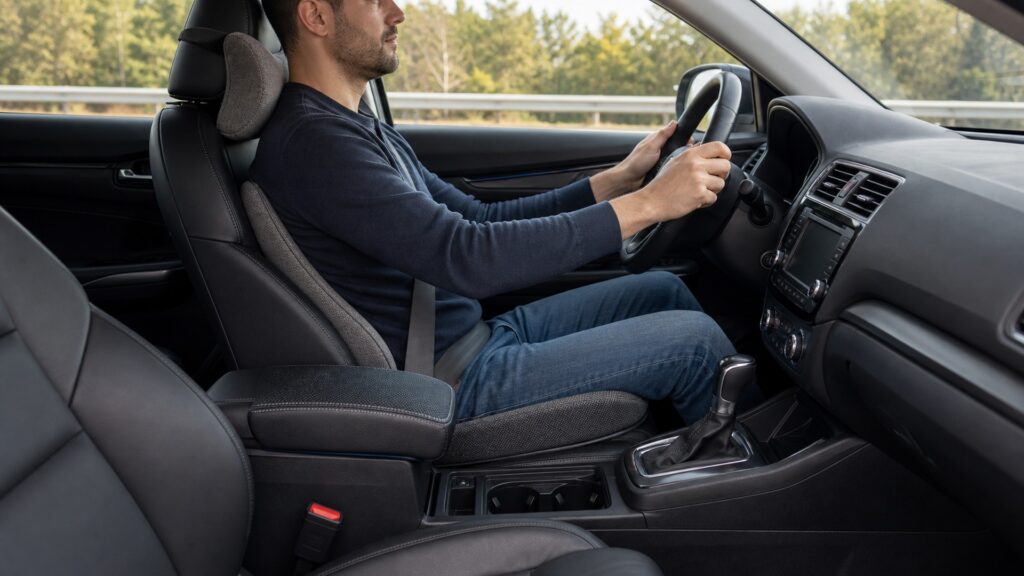
Why Interior Comfort Safety Factors Matters

A comfort accessory acts where a person meets a safety system. Seat pads, covers, supports, shades, heaters, fans, and portable controls can change body position, belt routing, airbag space, pedal reach, vision, surface temperature, wiring, or attention. A favorable sensation never cancels those boundaries.

Safety evaluation starts from the vehicle's designed seating and control geometry, then asks what the added product changes during entry, driving, braking, adjustment, and exit. The final configuration must keep the occupant stable, preserve direct control and sightlines, remain thermally and electrically bounded, and reveal rather than hide developing symptoms or equipment faults.

By: Review Streets Research Lab
Updated: September 11, 2026
Explainer · 8-12 min read
interior comfort safety factors explainer hero image for Review Streets
What You'll Learn

Protect the Human-Vehicle Safety Envelope

The review connects comfort changes to restraint performance, driving function, energy exposure, attachment stability, and appropriate escalation.

  • Restore the factory reference position
  • Check belts, head restraints, and airbags
  • Operate every control fully
  • Verify views and mirror adjustment
  • Inspect heat and electrical paths
  • Stress attachments through transitions
  • Define stop and escalation cues

Tip: Evaluate the complete installed configuration with the actual occupant, not the accessory on an empty seat.

Definitions

Key Concepts That Define Interior Comfort Safety Factors

Safety Terms Define Nonnegotiable Boundaries

Restraint Geometry

The relationship among the occupant, seat, lap belt, shoulder belt, buckle, head restraint, and structural anchorage in the accepted position.

  • Locate the restraint geometry boundary
  • Observe the restraint geometry in use
  • Verify the restraint geometry result

Airbag Clearance

The unobstructed deployment space and compatible surface conditions required around identified airbag locations, seams, panels, and occupant zones.

  • Locate the airbag clearance boundary
  • Observe the airbag clearance in use
  • Verify the airbag clearance result

Control Reach

The ability to operate pedals, steering, transmission, primary controls, and emergency functions from a stable seated posture.

  • Locate the control reach boundary
  • Observe the control reach in use
  • Verify the control reach result

Sightline Margin

The remaining visible field around pillars, mirrors, glazing, displays, and road reference points after seating or shade changes.

  • Locate the sightline margin boundary
  • Observe the sightline margin in use
  • Verify the sightline margin result

Thermal Exposure

The temperature, contact area, duration, sensation, and user vulnerability that together determine risk from a heated or cooled surface.

  • Locate the thermal exposure boundary
  • Observe the thermal exposure in use
  • Verify the thermal exposure result

Attachment Stability

The ability of straps, clips, friction surfaces, fasteners, and product geometry to hold position through use, adjustment, entry, and exit.

  • Locate the attachment stability boundary
  • Observe the attachment stability in use
  • Verify the attachment stability result

Tip: These definitions identify vehicle functions that comfort improvements must leave intact.

Occupant Geometry

Belts, Head Restraints, and Airbags Set the First Limit

Added thickness or changed posture can lift, translate, or rotate the occupant. Follow vehicle guidance, keep belt paths direct, retain buckle access, preserve head support, and avoid identified deployment seams and sensor zones.

  • Map restraint contact
  • Identify airbag locations
  • Compare occupied positions

Comfort is subordinate to the geometry of crash protection.

Driving Function

Stable Posture Must Preserve Pedals, Steering, Views, and Emergency Controls

The occupant should not brace on an accessory, stretch for pedals, lose steering range, or surrender outside visibility. Test normal movements and urgent control access while fully seated and belted.

  • Operate full pedal travel
  • Turn steering as required
  • Reach hazard controls

Relief that weakens vehicle control is not an acceptable trade.

Energy Limits

Heating, Cooling, and Power Need Bounded Exposure

Verify outlet rating, fuse protection, intact connectors, cable routing, surface-temperature behavior, airflow intake, accessible controls, and shutdown. Sensation may be unreliable for some occupants, so output and duration need conservative limits.

  • Inspect the power path
  • Monitor contact temperature
  • Confirm off-state behavior

Energy must remain controlled even when the user cannot detect excess exposure promptly.

Product Retention

Accessories Must Stay Out of Safety and Movement Paths

Straps, pads, shades, fans, and cables experience body loading, vibration, seat travel, and door movement. Nothing may migrate into pedals, belts, airbags, latches, tracks, views, or exits.

  • Load every attachment
  • Cycle seats and doors
  • Reinspect after the trip

Position is a safety property that must persist during use.

Human Limits

Symptoms, Vulnerability, and Attention Define Stop Conditions

New pain, numbness, weakness, dizziness, excessive heat, reduced sensation, restricted mobility, or repeated adjustment signals a boundary. Stop the trial and seek appropriate expertise rather than compensating with more accessory output.

  • Name stop symptoms
  • Keep adjustments simple
  • Escalate persistent limits

The occupant's functional feedback is evidence, not an inconvenience to suppress.

Quick Reality Check

Comfort Can Mask a Developing Problem

Extra padding, heat, airflow, or noise masking may temporarily reduce awareness of collapsed seating, HVAC faults, water intrusion, electrical damage, vibration, or a medical symptom without removing its cause.

Useful Evidence

The occupant remains stable and can use every required restraint, control, view, and exit.

Thermal and electrical behavior stays within documented limits without odor, damage, intermittent power, or unexpected heat.

Limits and Escalation

Structural seat, restraint, airbag, sensor, or vehicle-electrical work belongs with qualified service.

Adaptive driving needs and persistent neurological or pain symptoms require appropriate professional assessment.

Common Myths

Misconceptions About Interior Comfort Safety Factors

These myths let immediate comfort override vehicle or human safety evidence.

Soft padding cannot create a safety problem

Padding can change occupant height, belt contact, head-restraint position, pedal reach, side support, sensor response, and stability. Its material may also block an airbag seam or compress unpredictably during braking and entry.

A low-voltage accessory is harmless

Twelve-volt equipment can still overload outlets, heat poor connectors, abrade wiring, drain a parked battery, distract through awkward controls, or place cables in movement paths. Verify the entire circuit and shutdown behavior.

Feeling heat means exposure is safe

Thermal sensation varies with circulation, neuropathy, medications, clothing, contact pressure, and attention. A user may detect excessive temperature late, so documented limits, conservative duration, inspection, and automatic or reachable shutdown remain important.

A strap that holds while parked is secure

Entry, exit, braking, turning, seat adjustment, clothing friction, and repeated compression load attachments differently. Recheck position after realistic motion and reject any migration toward restraints, controls, airbags, tracks, views, or exits.

Tip: Treat each safety interface as its own pass-or-stop gate.

FAQ

Frequently Asked Questions About Interior Comfort Safety Factors

These answers address occupant differences, trials, warning cues, and professional boundaries.

Which factory information should be checked first?

Consult the vehicle manual for seat adjustment, head restraints, belts, airbags, occupant sensors, child-restraint considerations, electrical outlets, heated or ventilated seats, warnings, and prohibited accessories before adding material or powered equipment.

How is control reach tested safely?

While parked, belt the actual occupant in the accepted posture and operate pedals, steering, shifter, parking brake, primary switches, hazard controls, doors, and exits. Confirm the position remains stable without leaning or bracing.

Who needs extra thermal caution?

People with reduced sensation, impaired circulation, limited mobility, certain medical conditions or medications, or an inability to reposition or shut the device off may need lower exposure and guidance from an appropriate professional.

What electrical signs require immediate shutdown?

Disconnect safely if a plug, outlet, controller, cable, or surface becomes unusually hot; if odor, smoke, discoloration, sparking, intermittent power, blown fuses, vehicle warnings, or damaged insulation appears; or if shutdown fails.

When does discomfort need expert evaluation?

Persistent pain, numbness, weakness, dizziness, restricted movement, worsening symptoms, crash-related discomfort, or dependence on an improvised driving position warrants medical, mobility, ergonomic, or vehicle-adaptation expertise appropriate to the concern. when

Bottom Line

Safety is part of comfort performance.

Preserve restraint and airbag geometry, stable control reach, sightlines, bounded energy, durable attachments, and clear exits. Stop when symptoms or equipment cues exceed an accessory trial, and direct structural or medical concerns to qualified expertise.

Next Steps

Continue into Fitment and Operating Behavior

These explainers show how safety boundaries become compatibility requirements and how they must persist through every comfort operating state.