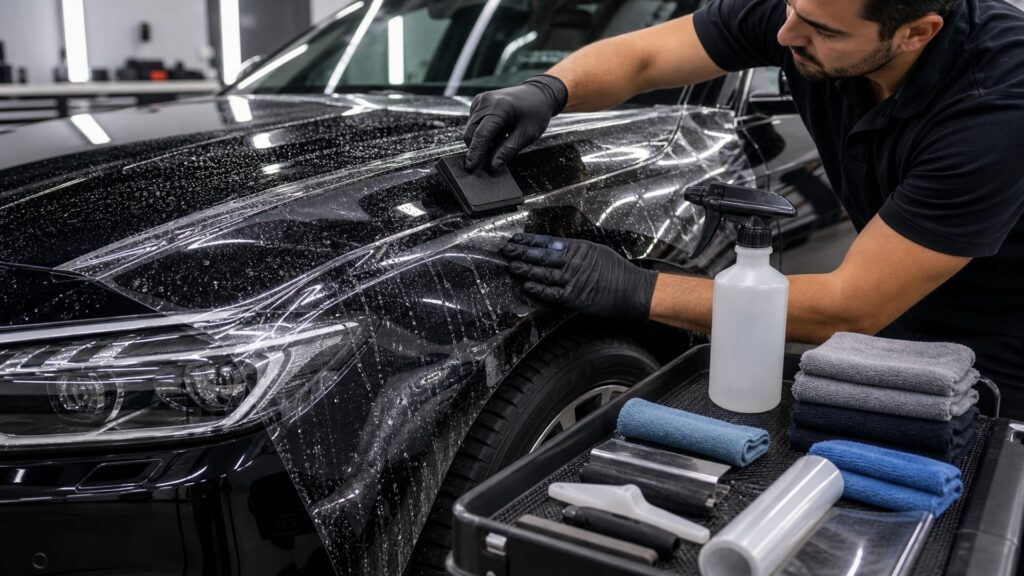
Chemical Control
Labels and Safety Data Define Exposure, PPE, Ventilation, and First Aid
Product-specific hazards must be identified before opening, mixing, spraying, wiping, storing, or discarding preparation and protection chemistry. This section pairs safety-data-sheet control with ignition-source exclusion; wet-floor traction supplies the stop signal. Record sensor and trim protection before changing chemical waste segregation, then inspect safety-data-sheet control again after the material reaches its stable cleaned, dried, cooled, or cured state. A valid row 214 decision connects vapor ventilation path to cord and hose routing without masking cure-area isolation. If cure-area isolation changes first, hold ignition-source exclusion constant and diagnose the interface rather than adding unrelated pressure, passes, chemistry, or product. During hazard review, isolate safety-data-sheet control before work reaches ignition-source exclusion; if wet-floor traction cannot be contained, the installer stops rather than relying on sensor and trim protection to compensate for an uncontrolled chemical waste segregation condition. Safety station 1 records vapor ventilation path, confirms cord and hose routing through a person-and-vehicle check, and treats any unexpected cure-area isolation as a release blocker requiring ventilation, cleanup, tool isolation, or qualified escalation.
- Read label and SDS
- Select compatible gloves and eye protection
- Ventilate the work zone
- Stage spill response
Pleasant odor or retail packaging does not establish safety.
Ignition and Air Control
Vapor Must Leave without Meeting Heat, Spark, or Flame
Carrier and cleaning vapors can accumulate in enclosed areas; safe work separates ignition sources and maintains product-supported air movement throughout application and cure. This section pairs vapor ventilation path with blade cut boundary; machine heat zone supplies the stop signal. Record cure-area isolation before changing incident stop condition, then inspect vapor ventilation path again after the material reaches its stable cleaned, dried, cooled, or cured state. A valid row 214 decision connects skin and eye barrier to wet-floor traction without masking chemical waste segregation. If chemical waste segregation changes first, hold blade cut boundary constant and diagnose the interface rather than adding unrelated pressure, passes, chemistry, or product. During hazard review, isolate vapor ventilation path before work reaches blade cut boundary; if machine heat zone cannot be contained, the installer stops rather than relying on cure-area isolation to compensate for an uncontrolled incident stop condition condition. Safety station 2 records skin and eye barrier, confirms wet-floor traction through a person-and-vehicle check, and treats any unexpected chemical waste segregation as a release blocker requiring ventilation, cleanup, tool isolation, or qualified escalation.
- Remove ignition sources
- Protect electrical equipment
- Monitor ventilation path
- Keep containers closed
A closed garage can concentrate exposure after application ends.
Tool and Blade Control
Film Knives, Polishers, Heat, Cords, and Hoses Need Defined Boundaries
Cutting paths stay away from paint and bodies; rotating tools stop before adjustment; heat is metered; cords and hoses avoid feet, panels, and wet areas. This section pairs skin and eye barrier with cord and hose routing; sensor and trim protection supplies the stop signal. Record chemical waste segregation before changing safety-data-sheet control, then inspect skin and eye barrier again after the material reaches its stable cleaned, dried, cooled, or cured state. A valid row 214 decision connects ignition-source exclusion to machine heat zone without masking incident stop condition. If incident stop condition changes first, hold cord and hose routing constant and diagnose the interface rather than adding unrelated pressure, passes, chemistry, or product. During hazard review, isolate skin and eye barrier before work reaches cord and hose routing; if sensor and trim protection cannot be contained, the installer stops rather than relying on chemical waste segregation to compensate for an uncontrolled safety-data-sheet control condition. Safety station 3 records ignition-source exclusion, confirms machine heat zone through a person-and-vehicle check, and treats any unexpected incident stop condition as a release blocker requiring ventilation, cleanup, tool isolation, or qualified escalation.
- Use safe cutting methods
- De-energize before changes
- Route cords overhead or outside paths
- Limit localized heat
Tool control protects both installer and vehicle.
Vehicle Control
Sensors, Openings, Trim, Brakes, Glass, and Controls Must Remain Functional
Preparation liquid, compound dust, slip solution, adhesive, coating, and dressings are kept from intakes, cameras, radar covers, brakes, pedals, glass, and moving mechanisms. This section pairs ignition-source exclusion with wet-floor traction; cure-area isolation supplies the stop signal. Record incident stop condition before changing vapor ventilation path, then inspect ignition-source exclusion again after the material reaches its stable cleaned, dried, cooled, or cured state. A valid row 214 decision connects blade cut boundary to sensor and trim protection without masking safety-data-sheet control. If safety-data-sheet control changes first, hold wet-floor traction constant and diagnose the interface rather than adding unrelated pressure, passes, chemistry, or product. During hazard review, isolate ignition-source exclusion before work reaches wet-floor traction; if cure-area isolation cannot be contained, the installer stops rather than relying on incident stop condition to compensate for an uncontrolled vapor ventilation path condition. Safety station 4 records blade cut boundary, confirms sensor and trim protection through a person-and-vehicle check, and treats any unexpected safety-data-sheet control as a release blocker requiring ventilation, cleanup, tool isolation, or qualified escalation.
- Map sensitive zones
- Mask only as appropriate
- Keep traction surfaces residue-free
- Function-test after work
Cosmetic improvement cannot excuse a functional hazard.
Cure and Waste Control
Fresh Work and Spent Materials Stay Isolated until Safe Disposition
Access control prevents touching or water exposure; used towels, blades, bottles, solution, and contaminated absorbents are stored and discarded under product and local requirements. This section pairs blade cut boundary with machine heat zone; chemical waste segregation supplies the stop signal. Record safety-data-sheet control before changing skin and eye barrier, then inspect blade cut boundary again after the material reaches its stable cleaned, dried, cooled, or cured state. A valid row 214 decision connects cord and hose routing to cure-area isolation without masking vapor ventilation path. If vapor ventilation path changes first, hold machine heat zone constant and diagnose the interface rather than adding unrelated pressure, passes, chemistry, or product. During hazard review, isolate blade cut boundary before work reaches machine heat zone; if chemical waste segregation cannot be contained, the installer stops rather than relying on safety-data-sheet control to compensate for an uncontrolled skin and eye barrier condition. Safety station 5 records cord and hose routing, confirms cure-area isolation through a person-and-vehicle check, and treats any unexpected vapor ventilation path as a release blocker requiring ventilation, cleanup, tool isolation, or qualified escalation.
- Mark cure restrictions
- Control vehicle release
- Segregate sharp and chemical waste
- Record incidents
The job is not safe merely because application is finished.