
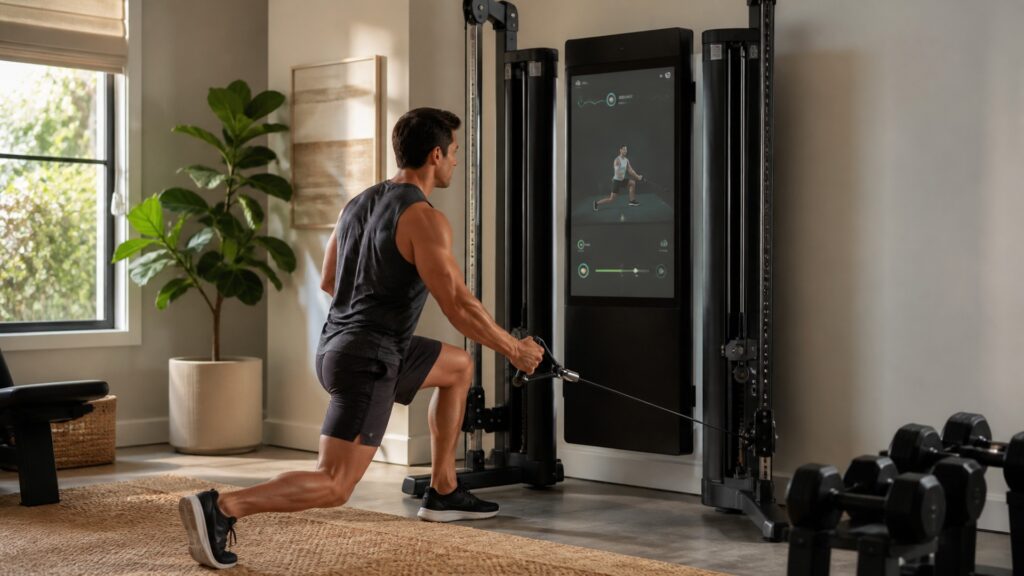
Why Smart Home Gyms Workout Role Matters

Workout role matters in smart home gyms because the system should solve a specific job in the user's routine. Some smart home gyms are best as the main strength station. Others work better as a guided supplement, a compact class hub, or a way to make home workouts easier to start.

Without a clear workout role, it is easy to overbuy hardware, underuse the subscription, or choose a system that does not match the training a person actually repeats.

By: Review Streets Research Lab
Updated: September 23, 2026
Explainer · 8-12 min read
smart home gyms workout role explainer hero image for Review Streets
What You'll Learn

How Workout Role Determines Smart Home Gym Fit

A practical way to decide what job a smart home gym should perform in a real routine.

  • Why a smart home gym should have a defined job
  • How main-system and supplement roles differ
  • Where exercise selection and resistance range shape fit
  • Why weekly use matters more than feature lists
  • How to avoid buying hardware for a routine you will not repeat

Tip: Judge the system by how it changes real training decisions, not by how advanced the feature sounds.

Definitions

Key Concepts Behind Smart Home Gyms Workout Role Matters

These concepts clarify the practical signals readers should check before choosing home fitness technology.

Primary Training Station

A primary training station is the main place where a user completes most planned workouts.

  • Example: using a cable-based smart gym for three weekly strength sessions
  • Check: confirm it covers the core weekly routine
  • Limit: one station may not cover every training style

Supplemental Tool

A supplemental tool adds specific sessions or guidance around other training.

  • Example: using the system for mobility or short strength work between gym days
  • Check: define what it adds to the existing routine
  • Limit: supplements are easier to ignore if the role is vague

Workout Coverage

Workout coverage is how much of the user's actual training the system can handle well.

  • Example: supporting push, pull, lower-body, core, and recovery sessions
  • Check: review a full week of planned workouts
  • Limit: coverage depends on goals and equipment limits

Session Frequency

Session frequency is how often the system will realistically be used.

  • Example: planning two short weekday sessions and one longer weekend workout
  • Check: compare expected use with total cost
  • Limit: intended use often exceeds actual use

Training Gap

A training gap is the missing piece the system is supposed to solve.

  • Example: needing guided strength at home without a full rack
  • Check: name the gap before buying
  • Limit: a vague desire for convenience is not always enough

Routine Fit

Routine fit is how well the system matches time, space, goals, and preferred workout style.

  • Example: a compact station for short evening strength sessions
  • Check: test whether the routine works on busy days
  • Limit: the best hardware still fails if the routine does not fit

Tip: A strong feature should make workouts easier to perform, repeat, or evaluate without hiding important limits.

Purpose

Start With The Job The System Should Do

A smart home gym should be chosen for a clear role. It might replace gym trips, support strength work, add guided classes, or make short home sessions easier.

  • Name the main job before comparing systems.
  • Separate must-have workouts from nice extras.
  • Avoid paying for features outside the role.

A clear job makes the purchase easier to judge.

Main System

A Primary Station Needs Broad Coverage

If the smart home gym is meant to anchor the routine, it needs enough exercise variety, resistance, guidance, and progression to support repeated weekly training.

  • Review several weeks of programs.
  • Check lower-body, upper-body, core, and recovery options.
  • Confirm resistance range and setup speed.

A main station has to carry more than one impressive demo.

Supplement

A Supplemental Role Can Be Narrower

Some users do not need the smart home gym to do everything. It may work best as a convenient supplement for short sessions, mobility, guided strength, or days away from the gym.

  • Define when it will be used.
  • Choose features that support that narrow job.
  • Do not expect a supplement to replace every workout.

A smaller role can still be valuable when it is realistic.

Cost

Use Frequency Should Match Commitment

Smart home gyms can involve hardware cost, subscriptions, space, and setup. The workout role should be frequent enough to justify those commitments.

  • Estimate weekly sessions honestly.
  • Include subscription cost in the decision.
  • Avoid buying for an ideal routine that has not happened yet.

Value comes from repeated use, not feature ownership.

Decision

The Right Role Reduces Regret

When the system has a clear place in the routine, tradeoffs become easier to accept. When the role is vague, even strong features can feel unnecessary.

  • Match the system to a real training gap.
  • Choose hardware that supports the role.
  • Keep flexibility if the routine is still uncertain.

The best smart home gym is the one with a job it can keep doing.

Quick Reality Check

Where Workout Role Helps And Where It Can Fall Short

Role-based buying keeps the system tied to actual behavior.

Where It Helps

It clarifies whether the system should replace, support, or supplement other training.

It connects price and features to expected weekly use.

Where It Falls Short

It cannot guarantee motivation or consistency.

The role may change as goals, space, or schedules change.

Common Myths

Misconceptions About Smart Home Gym Workout Role

A powerful system still needs a realistic job.

The best system should do everything

The best system should do the user's needed workouts well.

A supplement is a failed purchase

A narrow role can be useful if it is used consistently.

More features mean a stronger routine

Features matter only when they support the role.

The role can be figured out later

A vague role often leads to low use and buyer regret.

Tip: Treat strong claims as reasons to inspect the system more closely, not as final proof.

FAQ

Frequently Asked Questions About Smart Home Gym Workout Role

Short answers for practical buying and training decisions.

What workout role should I define first?

Decide whether the system will be the main training station, a supplement, or a specific solution for one training gap.

Can a smart home gym replace a gym membership?

Sometimes, if it covers the workouts, resistance, and progression the user actually needs.

Is a narrow role worth it?

Yes, if that role is frequent and valuable enough to justify the cost and space.

How do I avoid overbuying?

List the workouts you will do weekly and ignore features outside that routine.

What is the practical takeaway?

Buy for the job the system will perform repeatedly, not for the longest feature list.

Bottom Line

Workout role matters because a smart home gym needs a defined place in the user's routine.

The strongest purchase is tied to a real training gap, realistic weekly use, and hardware that supports the intended job.

Next Steps

Go Deeper or Compare Your Options

Use these Review Streets paths to compare related categories and practical next decisions.