
Polymer Blend
The combination of natural and synthetic rubber chains forming the elastic base of a tire compound.
- Blend choice sets broad temperature behavior
- Chains stretch and recover under load
- Different tread zones can use different blends
Tire compound is the engineered rubber mixture that turns tread shape into friction. Polymers provide the elastic network; carbon black or silica reinforce it; oils tune flexibility and processing; sulfur chemistry creates crosslinks; protective additives slow oxygen, ozone, and fatigue damage. The recipe changes by tread region and intended use.
No compound is simply soft or hard. Grip comes from adhesion at the road surface and hysteresis as rubber deforms around texture, both changing with temperature, frequency, water, and wear. Increasing one form of grip can raise abrasion, rolling loss, heat, or warm-weather movement. The buyer therefore needs the correct operating window—winter, touring, performance, off-road, or competition—rather than the stickiest-sounding marketing phrase.
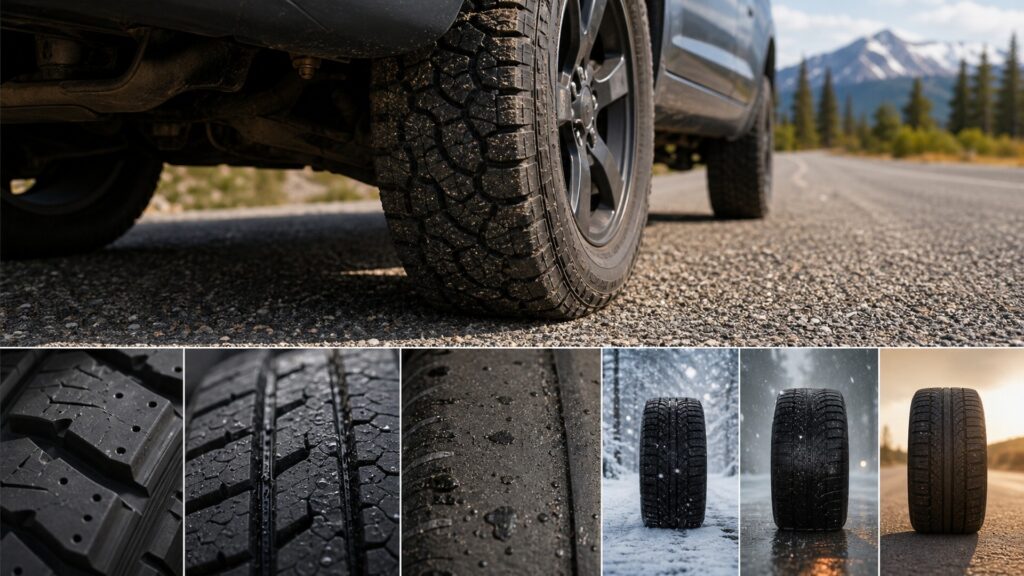
The compound matters through how its molecular network deforms, returns energy, generates heat, wears, and ages during the exact surface and speed cycle.
Tip: A cold morning, a wet highway stop, and a hot track session ask the same rubber to operate at different temperatures and deformation rates. Product category should match the dominant window.
These definitions explain the material behaviors hidden beneath a tread-pattern photograph.
The combination of natural and synthetic rubber chains forming the elastic base of a tire compound.
Carbon black, silica, or another dispersed material used to strengthen rubber and tune its energy behavior.
Energy lost as rubber deforms and recovers during each contact and casing cycle.
The temperature region where a polymer shifts rapidly between relatively stiff and more rubber-like behavior.
The extent of chemical connections tying polymer chains into a resilient three-dimensional network.
Long-term chemical change as oxygen, heat, ozone, and stress alter rubber and its protective additives.
Tip: A compound claim is credible only when the exact tire, temperature, surface, wear state, and measured outcome are identified.
At the road, molecular attraction contributes adhesion while viscoelastic deformation over surface asperities produces hysteretic friction. Water, contamination, texture scale, load, sliding speed, and temperature change their balance; a single hardness reading cannot represent both.
Compound creates friction by responding to texture, not by acting like glue.
Silica systems can help tune wet grip and rolling loss, while carbon black provides reinforcement and other useful properties. Performance depends on particle dispersion, polymer compatibility, coupling chemistry, loading, and cure—not the presence of one fashionable ingredient.
Recipe execution matters more than the headline filler.
Cold can move rubber toward a stiff response that follows road texture poorly; heat can soften blocks, accelerate wear, and change pressure. Winter and performance compounds target different windows, while track compounds may need controlled warming and can be unsuitable cold or wet.
There is no single compound that occupies every useful temperature range without compromise.
Rubber that dissipates energy at road-texture frequencies may grip well, but loss in repeated bulk deformation becomes rolling resistance and heat. Reinforcement, tread depth, block support, pressure, alignment, and driving style decide whether the intended balance survives.
A compound cannot be ranked on grip without asking what it costs in heat and material.
Oxygen diffusion, ozone, UV exposure, heat cycles, flex fatigue, and additive migration alter rubber over time. Climate, storage, use, and construction matter, so age guidance, inspection, performance change, and manufacturer recommendations complement tread measurement.
Plenty of tread cannot prove that an aged compound still behaves as intended.
Each recipe targets a range of temperature, texture, speed, wear, and energy loss; outside it, the original advantages can fade or reverse.
It remains sufficiently compliant and stable across the route's temperatures, produces credible wet and dry outcomes, controls heat, and delivers acceptable wear and rolling loss.
The tire's pattern, casing, pressure, load, age, and maintenance let that material operate in the tested form rather than forcing it beyond its intended category.
Words such as silica, racing, soft, eco, or nano cannot establish friction, temperature range, durability, rolling resistance, or safety without an exact formulation and whole-tire test.
No fresh compound compensates for inadequate water evacuation, wrong pressure, overload, structural damage, incompatible mixing, poor alignment, unsafe speed, or continued service after age and condition limits.
Compound myths search for one ingredient or softness test that can rank a material built from interacting chemistry.
A low hardness reading can reflect temperature, test method, and one material region while saying little about wet friction, block support, heat stability, or wear. Grip depends on the compound's viscoelastic response at the actual surface and speed.
Silica can help tune wet grip and rolling resistance, but polymer choice, coupling agents, dispersion, cure, tread design, and casing determine the final result. The ingredient name alone cannot rank two complete tires.
Rubber ages through oxygen, ozone, heat, UV exposure, and internal chemical change even when tread is unworn. Storage can slow deterioration but cannot pause it; date, condition, history, and maker guidance still matter.
Competition rubber may require temperature, load, surface, pressure, and warm-up conditions unavailable on public roads, while sacrificing wet behavior, cold flexibility, wear, or legal suitability. Intended use outranks the performance label.
Tip: Require whole-tire evidence under a named temperature, surface, speed, and wear state before translating a recipe claim into a driving decision.
These answers address hardness, warming, color, age, mixing, and why compound cannot be evaluated separately from the rest of the tire.
A durometer measures indentation hardness under specified conditions, not complete friction, hysteresis, temperature range, or structural performance. It can track a controlled comparison, but readings across products, temperatures, tread zones, and instruments need careful interpretation.
Some compounds develop useful compliance and energy response only after controlled heat builds. Until then, grip may be limited; beyond the intended window, overheating can produce greasy response, pressure growth, accelerated wear, and structural stress.
Carbon black has long provided reinforcement and environmental protection while producing the familiar color. Modern tires can also use silica and many other ingredients; color does not reveal the full recipe, performance balance, or compound placement.
There is no universal visual answer. Follow vehicle and tire-maker age guidance, read the date code, inspect professionally, and consider climate, storage, heat, cracking, vibration, pressure history, and performance changes alongside remaining tread depth.
Different tire models or wear states can create unequal wet, cold, response, and breakaway behavior. Follow vehicle and tire-maker matching guidance, prioritize axle balance, and avoid assuming identical size or tread appearance means compatible compound performance.
Tire compound matters because its polymer, filler, oil, cure, and protective chemistry decide how rubber deforms, creates friction, generates heat, resists wear, and ages within a temperature window.
Choose whole-tire evidence for the real climate and duty, maintain pressure and alignment, and reassess age and condition; no single ingredient, hardness number, or performance label can predict the complete result.
The related explainers show how tread geometry, seasonal selection, and pressure determine whether the compound can use its intended friction and temperature behavior.
See how grooves, sipes, blocks, support, and wear decide where the compound contacts the road and how water or loose material leaves.
Apply the temperature-window concept to the practical choice between a winter set and a year-round all-season compromise.
Understand how pressure-driven deflection changes heat, footprint, and the rate at which the compound and casing work.
Choose a retailer
Prices checked regularly. We may earn a commission at no cost to you.