Why Trailer Brake Controllers Matter

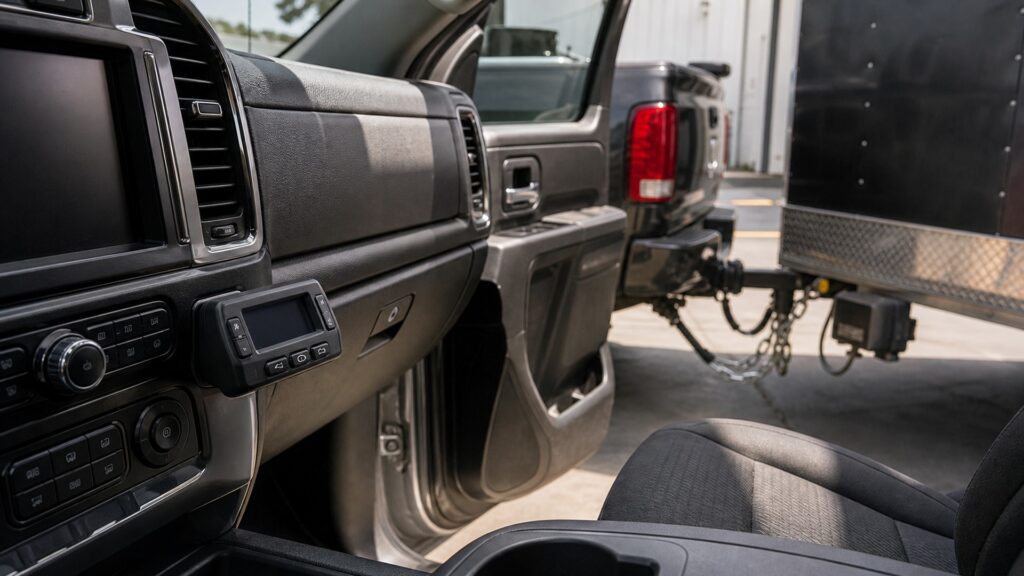
A trailer brake controller matters because an electric-brake trailer cannot decide from the tow vehicle's brake pedal alone how much current its brake magnets should receive. The controller interprets pedal input and, depending on design, sensed deceleration or elapsed time, then sends adjustable output through the trailer connector.

The goal is balanced deceleration. Too little trailer braking pushes the tow vehicle and lengthens stops; too much can lock trailer wheels, reduce lateral grip, and destabilize the rig. Behavior also depends on wiring voltage drop, grounds, connector condition, brake adjustment, magnets, drums, axle load, and surface friction. Gain and boost are setup controls, not repairs. A low-speed test and manual-override check must prove the complete circuit whenever the load changes.

By: Review Streets Research Lab
Updated: August 31, 2026
Explainer · 8-12 min read
trailer brake controllers explainer hero image for Review Streets
What You'll Learn

Tune the Combination until Both Vehicles Share the Stop

The controller is useful only when its sensing logic, output current, wiring, and adjusted trailer brakes produce prompt contribution without wheel lock.

  • Identify proportional or time-based logic
  • Mount and orient the controller as specified
  • Inspect power ground and seven-way circuits
  • Set gain with the actual loaded trailer
  • Use boost only for the intended response
  • Test manual override before road speed

Tip: Set up on a level, low-speed, traffic-free surface using the controller and trailer instructions. Change one setting at a time and stop if a wheel locks, braking pulls, output is erratic, or hardware overheats.

Definitions

Key Concepts That Define Trailer Brake Controllers

These terms separate controller strategy, driver adjustment, electrical delivery, and the independent emergency system.

Proportional Controller

A controller using an inertial sensor or vehicle data to scale trailer output with sensed tow-vehicle deceleration.

  • Harder stops can produce stronger prompt output
  • Mounting and calibration affect sensing
  • Gain still sets the output relationship

Time-Delayed Controller

A controller increasing trailer-brake output according to a preset rate after receiving a brake signal.

  • Response does not directly measure deceleration
  • Ramp and gain require tuning
  • Stop feel can vary across driving conditions

Brake Gain

The driver-adjustable maximum or scaling level governing how strongly the controller commands trailer brakes.

  • Load changes can require retuning
  • High gain can lock wheels
  • Low gain shifts work to the tow vehicle

Boost Setting

A controller feature changing initial or early brake output for selected trailer and load conditions.

  • It alters response before full deceleration develops
  • Settings are product-specific
  • It cannot repair weak trailer brakes

Manual Override

A control allowing the driver to command trailer braking without applying normal tow-vehicle service brakes.

  • It supports pre-trip testing
  • It may help manage emerging sway
  • It is not a parking-brake control

Breakaway Switch

A separation-triggered switch using the trailer's dedicated battery to apply trailer brakes independently.

  • The lanyard attaches to a separate tow-vehicle point
  • Battery condition must be verified
  • Routine controller operation does not prove it

Tip: Controller output is only a request; current must still reach correctly adjusted brakes that can create friction at the loaded wheels.

The Command Travels through More than One Wire

Battery, Controller, Connector, Grounds, and Magnets Form a Current Loop

The controller needs protected power and ground, a valid stop signal or vehicle interface, and an output circuit through the seven-way connector to parallel trailer brake magnets. Corrosion, small conductors, weak grounds, or poor splices reduce current and create uneven braking.

  • Inspect the socket and plug for heat or corrosion
  • Measure voltage drop under brake load
  • Protect wiring from abrasion and articulation
  • Use approved circuit protection and routing

A high display setting cannot force current through a resistive circuit.

Proportional Logic Follows Deceleration

An Inertial Sensor Translates Vehicle Motion into Output

A properly installed proportional controller senses braking intensity and applies trailer output accordingly. Leveling, orientation, calibration, mounting rigidity, grade compensation, and vehicle integration vary by model, so an unsecured or misoriented unit can misread motion.

  • Mount within the permitted angle
  • Calibrate after installation or tow-vehicle changes
  • Keep the controller fixed during travel
  • Confirm behavior on grades as instructed

Proportional describes the control strategy, not proof that the trailer brakes are balanced.

Gain Is a Relationship, Not a Universal Number

Trailer Load and Road Friction Change the Required Contribution

A heavy loaded trailer generally needs more available braking than the same trailer empty, while rain, gravel, tire condition, brake temperature, and axle loading change lockup. Adjust according to the maker's low-speed procedure and reassess after load changes.

  • Tune with normal travel load
  • Watch for push pull and lockup
  • Reduce speed for low-friction surfaces
  • Retest after brake service or cargo change

Copying another driver's gain ignores both hardware and load.

Weak Hardware Can Masquerade as a Controller Problem

Adjustment, Magnets, Drums, Bearings, and Voltage Decide Actual Torque

Electric drum brakes need sound magnets, wiring, shoes, drum surfaces, bearings, and correct adjustment. Grease contamination, wear, poor ground, one open magnet, or maladjustment can make output uneven or ineffective while the controller appears normal.

  • Inspect every wheel-end circuit
  • Adjust brakes at required intervals
  • Check drum and bearing condition
  • Compare current or magnet resistance appropriately

The dashboard module commands braking; the wheel hardware produces it.

Manual Override Is a Test and a Limited Control

It Confirms Trailer Contribution without Tow-Vehicle Service Brakes

At low speed, manual application should create smooth, straight trailer drag. During emerging sway, manufacturer guidance may call for gentle manual trailer braking while holding steering steady. Misuse or excessive output can lock wheels and remove lateral grip.

  • Test before entering traffic
  • Keep fingers able to reach the control
  • Never use override as a parking brake
  • Stop and correct the cause after any sway event

Manual control provides information and intervention, not a cure for unstable loading.

Quick Reality Check

The Controller Coordinates; the Trailer Brakes Perform

Balanced stopping depends on sensing strategy, adjusted output, healthy wiring, and capable wheel-end hardware working together.

What Correct Setup Feels Like

Trailer braking begins promptly, builds smoothly with tow-vehicle deceleration, keeps the combination straight, and contributes enough force without locking wheels on the test surface.

Gain, boost, orientation, calibration, wiring, grounds, connector, magnets, adjustment, breakaway battery, and manual override have been checked with the trailer loaded as it will travel.

Problems Settings Cannot Fix

Weak magnets, poor grounds, voltage drop, worn or contaminated brakes, maladjustment, tire or axle overload, wrong controller compatibility, damaged wiring, or an empty breakaway battery require repair, not more gain.

No controller makes excessive speed, poor tongue weight, rearward cargo, worn tires, long following distance, overheating brakes, unsafe grades, or a trailer beyond the tow vehicle's ratings controllable.

Common Myths

Misconceptions About Trailer Brake Controllers

Brake-controller myths give the in-cab display authority over a mechanical and electrical system it can only command.

Maximum gain gives the shortest stopping distance

Excessive output can lock trailer wheels, sacrificing lateral grip and control while flat-spotting tires. The correct setting produces strong smooth contribution without lockup on the actual loaded trailer and current road surface.

A proportional controller needs no adjustment

Its sensing can scale output with deceleration, but gain, boost, mounting, calibration, trailer load, brake condition, and surface still matter. Proportional logic cannot know weak magnets, poor adjustment, or wrong axle loading by itself.

The manual override is only for emergencies

It is also a valuable pre-trip functional test because it commands trailer brakes independently. Limited manual application may help control emerging sway when the manufacturer instructs, but the event still requires stopping and correcting cause.

If the display shows output, the trailer brakes work

The display may confirm controller command while corrosion, open wiring, voltage drop, bad grounds, worn magnets, contamination, or maladjusted shoes prevent useful wheel torque. Test the complete circuit and actual low-speed braking response.

Tip: Judge the setup by current delivery and loaded wheel behavior, then keep stability, weight, and stopping distance outside the controller's claimed role.

FAQ

Frequently Asked Questions About Trailer Brake Controllers

These answers address controller types, gain changes, lockup, factory integration, breakaway testing, and diagnosing weak output without randomly increasing settings.

Which controller type is better for most towing?

A well-installed proportional controller often provides more natural response across varied stops, but vehicle integration, trailer compatibility, mounting limits, budget, and exact features matter. A time-delayed unit can work when correctly selected and carefully tuned.

Should gain change when the trailer is empty?

Often yes, because axle load and available tire grip change. Follow the controller's setup procedure for each meaningful load state; record useful settings but confirm them with a low-speed test rather than assuming last trip's number.

Why do trailer brakes lock at low speed?

Gain or boost may be high, brakes may be unevenly adjusted, wiring can differ by wheel, or lightly loaded tires may reach their grip limit quickly. Inspect hardware and retune on a safe surface.

Can a factory controller replace an aftermarket unit?

A compatible integrated controller can use vehicle brake and stability data, but capacity and trailer-brake compatibility remain model-specific. Follow the tow-vehicle manual and do not add a second controller unless an approved procedure requires it.

How is the breakaway system tested?

Follow the trailer and switch instructions without using the event as routine parking control. Confirm battery condition, independent lanyard attachment, switch operation, and brake application, then restore the pin correctly before travel.

Bottom Line

Trailer brake controllers matter because they translate tow-vehicle braking into adjustable electrical output so the trailer contributes to deceleration instead of pushing the combination or locking its wheels.

Set the controller with the actual loaded trailer, prove the current path and wheel hardware, test manual and breakaway functions, and treat gain as coordination—not a substitute for adjustment, stable loading, or safe speed.

Next Steps

Balance the Stop from Pedal to Trailer Tire

Related explainers place controller output inside the complete towing combination, brake hardware, and tire-load system.

Why Brake Components Matters

Review how friction materials, hydraulic or electrical actuation, heat, hardware condition, and verification create braking force.

Why Tire Load Ratings Matter

Ensure loaded trailer tires and tow-vehicle tires retain pressure-based capacity at their measured axle loads.