Why Vehicle Batteries Safety Factors Matters

Vehicle batteries concentrate energy behind terminals that may look inactive. A 12-volt battery can drive enough fault current to melt metal, burn skin, ignite material, or rupture a cell; lead-acid electrolyte and charging gas add chemical and fire hazards. Its mass and mounting also matter during lifting and collision loads.

Traction batteries require a different safety class. Hundreds of volts, stored cell energy, high-current buswork, power-electronic capacitors, coolant, damaged insulation, and thermal propagation can remain hazardous after shutdown or a crash. Safe work begins by identifying the architecture and condition, controlling keys and activation, following the exact isolation procedure, using rated protective equipment, verifying absence of voltage where required, and keeping damaged packs within qualified emergency and service channels.

By: Review Streets Research Lab
Updated: September 1, 2026
Explainer · 8-12 min read
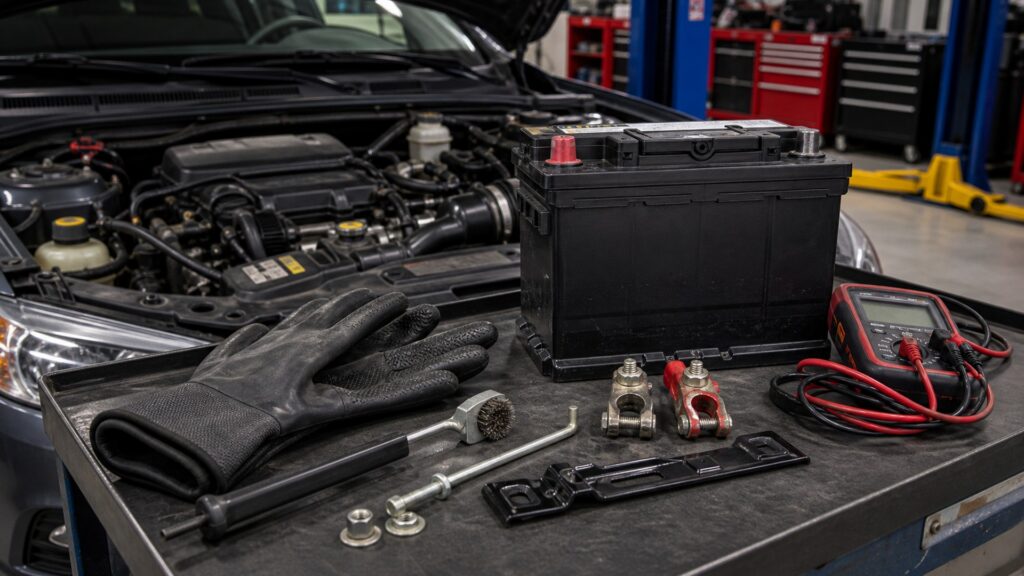
vehicle batteries safety factors explainer hero image for Review Streets
What You'll Learn

Identify the Energy Class before Touching a Terminal

Safety controls must match the battery role, chemistry, voltage, physical condition, and manufacturer procedure rather than a generic idea of disconnection.

  • Read labels and cable markings
  • Remove ignition sources and jewelry
  • Protect eyes and skin
  • Control keys and remote activation
  • Use the specified isolation sequence
  • Escalate damaged traction packs

Tip: Smoke, hissing, popping, rapid heating, electrolyte leakage, crash deformation, or exposed high-voltage parts are evacuation and emergency-response signals, not invitations to continue diagnosis.

Definitions

Key Concepts That Define Vehicle Battery Safety

These terms define hazards that require different controls in low-voltage service, high-voltage service, transport, and post-crash response.

Short-Circuit Current

Large uncontrolled current flowing through an unintended low-resistance path between battery potentials or from positive to grounded structure.

  • Metal tools can become conductors
  • Heat develops extremely quickly
  • Protection may not stop terminal faults

Electrolyte Exposure

Contact with leaked or vented cell material whose chemical hazards depend on the battery chemistry and damage condition.

  • Avoid skin and eye contact
  • Use chemistry-specific cleanup
  • Damaged packs need specialist handling

Hydrogen Ventilation

Control of potentially flammable charging gas around vented lead-acid batteries by preventing accumulation and eliminating ignition sources.

  • Charging can increase gas
  • Enclosures need designed vents
  • Sparks can ignite mixtures

High-Voltage Isolation

Designed electrical separation between energized traction conductors and the vehicle body or accessible low-voltage structures.

  • Insulation monitoring detects leakage
  • Crash damage can defeat barriers
  • Qualified tests verify integrity

Absence-of-Voltage Test

A prescribed measurement confirming that designated high-voltage points are de-energized after isolation, instrument checks, and required waiting periods.

  • Rated instruments are mandatory
  • Test points are vehicle specific
  • Reactivation must remain controlled

Thermal Runaway

Self-accelerating cell heating in which internal reactions release more heat than the battery can safely dissipate.

  • Damage may trigger propagation
  • Gas can be toxic and flammable
  • Reignition can be delayed

Tip: A switched-off vehicle is a control state, not proof that stored energy is absent; verify the state required by the exact service procedure.

Low Voltage Can Still Deliver Violent Current

A Wrench across Terminals Bypasses Normal Loads

The nominal voltage may be below shock thresholds in ordinary dry contact, yet the battery's low internal resistance can drive immense current through jewelry, tools, or pinched cables, producing arcs, burns, and molten metal.

  • Remove conductive jewelry
  • Cover the positive terminal
  • Use insulated tools where specified
  • Prevent cable spring-back

Never confuse low voltage with low energy or low fault current.

Chemistry Adds Exposure and Gas Hazards

Electrolyte and Vent Products Need Specific Controls

Lead-acid batteries may vent hydrogen during charging and contain corrosive sulfuric acid. Other chemistries can release different solvents, gases, or reaction products when damaged, overheated, or improperly handled.

  • Ventilate the work area
  • Keep sparks and flames away
  • Wear specified eye and skin protection
  • Use approved spill response

Cleanup guidance must match the chemistry; water or neutralizer advice is not universal.

Mass and Restraint Are Safety Components

Lifting, Tray Condition, and Hold-Downs Control Physical Energy

Batteries are dense. Poor lifting can injure; a cracked tray can abrade the case; a missing clamp allows vibration, terminal contact, or a heavy projectile during a collision.

  • Use correct lifting aids
  • Inspect tray and fasteners
  • Keep posts free of lifting force
  • Verify the case cannot move

Physical retention protects both the battery and everyone around the vehicle.

High Voltage Requires Verified Isolation

Shutdown, Disconnect, Wait, Test, and Prevent Reactivation

Traction systems may remain energized during charging, cabin conditioning, or 12-volt support. Only vehicle-specific depowering, secured disconnect control, waiting periods, and rated verification establish the intended service condition.

  • Restrict access to trained staff
  • Wear specified high-voltage PPE
  • Prove the meter before and after
  • Guard exposed energized boundaries

Disconnecting a 12-volt terminal is not a universal high-voltage isolation procedure.

Damage Can Produce Delayed Escalation

Pack Fire Risk May Continue after the Visible Event Ends

Crush, flood exposure, internal shorting, overheat, or fire can create shock, toxic vapor, flammable gas, and delayed reignition. Storage, towing, monitoring, and distance require emergency and manufacturer guidance.

  • Call emergency services for active events
  • Keep people away and upwind
  • Report the vehicle is electrified
  • Use qualified damaged-pack handling

A quiet damaged pack can remain an evolving hazard long after impact.

Quick Reality Check

Battery Safety Starts with Architecture and Condition

Low-voltage service controls current, acid, gas, mass, and polarity; high-voltage work adds isolation, arc, capacitors, thermal propagation, specialized PPE, and damaged-pack response.

Proceed Only with Defined Controls

The battery chemistry and voltage class are identified; service information is available; activation is controlled; the work area is ventilated; terminals, tools, lifting, venting, restraint, and spill response are planned.

For traction systems, qualified personnel use the manufacturer isolation process, rated PPE and instruments, specified waiting and verification steps, controlled access, thermal assessment, and documented reactivation procedures.

Stop, Isolate the Area, and Escalate When

There is smoke, hissing, popping, rapid heat, fire, exposed conductors, damaged orange cabling, severe case deformation, electrolyte leakage, flood exposure, uncertain isolation, or equipment and training do not match the task.

Do not touch, tow conventionally, store indoors, probe, open, jump, cool, move, or transport a damaged traction pack based on generic advice. Follow emergency services, manufacturer, and qualified high-voltage guidance.

Common Myths

Misconceptions About Vehicle Battery Safety

Everyday starting batteries can invite casual handling, while silent traction packs can invite the assumption that shutdown removed their stored energy.

A 12-volt battery cannot cause serious injury

Its voltage is modest, but fault current can heat tools and jewelry almost instantly, causing burns, arcs, fire, battery rupture, and flying material. Acid, gas, lifting, and polarity hazards also remain significant.

Turning the vehicle off makes a traction battery safe

Charging, thermal conditioning, low-voltage support, retained capacitor charge, or damaged controls can keep hazards present. Use the exact manufacturer isolation, waiting, lockout, and absence-of-voltage verification procedure performed by qualified personnel.

Any gloves and multimeter are suitable for high voltage

High-voltage work requires equipment with the specified insulation, category, voltage rating, condition, test procedure, and inspection status, plus trained technique. Ordinary work gloves or meter leads do not establish protection against shock or arc.

A battery fire is over once flames disappear

Damaged lithium-ion cells can retain energy and develop delayed heating or reignition. Toxic or flammable gases and electrical hazards may persist. Emergency responders and qualified specialists determine monitoring, storage, towing, and disposition.

Tip: Use hazard-specific controls and explicit stop conditions; familiarity, dashboard displays, and visual calm are not verification methods.

FAQ

Frequently Asked Questions About Vehicle Battery Safety

These answers address jump starting, terminal order, ventilation, high-voltage PPE, crash damage, flooding, towing, and emergency escalation.

Is it safe to jump-start an electric vehicle?

The high-voltage traction battery cannot be jumped. Some electrified vehicles permit a 12-volt jump using specific points and sequences. Follow the owner's manual exactly; wrong polarity or location can damage electronics or create hazards.

Why is the negative connection sequence important?

On many negative-ground vehicles, the specified connection and removal order reduces the chance that a tool bridges positive hardware to grounded body metal. Procedures vary, so use the designated terminals, remote points, and manufacturer sequence.

What should happen after a battery electrolyte spill?

Stop exposure, isolate the area, identify chemistry, and follow the safety data and manufacturer response. Use specified protective equipment and disposal methods. Seek medical guidance for contact; do not apply an improvised universal neutralizer.

Can a flooded EV be moved into a garage?

NHTSA warns flooded electrified vehicles can present high-voltage shock and fire hazards. Keep people away, contact emergency services or the manufacturer, and follow qualified towing and storage guidance rather than placing the vehicle near structures.

Who should service a traction battery?

A qualified technician with vehicle-specific high-voltage training, rated protective and diagnostic equipment, manufacturer procedures, and an appropriate controlled workspace. Owners should not open, probe, disconnect, or attempt repair inside a traction-battery enclosure.

Bottom Line

Vehicle-battery safety matters because even low-voltage batteries combine high fault current, chemical exposure, gas, polarity, and mass, while traction batteries add lethal voltage, isolation, arc, stored heat, and delayed-event hazards.

Identify architecture and damage before contact, apply the exact service controls, and stop for any condition outside training or equipment. Shutdown and low state of charge never substitute for verified isolation or qualified damaged-pack response.

Next Steps

Control the Energy before Approaching the Battery

Related explainers connect internal energy conversion, physical fitment, and operating limits to the specific hazards that safe service must contain.

How Vehicle Batteries Work

Understand how electrochemical cells retain energy and drive current even when the vehicle is inactive.