
Laminated Fracture
A crack network in bonded glass plies whose plastic interlayer retains many fragments without eliminating sharp edges or optical impairment.
- Plys can fracture differently
- Edges can release pieces
- Damage may continue spreading
Windshield service combines sharp material, stored mechanical force, chemicals, electricity, and a critical view. Laminated glass often remains together after impact, but edges and loose fragments can cut; a raised wiper arm can strike the pane; heaters and attached electronics require controlled power; solvents, primers, and urethane demand compatible handling and ventilation.
Replacement adds retention and timing risks. The body opening must remain sound, the adhesive system must be prepared and cured as specified, and the vehicle must not move before its documented safe drive-away condition. Glass optical quality, wiper coverage, leaks, cameras, rain sensors, and driver-assistance calibration require final proof. A quiet cabin and clear dashboard do not establish structural or electronic readiness.
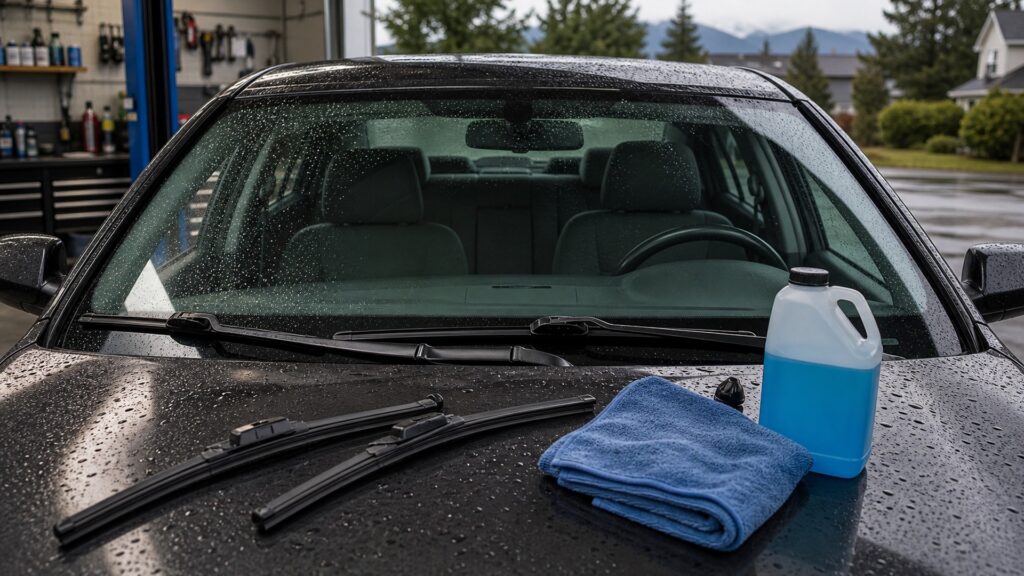
Safe work identifies glass condition, wiper-arm force, chemicals, electrical features, body preparation, adhesive cure, visibility, and calibration before removal begins.
Tip: Never slam a door or road-test during uncured bonding; pressure and body movement can disturb the new joint before it reaches the required condition.
These terms define the physical, chemical, structural, optical, and electronic gates that safe windshield work must pass.
A crack network in bonded glass plies whose plastic interlayer retains many fragments without eliminating sharp edges or optical impairment.
Gloves, sleeves, eye protection, and other equipment selected to reduce injury from glass edges and fragments.
The stored mechanical force pressing an arm and blade against the windshield throughout the designed sweep.
The documented minimum curing interval and condition after bonded-glass installation before vehicle operation is permitted.
The prepared body flange surrounding the glazing opening to which the windshield adhesive system bonds.
The practical or specified point below which cracks, fog, contamination, distortion, or failed clearing makes continued driving unsafe.
Tip: Write the safe drive-away time and calibration status on the work order before the vehicle leaves the bay; memory is not a release control.
Removal forces can release shards from cracked plies, especially around edges and cut lines. Protect people, paint, dashboard, upholstery, vents, and electronics while supporting the panel throughout extraction.
Lamination changes fracture behavior; it does not make broken glazing harmless.
The arm spring can pull an unsupported hook or frame into the windshield with enough force to chip or crack it. Marking park position and controlling the arm also protects later sweep geometry.
A small maintenance step can destroy a sound windshield when spring force is ignored.
Gouging the flange, leaving corrosion, contaminating the surface, mixing systems, or setting the glass poorly can create weak or discontinuous adhesion. Trim appearance cannot reveal every defect.
The vehicle remains in process until the adhesive reaches its specified drive-away state.
Embedded circuits and attached modules can short or overheat if damaged. Cleaning and bonding products can be flammable, irritating, moisture-sensitive, or incompatible, requiring instructions, ventilation, and controlled ignition sources.
A general shop solvent is not automatically safe for optical coatings or adhesive surfaces.
Distortion, blocked frit windows, wrong brackets, poor wiper coverage, leaks, camera faults, or incomplete calibration can impair the driver or automated features. Inspect from the cockpit and complete exact electronic procedures.
Release requires both physical retention and a trustworthy forward view.
Glass edges, spring force, chemicals, electrical features, body preparation, adhesive cure, optical quality, clearing systems, and calibration create consecutive safety gates.
Correct PPE and interior protection, stabilized broken glass, secured wiper arms, controlled power, labeled electronics, approved cutting, intact pinch-weld coatings, compatible primer and urethane, and documented environment and cure time.
Final checks cover glass position, moldings, leaks, optical distortion, heated features, wiper park and sweep, washer delivery, defogging, rain sensors, cameras, fault status, and required calibration.
The opening is corroded or distorted, glass damage is unstable, required PPE or extraction tools are absent, adhesive products or cure conditions are uncertain, electrical damage exists, or the exact replacement cannot be confirmed.
Do not release a vehicle with inadequate visibility, an uncured bond, incomplete sensor mounting, failed calibration, persistent driver-assistance warnings, unverified leaks, or wipers that strike, lift, skip, or park incorrectly.
Transparency makes windshield service look less hazardous than brake or high-voltage work, yet many risks remain invisible until a pane fractures, an arm snaps, or a feature misinterprets the road.
The interlayer retains many fragments, but broken plies and exposed edges can still cut, release chips, damage eyes, contaminate vents, or tear trim. Use appropriate PPE, support, containment, and cleanup throughout removal.
Visual position does not prove adhesive cure. Safe drive-away time depends on the documented product system and conditions. Early movement, door pressure, or collision loads can disturb a joint before required properties develop.
A bare arm remains spring-loaded and can snap against glass. Control it with the specified service position and temporary protection, never rely on balance, and restore correct indexing, fastener torque, sweep, and park.
A camera can be seated incorrectly, see through wrong glass, or require calibration without an immediate persistent warning. Follow the manufacturer inspection and calibration procedure and document successful completion before release.
Tip: Use explicit controls and release records rather than judging safety from a clean installation photograph.
These answers address broken-glass handling, wiper arms, primers and urethane, cure, airbags, heated glass, calibration, and safe vehicle release.
No. Cutting and flexing can release glass chips, wire fragments, adhesive debris, or tool material. Use rated eye, hand, and body protection appropriate to the removal system and keep unprotected people away.
Some procedures reduce cabin pressure so a slammed door does not push against uncured bonding or contribute to leaks. Follow the exact adhesive and vehicle instructions rather than treating open windows as a substitute for cure.
Vehicle designs differ, but bonded windshield retention can interact with occupant protection and body performance. Preserve the specified opening, adhesive system, cure, and glass; do not assume trim alone provides the required support.
Do not release affected features as normal. Recheck exact glass, bracket, camera seating, optical zone, tire pressures, ride height, alignment prerequisites, lighting, targets, software, faults, and the manufacturer procedure before escalating diagnosis.
Use towing or qualified assistance when visibility is inadequate, glass is unstable, the opening or bond is compromised, wipers cannot clear required areas, calibration-dependent warnings affect safe operation, or adhesive cure prohibits driving.
Windshield-component safety matters because broken glass, stored wiper-arm force, bonding chemicals, electrical features, body retention, cure time, optical quality, and camera calibration create hazards from first contact through final release.
Control each gate with vehicle- and product-specific procedures. Do not drive on an uncertain bond or view, and document both physical and electronic completion before returning the vehicle to service.
Related explainers connect the windshield mechanism, exact fitment, and operating outputs to the controls that keep removal, installation, curing, and calibration safe.
Trace how glazing, adhesive, wipers, washers, defogging, and sensors work before disturbing their interfaces.
Confirm the exact glass, brackets, optical features, moldings, adhesive system, and calibration plan.
Verify optics, retention, wet sweep, spray, condensation control, and electronic sightlines under representative conditions.
Choose a retailer
Prices checked regularly. We may earn a commission at no cost to you.