Why Work Trucks Safety Factors Matters

Work-truck safety depends on the complete working vehicle: its load, installed equipment, driver visibility, condition, and the people around it. A truck that is within its overall weight rating can still have an overloaded axle, unsecured tools, or a blind area that hides a worker. Safe road travel and safe operation at the site require separate checks.

The useful approach follows the job from loading to arrival, equipment use, and departure. Confirm the limits of the finished truck, control movement of loads and people, and use the procedures for the particular body and attachments. A camera, warning alarm, or heavy-duty badge addresses only part of that picture.

By: Review Streets Research Lab
Updated: October 6, 2026
Explainer · 8-12 min read
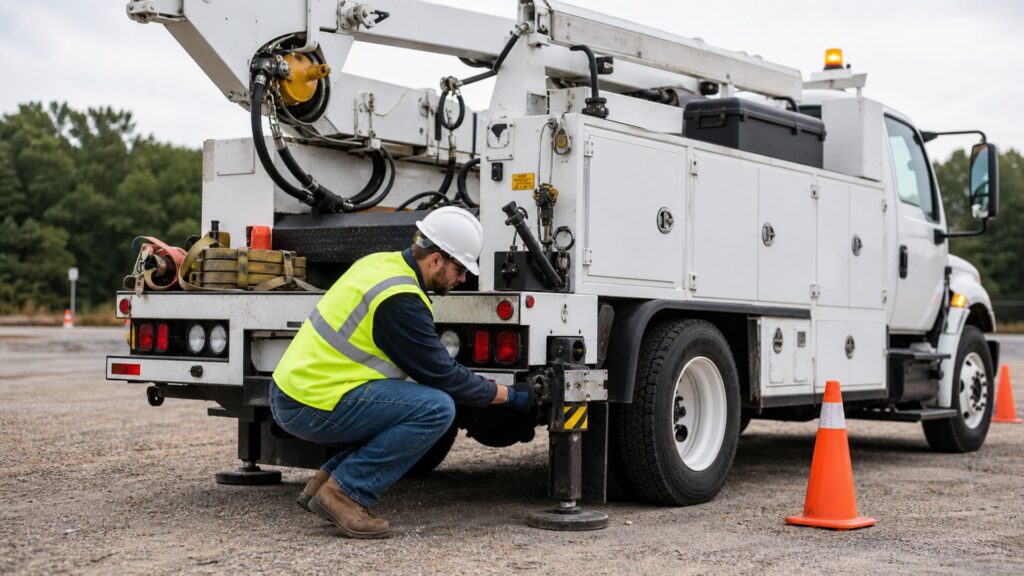
work trucks explainer hero image for Review Streets
What You'll Learn

Check the Risks of the Complete Working Truck

Connect roadworthiness, loading, visibility, and equipment operation with the actual assignment.

  • Check total and axle loads in the working configuration.
  • Treat cargo securement as a complete system.
  • Plan vehicle movement around people.
  • Distinguish driving safety from stationary equipment hazards.
  • Make defects and departure checks actionable.

Tip: Assess the truck as loaded and equipped for the job, not as an empty chassis.

Definitions

Six Safety Factors Beyond the Truck Badge

Each factor controls a different source of risk.

Axle load

Axle load is the portion of the vehicle's weight supported by a particular axle.

  • Example: a rear-mounted load concentrating weight at the back
  • Check: actual axle weights against the applicable ratings
  • Limit: being below the total rating does not prove both axles comply

Cargo securement

Cargo securement restrains carried items against movement during transport.

  • Example: tools retained in suitable mounts or cargo secured with an appropriate system
  • Check: anchors, restraints, cargo shape, and component condition
  • Limit: a closed door alone is not a complete securement plan

Blind area

A blind area is a space around the vehicle the driver cannot adequately see.

  • Example: a worker concealed behind a tall service body
  • Check: visibility with the actual body and load
  • Limit: a camera has its own field of view and limitations

Work zone

The work zone is the area affected by the parked truck and its operating equipment.

  • Example: the space needed around a deployed liftgate
  • Check: people, traffic, ground, and equipment movement
  • Limit: parking within a bay does not establish safe operating space

Stored energy

Stored energy can produce movement or release even after normal operation stops.

  • Example: a raised body or pressurized hydraulic circuit
  • Check: the equipment-specific isolation and support procedure
  • Limit: switching off a control may not remove the hazard

Departure condition

Departure condition is the verified state of the truck before it moves.

  • Example: equipment stowed and compartments secured
  • Check: required inspections and travel positions
  • Limit: the end of the task does not automatically mean road readiness

Tip: A control is useful only when it addresses the hazard actually present.

Loaded Vehicle

Weight Limits Apply to the Finished Working Configuration

Count the body, fixed equipment, occupants, tools, cargo, and any trailer-imposed load. Then compare measured or properly established loaded weights with the vehicle and component limits. Position matters: a heavy item near the rear can create an axle problem before the total vehicle limit is reached. Have the completed upfit assessed with representative loads rather than relying on a base-model brochure figure.

  • Check total and individual axle ratings.
  • Include permanent equipment and the crew.
  • Review load placement when assignments change.

Manufacturer towing and loading guidance distinguishes total, axle, and combination limits; the correct figures belong to the specific truck. Ford loading and towing guidance.

Restraint

Secure the Load as a System, Not a Collection of Straps

The restraint is only as suitable as its components, anchor points, arrangement, and condition. A tool can move inside a compartment, and a load can shift on a platform even when it appears heavy enough to stay put. Use the method appropriate to the cargo and applicable requirements. Damaged restraints or uncertain attachment points require resolution before transport.

  • Use suitable anchors and restraints.
  • Inspect components for damage or weakening.
  • Address rolling, sliding, and loss of cargo.

FMCSA provides general and cargo-specific securement rules for operations within its scope; do not reduce a complete securement requirement to a single strap-strength number. FMCSA cargo-securement guidance.

Movement

Keep People Out of the Truck's Travel Path

A tall body, equipment rack, or changing load can alter what the driver sees. Plan site movements to reduce unnecessary reversing and separate foot traffic where possible. Use the site's trained spotting and communication procedures when needed. Cameras and detection aids can help, but their coverage and condition must be understood; a display is not proof that the entire path is clear.

  • Assess visibility with the real body and load.
  • Use the established traffic and spotting arrangements.
  • Stop when the path or communication is uncertain.

OSHA identifies blind spots, noise, and assumptions about a clear path as contributors to backovers and discusses several complementary prevention measures. OSHA backover prevention.

Equipment

Stationary Work Introduces Different Hazards

A parked truck may deploy a liftgate, crane, dump body, or other moving attachment. The ground, overhead space, nearby people, and equipment limits become part of the task. Only trained personnel should use the prescribed setup and operating procedures. Inspection or repair beneath a raised body requires the specified positive support and isolation; hydraulic pressure alone must not be treated as a safe support.

  • Follow the particular equipment's setup procedure.
  • Control access to moving and suspended equipment.
  • Use prescribed support and isolation for service.

OSHA's dump-body guidance emphasizes protection against unintended lowering during inspection and repair; an improvised prop is not a substitute for a suitable support method. OSHA raised dump-body safety.

Condition

Close Defects and Restore the Travel Configuration

Before leaving, verify the required travel positions of equipment, secured compartments, retained tools, and the truck's roadworthy condition. A warning, damaged mount, or failed latch needs assessment rather than a habitual workaround. Record the specific defect and follow the applicable removal-from-service process when safety is affected. Recheck after loading changes or equipment use as the instructions require.

  • Stow and secure equipment for travel.
  • Report the component and symptom clearly.
  • Confirm repairs and required checks before reuse.

A departure routine connects site work back to road travel, where an unstowed attachment or unsecured item can create a new hazard.

Quick Reality Check

What a Single Safety Feature Cannot Establish

Use several controls that address different parts of the job.

An Incomplete Safety Picture

The truck is below its total weight rating, but axle distribution and securement are unknown.

A camera is fitted, but equipment setup, pedestrian movement, and defects are unmanaged.

A More Complete Safety Picture

The actual load, condition, restraints, and vehicle limits are checked together.

Site movement, equipment use, and departure each have clear procedures and responsibilities.

Common Myths

Misconceptions About Work-Truck Safety

Avoid assuming one feature covers every hazard.

A heavy load cannot move

Braking and turning can move inadequately restrained cargo; use the appropriate securement system.

Below GVWR means every loading limit is satisfied

Individual axles and other components have their own limits.

A reversing camera replaces site controls

Cameras can assist visibility, but traffic planning, awareness, and suitable procedures remain necessary.

Tip: Look for the missing risk control, even when several visible safety features are present.

FAQ

Questions About Work-Truck Safety Factors

Practical answers for evaluating the complete job.

Does an enclosed body remove cargo-securement needs?

No. Contents still need appropriate restraint; the enclosure and its fittings must be suitable for the task.

Should equipment be checked after an upfit changes?

Yes. Changes can affect weight, clearance, visibility, and operation, so the completed configuration needs review.

Can hydraulic pressure support a raised body during service?

Do not rely on pressure alone. Follow the prescribed support and isolation procedure using suitable equipment and qualified personnel.

What if a driver cannot confirm a clear backing path?

Stop and resolve the uncertainty using the site's established movement and communication procedure.

Bottom Line

Work-truck safety comes from controlling the load, vehicle condition, movement of people, and operation of the installed equipment together.

Check each stage of the job with the actual truck and use the applicable manufacturer and site procedures.

Next Steps

Go Deeper or Compare Your Options

Use these Review Streets paths to compare related categories and practical next decisions.