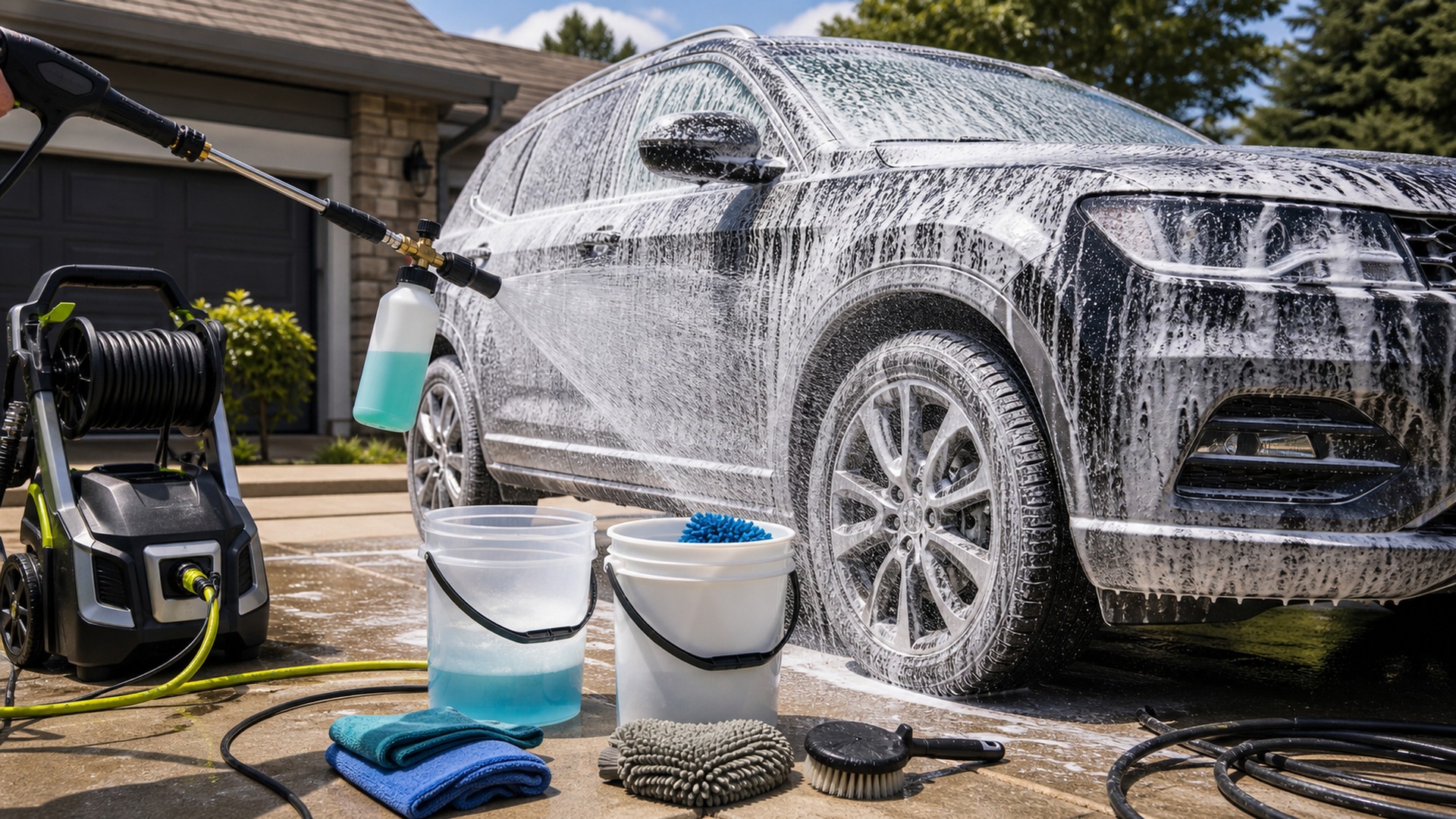
What Makes Detailing Kits Different from Car Wash Equipment
Detailing kits prescribe task-specific surface treatment; car wash equipment supplies durable physical delivery that must be selected, maintained, and verified separately.

Reviews You Can Trust
Detailing kits prescribe task-specific surface treatment; car wash equipment supplies durable physical delivery that must be selected, maintained, and verified separately.
A detailing kit fits only when its chemistry, media, machine interfaces, quantities, conditions, and stage sequence suit the actual vehicle surface and problem.
A detailing kit works when compatible chemistry and clean media move through verified stages from inspection and washing to selective correction and protection.
Choose wash equipment for repeated physical capacity and a detailing kit for targeted treatment specificity; let workload, site, and finish evidence decide which leads.
Maintenance keeps wash output, chemical delivery, contact media, safety, storage, and reclaim behavior predictable enough to diagnose and control.
Wash equipment removes contamination; paint protection leaves a sacrificial, bonded, or adhered layer that depends on preparation, cure, and compatible maintenance.
Safe car washing requires separate controls for hydraulic pressure, electricity, chemicals, physical exposure, vehicle surfaces, runoff, and combustion exhaust.
Car wash results depend on a balanced function chain from inlet flow and spray geometry through chemistry, contact, rinsing, drying, and wastewater control.
Use exterior wash equipment when flowing water can safely export soil; use cabin cleaning when materials and hidden assemblies require restrained moisture and recovery.
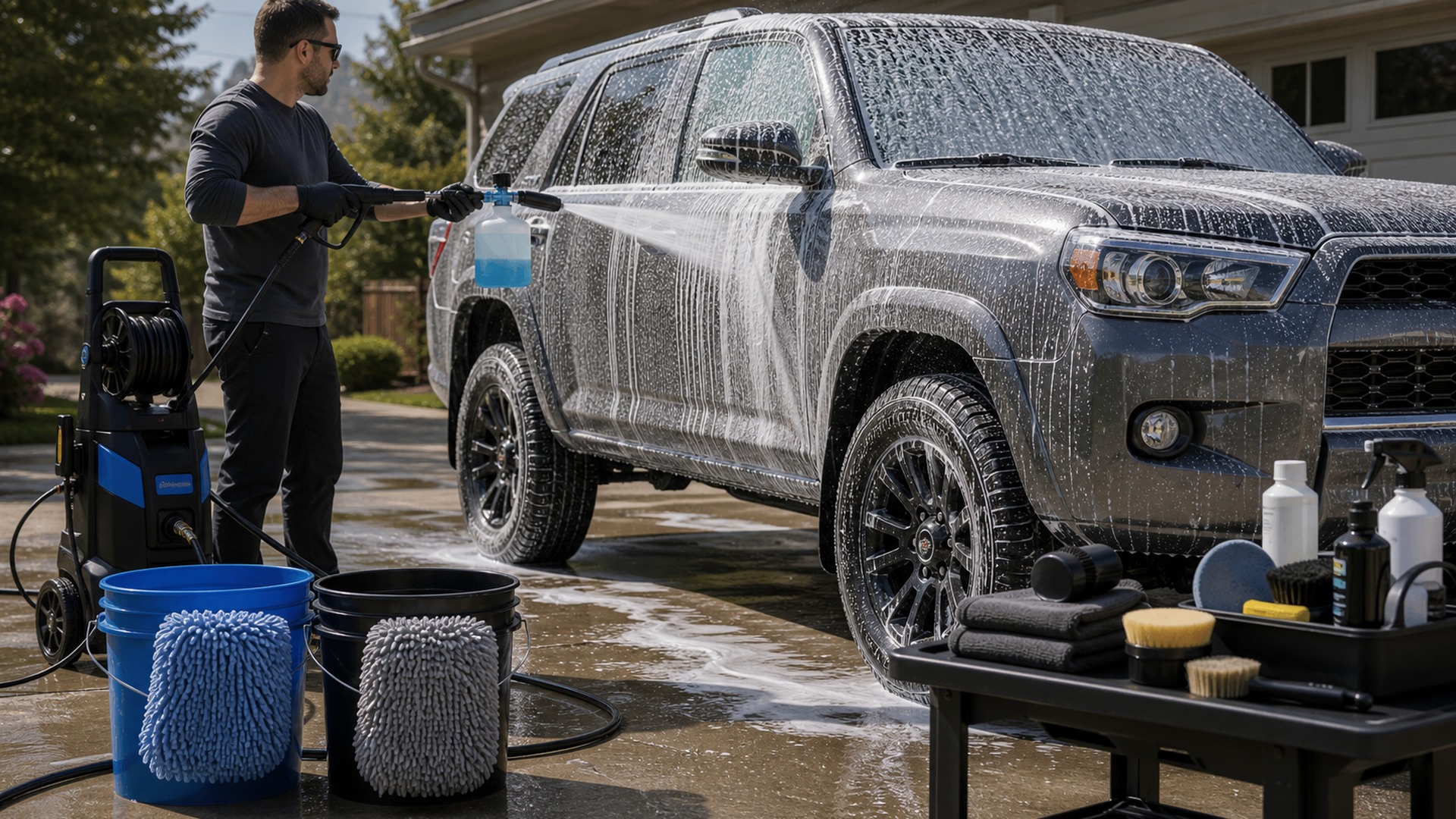
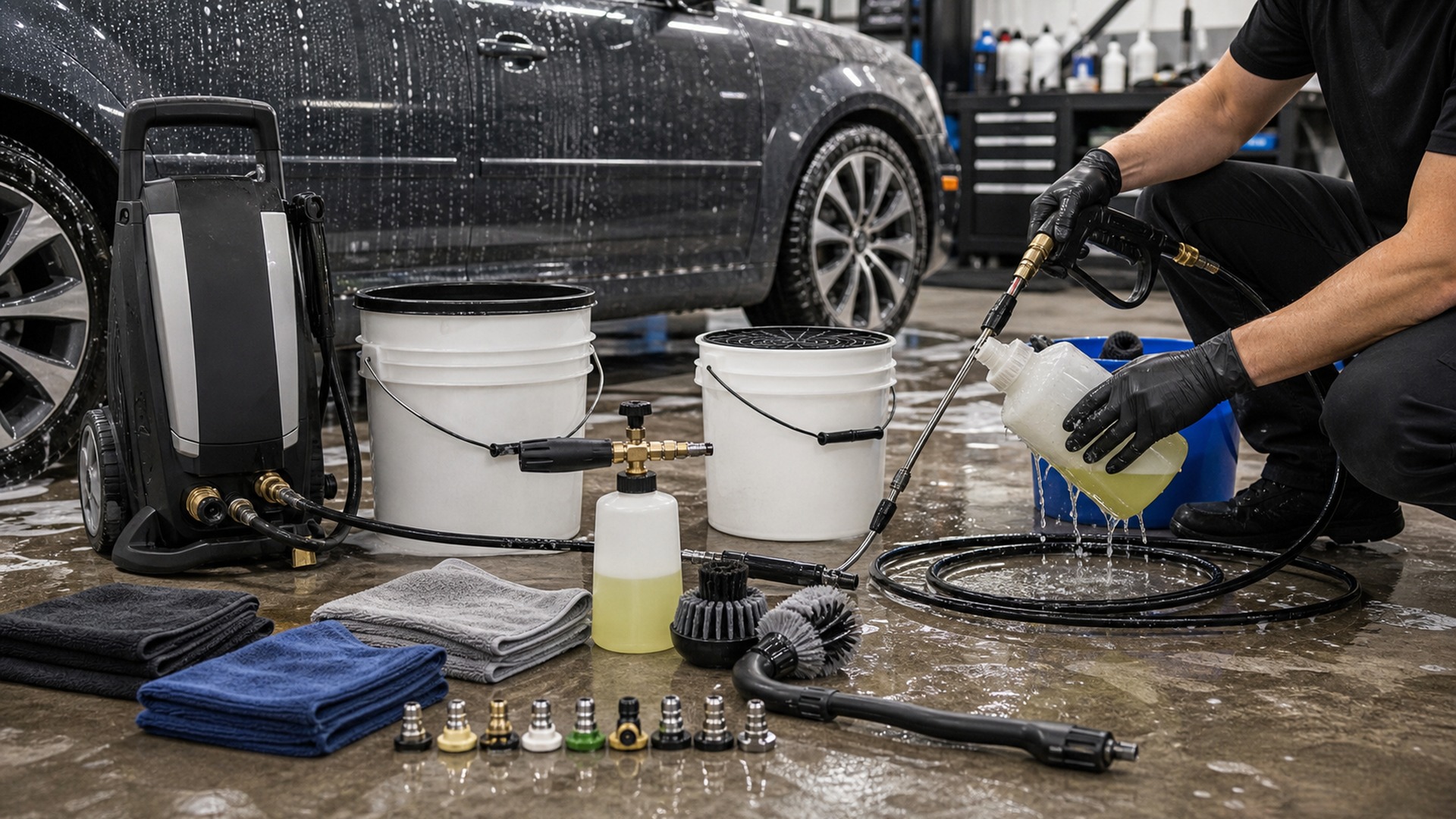
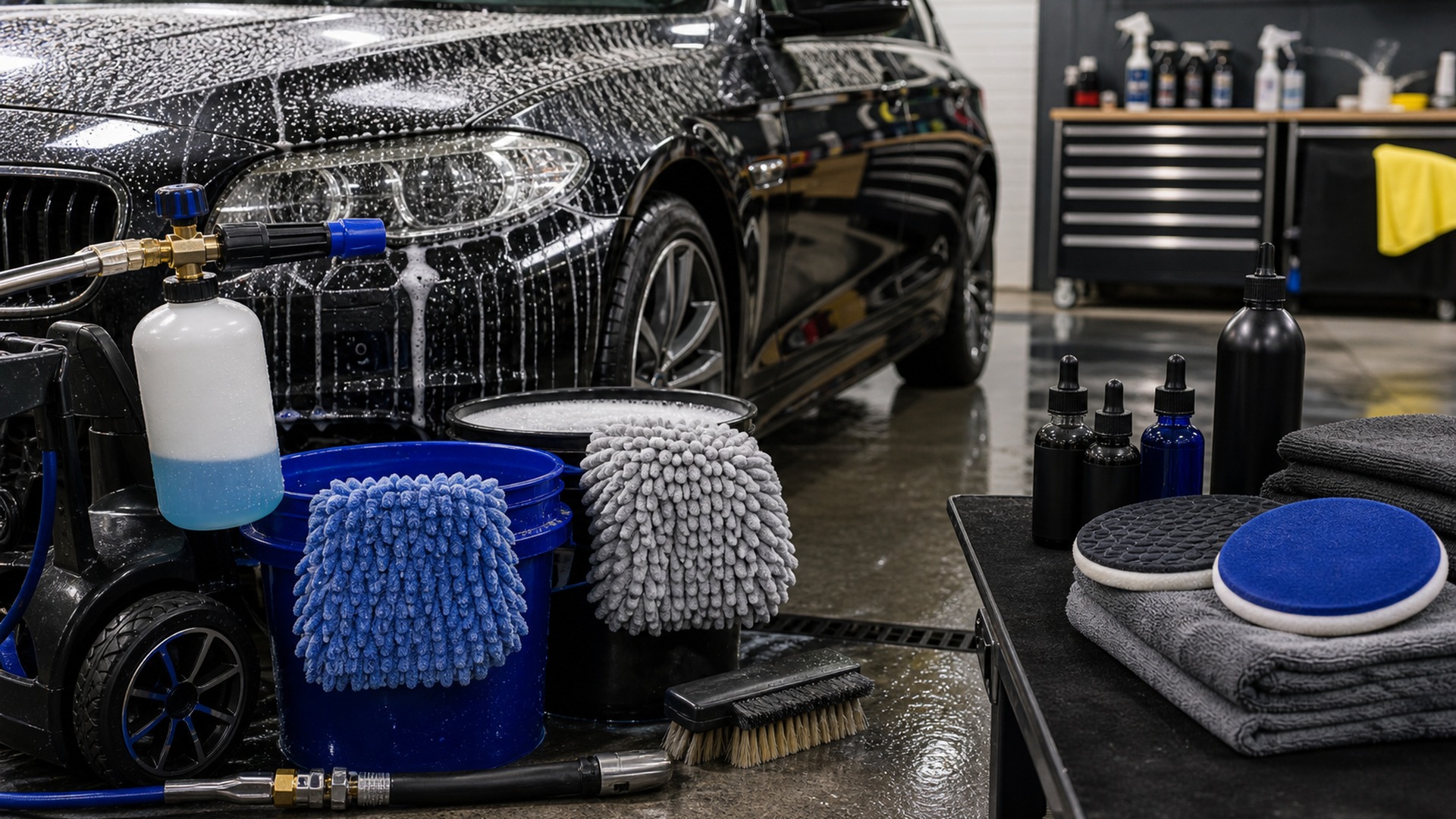
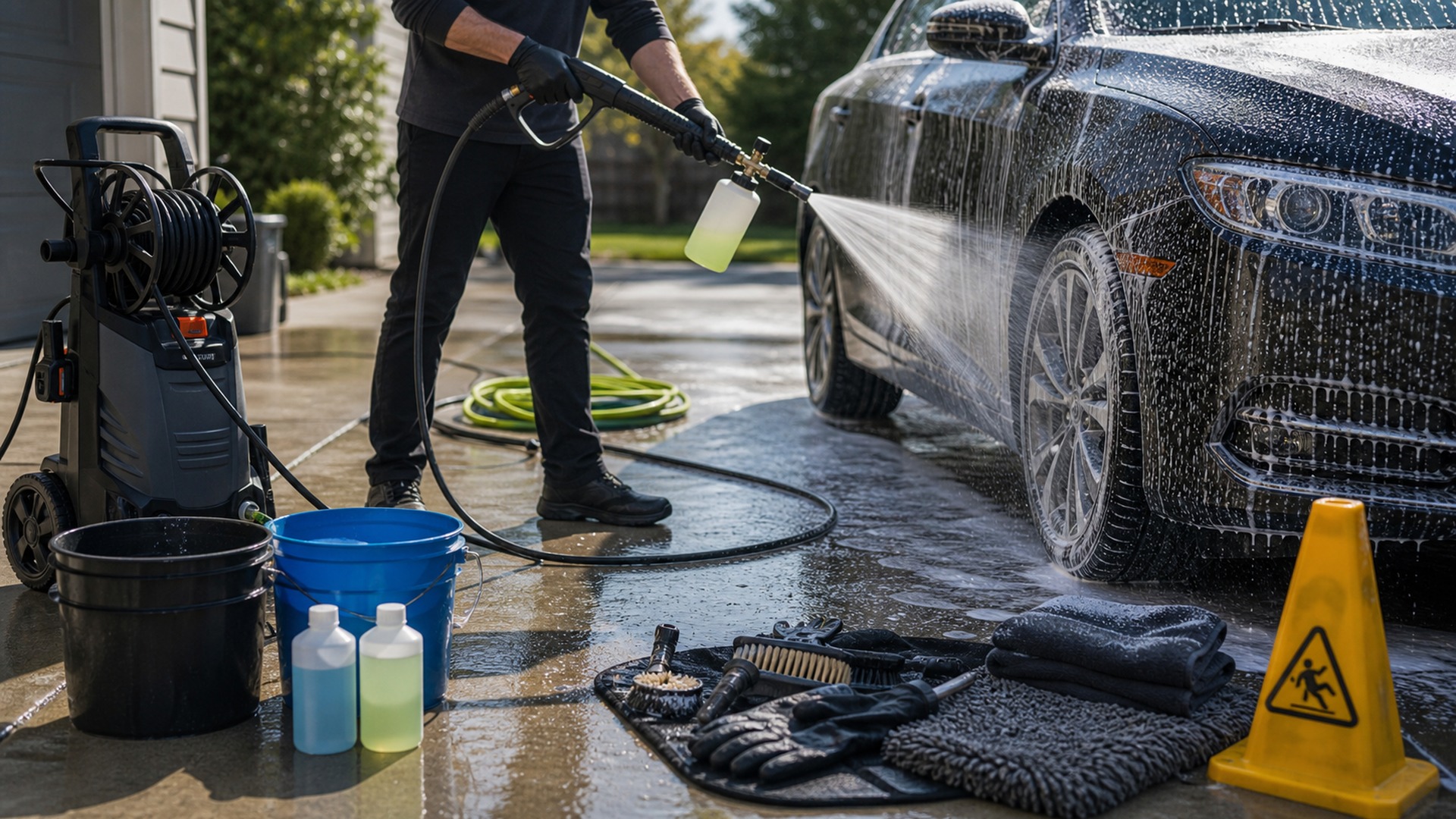
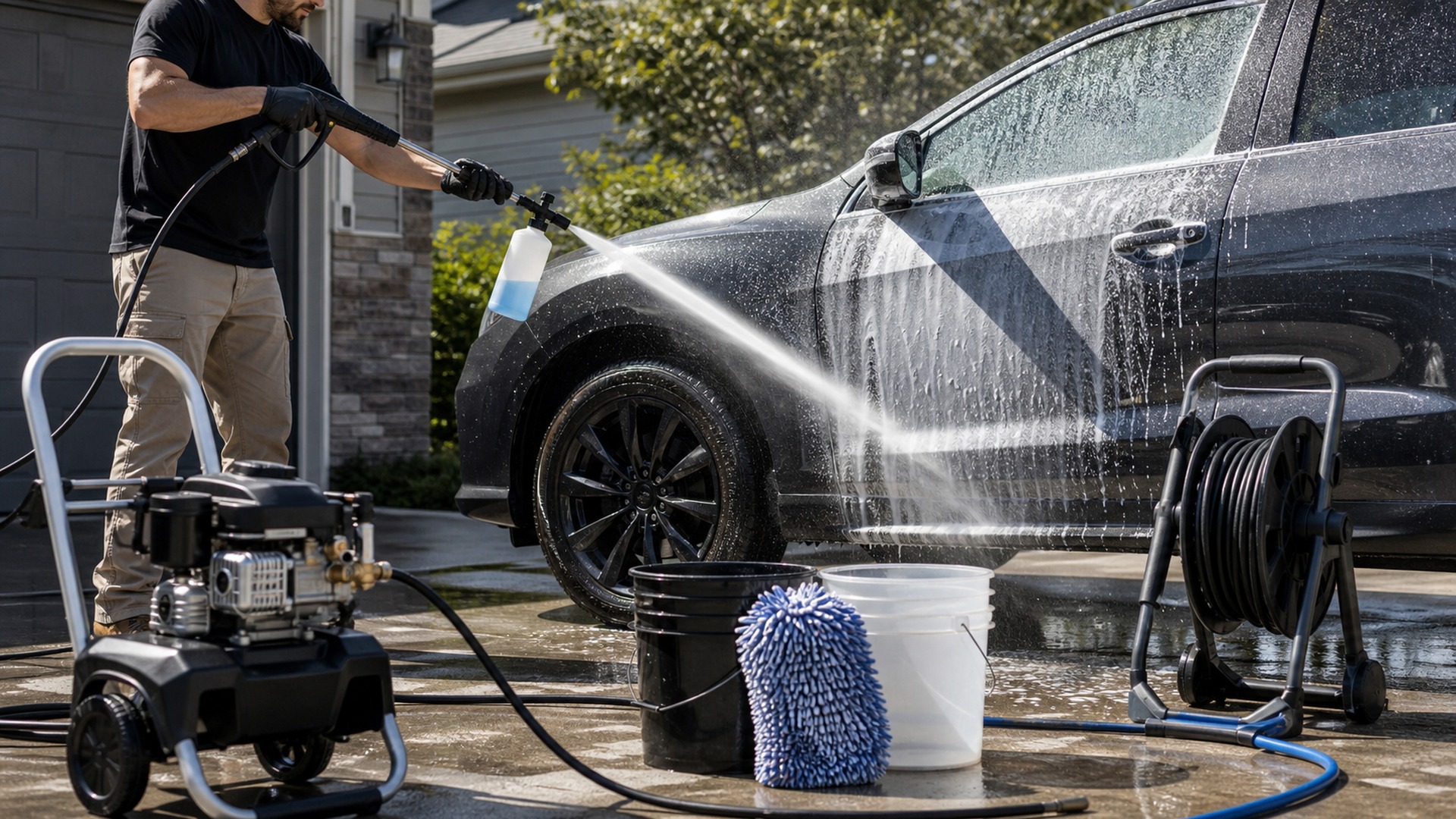
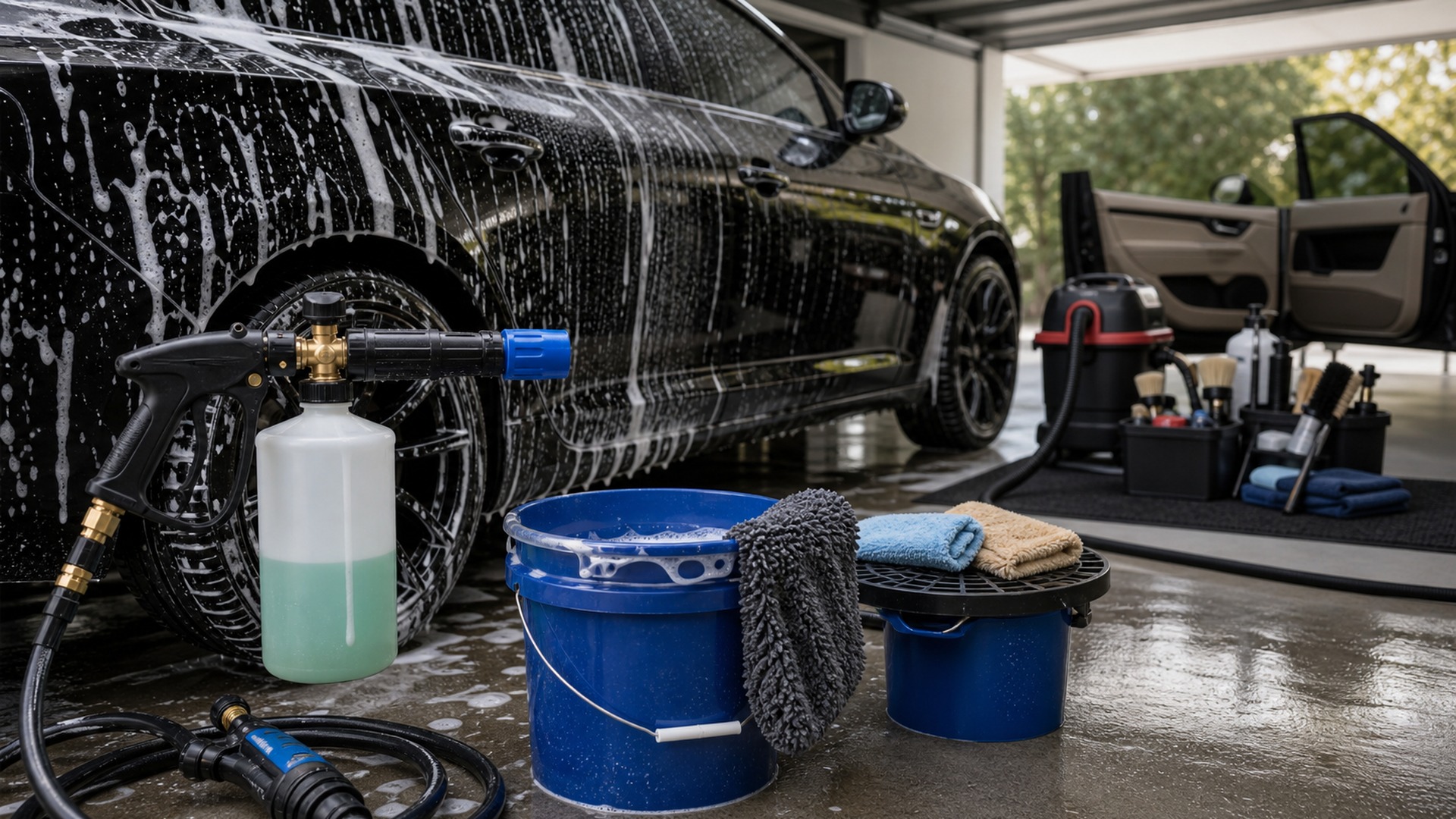
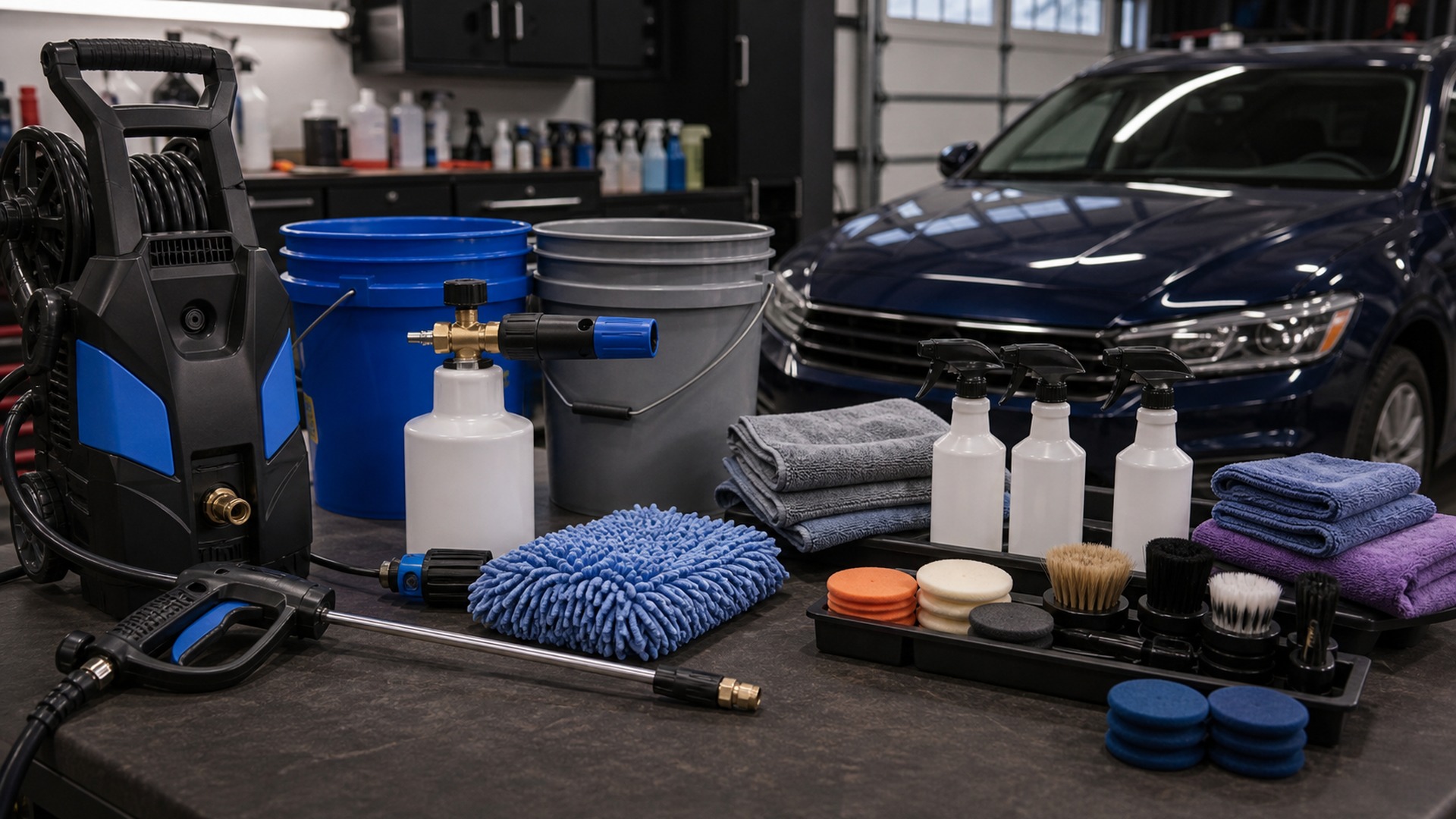
Car wash equipment supplies repeatable delivery capacity; detailing kits organize chemistry and contact media into targeted surface-treatment steps.
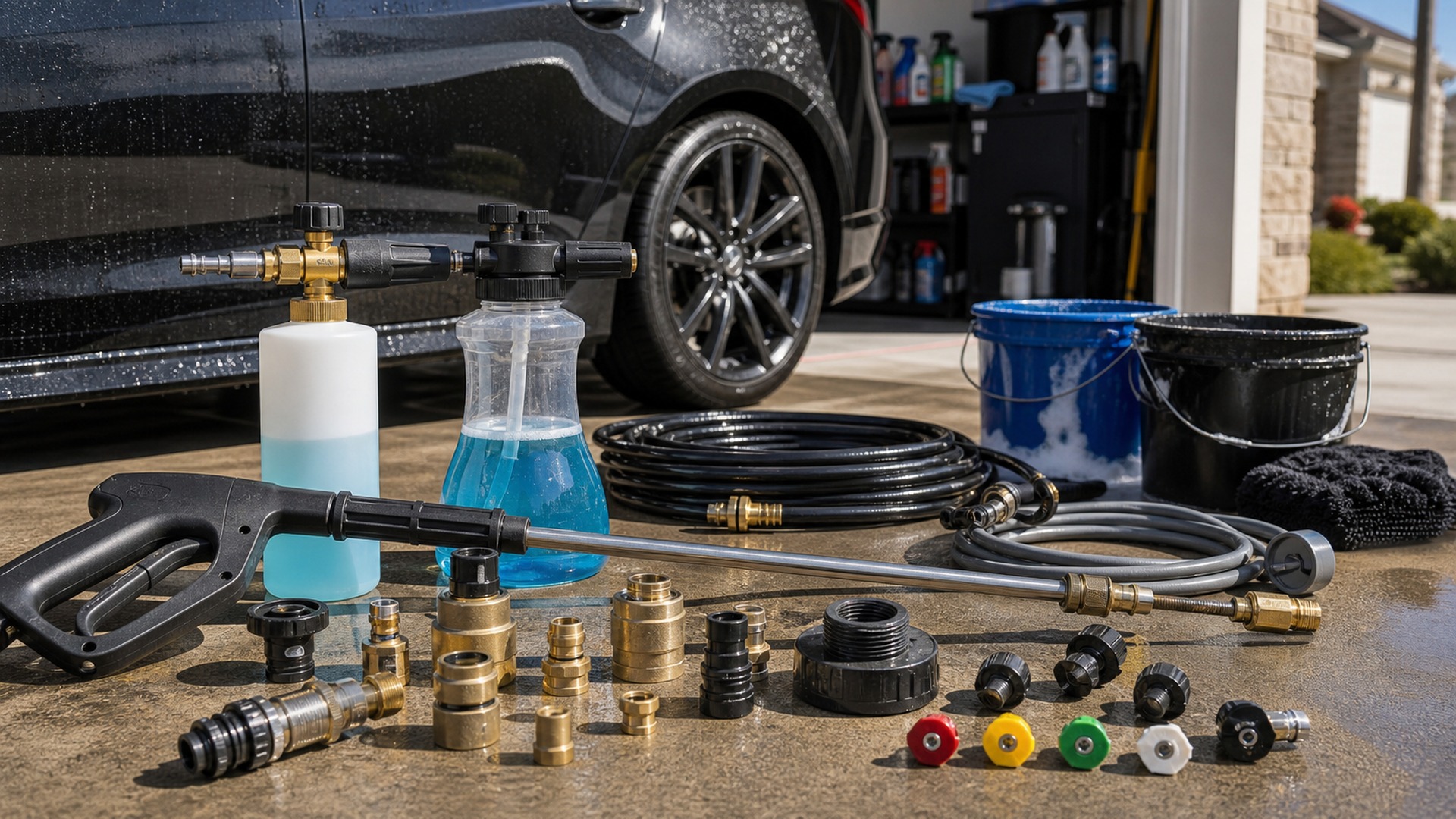
Car wash equipment fitment is a complete hydraulic, electrical, chemical, surface, and site match—not a connector guess.
Car wash equipment turns supplied water, controlled hydraulic energy, chemistry, contact, rinse flow, and drying into managed soil removal.