What Makes Interior Comfort Different from Floor Protection
Interior comfort changes occupant response; floor protection controls wear and contamination. Their evidence differs even where both affect the driver footwell.

Reviews You Can Trust
Interior comfort changes occupant response; floor protection controls wear and contamination. Their evidence differs even where both affect the driver footwell.
Interior comfort must fit the actual occupant and vehicle while preserving restraints, airbags, controls, sightlines, stable posture, climate paths, and safe power.
Vehicle interior comfort emerges from mechanical support, thermal exchange, airflow, sound, touch, visibility, reach, motion, and adaptation over time.
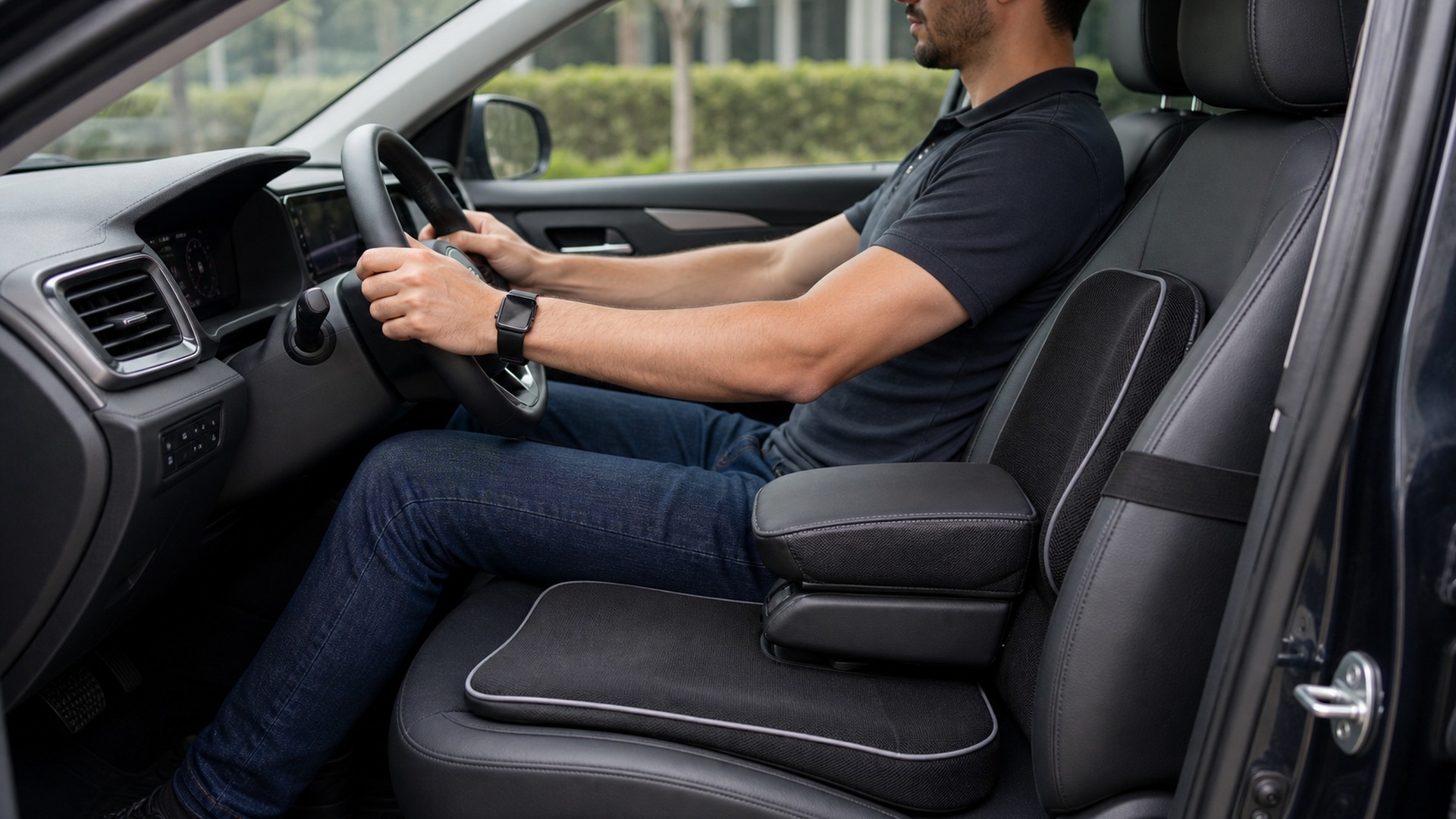
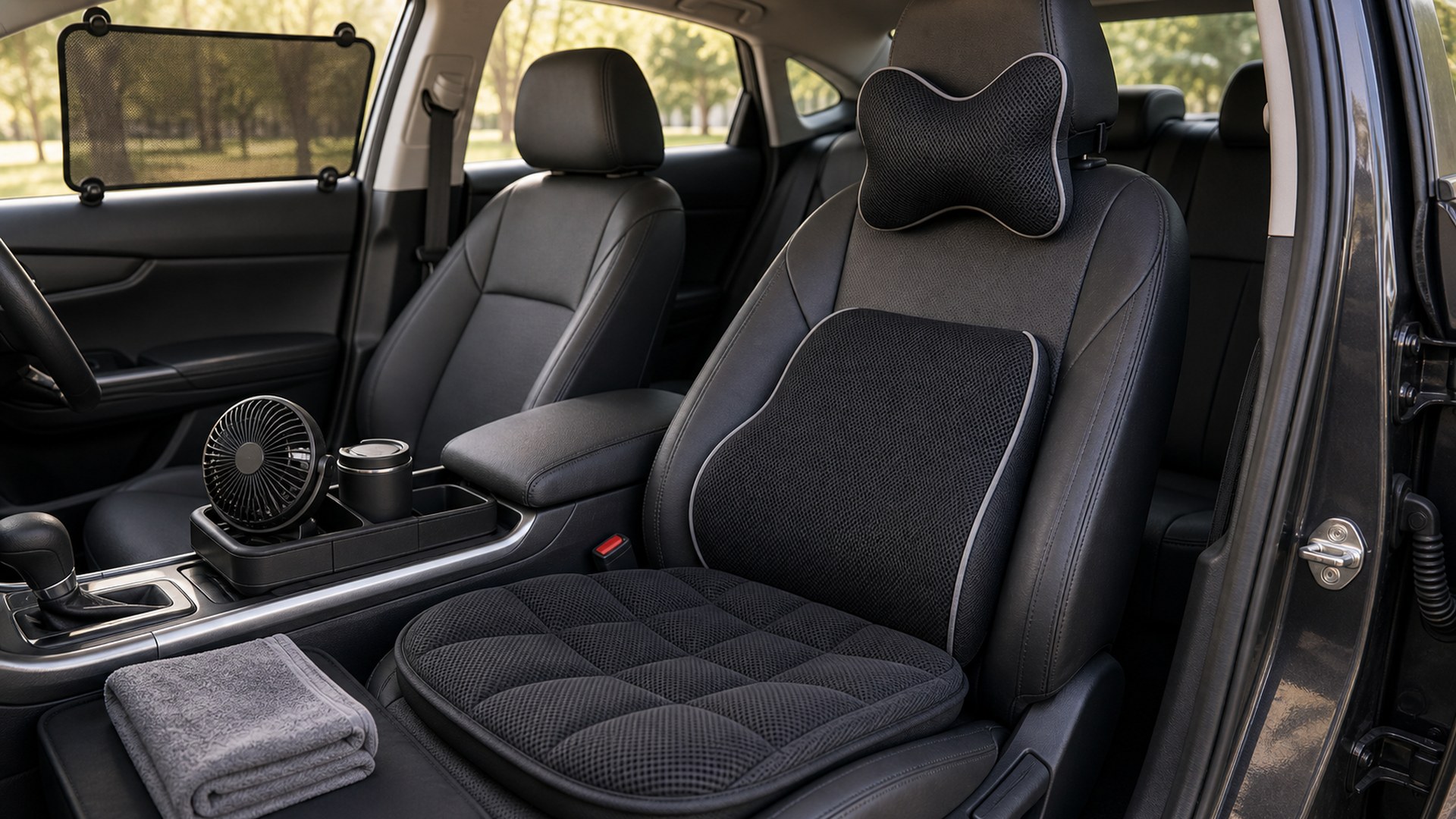
Fit cabin comfort accessories around the entire driving environment. Verify hip position, pedal and steering reach, belt and head-restraint geometry, seat side airbags, passenger sensing, console lids and controls, dashboard reflections, defroster outlets, vents, seat rails, under-seat wiring, attachment stability, surface heat, full movement, and a safe removal path.
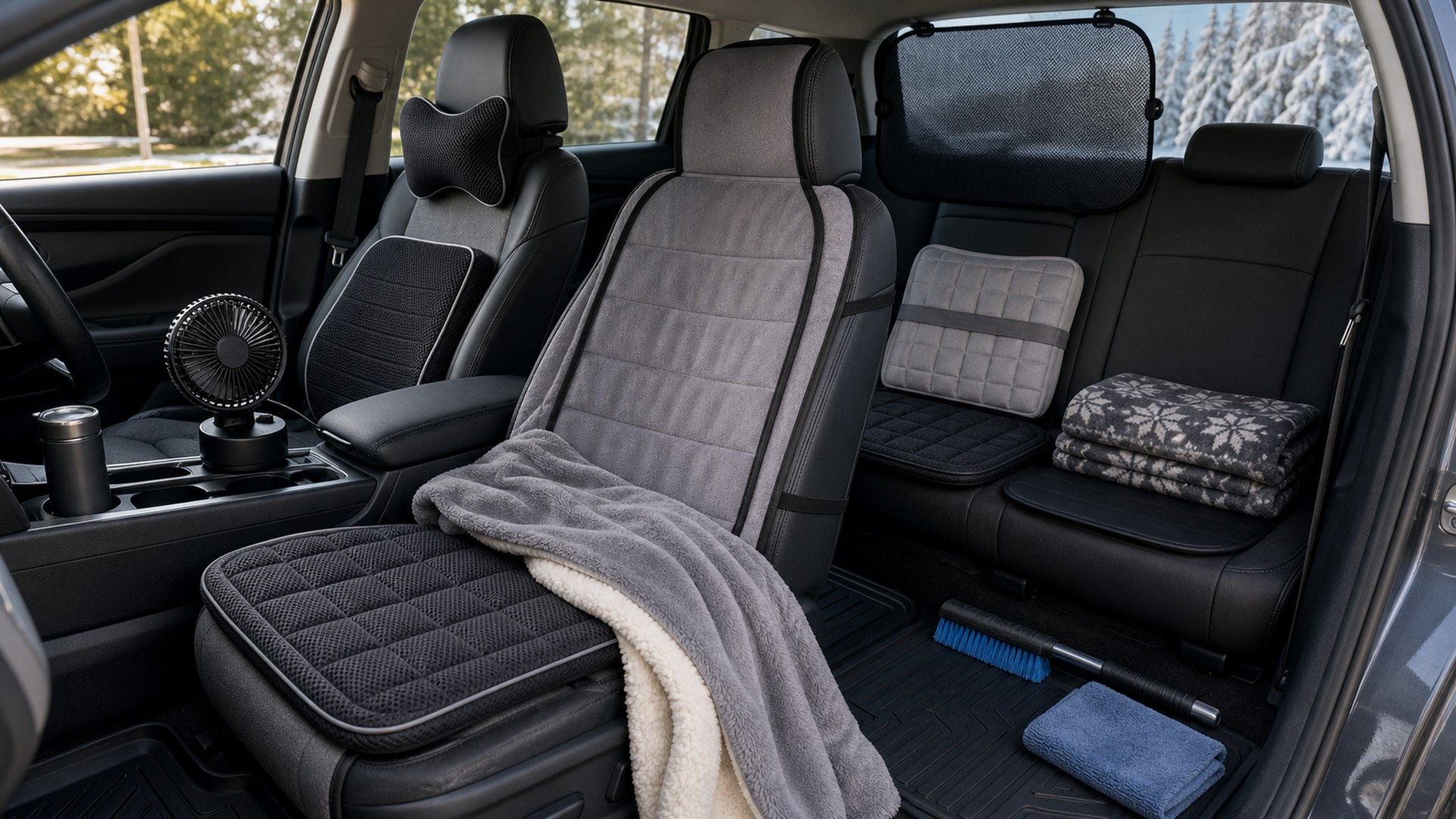
Prepare vehicle interior comfort for summer sun, winter cold, rain and humidity. Compare parked shades, hot and cold material behavior, breathable seating, seat-heater and ventilation compatibility, defroster and HVAC clearance, windshield fog control, wet-clothing and gear storage, odor and drying, 12-volt load, cord temperature, secure seasonal storage, and complete spring and fall resets.
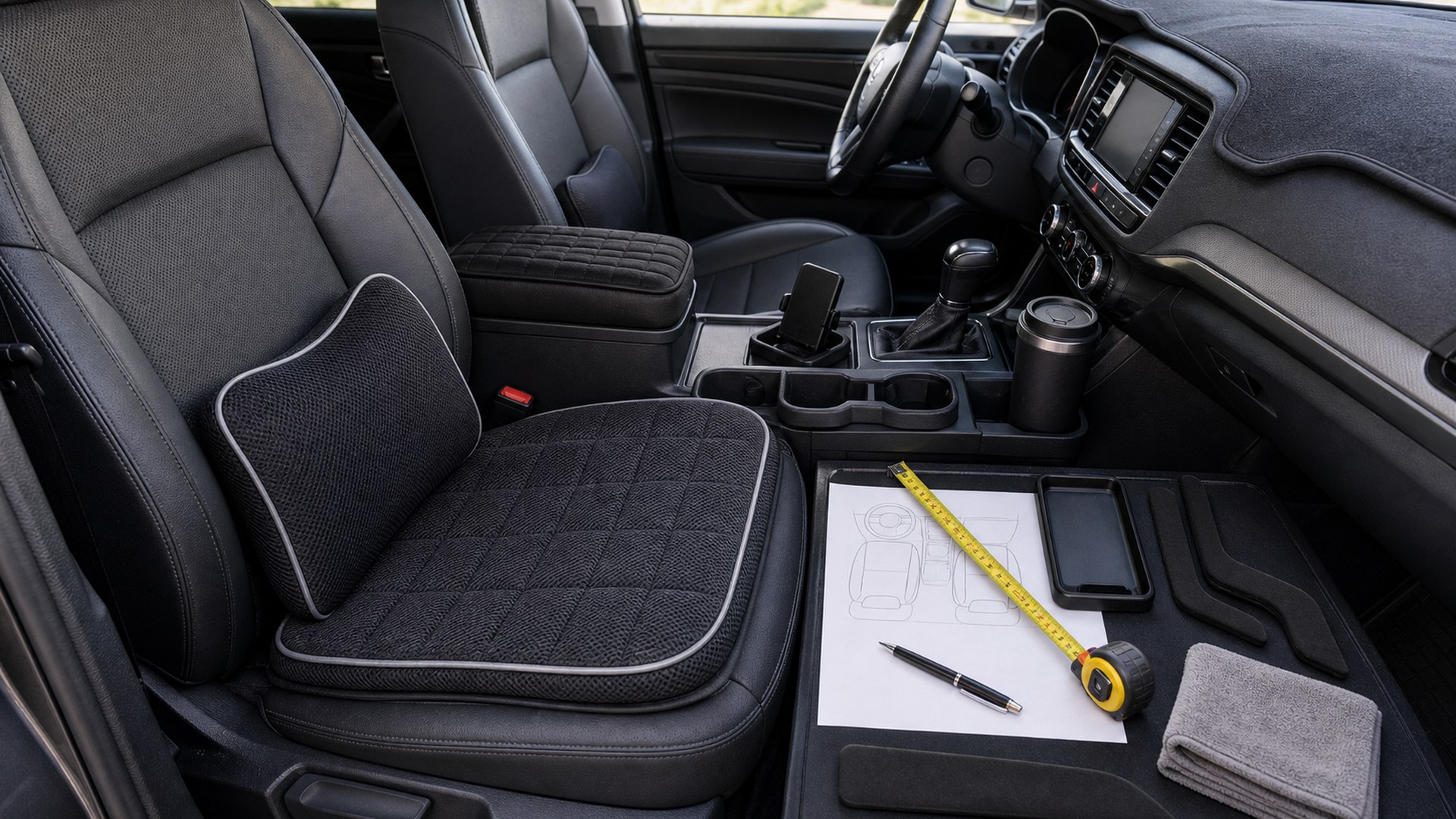
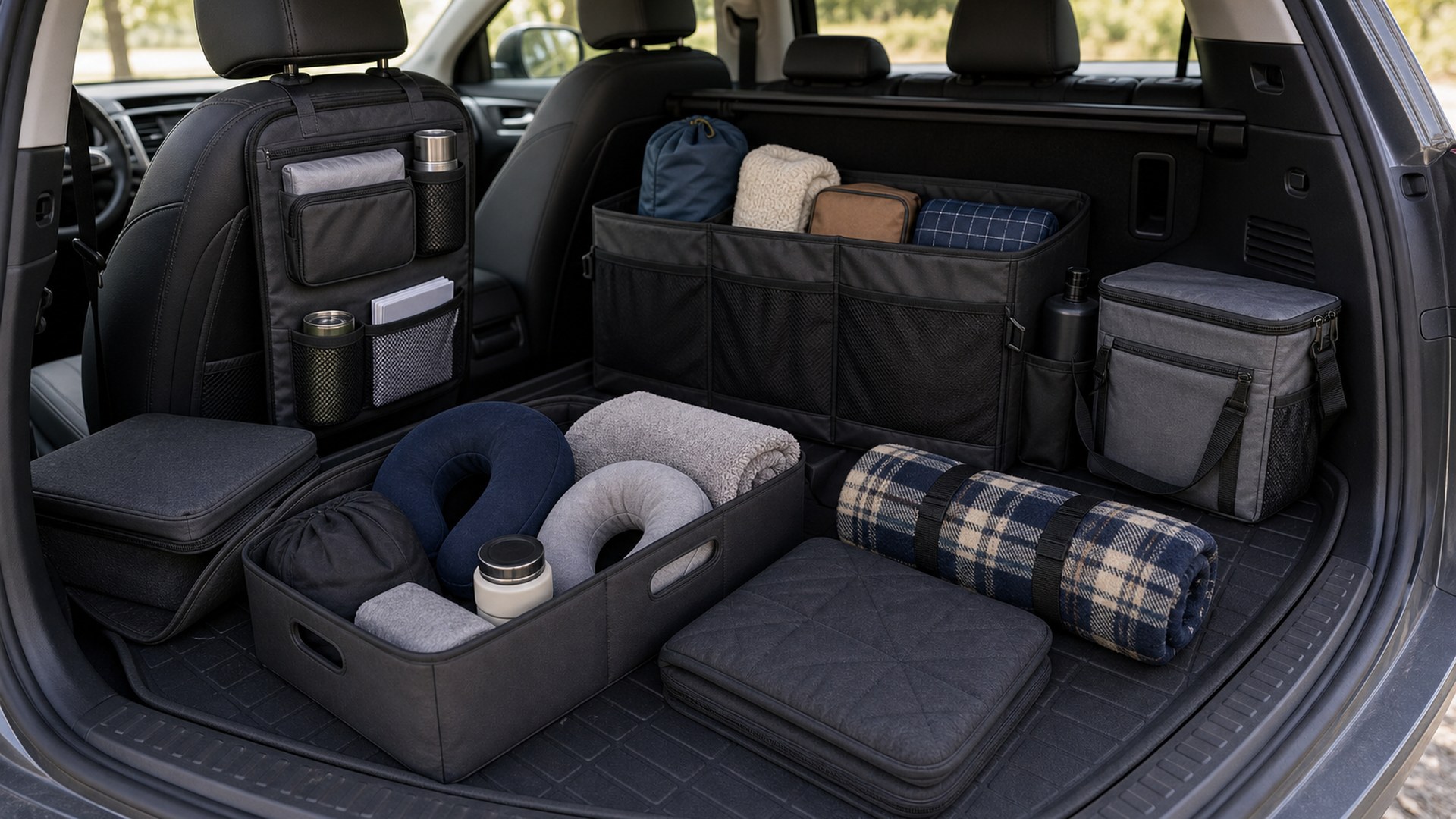
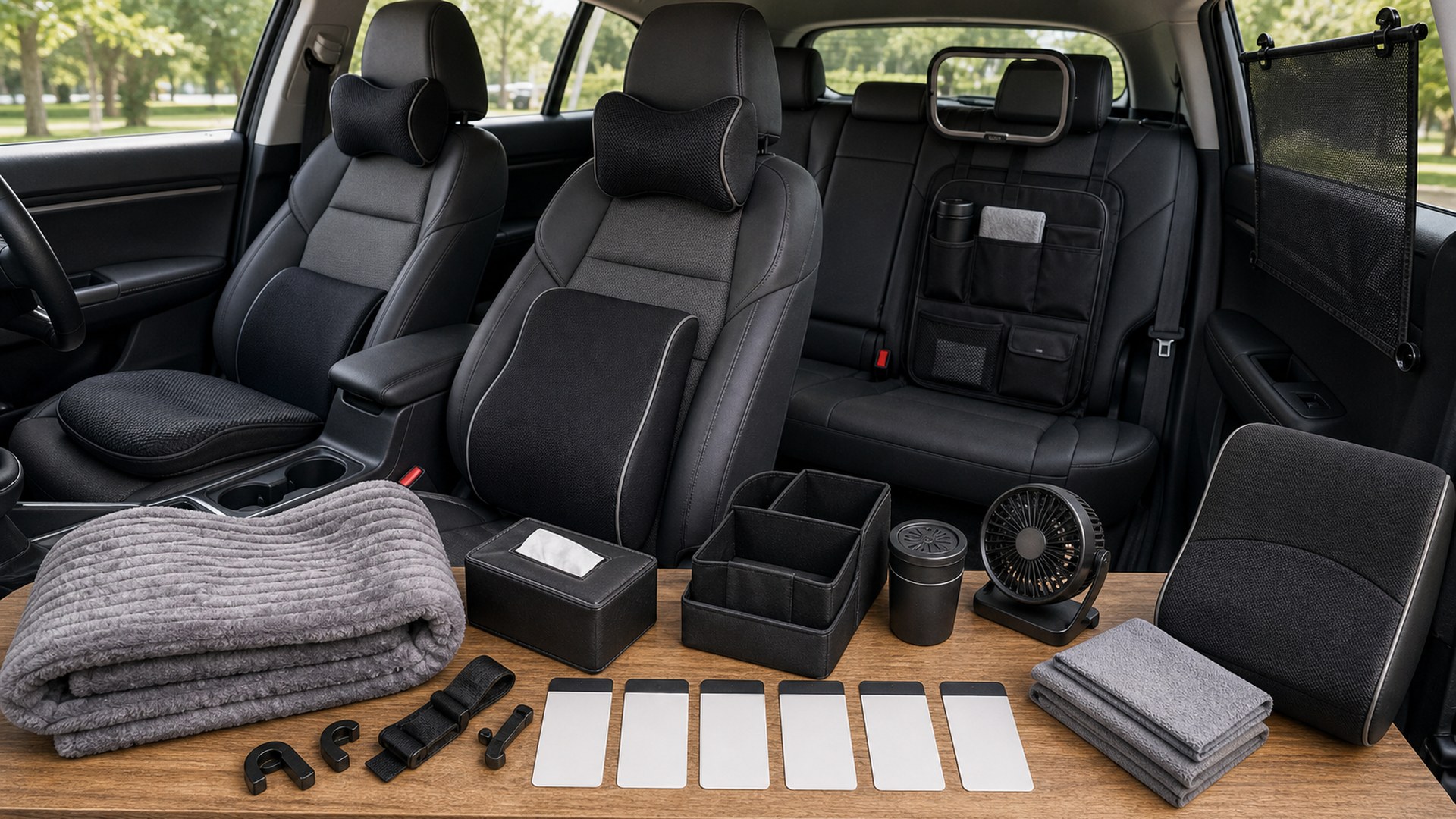
Organize comfort gear as restrained cargo. Map consoles, door pockets, seatback organizers, under-seat areas and cargo zones; preserve airbags, belts, seat travel, HVAC vents, driver controls, rear visibility, tie-downs, folding-seat transitions and emergency equipment. Test cable routes, blanket and cushion storage, organizer loads, hard-object placement, retrieval distraction, passenger knee room, and crash-safe securement.
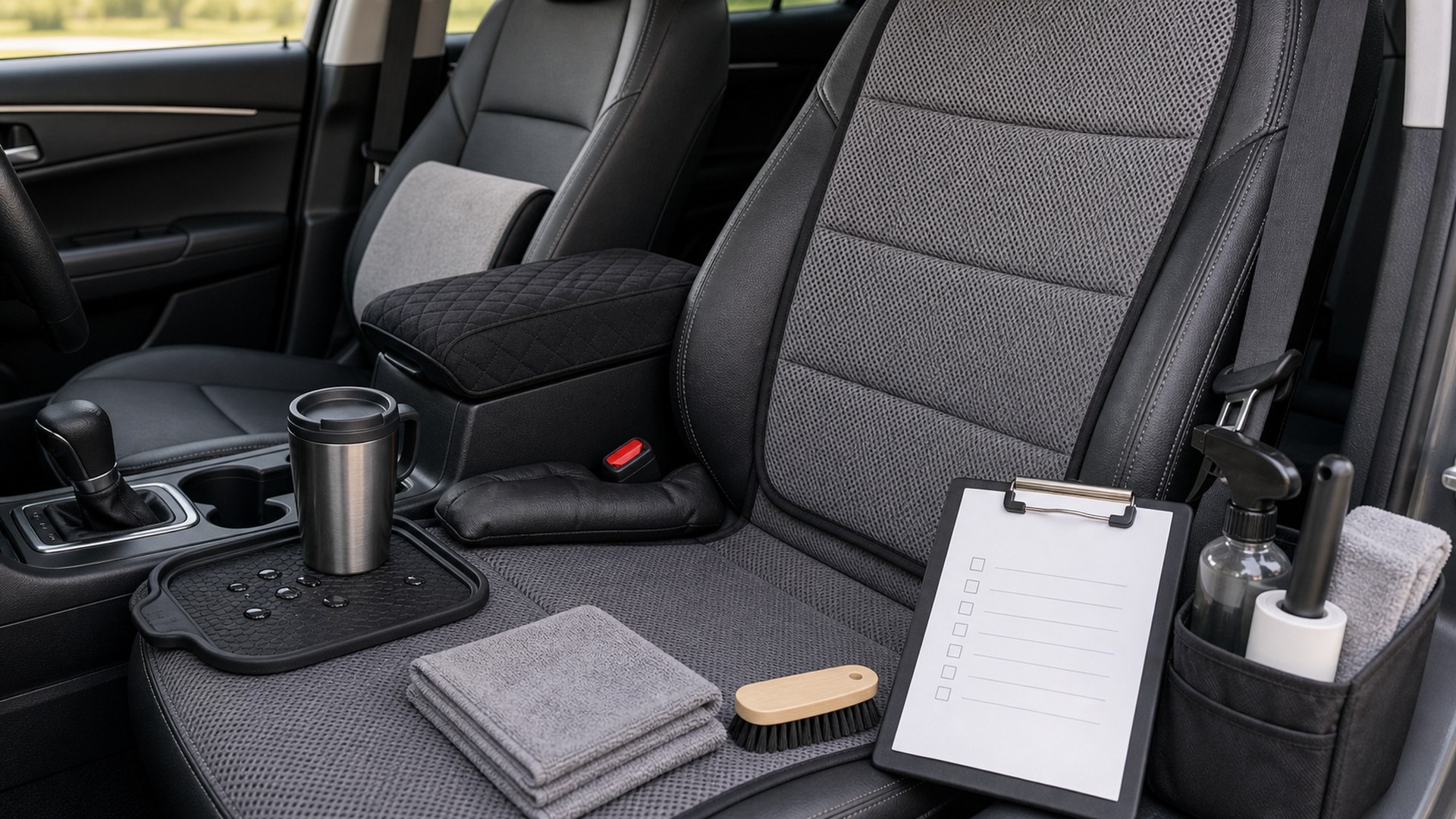
Choose interior protection by the actual UV, heat, spill, abrasion, pet, and dirt exposure. Verify seat-mounted airbags, passenger occupant classification, belt and buckle access, heated and ventilated seat restrictions, dashboard reflection, window visibility, surface and cleaner compatibility, secure attachments, spill removal, moisture escape, hidden-surface inspection, and replacement thresholds.
Plan high-use vehicle comfort around full-shift support, pressure and heat, steering and pedal reach, side airbags, passenger sensing, rear entry, knee room, washable surfaces, odor-source removal, HVAC recovery, seatback storage, USB cable resets, adjustment baselines, inspection intervals, replaceable wear items, and cleaning downtime between riders.
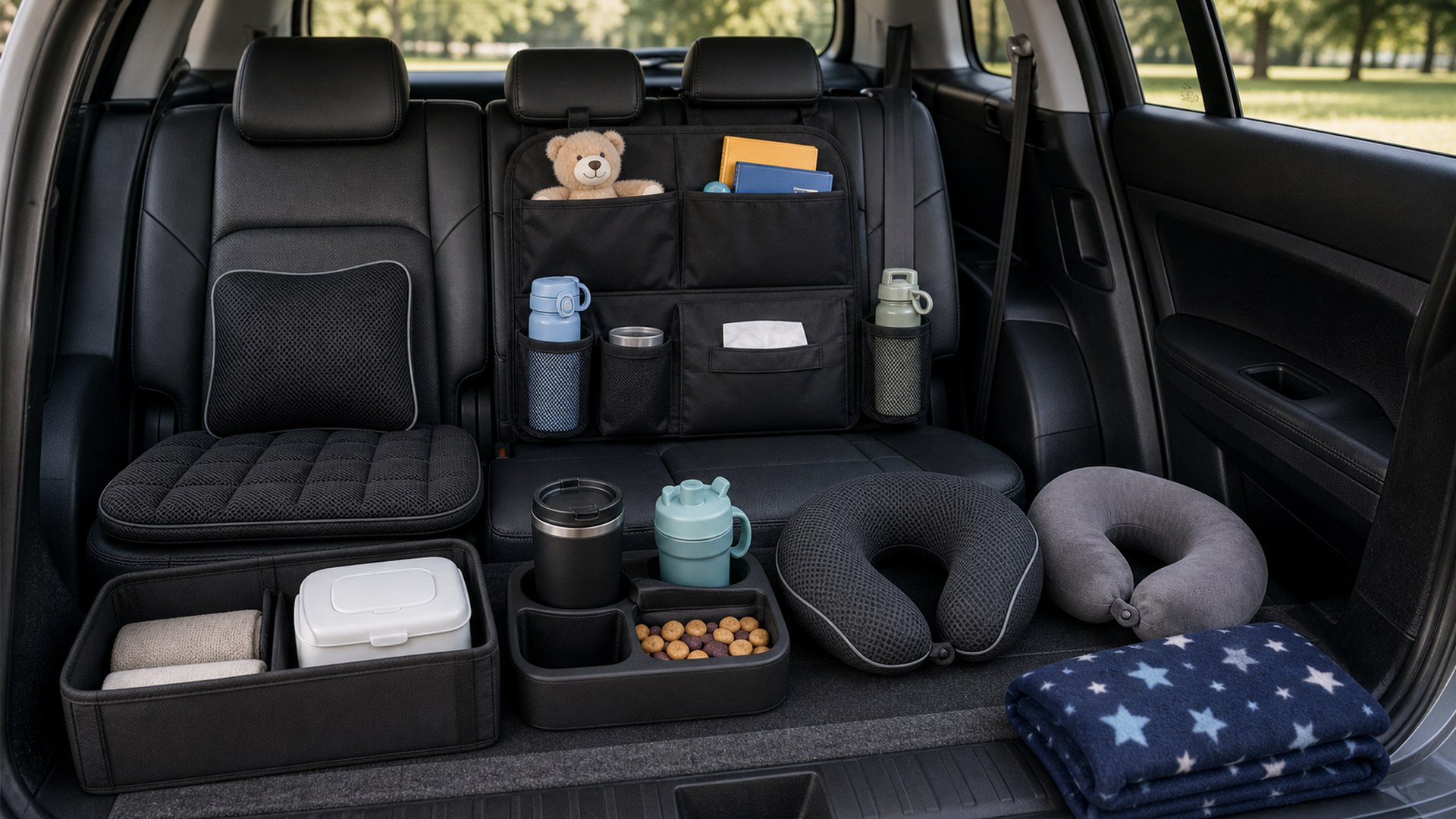
Organize family vehicle comfort without creating loose-object or restraint conflicts. Preserve child-seat lower anchors and tether paths, side and curtain airbags, seat belts, rear window visibility, HVAC outlets, front-seat travel, third-row entry and emergency exits. Compare shade securement, seatback organizer load, charging-cable routes, spill-kit storage, washable materials, cleanup resets, and changing passenger needs.
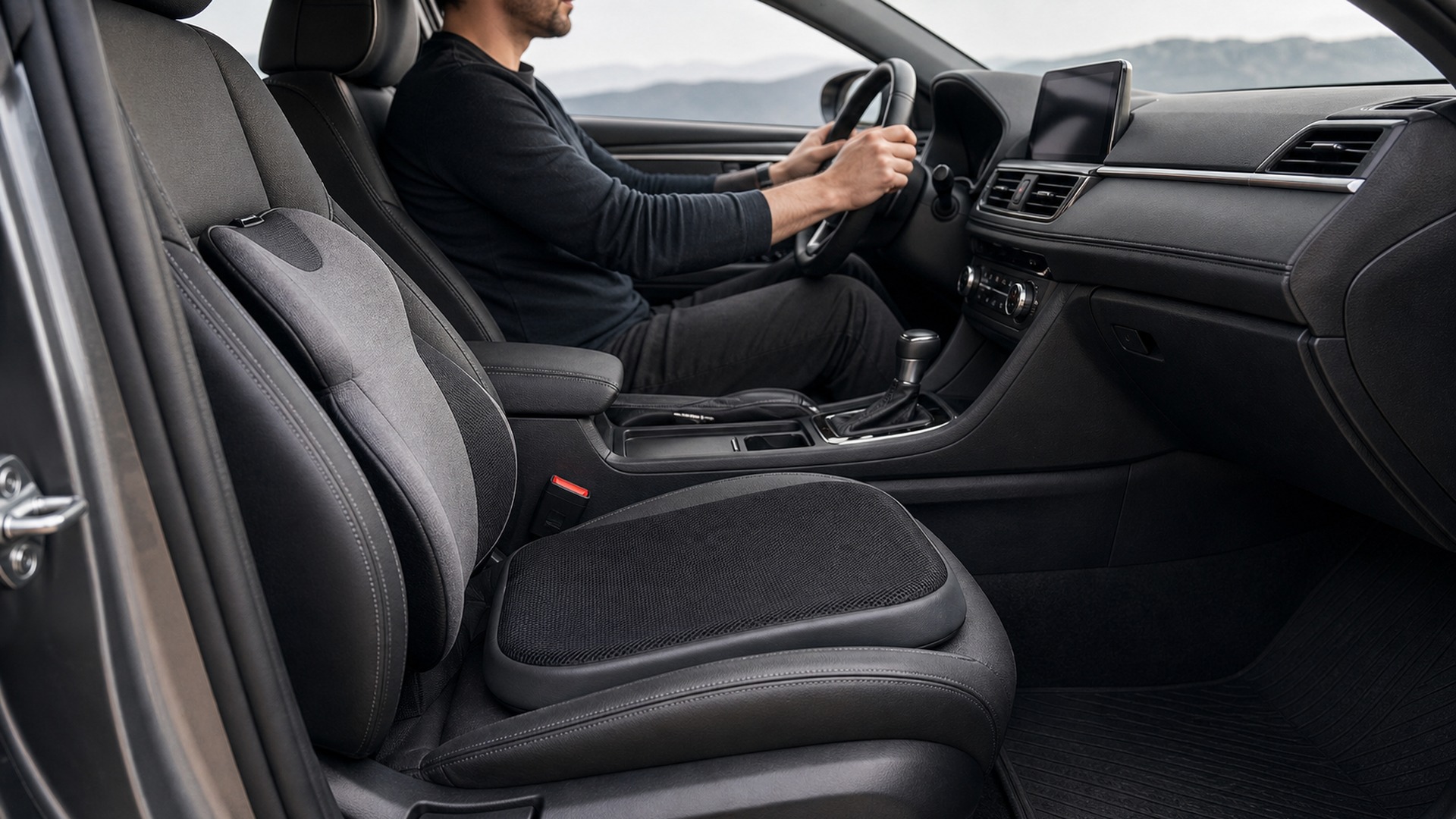
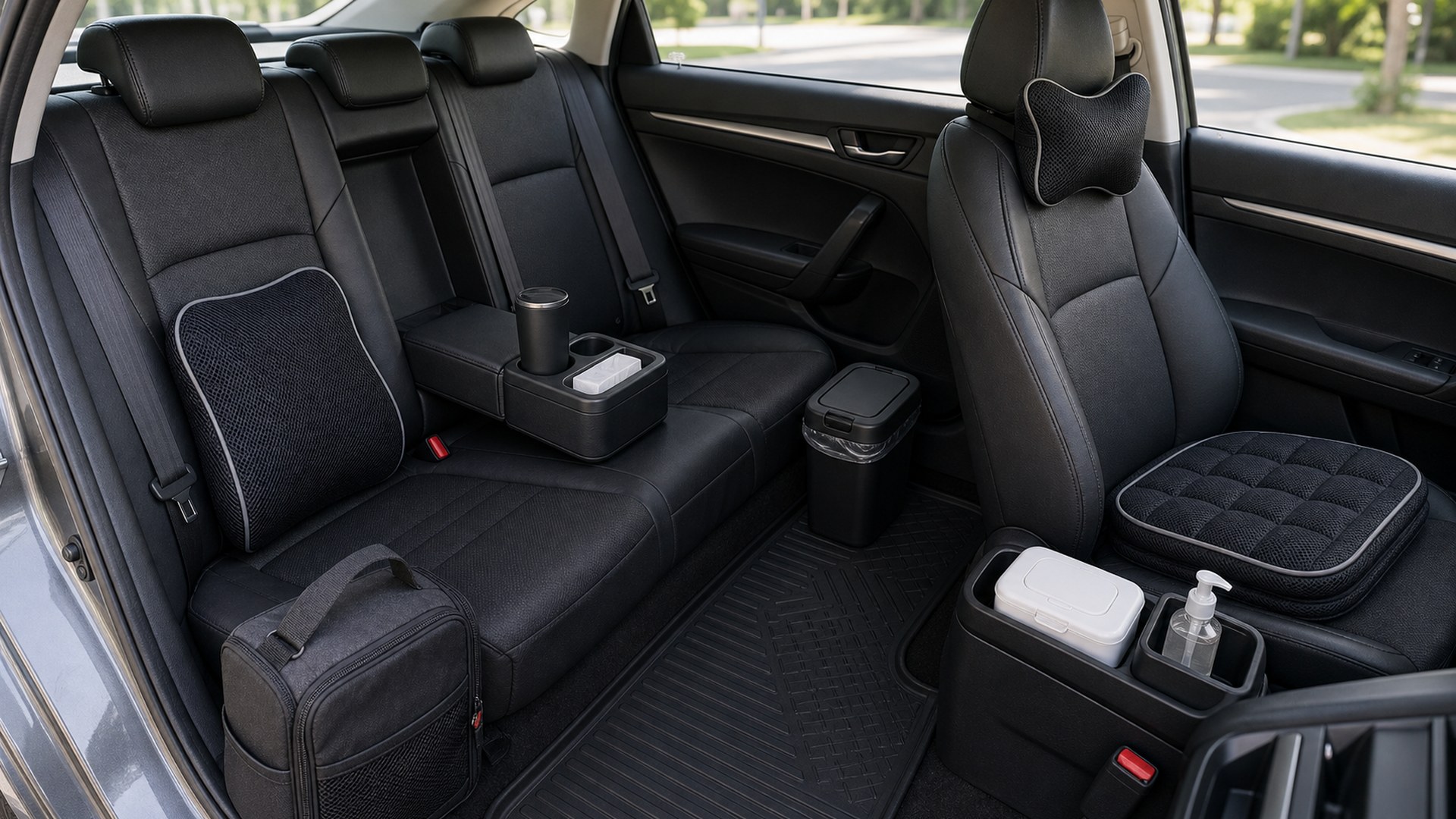
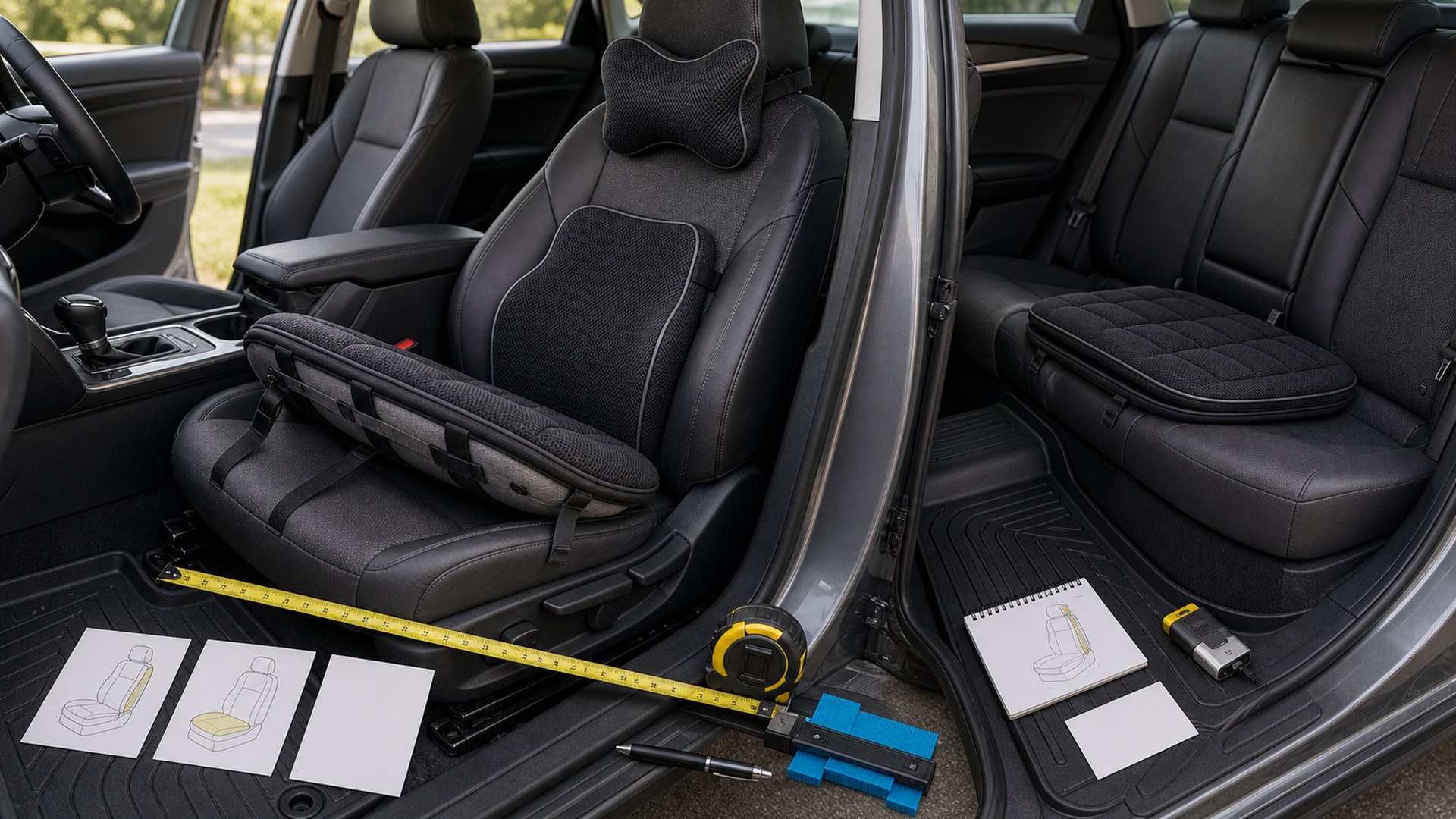
Verify comfort-accessory fit against the exact vehicle and occupant. Measure seat width, depth and bolsters; locate side airbags and passenger sensors; preserve buckle and integrated-belt paths, head restraints, heaters, ventilation, power-seat switches, rails and folding joints; then retest headroom, steering and pedal reach, mirror views, console knee space, rear legroom, and removal.
Coordinate seat, lumbar, heating, ventilation, shade, airflow, noise, and storage upgrades without creating conflicts. Check combined thickness, belt and head-restraint fit, side airbags, occupant sensing, HVAC outlets, windshield and mirror views, dashboard reflections, socket load, controller reach, cable routing, cleaning, removal, and comfort during representative trips.
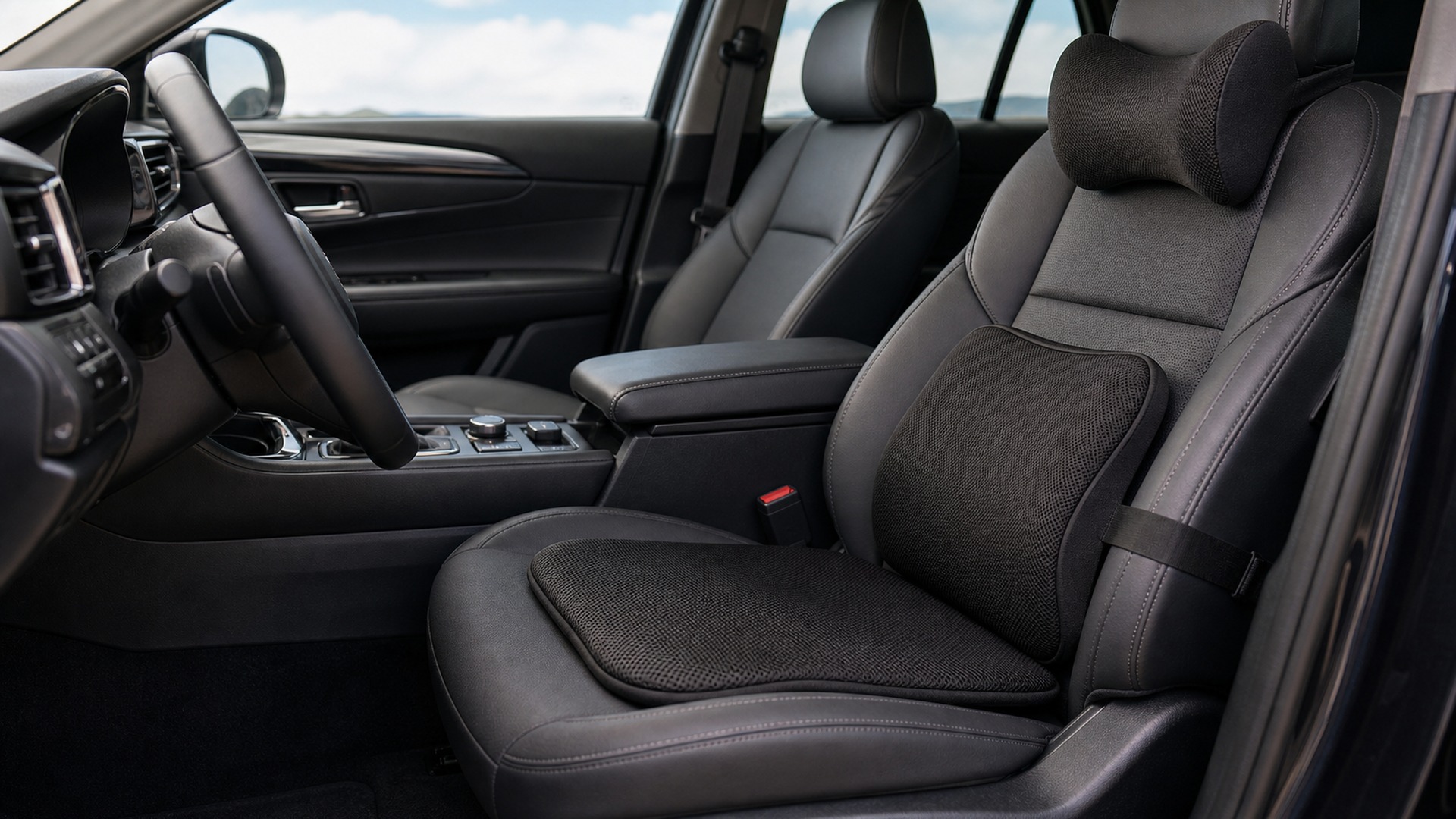
Plan interior comfort upgrades around the occupant and vehicle. Check seat adjustment, lumbar support, head restraint, belt path, steering-wheel distance, pedal reach, seat-mounted airbags, passenger occupant sensing, heat and ventilation, glare, windshield and mirror visibility, HVAC vents, accessory power, cord routing, secure storage, cleaning, and removal.