What Makes Interior Organization Different from Floor Protection
Interior organization controls discrete objects; floor protection controls dispersed wear and contamination. Their loads, evidence, maintenance, and shared-space checks differ.

Reviews You Can Trust
Interior organization controls discrete objects; floor protection controls dispersed wear and contamination. Their loads, evidence, maintenance, and shared-space checks differ.
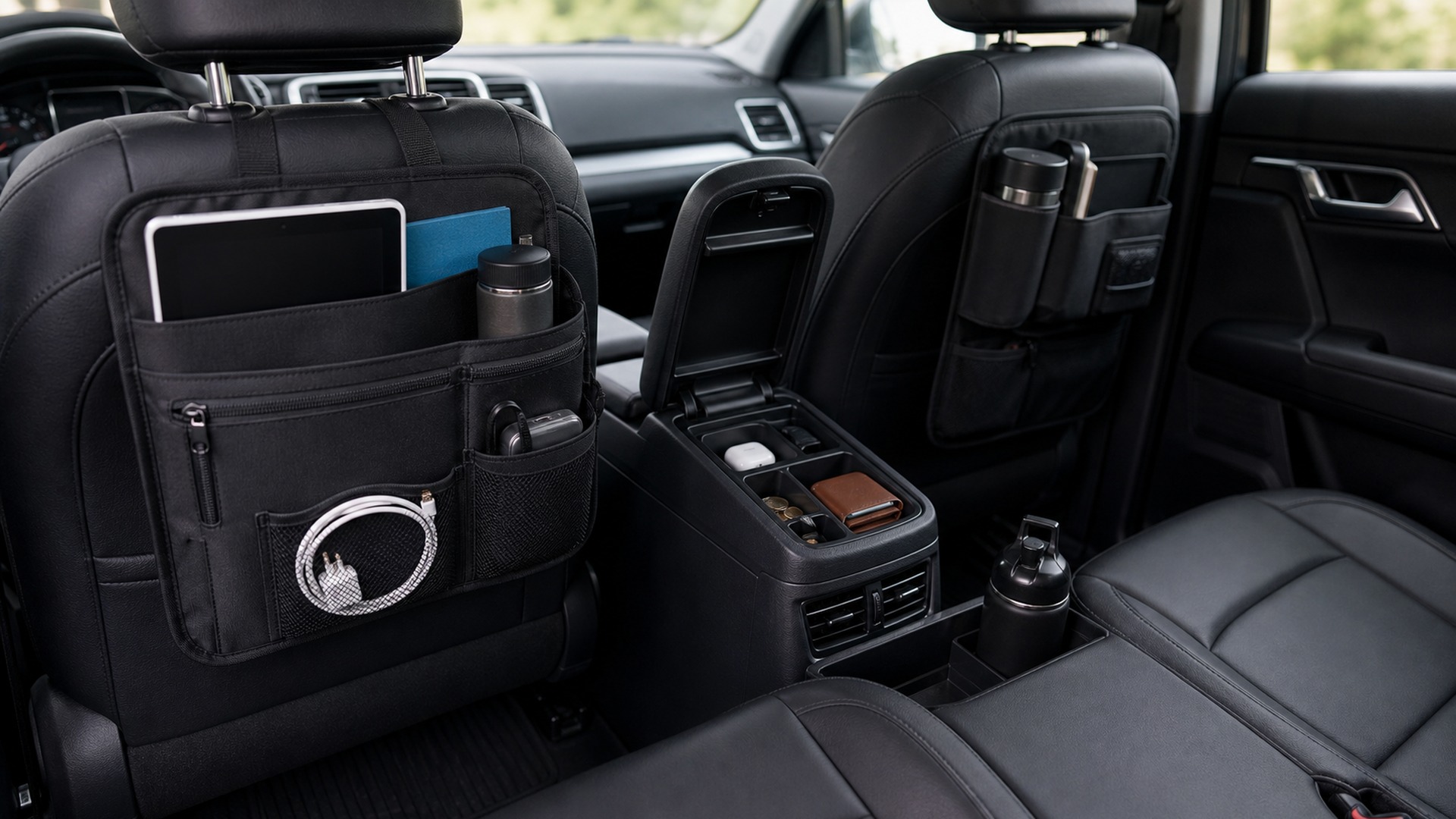
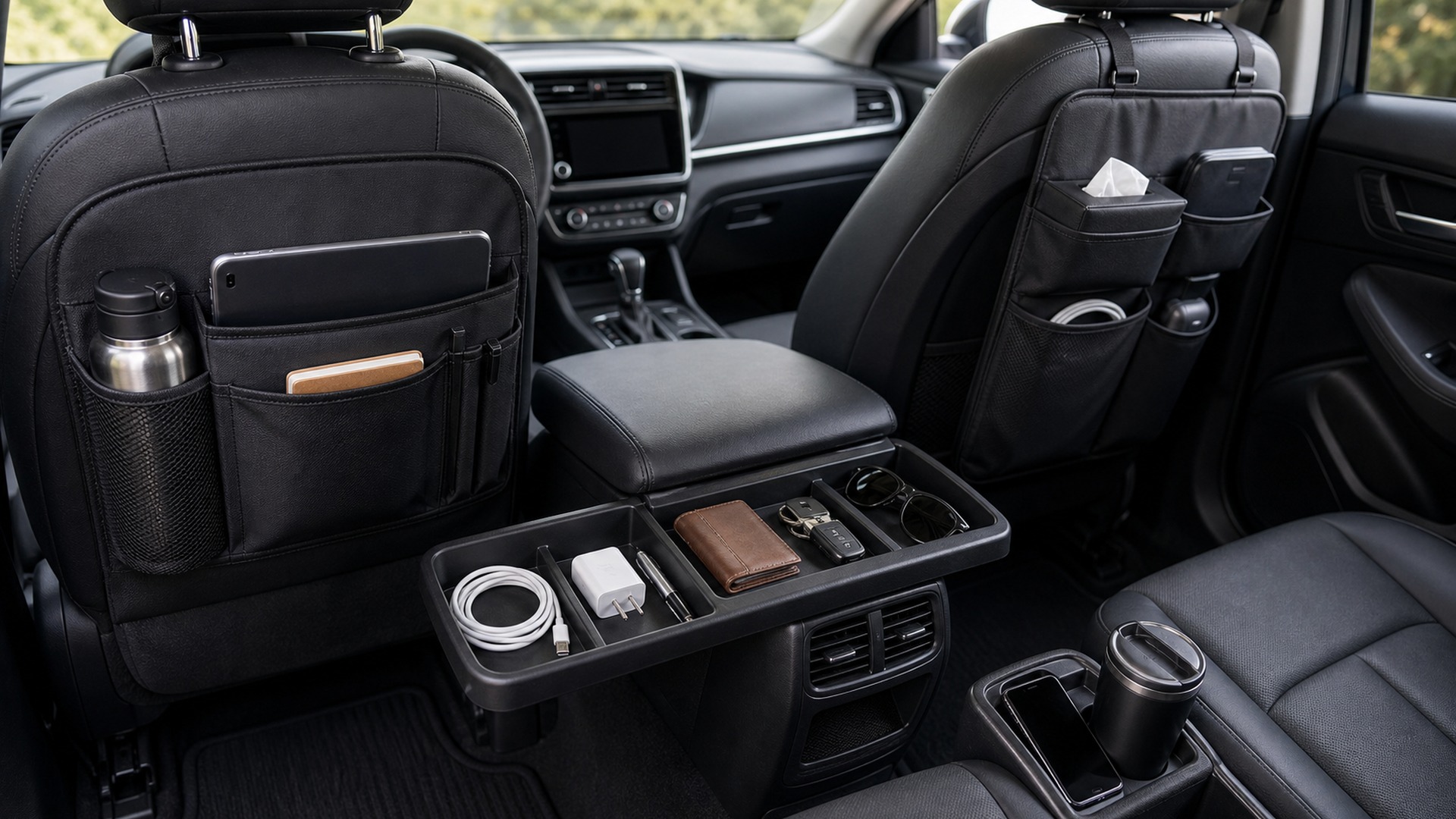
Interior organization fitment depends on the loaded, occupied vehicle: safety zones, structural support, dynamic clearances, retrieval, and every intended configuration.
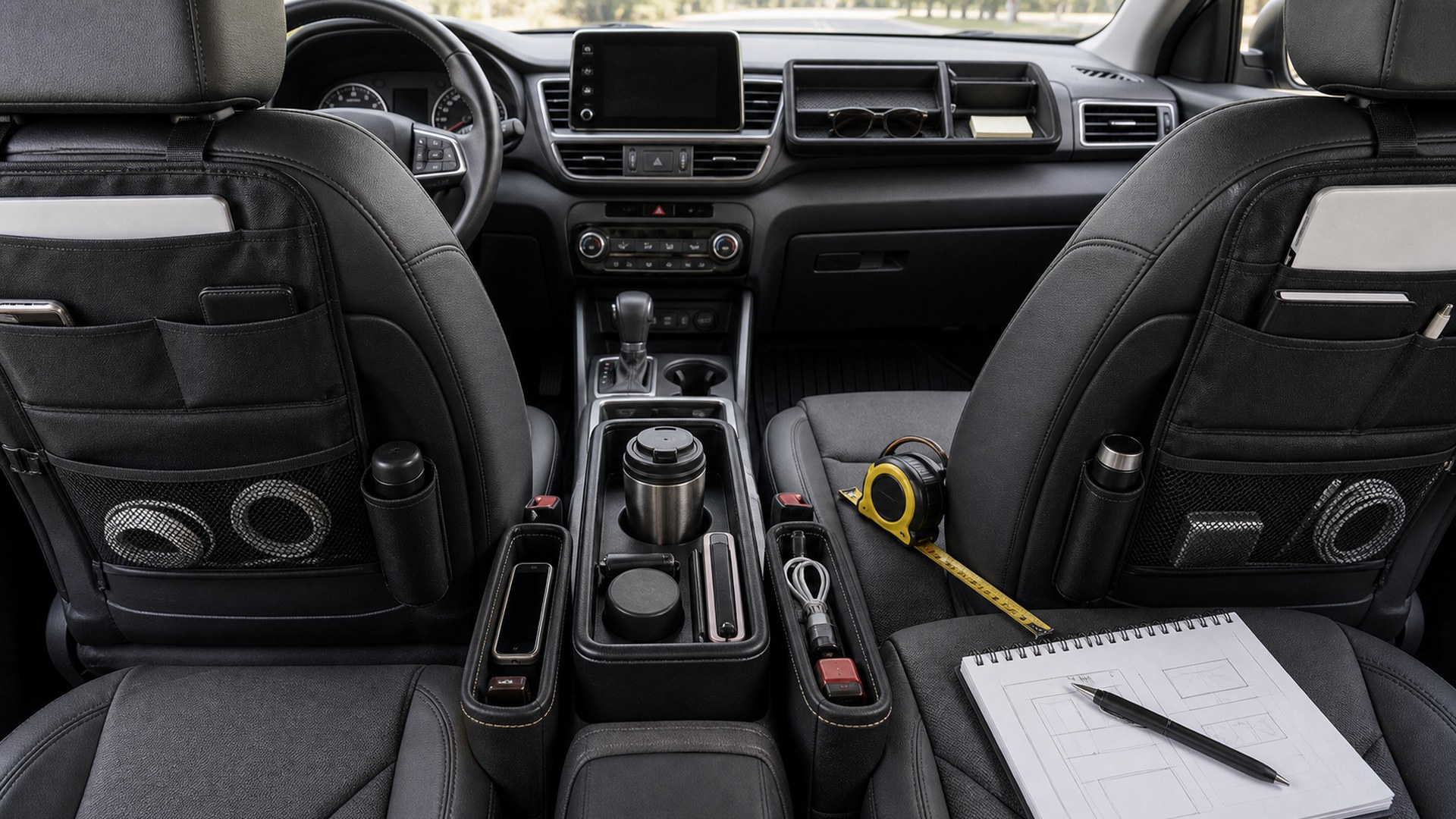
Interior organization turns carried objects into a stable system through inventory, zones, containment, motion restraint, appropriate retrieval, and routine reset.
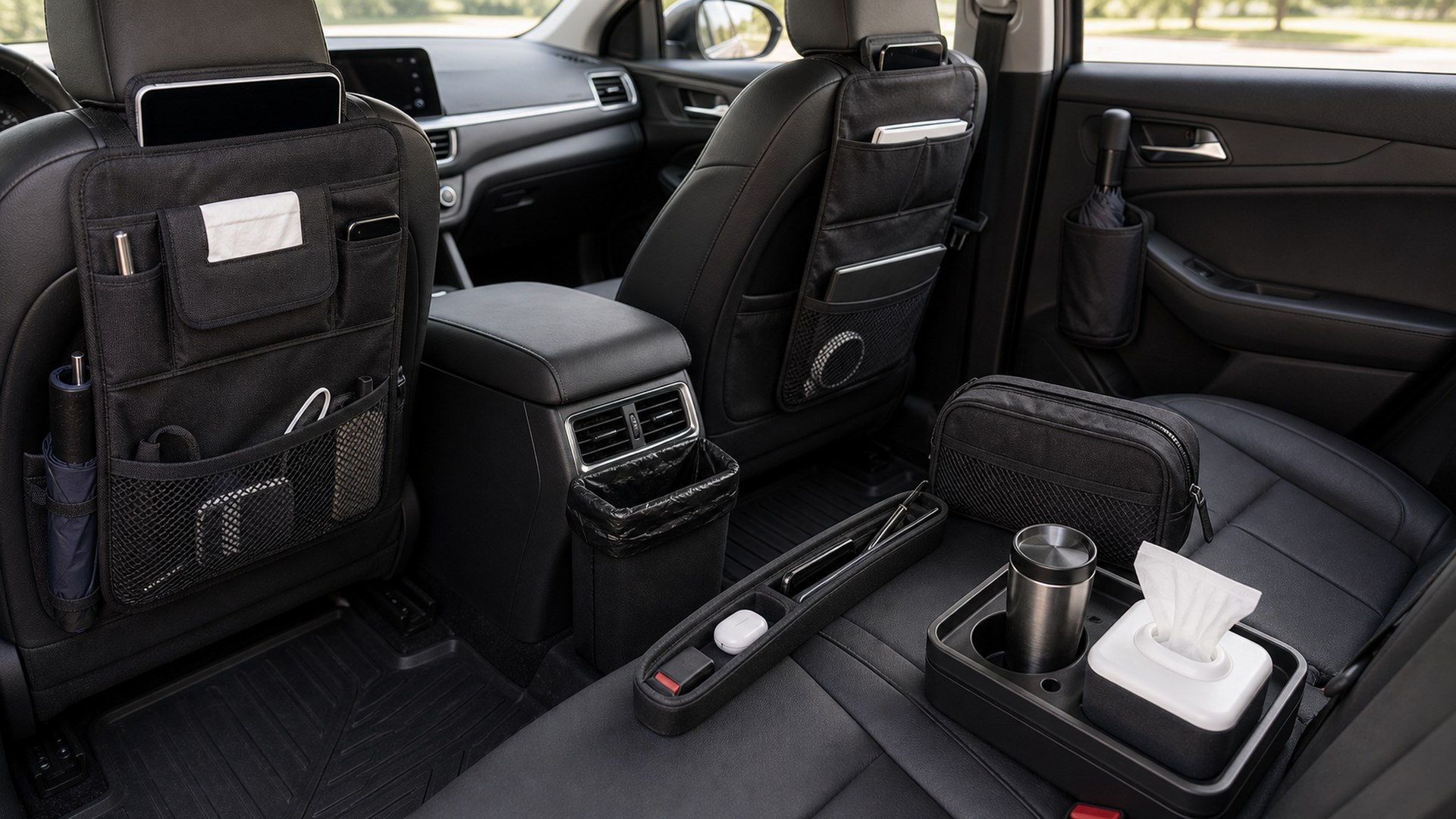
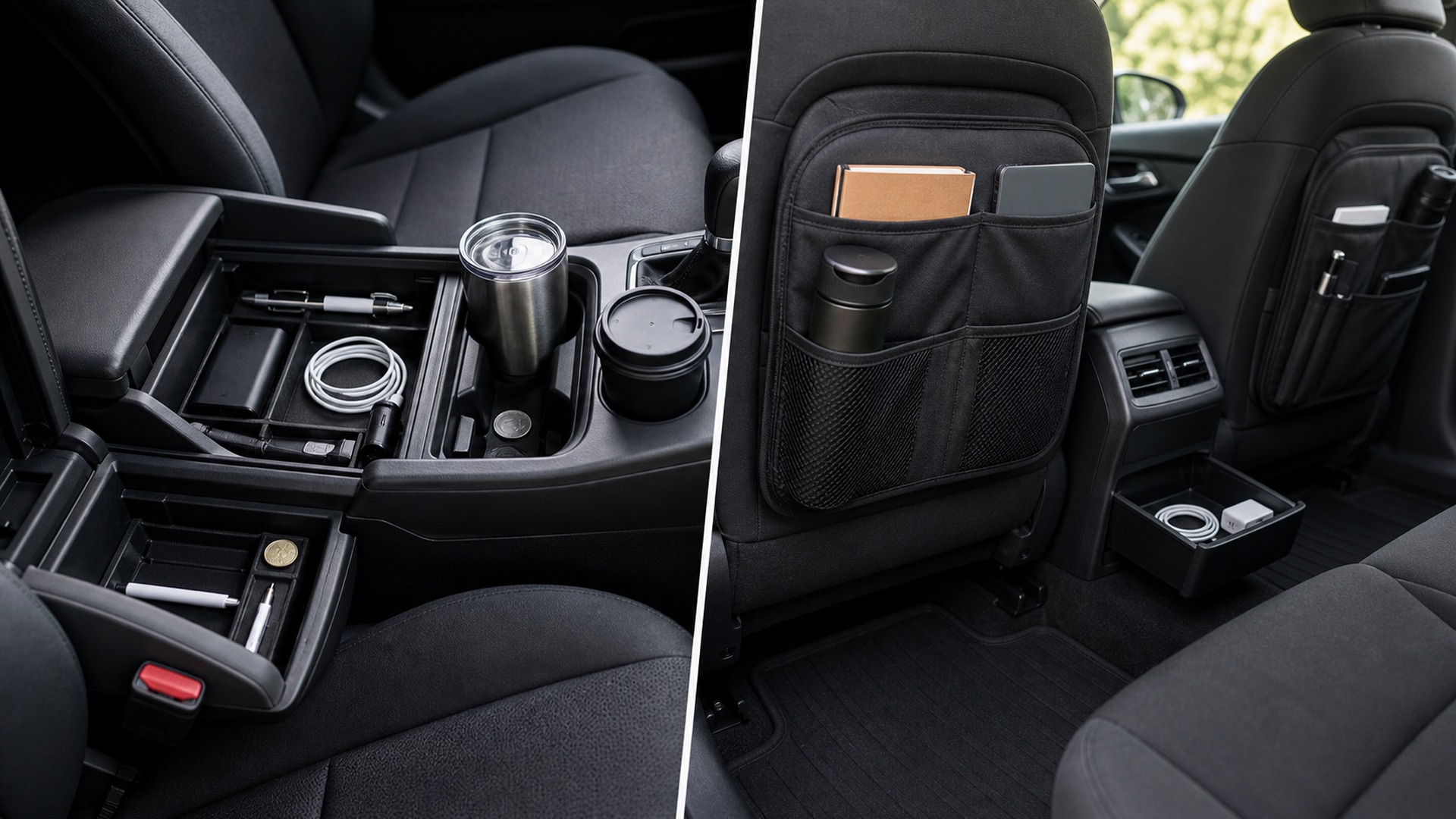
Map the seat, dashboard and console before adding storage. Preserve steering, pedals, shifter and brake use; airbag panels and seat seams; belts, buckles and full seat travel; console lids, latches, ports and cupholders; screens, indicators, sensors, cameras, vents and defroster flow; route cables outside rails and controls; limit glance demand; and retain service access plus secure object retention.
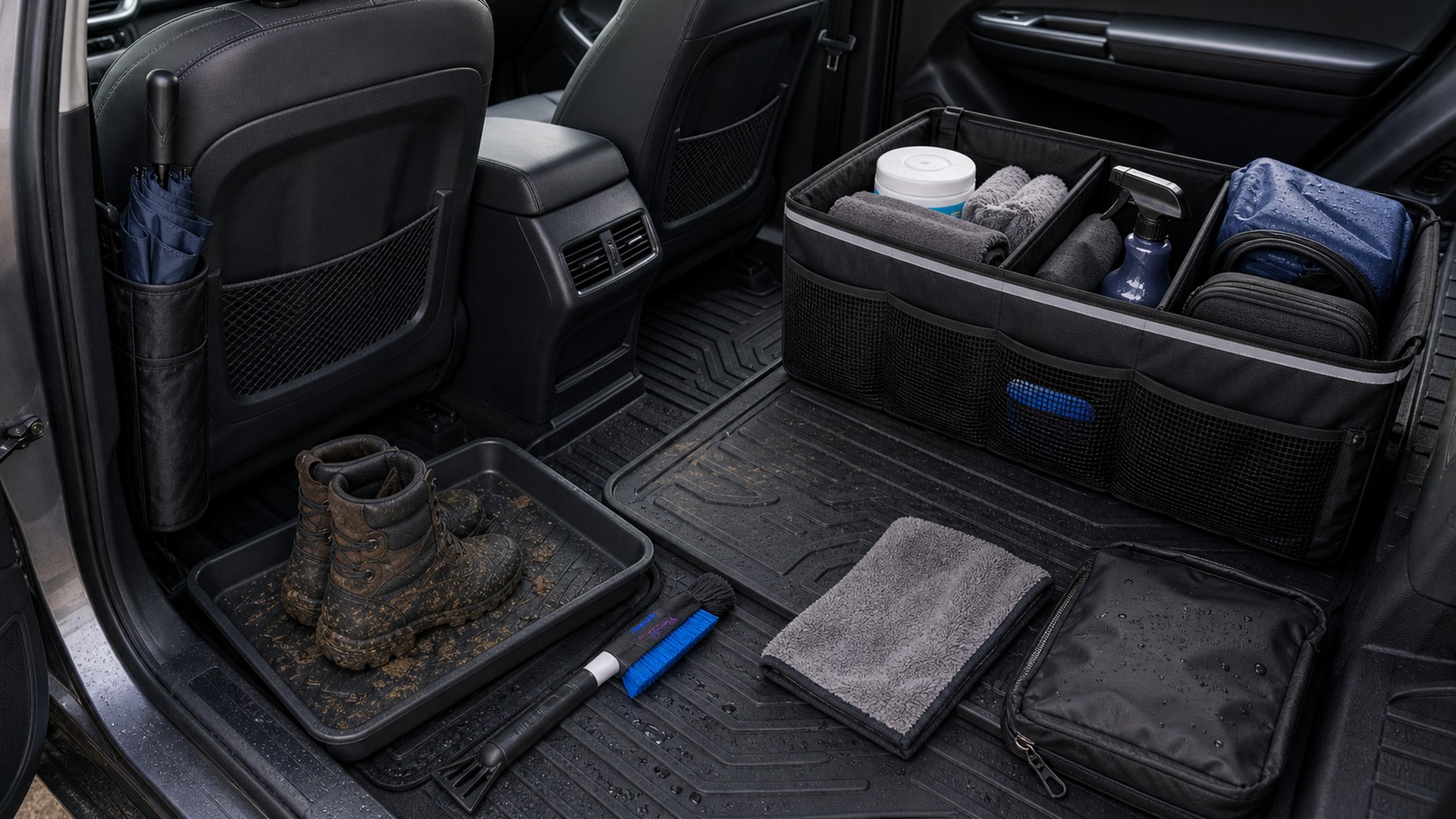
Organize a cabin for heat, cold, rain, snow, mud and salt. Check material temperature range, cold-flex and hot-soak shape, gloved closure use, wet-umbrella and clothing containment, leak paths, mud and brine cleaning, ventilation and full drying, clear defrost and HVAC outlets, windshield visibility, secure weather modules, and complete spring and fall inventory resets.
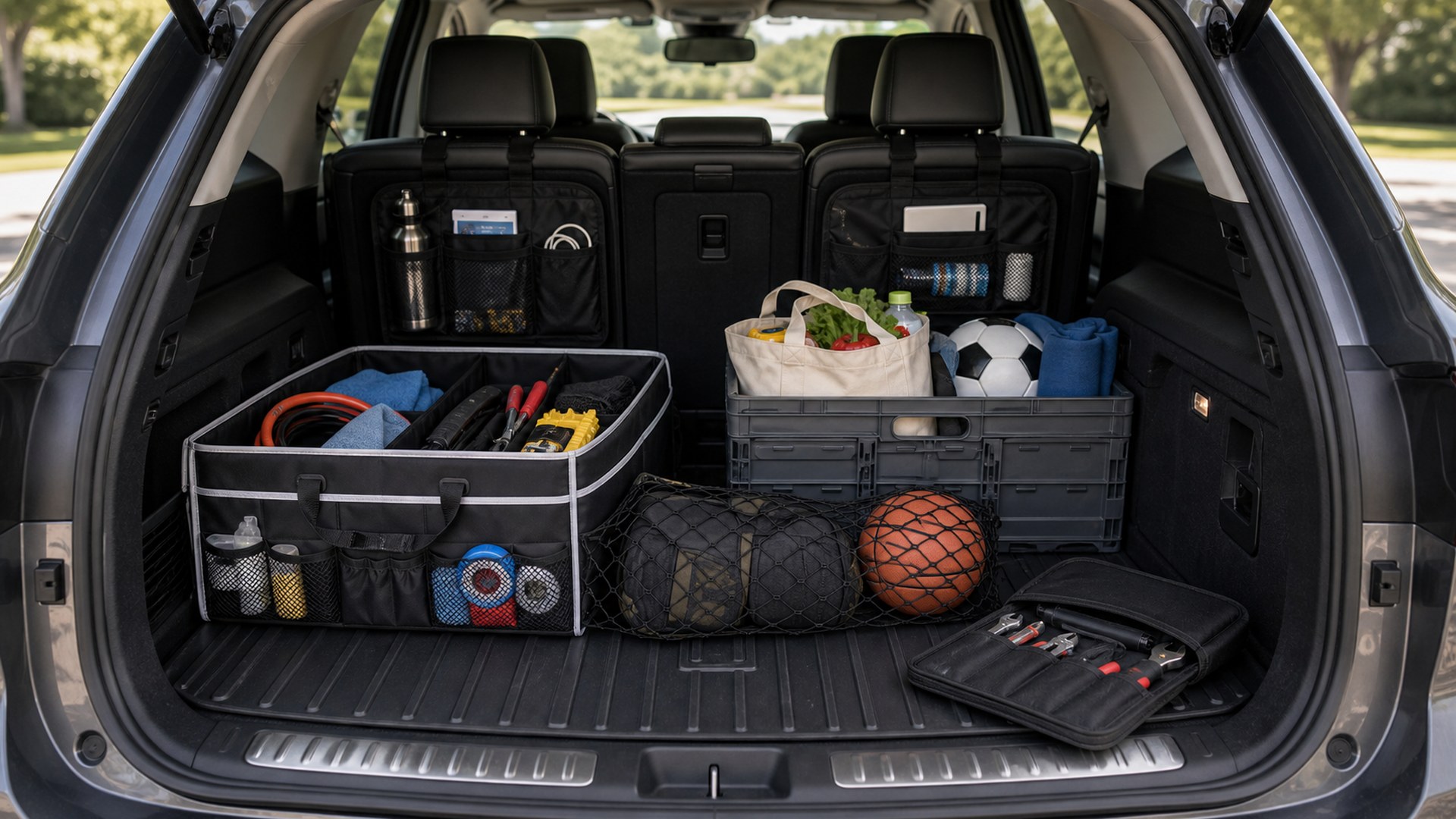
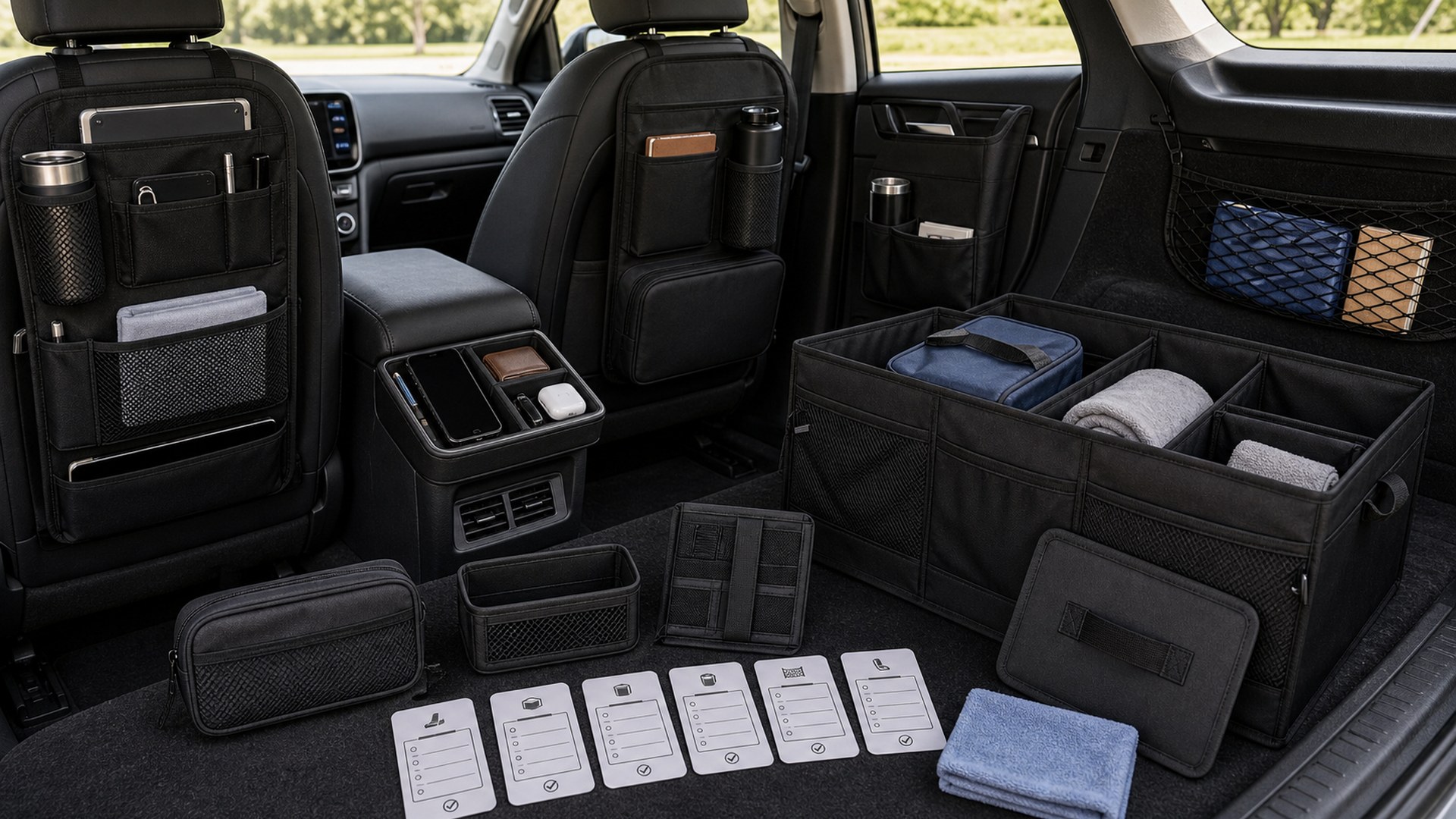
Integrate cabin organizers with the complete cargo plan. Check the vehicle load label and manual; place dense items low and appropriately restrained; use tie-downs only as specified; preserve seats, latches, rear views and exits; define where modules move when rows fold; maintain access to the spare or inflator and emergency gear; then rehearse loading, hard-braking logic and safe unloading.
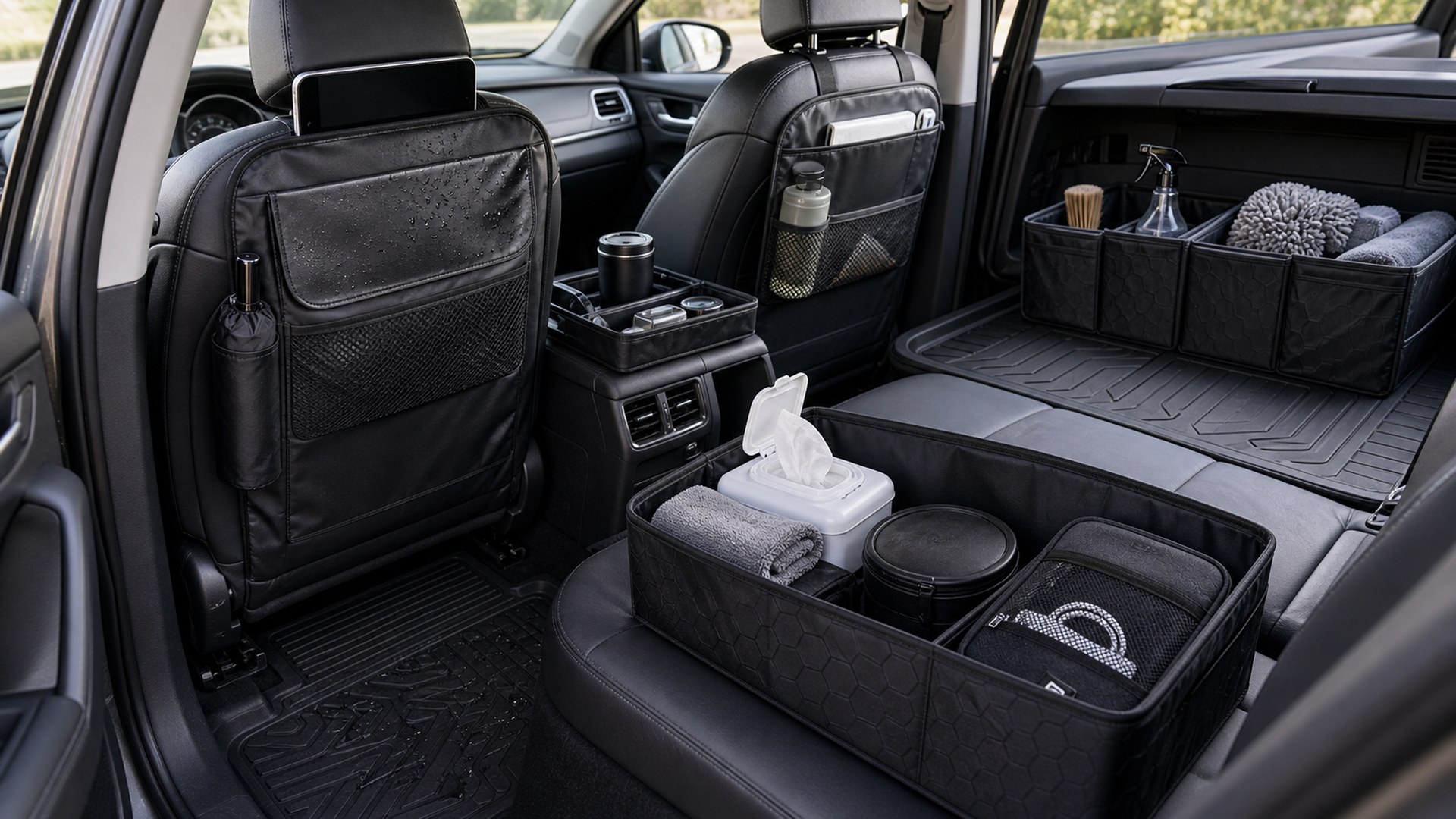
Protect cabin contents and surfaces by mapping spills, parked heat, sunlight, abrasion, contamination, child access and theft visibility. Check primary packaging and secondary containment, material and cleaner compatibility, battery and electronics isolation, secure closures, discreet placement, loaded removal, hidden-surface inspection, leak response, complete drying, and replacement of damaged liners or containers.
Organize a high-use cabin around a controlled shift inventory, parked-only driver retrieval, clear passenger boundaries, short secured charging leads, protected documents and personal data, separate cleaning supplies, a found-property procedure, fast surface inspection and drying, replaceable wear parts, timed passenger turnover, and an end-of-day reset that protects vehicle uptime.
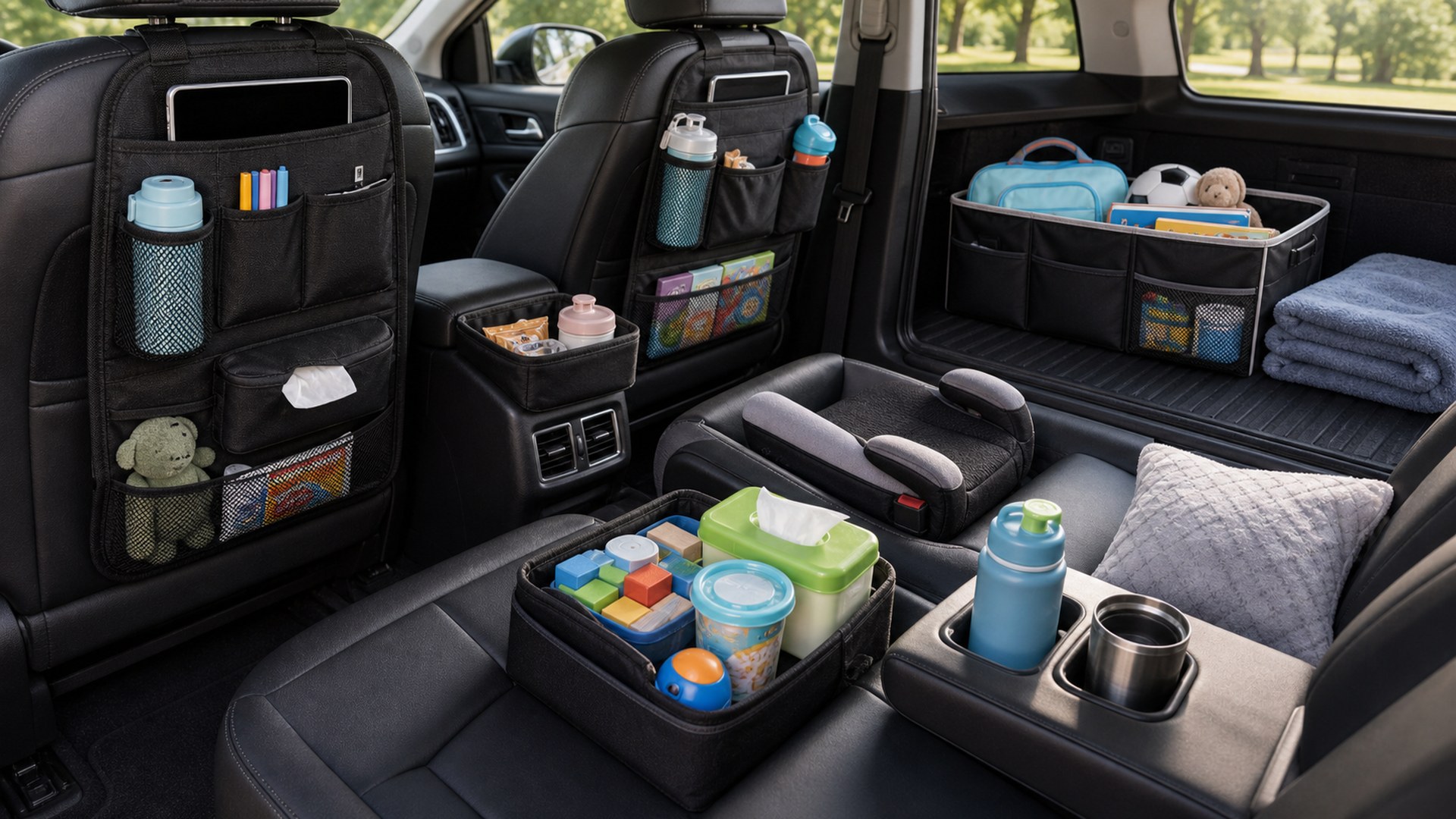
Plan family car organization only after child restraints, belts, buckles, anchors and tethers are correct. Assign age-appropriate occupant zones; secure hard objects and school gear; separate snacks, waste and spill supplies; preserve front-seat travel and third-row access; test stroller and cargo transitions; then use daily resets and growth reviews as children, routines and seating equipment change.
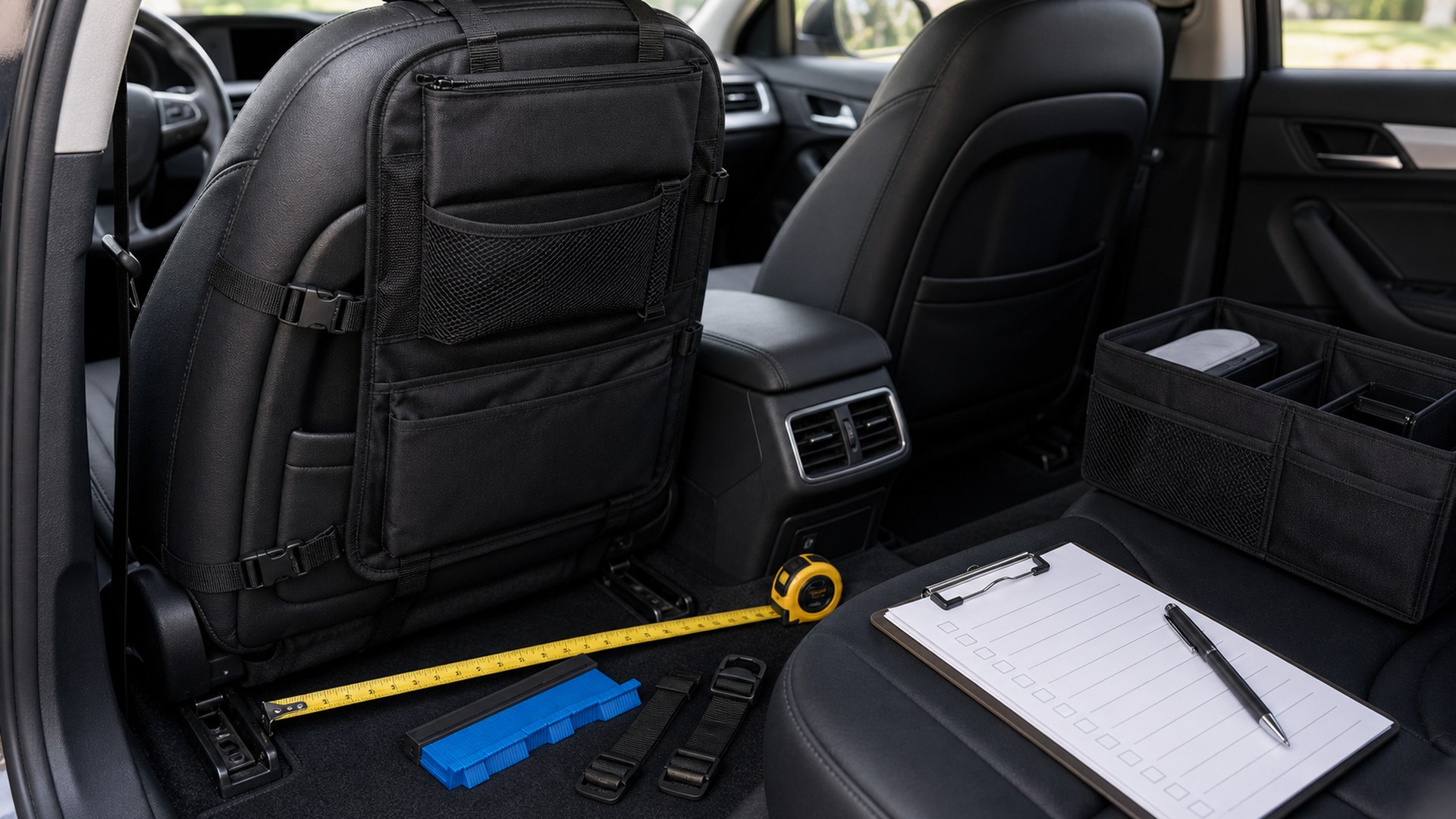
Verify organizer fit in the exact vehicle rather than trusting nominal dimensions. Measure tapered cavities and openings; include loaded bulge, straps and closures; map seat sweeps, hinges, seals, rails, wiring, vents and restraint hardware; test every used passenger and cargo configuration; confirm installation and loaded removal paths; then inspect for migration, noise, witness marks and trim damage.
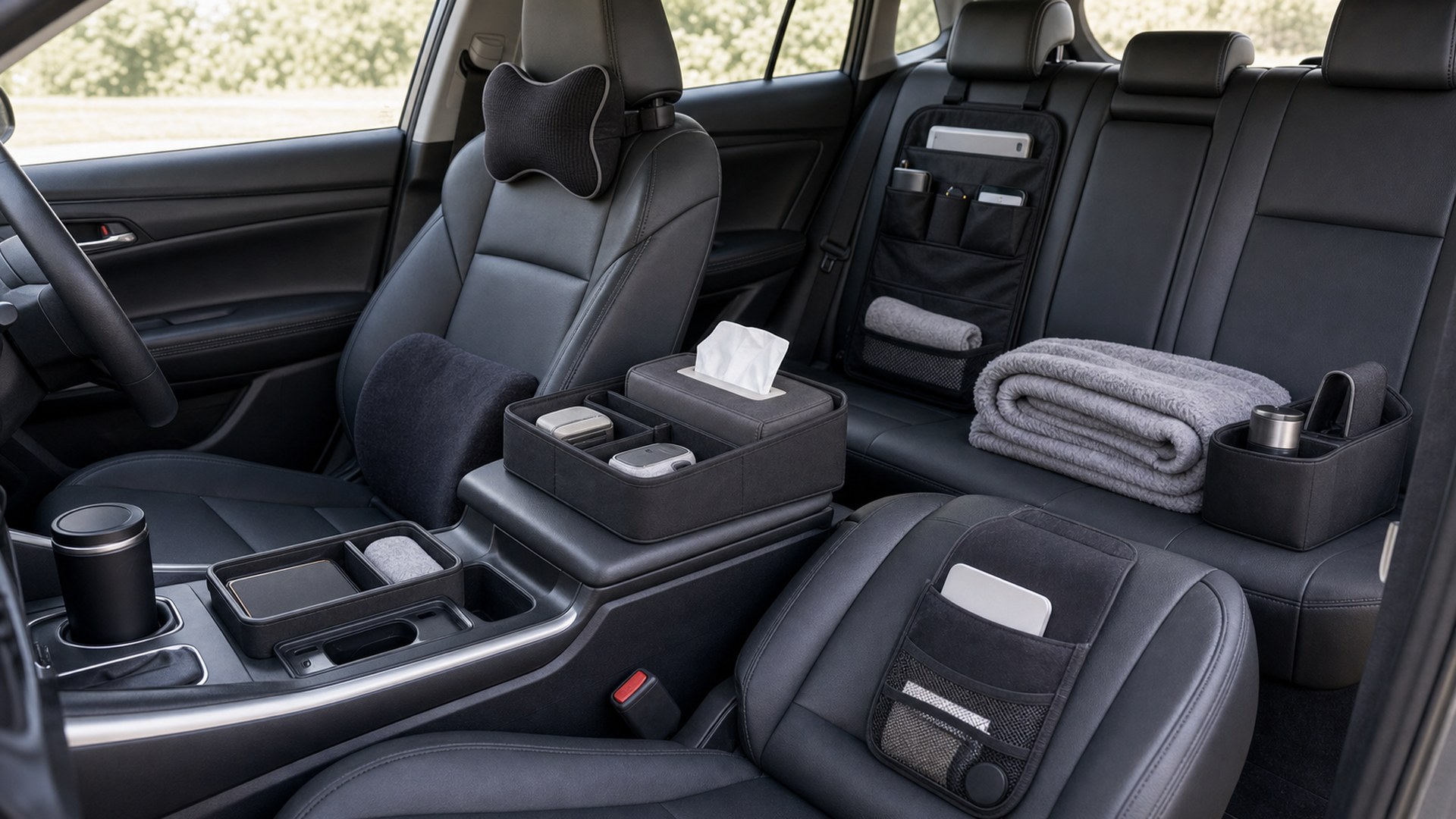
Plan storage for cushions, blankets, shades, chargers, tissues and hydration before adding comfort gear. Define safe use, handoff and restrained stow states; preserve airbags, belts, buckles, seat sensors and HVAC outlets; control cable length and plug heat; separate clean, used and wet textiles; then test occupant changes, seat movement, cleanup and seasonal kit removal.
Build a car organization system from an item inventory, not a container catalog. Classify mass, hardness, leakage and retrieval timing; map controls, airbags, belts, seats, vents and views; verify organizer anchors, closures and loaded shape; preserve passenger space, seat folding and emergency access; then set clean-out, inspection and seasonal reset rules.