What Makes Electric Trailer Brakes Different from Surge Brakes
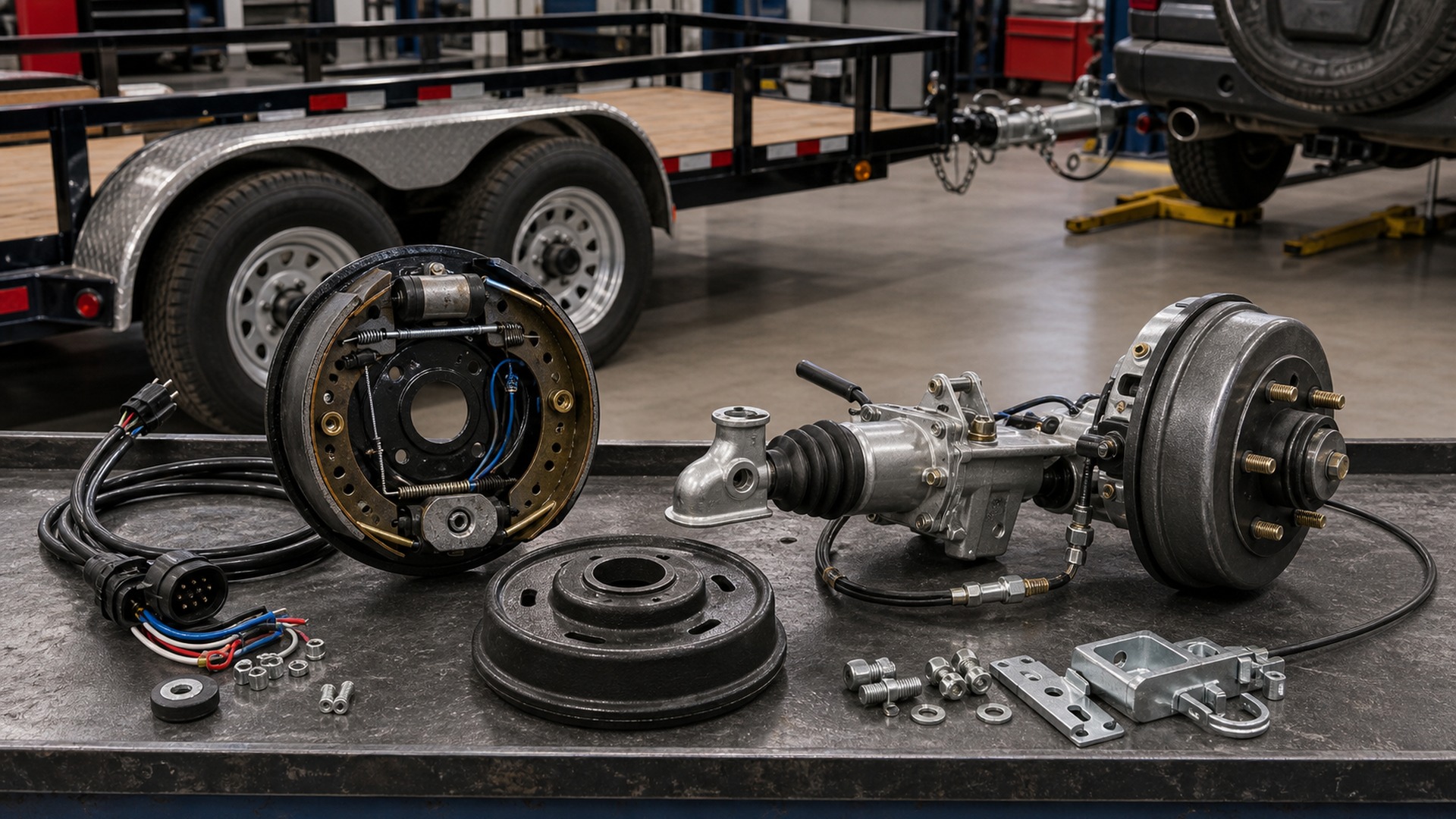
Electric trailer brakes follow an adjustable electrical command; surge brakes create hydraulic pressure from trailer overrun at the coupler.

Reviews You Can Trust
Electric trailer brakes follow an adjustable electrical command; surge brakes create hydraulic pressure from trailer overrun at the coupler.
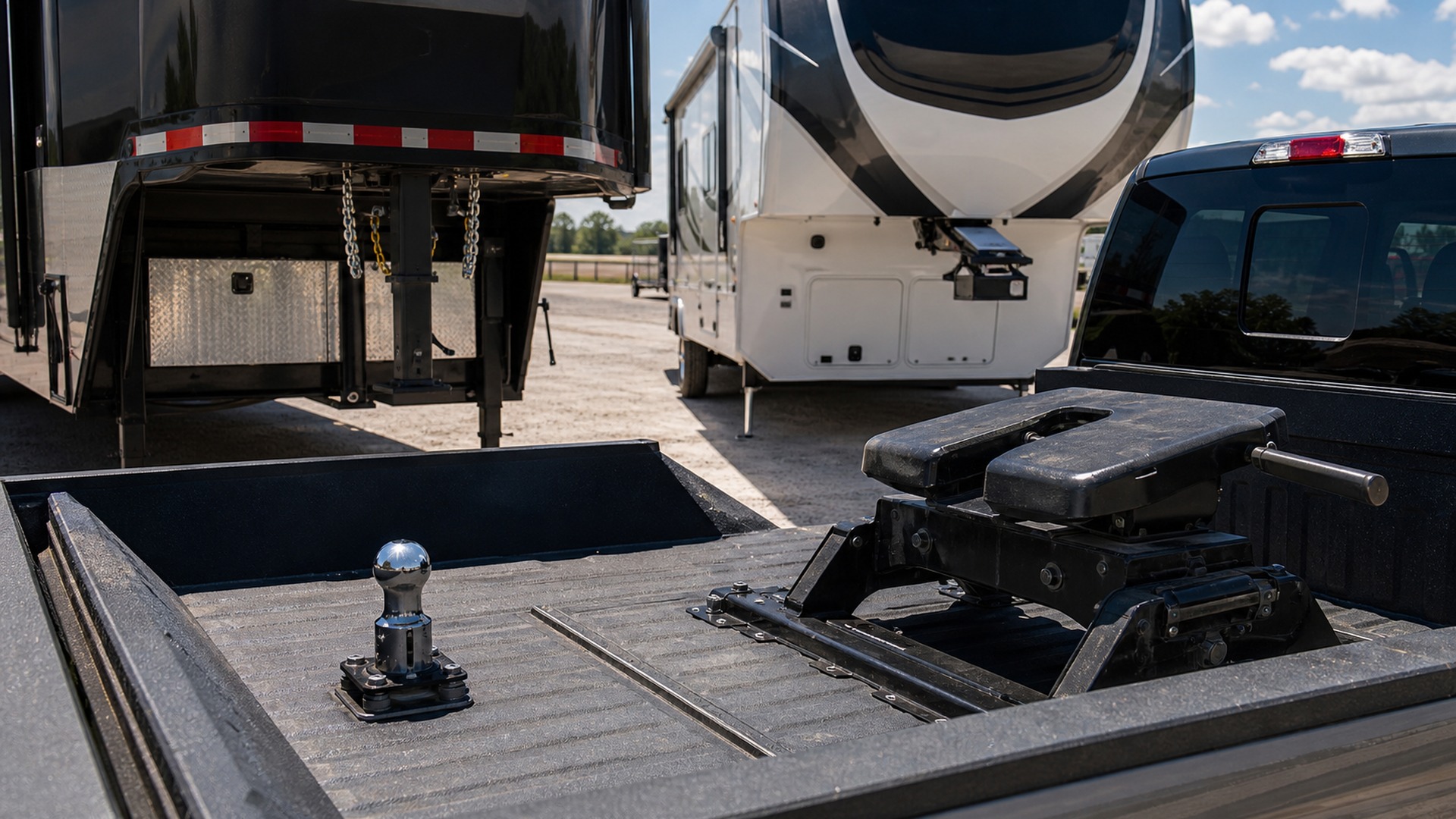
Goosenecks use a compact ball and socket; fifth-wheels use a kingpin, jaws, and plate. Trailer design, payload, clearance, and approved installation decide.
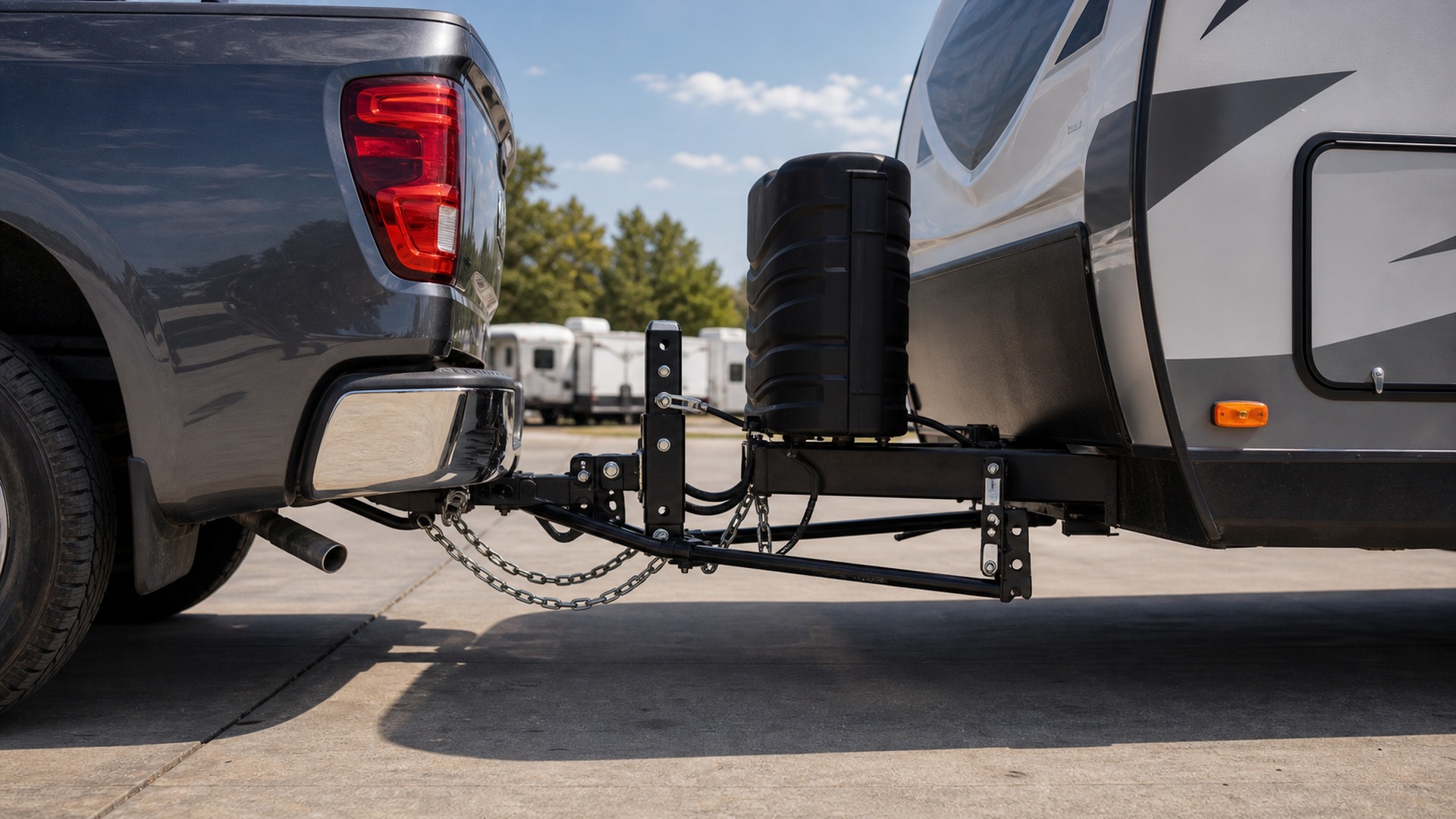
A weight distribution hitch uses spring-bar leverage to restore an approved share of front-axle load; it redistributes load but never creates towing capacity.
A trailer brake controller coordinates braking, but smooth contribution still depends on current delivery, adjusted wheel hardware, actual load, tire grip, and low-speed testing.
A towing combination works only when actual axle loads, hitch components, trailer systems, cargo placement, brakes, tires, and driver checks remain within limits.
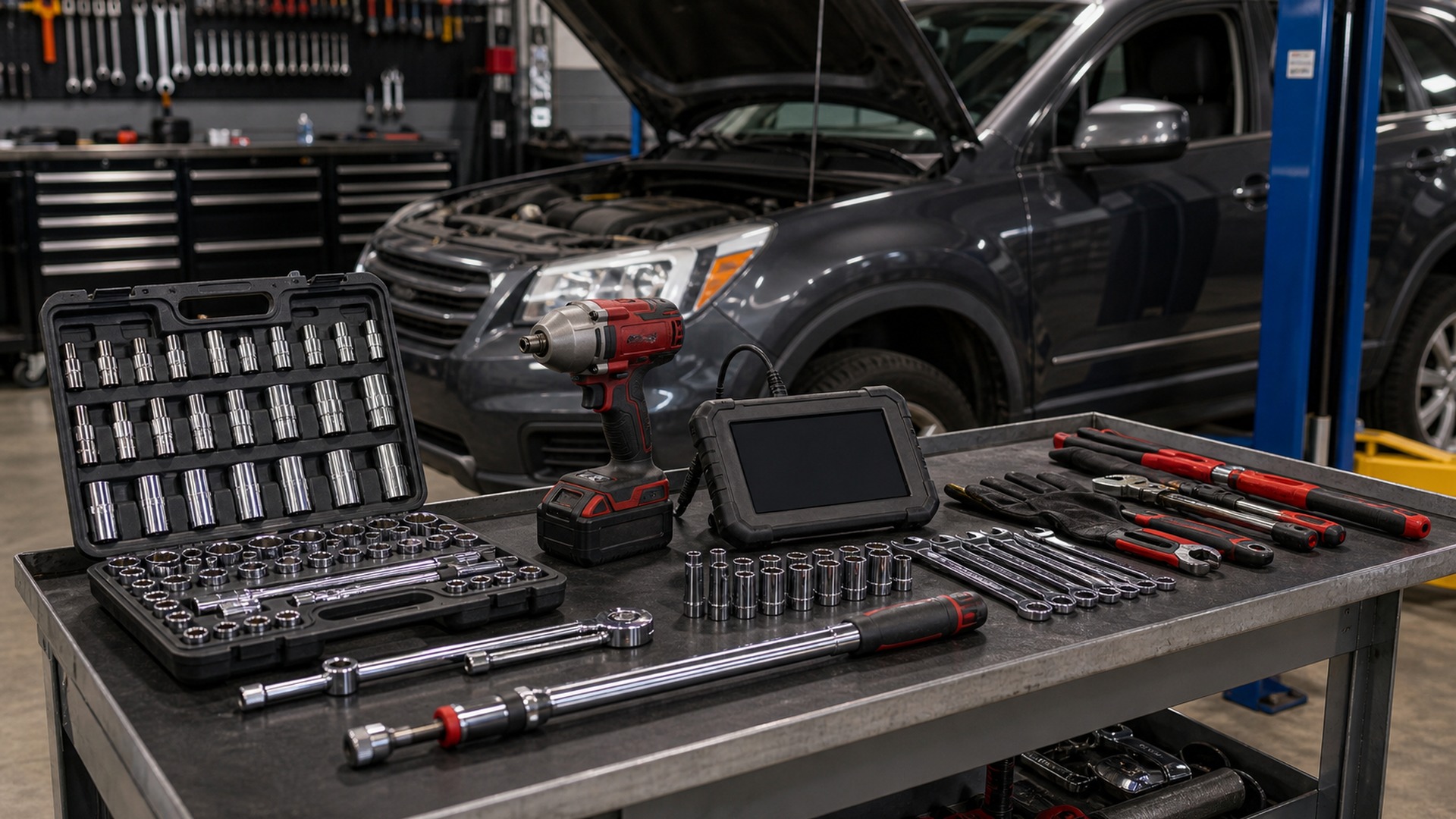
The correct automotive tool transfers force or measurement through the intended interface and range while preserving the component, evidence, and operator control.
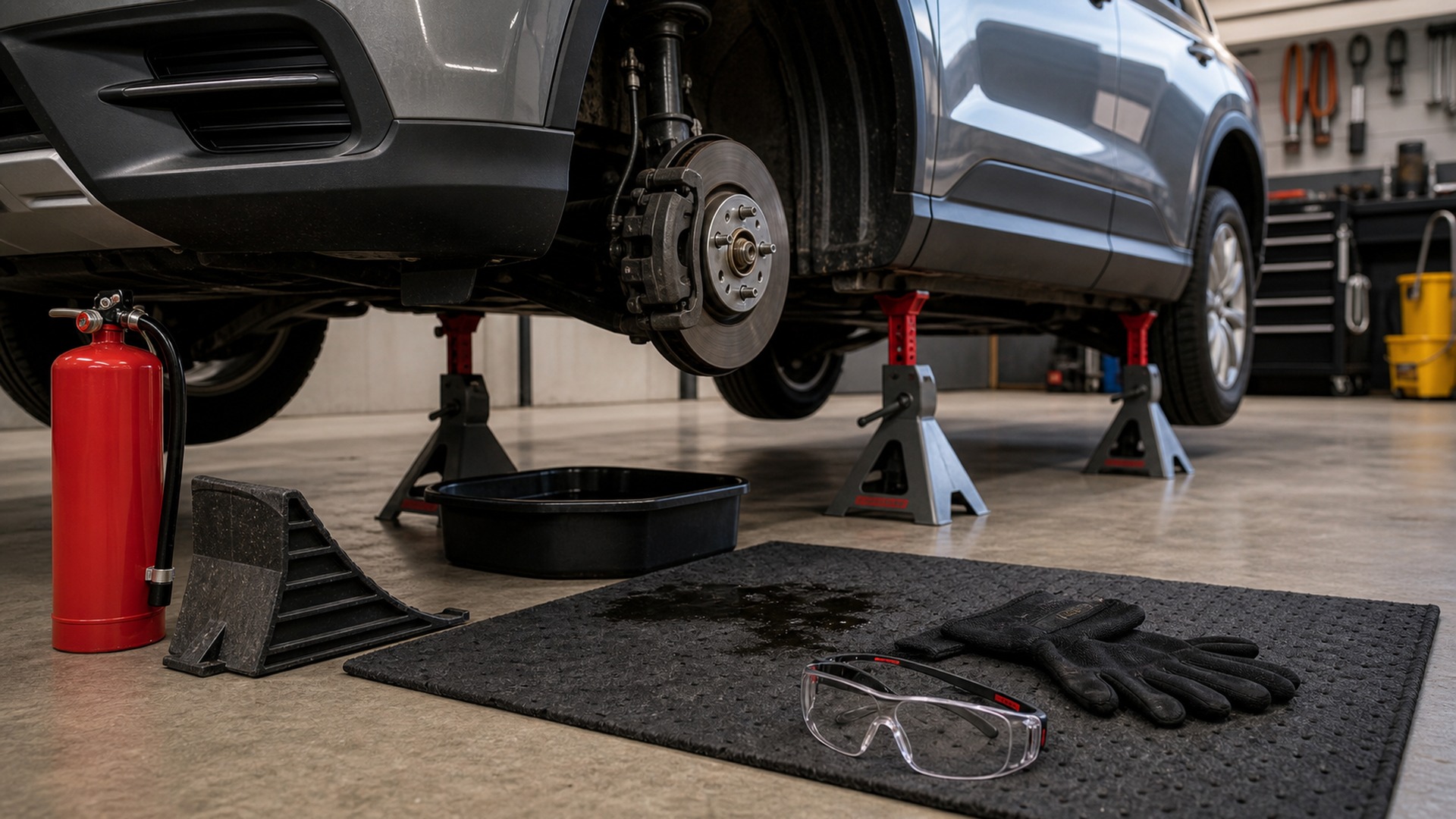
Garage safety equipment must control gravity, motion, exhaust, fuel, electricity, pressure, heat, chemicals, and emergency access as one layered system.
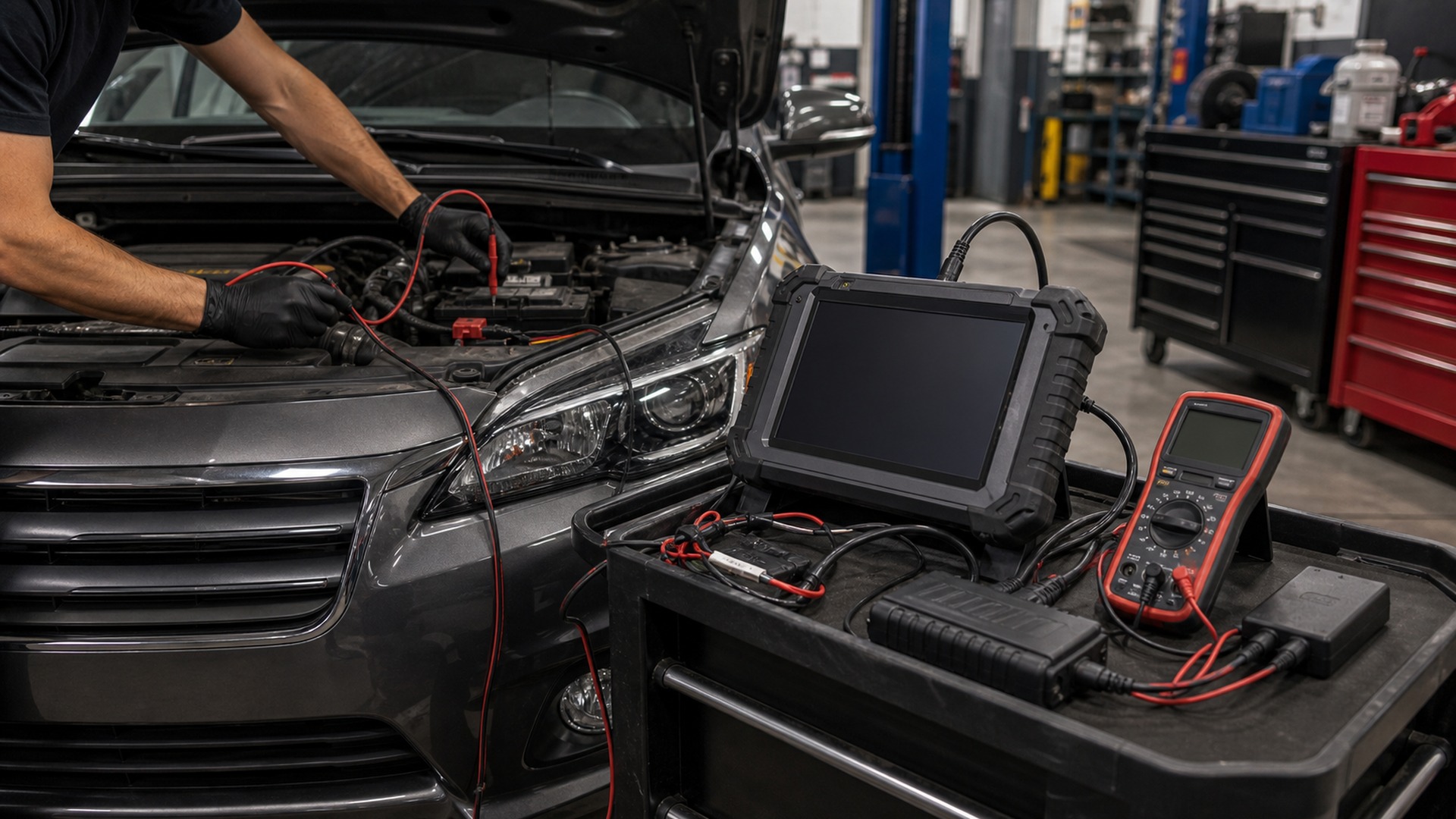
Diagnostic equipment matters when each instrument tests a specific cause under controlled conditions and the decisive measurement is repeated after repair.
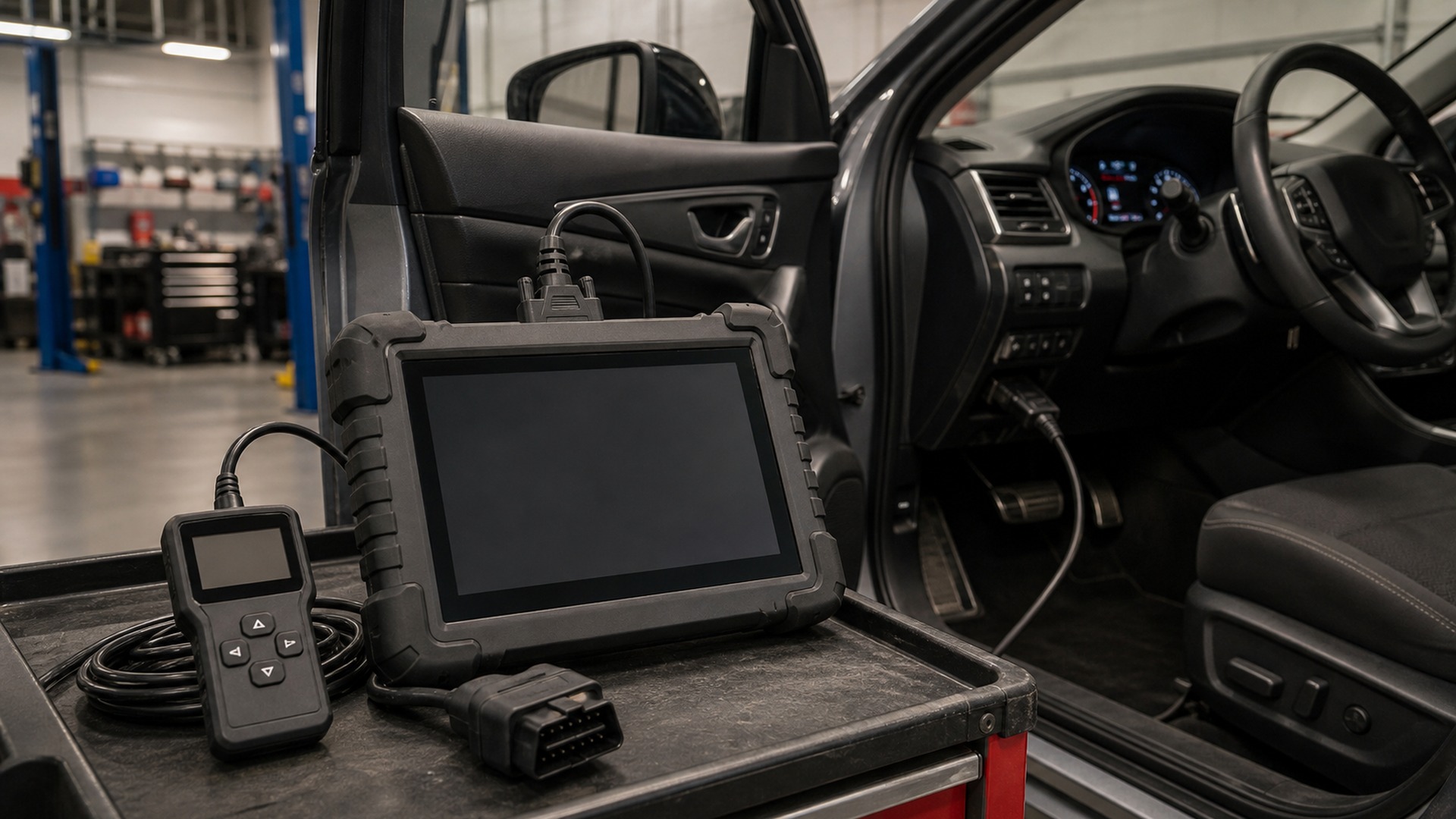
A professional scan tool is justified when the job crosses from generic emissions data into manufacturer modules, active commands, protected access, or persistent writes.
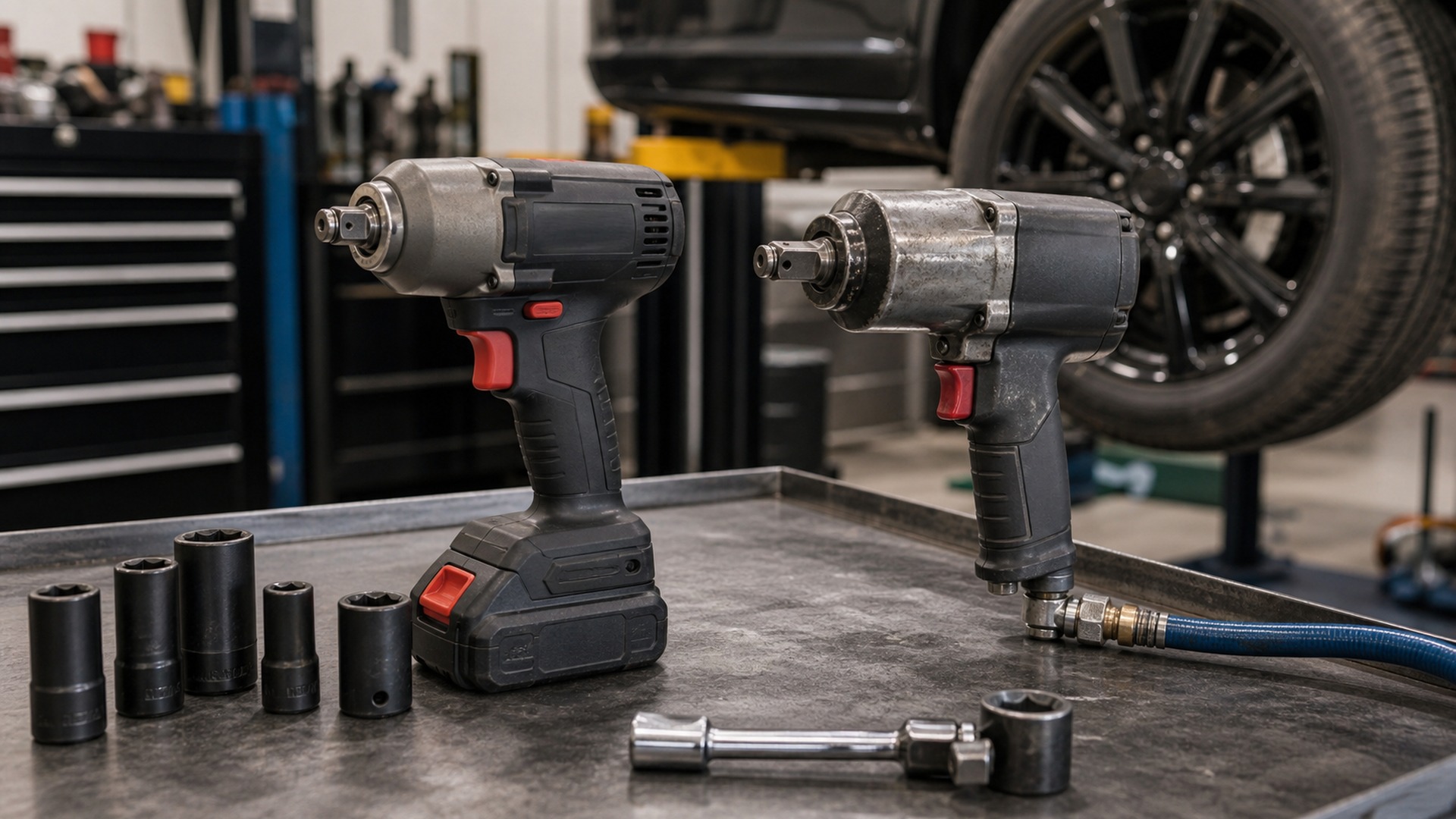
Cordless impacts carry their energy and controls; pneumatic impacts depend on compressor flow through the full air system. Real output and duty follow the complete chain.
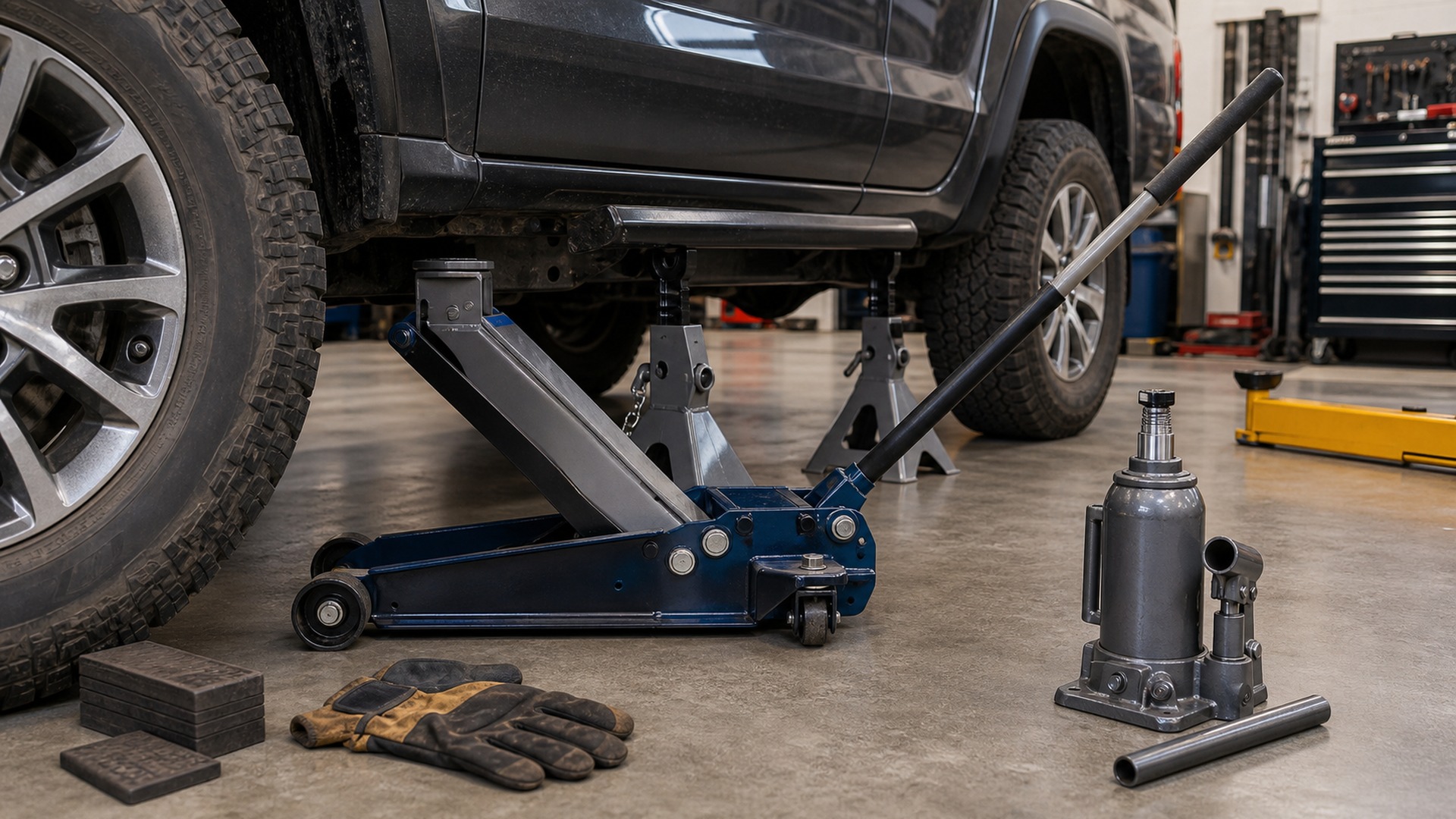
Floor jacks trade size for low rolling reach; bottle jacks trade starting clearance and footprint for compact vertical capacity. Neither replaces approved supports.
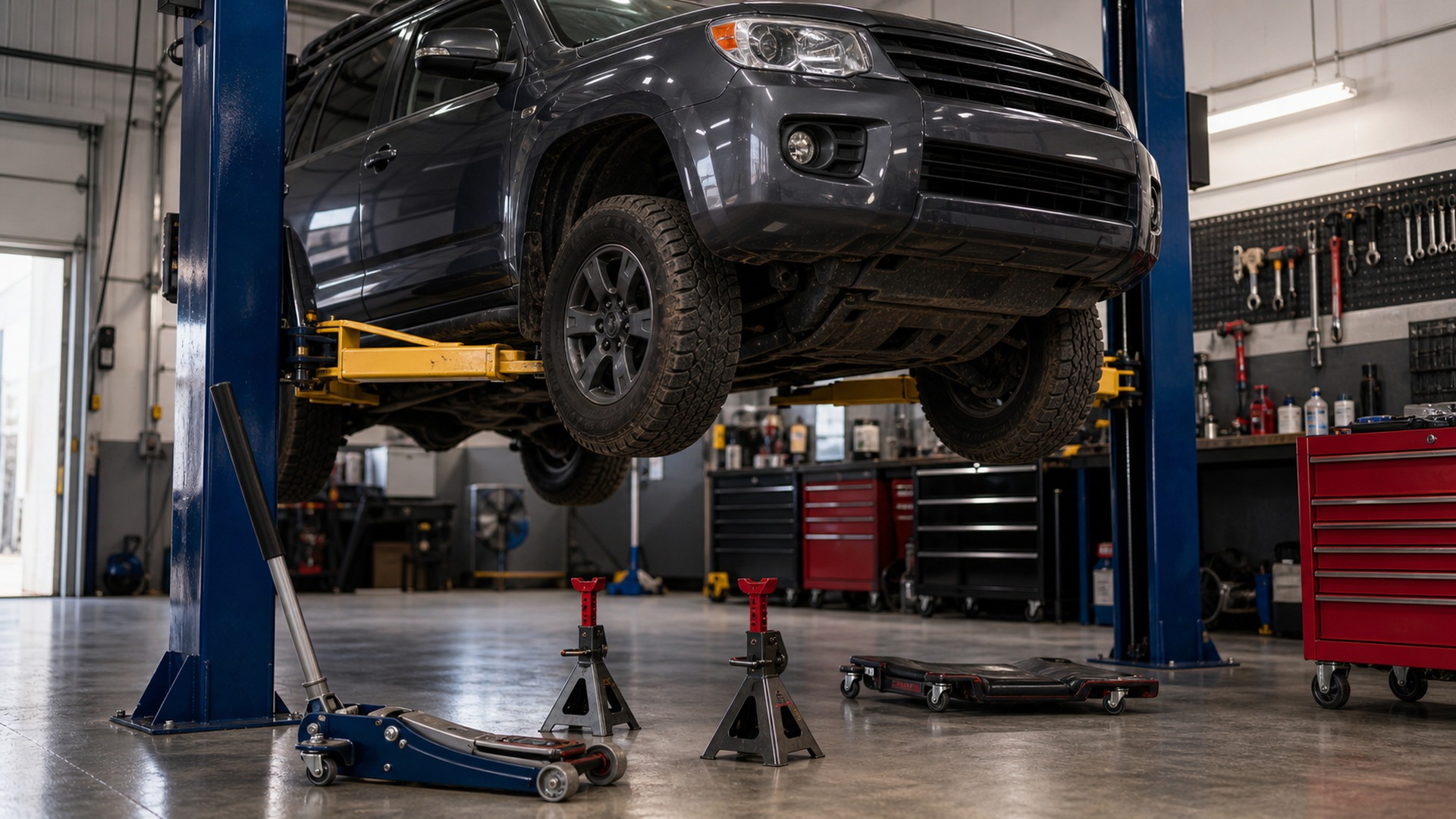
Safe vehicle lifting depends on a complete load path through approved points, fitted saddles, rated equipment, positive supports, a stable floor, and controlled descent.